Find Yourself in Nepal
8 itinerary days
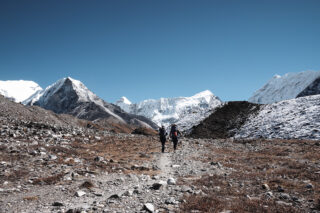
Two main trekking days with a listed high point of 2,012 metres, plus a short exit walk.
Trip Planning for Treks & Climbs | BY Rami Rasamny | PUBLISH DATE: September 09 2026 | READ TIME: 22 mins | UPDATED DATE: September 29 2026

Compare five Nepal treks, three peak progressions and one softer adventure holiday by time, altitude and commitment, then choose the journey you want to prepare for.
Choosing a Nepal trek starts with the time you have and the walking you have already done. Active walkers can start with Annapurna Base Camp or Mardi Himal. Choose Everest Base Camp for the Base Camp goal, or Gokyo for lakes and a high circuit. Experienced trekkers can consider Three Passes. Mera, Island Peak and Lobuche East require a separate climbing assessment. If you want a gentler introduction with varied activities, consider Find Yourself in Nepal. This chooser compares the commitment behind each name, including trip duration and the distinction between visiting a high point and sleeping there.
This comparison covers five trekking routes and three peak progressions, plus one softer adventure holiday. Three Passes is a reference route; ask us whether a private itinerary can be arranged. Start with the description that sounds most like you, then check the actual itinerary behind the route name.
| Your profile | Start your shortlist with | What to consider |
|---|---|---|
| A first visitor seeking varied activities and a shorter taste of trekking | Find Yourself in Nepal | An adventure holiday with a short trek, rather than a high mountain objective |
| An active walker planning a first Himalayan trek | Annapurna Base Camp | A compact journey with steep steps, repeated climbs and an overnight at altitude |
| A regular hiker drawn to forests and ridge views | Mardi Himal | Consecutive walking days and a high viewpoint, with descent afterwards |
| A prepared walker who has always wanted to reach Everest Base Camp | Everest Base Camp | A longer mountain journey with acclimatisation days and basic accommodation |
| A walker with experience of longer treks who values lakes and broad views | Gokyo Lakes | LHO’s circuit includes a demanding Renjo La crossing when conditions allow |
| An experienced altitude trekker who wants repeated high pass crossings | Everest Three Passes | A demanding reference route; ask about a private itinerary |
| A very fit trekker drawn to a remote approach and glacier climbing | Mera Peak | A longer expedition with altitude, cold and glacier skills to prepare for |
| A very fit trekker ready to learn mountaineering skills | Island Peak | A separate climbing commitment, including glacier travel and fixed ropes |
| An altitude experienced trekker or climber seeking a more technical objective | Lobuche East | Steeper, exposed terrain and a careful assessment of preparation |
These are starting recommendations, not an assessment of your individual suitability. Our Nepal trekking and climbing trips provide the wider context for your shortlist.
Filters compare published itineraries, not minimum preparation or acclimatisation needs. Add international travel and disruption buffers. Three Passes has no confirmed duration and appears only when all durations are selected.
9 journeys shown
No published itinerary matches both choices. Adjust your shortlist rather than compressing the ascent.
8 itinerary days
Two main trekking days with a listed high point of 2,012 metres, plus a short exit walk.

8 itinerary days
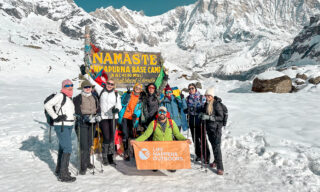
Five consecutive walking days, steep steps and an overnight at base camp.

9 itinerary days
Nine-day guided itinerary with forest trails, ridges and a viewpoint visit before descending.

16 itinerary days
Twelve mountain block days, including acclimatisation, for the Base Camp goal. Compare Everest-region route choices if you are considering Gokyo combinations or multiple passes.

16 itinerary days
Lakes and a high circuit, with Renjo La crossed only when conditions allow.
Duration to confirm
No standard LHO departure listed. Ask whether a private itinerary can be arranged.
21 itinerary days
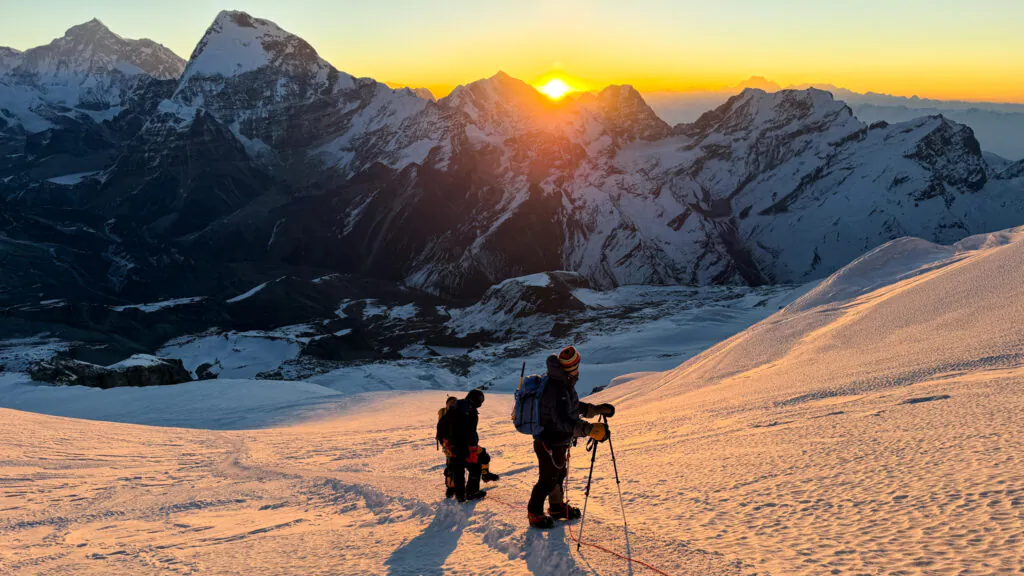
Mera North at 6,476 metres, with a remote approach, glacier training and contingency days.

20 itinerary days
Technical training, glacier travel and fixed ropes require a separate readiness assessment.

19 itinerary days
A demanding progression for fit trekkers or climbers with strong high altitude experience.
A trek is primarily a walking journey. A peak expedition adds a summit objective that may require ropes, specialist equipment and skills for moving on snow, ice or glaciers. A high pass can still make a trek demanding even when technical climbing is not normally required.
The phrase “trekking peak” can be misleading. Mera, Island Peak and Lobuche East are mountaineering objectives. They involve more than a longer walk beyond base camp.
Crampons are metal traction devices attached to compatible boots. Fixed ropes are ropes secured along parts of a climbing route. Using them correctly takes instruction and practice, especially when you are tired or cold.
The table uses current published LHO itineraries, checked on 10 September 2026, with Three Passes shown separately as a reference route. Total days refer to the organised itinerary in Nepal. Add international travel and discuss extra time for transport disruption before booking flights. Mardi Himal is offered on scheduled group departures. See the Mardi Himal dates and prices for booking options.
Mountain block days count the consecutive days from the first trail day to the final trail day, including acclimatisation days. They are not all full walking days. Expedition blocks are marked not comparable because they combine approach trekking, climbing training, summit attempts and reserve days. These durations describe published itineraries, not universal minimums.
| Journey | LHO itinerary | Mountain block days | Named objective | Main commitment |
|---|---|---|---|---|
| Find Yourself in Nepal | 8 days | 2 main trekking days, plus a short exit walk | Trek high point at 2,012 metres | Short trekking alongside activities such as rafting, yoga and tandem paragliding |
| Annapurna Base Camp | 8 days | 5, Days 2 to 6 | Base camp at 4,130 metres | Five consecutive walking days, steep steps and altitude |
| Mardi Himal | 9 days, scheduled departures | 6, Days 2 to 7 | LHO viewpoint at 4,120 metres | Six walking days through forests and along ridges |
| Everest Base Camp | 16 days | 12, Days 3 to 14 | Base camp at 5,364 metres | A longer approach with two planned acclimatisation days |
| Gokyo Lakes | 16 days | 12, Days 3 to 14 | Gokyo Ri at 5,357 metres and Renjo La at about 5,360 metres | Sustained altitude and a demanding pass day |
| Everest Three Passes | Depends on the selected itinerary | Not specified | Kongma La, Cho La and Renjo La | Repeated high passes; reference route with no current LHO departure verified |
| Mera Peak | 21 days | Not comparable | Mera North summit attempt at 6,476 metres | Remote Hinku Valley approach, glacier training and high camp |
| Island Peak | 20 days | Not comparable | Summit attempt at 6,189 metres | Technical training, glacier travel and fixed ropes |
| Lobuche East | 19 days | Not comparable | Summit attempt at 6,119 metres | Strong altitude experience and movement on exposed terrain |
The elevations describe named objectives, not a complete record of sleeping altitudes or route maximums. Optional Kala Patthar takes the Everest Base Camp itinerary higher than base camp itself. LHO’s Mardi route visits the 4,120 metre viewpoint rather than the higher upper base camp.
Count your available time from leaving home to returning home, adding international travel and a realistic allowance for disruption to the published itinerary. Keep acclimatisation, training and reserve days intact, whether you choose a shorter trek or a full expedition.

If you want to experience Nepal without making a high mountain objective the centre of the trip, consider Find Yourself in Nepal. Its eight day itinerary includes two main trekking days with a listed high point of 2,012 metres, followed by a short exit walk the next morning, alongside rafting, tandem paragliding, yoga and meditation. No previous activity skills are required, and specialists provide instruction.
It is an adventure holiday with trekking as one part of the experience. Review the activities individually if you have preferences or concerns. Weather and local conditions can change what is possible.
Annapurna Base Camp suits active walkers who want to walk into a mountain sanctuary without committing to the longer Everest itinerary. No technical mountaineering experience is required on the standard trek, but stone staircases, sustained climbs and the return descent make preparation important.
Ask yourself how you feel the morning after a long hilly walk. Could you comfortably get up and walk again? That is a more useful starting conversation than whether you can manage one hard gym session.
For a closer look at the stairs, daily effort and preparation, read our Annapurna Base Camp difficulty guide.
If both base camps appeal, read our Annapurna Base Camp versus Everest Base Camp comparison for the closer decision.
Mardi Himal is worth considering if the shape of the journey matters more than reaching a famous base camp. LHO’s route combines forest trails with higher ridges and a viewpoint visit before descending to High Camp.
Its listed viewpoint is close in elevation to Annapurna Base Camp, but the overnight pattern differs. Visiting a high point and sleeping there are different commitments. Ask for the daily sleeping altitudes when comparing either itinerary.
Mardi Himal is offered on scheduled group departures. Review the Mardi Himal dates and prices and confirm your chosen departure with the team before arranging international travel.
Choose Everest Base Camp when the destination itself matters to you. Its longer approach asks for steady walking, patience and comfort with spending more time in simple mountain accommodation.
You do not need technical climbing skills for the standard trek. You do need a solid hiking foundation, preparation for consecutive days and willingness to follow decisions about altitude and weather.
For the stage-by-stage effort and altitude considerations, read our Everest Base Camp difficulty guide.
Gokyo offers a different focus within the Everest region. The attraction is the combination of lakes, glacier scenery and high viewpoints.
Check which route an operator means by “Gokyo”. LHO’s published itinerary includes Renjo La when conditions allow. A circuit over a high pass is a different undertaking from walking up a valley and returning the same way. We recommend previous experience of trekking over several days before taking on this circuit.
In Rami Rasamny’s Gokyo Lakes versus Everest Base Camp comparison, Gokyo’s appeal comes from the whole landscape: lakes, glaciers and wide mountain views. Everest Base Camp offers the meaning of reaching a place closely tied to mountaineering history. Neither experience is a substitute for the other. Choose the one you would still value on an ordinary walking day, between the famous viewpoints.
Everest Three Passes combines Kongma La, Cho La and Renjo La in a longer circuit. It is a reference option for experienced trekkers who specifically want repeated high pass crossings. LHO does not list a standard departure for this route. Ask us whether a private itinerary can be arranged before making plans; availability and the route would need to be confirmed.
Ask about the actual walking schedule, acclimatisation, pass conditions and alternatives before committing. A route being described as a trek does not remove the demands of snow, glacier terrain or prolonged altitude.
Mera Peak takes a more remote approach through the Hinku Valley. LHO’s 21 day expedition targets Mera North at 6,476 metres and includes glacier training and two contingency days. Very high fitness and preparation for cold, a long summit day and roped glacier travel are important.
Island Peak can suit a very fit trekker preparing for a first guided Himalayan climb. LHO’s itinerary includes two technical training days and a reserve summit day. Read the Island Peak climbing guide before deciding whether the skills and terrain appeal to you.
Lobuche East is generally the more technical and exposed choice. Its lower summit elevation does not make it easier than Island Peak. The current LHO trip description positions it for fit trekkers or climbers with strong high altitude experience. Our Lobuche East preparation guide explains the demands in more detail.
For any of these peaks, discuss your previous experience at altitude, recent hiking and climbing skills with the team before booking. Training during an expedition supports preparation. It cannot guarantee that every participant will become ready for every section of the route.
If you have already completed EBC, our guide to what to do after Everest Base Camp explores that particular progression in more detail.
To compare the wider pathway from ABC, EBC or Gokyo, use our Nepal trekking-to-climbing progression framework. It sets out the experience and skills to discuss before a 6,000-metre peak, and the separate preparation required for Ama Dablam or Manaslu. Completing one journey does not automatically establish readiness for the next.
Fitness helps you walk, but it does not protect you from altitude illness. Acclimatisation means allowing your body time to adjust as you travel higher. The rate of ascent and the altitude where you sleep matter, alongside your previous response to similar conditions. CDC altitude guidance explains these distinctions.
Before choosing, ask for the daily sleeping altitudes, planned acclimatisation stops and options if someone needs more time. Report symptoms promptly. Do not ascend with symptoms of altitude illness; worsening symptoms require descent and medical assessment.
If you have relevant medical conditions or a history of significant altitude illness, discuss the proposed itinerary with a clinician familiar with altitude medicine.
A famous destination is a good reason to travel if it means something to you. It is less useful if you would actually prefer a shorter journey or a different landscape. Decide what you want an ordinary day on the trail to feel like.
An itinerary includes more than walking. Arrival days, transfers, acclimatisation, technical training and reserve days serve different purposes. Read the daily plan before treating a shorter trip as better value or a longer one as harder.
Steps, terrain, exposure, overnight altitude and accumulated fatigue all matter. The height of a viewpoint cannot tell you how a route will feel, and the height of a summit cannot tell you how technical it is.
Guides and porters can make the practical side more manageable, but you still need to walk the route and adapt to the conditions. Tea houses are mountain lodges with simple rooms and shared facilities on many stops. Confirm the arrangements that matter to your sleep and recovery.
A route must fit your travel month as well as your fitness. Spring and autumn are the main planning windows for these journeys, with differences between routes. Read our guide to the best time to visit Nepal and confirm conditions for your chosen departure. A recommended season cannot guarantee clear views or an open pass.
Write down three things: the total time you can take away, the walking you have actually done recently and the experience you most want from Nepal. Include any previous time at altitude.
Speak to an Adventure Specialist to turn those three answers into a trek or climbing plan. For Mardi Himal, check the Mardi Himal dates and prices to choose a scheduled departure.
If ABC is one of your options, use the ABC budget worksheet. If you are comparing the two base camps, read how ABC and EBC differ in difficulty. Before choosing cover, use the Nepal trekking insurance checklist.
In this comparison, the LHO figures are total organised itinerary days in Nepal, including the listed arrival, departure and transfer days. They are not all walking days. International travel and additional disruption buffers need separate allowance. Check the daily itinerary before requesting leave.
Yes. Mardi Himal is offered on scheduled LHO group departures, with a nine-day itinerary. See the Mardi Himal dates and prices for departure options, prices and availability. Confirm your chosen departure with the team before arranging international travel.
No. Annapurna Base Camp enters the Annapurna Sanctuary. The Annapurna Circuit follows a different journey around the massif and typically includes Thorong La, a high mountain pass. Check the full route name when comparing itineraries.
Yes. LHO’s Annapurna Base Camp and Mardi Himal routes use Pokhara access rather than Lukla. That changes the transport plan, although domestic flights and road travel can still be disrupted. Confirm connections and spare time before buying international tickets.
Guide, TIMS registration and permit requirements depend on your route. Check the Nepal Tourism Board’s official TIMS guidance and have the team confirm the current requirements for your itinerary before departure.
Compare what each itinerary includes: accommodation, meals, permits, guides, porters, domestic travel and equipment where relevant. Then account for international flights, insurance, exclusions and contingency. A headline price is useful only when you understand what still needs paying for.
Send your insurer the exact itinerary, including optional high points, transport and activities. Ask it to confirm the activity classification, maximum altitude, rescue and evacuation arrangements and relevant exclusions in writing. A trekking policy should not be assumed to cover a climbing expedition. Our Nepal insurance checklist helps you prepare the questions; the insurer decides what its policy covers.
We checked the linked LHO trip schedules on 10 September 2026 and counted mountain blocks inclusively: ABC Days 2 to 6, Mardi Days 2 to 7, and EBC and Gokyo Days 3 to 14. The 12 day Everest region blocks include acclimatisation, so they should not be described as 12 full trekking days. Find Yourself in Nepal has two main trekking days and a short exit walk.
Trip pages supply the durations and named elevations; our recommendations interpret those schedules for different experience levels. The Gokyo comparison supplies the LHO perspective, CDC supports the altitude guidance, and Nepal Tourism Board supplies the permit reference. Three Passes has no fixed LHO schedule in this comparison. Confirm the final itinerary and conditions with the team before booking.
Once you have a shortlist, move from choosing the journey to planning it. Read How to Plan Trekking in Nepal for the next steps on timing, permits and preparation. Keep your preferred route and available dates beside you as you read, so your research becomes a practical plan.
Your shortlist is a starting point. Explore LHO’s Nepal journeys or talk to an Adventure Specialist with your available time, recent walking experience and preferred kind of adventure. We will help you understand the commitment behind the name.
Expert review
Reviewed by
Mountaineering guide and expedition doctor
Dr. Nima is LHO’s high-altitude and wilderness medicine reviewer. He has reviewed the altitude-related medical and physiological guidance in this article.
CONTINUE YOUR RESEARCH

ABOUT THE AUTHOR

Rami Rasamny
Rami Rasamny is the founder of Life Happens Outdoors, a premium adventure travel company that uses the outdoors as a catalyst for human transformation. His work brings people into the mountains not only for challenge, but for clarity, confidence, and connection. He believes that when people answer the call to adventure truthfully, they come back different.