Mountains & Peaks | BY Rami Rasamny | PUBLISH DATE: May 07 2026 | READ TIME: 15 mins | UPDATED DATE: September 23 2026
Everest Base Camp Trek Difficulty: How Hard Is EBC Really?

DOWNLOAD YOUR Everest Base Camp Trek GUIDEBOOK
Everest Base Camp trek difficulty is not about technical climbing. It is about walking for many days in a row, recovering properly, adapting to altitude, and staying mentally steady when your body feels tired. For most first timers, the EBC trek is hard but achievable with the right preparation, pacing, and support. You do not […]
Everest Base Camp trek difficulty is not about technical climbing. It is about walking for many days in a row, recovering properly, adapting to altitude, and staying mentally steady when your body feels tired. For most first timers, the EBC trek is hard but achievable with the right preparation, pacing, and support. You do not need mountaineering experience. You do need strong walking fitness, patience at altitude, and the humility to move slowly when the mountains ask you to.
That is the honest answer. Everest Base Camp is not easy. It is also not reserved for elite athletes.
The real difficulty of the Everest Base Camp trek is lived day by day. Some days feel beautiful and manageable. Some days feel slow, cold, dusty, emotional, and far longer than expected. The challenge builds gradually, then becomes more serious as the air gets thinner and recovery becomes harder. That is why the question is not only “is EBC hard?” The better question is “what kind of hard is it?”
This guide breaks down the Everest Base Camp trek difficulty from a first timer perspective, including the day by day experience, altitude impact, EBC fitness, and why a trekker may need to change plans or turn back.
If you are preparing now, read our Everest Base Camp training guide and explore the Life Happens Outdoors Everest Base Camp Trek for the full guided itinerary.
Is Everest Base Camp Hard?
Yes, Everest Base Camp is hard, but not in the way many first timers imagine.
The trek does not require ropes, ice axes, or climbing skills. You are walking on mountain trails, through villages, forests, suspension bridges, valleys, stone steps, glacial moraine, and high altitude terrain. The physical challenge comes from repetition. You wake up, walk for several hours, arrive at a tea house, eat, rest, sleep, and do it again the next day.
At lower altitude, this can feel like a beautiful trekking holiday. As you move higher, the same pace requires more effort. Stairs feel steeper. Your breathing changes. Appetite can drop. Sleep can become lighter. A small hill can suddenly feel like a real objective.
This is where Everest Base Camp becomes less about strength and more about consistency.
A fit person who walks too fast can struggle. A less athletic person who prepares properly, listens to the guide, eats, drinks, rests, and moves steadily can do very well. EBC rewards patience more than ego.
Watch: How Hard Is the Everest Base Camp Trek?
Everest Base Camp is not a technical trek, but it is physically and mentally demanding. Long consecutive days, altitude, changing weather and the need to maintain a deliberately slow pace are what make it difficult. In this video, Rami explains what trekkers should expect and how to prepare.
What Makes the EBC Trek Difficult?
The altitude
Altitude is the defining challenge of Everest Base Camp. The higher you go, the less oxygen your body has available with each breath. This does not mean you are suffocating. It means your body has to work harder to do ordinary things.
At sea level, you may be able to climb stairs without thinking. High in the Khumbu, a short uphill section can make you pause, breathe, reset, and continue. This is normal. It is not failure. It is the reality of trekking at altitude.
The difficulty is that altitude affects people differently. Fitness helps, but it does not make anyone immune. Strong runners can feel terrible. First time trekkers can feel surprisingly steady. That is why acclimatization days, slow pacing, hydration, and guide judgment matter so much.
Understand the warning signs and the decisions that matter before you travel in our guide to altitude sickness on the Everest Base Camp trek.
The number of days on foot
Many first timers focus on the hardest single day. In reality, the challenge is the accumulation.
You are not just doing one long hike. You are walking day after day, often on uneven terrain, with changing weather, thinner air, and simple mountain accommodation. Even if each individual day feels possible, the total journey asks for resilience.
Your legs may feel fine on day two. By day seven, the question is different. Can you keep going when sleep has been light? Can you eat when appetite is low? Can you remain patient when progress feels slow?
That is the real test.
The terrain
The trail to Everest Base Camp is not technically difficult, but it is not flat or smooth. Expect stone steps, dusty paths, suspension bridges, rocky sections, long gradual climbs, and descents that can be hard on the knees.
The ground near Base Camp becomes rougher, especially around the glacial moraine. You are still trekking, not climbing, but the terrain feels more serious. Foot placement matters. Trekking poles help. Good boots matter. Moving slowly becomes part of safety, not just comfort.
Use the Everest Base Camp packing list to check the boots, layers, poles and daypack that support you through those conditions.
The mental challenge
The EBC trek is emotional. That is often the part people underestimate.
There may be moments when you doubt yourself. There may be mornings when the idea of another long walking day feels heavy. There may be a point where you wonder why you signed up at all.
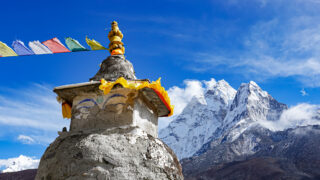
Then the clouds lift. A giant face of mountain appears. You walk into a village with prayer flags moving in the wind. Your team gathers around a warm meal. You remember why you came.
Everest Base Camp is difficult because it gives you time to meet yourself. That is also why it is so powerful.
Day by Day Difficulty Breakdown
Every itinerary is slightly different, but most Everest Base Camp treks follow a similar rhythm. The exact distances and timings can vary depending on route conditions, weather, group pace, and acclimatization planning.
Arrival in Kathmandu
This day is not physically difficult, but it matters. Long flights, travel fatigue, gear checks, nerves, and anticipation all begin here.
The key is to settle in, hydrate, organize your kit, and avoid arriving in Nepal already exhausted. Many first timers underestimate the value of calm preparation before the trail begins.
Difficulty: Low
Main challenge: Travel fatigue and nerves
Fly to Lukla and trek to Phakding
This is usually the first walking day. The flight to Lukla is dramatic, and the trek often feels exciting rather than difficult. The trail begins with villages, river views, bridges, and your first taste of the Khumbu.
Physically, this is not usually the hardest day. Emotionally, it can feel big because the journey has truly started.
Difficulty: Easy to moderate
Main challenge: Managing excitement and settling into trail rhythm
Phakding to Namche Bazaar
This is often the first day that gets people’s attention. The route includes suspension bridges, forest trails, and a significant climb into Namche Bazaar.
For many first timers, this is the day they realize EBC is not just a scenic walk. The final climb can feel long, especially if you move too quickly early in the day.
Difficulty: Moderate to hard
Main challenge: Long uphill effort into Namche

Acclimatization in Namche Bazaar
An acclimatization day is not a rest day in the way people imagine. You usually hike higher, then return lower to sleep. This helps your body adapt.
The walk can feel surprisingly hard because you are gaining altitude and your body is still adjusting. The good news is that you return to Namche, where you can rest, eat, and recover.
Difficulty: Moderate
Main challenge: Understanding that acclimatization still requires effort
Namche to Tengboche or Deboche
This is one of the most beautiful days on the trek, with classic Himalayan views when the weather allows. It can also be physically testing because the day often includes descent followed by a meaningful climb.
This is where pacing matters. The strongest trekkers are not always the ones in front. The strongest are the ones who finish steady, recover well, and can repeat the effort tomorrow.
Difficulty: Moderate to hard
Main challenge: Repeated ascent and descent
Tengboche or Deboche to Dingboche
The landscape begins to open. The trees thin out. The mountains feel bigger and closer. You are now entering a more serious altitude zone.
This day may not feel brutally steep, but the altitude begins to change the effort. You may notice slower breathing, colder air, and a greater need to move patiently.
Difficulty: Moderate
Main challenge: First clear feeling of higher altitude
Acclimatization in Dingboche
This is one of the most important days of the trek. You may hike up toward a viewpoint above Dingboche, then return to sleep lower.
This day can feel humbling. The pace is slow, the air is thin, and even fit trekkers can feel the difference. That is exactly why the day exists. It gives your body time to adapt before moving higher.
Difficulty: Moderate to hard
Main challenge: Thin air and mental patience
Dingboche to Lobuche
This is where the trek begins to feel serious. The route is higher, colder, and more exposed. Many trekkers begin to feel the accumulated fatigue of previous days.
The climb toward the memorial area can be emotional and physically demanding. The landscape is stark, powerful, and unforgettable.
Difficulty: Hard
Main challenge: Altitude, fatigue, and emotional intensity
Lobuche to Everest Base Camp and Gorak Shep
For many people, this is the hardest and most meaningful day. You are walking at high altitude over rougher terrain, with the goal finally within reach.
The trail toward Base Camp can feel slow. You may need to focus on one section at a time. The arrival is emotional, but it is important to remember that Base Camp is not the end of the day. You still need to return to Gorak Shep.
Difficulty: Very hard
Main challenge: High altitude, rough terrain, and a long day
Kala Patthar and the descent
Some itineraries include Kala Patthar for one of the best views of Everest. This can be extremely tough because it often starts early, it is cold, and the altitude is high.
The descent afterward can feel like relief, but downhill walking is still demanding. Knees, hips, and tired legs need care.
Difficulty: Very hard if Kala Patthar is included
Main challenge: Cold, altitude, early start, and descent impact
Trekking back down
Many first timers assume the return is easy. It is easier to breathe as you descend, but the walking days are still long. Tired legs, blisters, and sore knees can become more noticeable.
The emotional tone changes too. The objective is behind you, but the journey is not over. Staying focused on the way down matters.
Difficulty: Moderate
Main challenge: Fatigue, descents, and staying present
How Fit Do You Need to Be for Everest Base Camp?
EBC fitness is about endurance, not speed.
You should be comfortable walking for several hours at a steady pace, on consecutive days, with uphill and downhill sections. You do not need to run marathons. You do not need to be the fastest person in your group. You do need enough base fitness to recover overnight and continue the next day.
A good preparation plan should include long walks, stair climbing, hill training, leg strength, core strength, and mobility. If you live somewhere flat, stair sessions and incline treadmill walking can help. If you have access to hills, use them.
The goal is not to become a different person overnight. The goal is to arrive with a body that understands long, steady effort.
For a practical starting point, read our Everest Base Camp training guide, then compare it with the full Life Happens Outdoors Everest Base Camp Trek itinerary so your training matches the real rhythm of the journey.
Who Succeeds on the Everest Base Camp Trek?
The people who succeed are usually not the loudest, fastest, or most obviously athletic.
They are the people who respect the process.
They train before the trip. They break in their boots. They listen to the guides. They drink water even when they are not thirsty. They eat even when appetite drops. They move slowly when told to move slowly. They communicate early if they feel unwell.
Hard walking days can be part of the journey, but physical symptoms should not be dismissed as ordinary difficulty. Report headache, nausea, dizziness, unusual fatigue or loss of appetite promptly to your guide. Do not ascend to sleep higher while symptoms of altitude illness persist; worsening symptoms at the same elevation require descent and medical assessment. See the CDC’s altitude guidance.
Successful trekkers are steady. They are coachable. They let the mountain set the pace.
Why Might a Trekker Need to Turn Back?
Trekkers may need to change plans because of altitude illness, fatigue, other health concerns or mountain conditions. Underestimating the trek can make the journey harder, but it does not explain every difficulty or decision to turn back.
Arriving underprepared, moving too quickly or ignoring symptoms can add to the challenge. Tell your guide about changes in how you feel, including difficulty eating or recovering. A suitable response may include rest, assessment or descent rather than continuing towards the planned destination.
The most common mistake is treating Everest Base Camp like a normal hiking holiday. It is not. It is a high altitude journey in a remote mountain region. It deserves preparation and respect.
Preparation and pacing matter, but they do not guarantee reaching Base Camp. Altitude illness can affect fit, well-prepared trekkers. Turning around or descending when advised is a sound safety decision, not a failure.
Is EBC Harder Than Kilimanjaro?
This depends on the person. Kilimanjaro usually has a more intense summit night, while Everest Base Camp involves more days on the trail and a longer experience of living at altitude.
For many first timers, Kilimanjaro feels like a concentrated push. Everest Base Camp feels like a longer relationship with fatigue, altitude, and routine.
If you are good at steady effort and enjoy being on a journey, EBC may suit you well. If you struggle with repeated walking days, simple accommodation, or uncertainty, you will need to prepare mentally as well as physically.
Can a Beginner Do Everest Base Camp?
Yes, a beginner can trek to Everest Base Camp if they prepare properly, choose the right itinerary, and travel with experienced support.
Beginner does not mean unprepared. It means you may be new to high altitude trekking. That is fine. Many people reach Everest Base Camp as their first major Himalayan objective. What matters is that you take the preparation seriously.

If you are currently active, willing to train, and able to walk for several hours at a time, EBC can be a realistic goal. If you are starting from a low fitness base, you may need several months of progressive preparation.
The mountain does not require perfection. It requires respect.
What Everest Base Camp Feels Like
At its best, EBC feels like walking deeper into a story you have heard about your whole life.
You pass prayer wheels, stone walls, monasteries, suspension bridges, yaks, tea houses, and villages that seem to sit beneath impossible mountains. You feel small in the best way. The world becomes simpler. Walk. Breathe. Eat. Rest. Repeat.

At its hardest, EBC feels slow and uncomfortable. Your body asks questions. Your mind gets noisy. The distance to the next village can feel longer than it looks on paper.
That is the point where support matters. A good guide helps you interpret what is normal, what needs attention, and what requires action. A strong team environment helps you keep going without pretending everything is easy.
This is why the Everest Base Camp trek is not just about reaching a place. It is about who you become on the way there.
What Comes Next
If you are wondering whether Everest Base Camp is too hard for you, start with an honest assessment of where you are now.
Can you walk for several hours comfortably? Can you train consistently over the next few months? Are you willing to move slowly, listen carefully, and respect altitude? Are you looking for a journey that will challenge you without requiring technical climbing experience?
If the answer is yes, Everest Base Camp may be closer than you think.
Life Happens Outdoors designs the Everest Base Camp experience for people who want a serious Himalayan adventure with the right structure around them. That means guided support, careful acclimatization, local expertise, porters, tea house accommodation, Kathmandu logistics, and a team environment that helps you focus on the journey rather than the stress around it.
Your next step is preparation. Read the Everest Base Camp training guide, then explore the guided Everest Base Camp Trek with Life Happens Outdoors.
Come prepared. Come humble. Come ready to be changed.
Come Back Different.
FAQs About Everest Base Camp Trek Difficulty
How hard is the Everest Base Camp trek?
The Everest Base Camp trek is hard but achievable for prepared first timers. The main challenges are altitude, long consecutive walking days, uneven terrain, and recovery in basic mountain conditions. You do not need technical climbing skills, but you do need strong endurance and the ability to keep going when tired. The trek rewards steady pacing, preparation, and patience.
Is EBC hard for beginners?
EBC can be hard for beginners, but it is not impossible. Many people complete it as their first major high altitude trek. The key is to train properly, choose a well paced itinerary, and travel with experienced guides. A beginner who prepares seriously can often do better than a fit person who arrives overconfident.
What fitness level do I need for Everest Base Camp?
You need good walking endurance, leg strength, and the ability to hike for several hours on back to back days. Your training should include long walks, hill sessions, stair climbing, strength work, and time on your feet. You do not need to be fast. You need to be consistent.
What is the hardest day of the Everest Base Camp trek?
For many trekkers, the hardest day is the journey from Lobuche to Everest Base Camp and back to Gorak Shep. The altitude is high, the terrain is rougher, and the day can feel long. If Kala Patthar is included, that morning can also be extremely challenging because of the cold, early start, and altitude.
Does altitude make EBC much harder?
Yes, altitude is the biggest factor in Everest Base Camp trek difficulty. As you climb higher, your body has less oxygen available with each breath. This makes normal walking feel harder and recovery slower. Proper acclimatization, slow pacing, hydration, and honest communication with guides are essential.
Can I do Everest Base Camp without hiking experience?
It is possible, but you should not arrive without preparation. If you have limited hiking experience, spend several months building your walking fitness and getting used to long days on your feet. Practice walking uphill and downhill, break in your boots, and learn how your body responds to sustained effort.
Who should not attempt Everest Base Camp?
This article was reviewed for trekking accuracy by Shiva Raj Bastakoti, a Nepalese Trekking Guide licensed by Nepal’s Department of Tourism (Licence No. 2997).
Expert review
Reviewed by
Dr. Nima Namgyal Sherpa
Mountaineering guide and expedition doctor
Dr. Nima is LHO’s high-altitude and wilderness medicine reviewer. He has reviewed the altitude-related medical and physiological guidance in this article.
CONTINUE YOUR RESEARCH





ABOUT THE AUTHOR

Rami Rasamny
Rami Rasamny is the founder of Life Happens Outdoors, a premium adventure travel company that uses the outdoors as a catalyst for human transformation. His work brings people into the mountains not only for challenge, but for clarity, confidence, and connection. He believes that when people answer the call to adventure truthfully, they come back different.