Trip Planning for Treks & Climbs | BY Rami Rasamny | PUBLISH DATE: July 16 2026 | READ TIME: 16 mins | UPDATED DATE: September 23 2026
Everest Base Camp via Gokyo Lakes: Is It the Better Route?

DOWNLOAD YOUR Everest Base Camp Trek GUIDEBOOK
Everest Base Camp via Gokyo Lakes is best for trekkers who want the milestone of EBC but care equally about scenery, quieter trails, and a more varied journey. It is usually the better choice for people with extra time, strong hiking fitness, and confidence on long mountain days because it adds Gokyo Ri, the turquoise […]
Everest Base Camp via Gokyo Lakes is best for trekkers who want the milestone of EBC but care equally about scenery, quieter trails, and a more varied journey. It is usually the better choice for people with extra time, strong hiking fitness, and confidence on long mountain days because it adds Gokyo Ri, the turquoise lakes, the Ngozumpa Glacier, and Cho La Pass.
It is not the easiest or cheapest approach to Everest Base Camp. If your priority is the simplest established route to EBC, the classic trail remains the stronger choice.
The combined route sits within a much wider collection of Nepal trekking and mountaineering experiences. Understanding how the journey fits together will help you decide whether its greater variety is worth the additional time and challenge.
What is Everest Base Camp via Gokyo Lakes?
Everest Base Camp via Gokyo Lakes is a combined trek through two neighbouring valleys in the Everest region. Rather than walking directly to Base Camp and returning along much of the same trail, the route includes the Gokyo Valley before connecting with the classic EBC trail through Cho La Pass.
Most versions begin in Lukla and follow the familiar trail through Phakding and Namche Bazaar. After Namche, trekkers turn towards Dole, Machhermo, and Gokyo instead of continuing directly towards Tengboche.
From Gokyo, the journey normally includes an ascent of Gokyo Ri at 5,357 metres. The route then crosses the Ngozumpa Glacier and continues over Cho La Pass at approximately 5,420 metres before joining the main Everest Base Camp trail near Lobuche.
This creates a more complete circuit through the Khumbu. You still reach Everest Base Camp and can usually visit Kala Patthar, but you also experience a quieter valley, high glacial lakes, a major mountain pass, and one of the widest viewpoints in Nepal.
This guide focuses specifically on the combined journey. If you are still exploring the wider options, begin with our overview of the different routes to Everest Base Camp.
Who should choose EBC via Gokyo?
EBC via Gokyo is particularly well suited to trekkers who see the journey as more important than reaching one famous destination. It provides more landscape variety and reduces the amount of trail that must be repeated.
Consider the combined route if:
- You have enough time for a longer Nepal itinerary
- You want to experience Everest Base Camp without spending the entire journey on the busiest trail
- You are comfortable walking for several consecutive days
- You want the panoramic views from Gokyo Ri as well as the historical significance of EBC
- You are prepared for a demanding high pass crossing
- You value breadth of experience more than choosing the shortest itinerary
The route is less suitable if your annual leave is limited, you want the most straightforward first Himalayan trek, or you are uncertain about long days on steep and uneven ground. In those cases, the guided Everest Base Camp trek may offer a clearer and more manageable objective.
Everest Base Camp via Gokyo Lakes compared with classic EBC
Both journeys begin in Lukla, pass through Namche Bazaar, and reach Everest Base Camp. The difference is what happens between Namche and Lobuche.
Classic EBC follows the main Khumbu trail through Tengboche, Dingboche, and Lobuche. It is the most direct established route, with frequent tea houses, a clear sense of progression, and views of Ama Dablam, Everest, Lhotse, and Nuptse.
The combined route turns towards the Gokyo Valley before returning to the main trail through Cho La. It adds more varied landscapes, wider mountain panoramas, glacial lakes, and a quieter middle section.
The main differences are:
- Time: A combined Gokyo and EBC itinerary normally requires several more mountain days than either a standalone EBC trek or a standalone Gokyo trek.
- Crowds: Gokyo is generally quieter, although the shared trail near Namche and EBC can still be busy.
- Scenery: Classic EBC offers iconic Khumbu scenery, while the combined route adds the lakes, Ngozumpa Glacier, and Gokyo Ri.
- Challenge: Both routes involve significant altitude, but Cho La adds a longer and more serious mountain day.
- Variety: The combined route forms more of a circuit and involves less repetition.
- Simplicity: Classic EBC has fewer variables and is easier to fit into a shorter itinerary.
If you are deciding between Gokyo and EBC as separate journeys, read our full comparison of Gokyo Lakes and Everest Base Camp. That article helps you choose between the standalone treks, while this guide explains how they can be combined.
Why the Gokyo route can offer more value
More value does not mean a lower price. It means gaining a broader Everest region experience from the time, international travel, and preparation already invested in reaching Nepal.
For many trekkers, Gokyo Ri is one of the strongest reasons to choose the combined route. From the viewpoint, you can see a vast sweep of Himalayan peaks that includes Everest, Lhotse, Makalu, and Cho Oyu. The panorama feels broader than the more enclosed views found closer to Everest Base Camp.
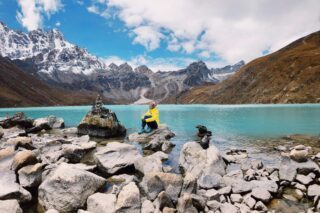
The Gokyo Lakes create a very different atmosphere from the rocky upper Khumbu. Their colour, scale, and setting beside the village of Gokyo provide a natural focal point that is distinct from the historical and emotional appeal of Base Camp.
The route also gives you a greater sense of progression. You move through forests, river valleys, Sherpa settlements, glacial terrain, lakes, a high pass, and finally the landscape beneath Everest.
For a time poor professional taking one significant journey to Nepal, that variety can make the additional days worthwhile. You are not simply extending the same trek. You are adding a second valley and a meaningfully different mountain experience.
Are there really fewer crowds?
The Gokyo section is usually quieter than the classic trail between Namche, Tengboche, and Everest Base Camp. Once you leave the shared route above Namche, the volume of trekkers generally falls and the experience can feel calmer.
Quieter does not mean empty. Gokyo is an established trekking destination, and its limited tea houses can still become busy during the main spring and autumn seasons.
The final section near Lobuche, Gorak Shep, and Everest Base Camp rejoins the classic trail. You should expect more people once you enter this part of the route.
The honest advantage is therefore not a crowd free Everest Base Camp trek. It is the opportunity to spend a meaningful part of the journey away from the busiest corridor before still experiencing EBC.
How does the Gokyo to EBC route work?
A Gokyo to EBC route normally begins with a gradual journey from Lukla to Namche Bazaar. An acclimatisation day around Namche helps prepare the body before the route moves higher.
From Namche, the trail turns towards Dole and Machhermo before reaching Gokyo. Most well designed itineraries include time in Gokyo for acclimatisation and an ascent of Gokyo Ri.
The route then crosses the Ngozumpa Glacier to reach Thagnak. From there, a long mountain day crosses Cho La and descends towards Dzongla, followed by Lobuche and the main Everest Base Camp trail.
A typical combined itinerary covers approximately 15 mountain stages, although the final pacing should reflect acclimatisation, conditions, and the needs of the group. A representative sequence looks like this:
- Lukla to Phakding
- Phakding to Namche Bazaar
- Acclimatisation in Namche
- Namche to Dole
- Dole to Machhermo
- Machhermo to Gokyo
- Gokyo Ri and acclimatisation
- Gokyo to Thagnak across the Ngozumpa Glacier
- Cho La Pass to Dzongla
- Dzongla to Lobuche
- Lobuche to Gorak Shep and Everest Base Camp
- Kala Patthar and the beginning of the descent
- Descent through the Khumbu Valley
- Return to Namche Bazaar
- Return to Lukla
This is an illustrative structure rather than a fixed itinerary. A responsible programme may add acclimatisation, contingency, or shorter stages based on the group and the expected conditions.
Is it better to visit Gokyo or Everest Base Camp first?
Many combined itineraries visit Gokyo first, cross Cho La towards Dzongla, and then continue to Everest Base Camp. This gives the journey a strong scenic progression and allows trekkers to spend time at Gokyo before attempting the pass.
Other itineraries reach Everest Base Camp first and cross Cho La towards Gokyo on the return. The Nepal Tourism Board describes this as an established way of adding Gokyo to an EBC journey and identifies Cho La as the connection between the Gokyo Valley and the Khumbu Valley near Lobuche.
Neither direction is automatically correct for every group. Acclimatisation, lodge availability, weather, snow conditions, group fitness, and operational planning all affect the decision.
Be cautious of choosing an itinerary simply because someone describes one direction as easier. The quality of the pacing and contingency plan matters more than the direction alone.
How difficult is Everest Base Camp via Gokyo Lakes?
Everest Base Camp via Gokyo Lakes is more demanding than the classic EBC trek. The extra difficulty comes from the longer duration, additional days at altitude, glacier terrain, and the crossing of Cho La.
Cho La is not normally a technical climb, but it is a serious mountain pass. Snow, ice, cold temperatures, loose ground, and changing weather can make the crossing significantly harder.
Trekkers should be ready for repeated walking days of approximately five to eight hours. The Cho La crossing may take longer, depending on the starting point, group pace, and trail conditions.
The route reaches several significant elevations:
- Gokyo village sits at approximately 4,756 metres
- Gokyo Ri reaches approximately 5,357 metres
- Cho La reaches approximately 5,420 metres
- Everest Base Camp sits at approximately 5,364 metres
- Kala Patthar rises above 5,500 metres
You do not need to be a mountaineer, but you should arrive with strong walking fitness and experience of consecutive hiking days. Our guide to Everest Base Camp trek difficulty explains how altitude, recovery, terrain, and daily effort affect a first time trekker.
Can a beginner trek EBC via Gokyo?
A fit and well prepared first time high altitude trekker can complete the route with appropriate support. Being new to altitude does not have to mean being new to long distance walking.
The route is not ideal as your first ever multi day trek. Before travelling to Nepal, you should know that you can walk for several hours, recover overnight, and repeat the effort over multiple days.
Training should include regular hills, long walks, leg strength, balance, and time carrying the daypack you will use in Nepal. Fitness cannot prevent altitude sickness, but it helps you cope with the physical workload while your body adapts.
At Life Happens Outdoors, we guide first time trekkers through Nepal and design itineraries around acclimatisation, steady pacing, preparation, and support. The aim is not to make a demanding route sound easy. It is to give the right person a clear and achievable path into the Himalayas.
Altitude, weather, and safety
The combined route spends more time above 4,000 metres than many introductory treks. A gradual ascent, sensible sleeping elevations, acclimatisation days, hydration, regular communication, and conservative decision making are essential.
Anyone can develop altitude symptoms, regardless of age or fitness. Headache, unusual fatigue, nausea, dizziness, poor sleep, and loss of appetite should be reported early rather than hidden.
Our guide to altitude sickness on the Everest Base Camp trek explains the symptoms and the importance of responding before a condition becomes more serious.
Cho La adds a second layer of uncertainty because pass conditions can change. If the crossing is unsafe, the correct decision may be to change the route or remove one objective rather than force the original plan.
This is one reason why a combined itinerary needs contingency. A schedule that works only when every flight, acclimatisation day, and mountain crossing goes perfectly is not a strong schedule.
Accommodation and practical logistics
The route uses tea houses rather than tents. These locally run mountain lodges provide a room, meals, and a shared place to rest, although comfort becomes more basic as the route climbs higher.
Rooms are generally simple and may not be heated. Charging, showers, and internet access can be limited or carry an additional cost, especially around Gokyo, Thagnak, Lobuche, and Gorak Shep.
A porter can carry your main duffel while you walk with a daypack containing water, warm layers, waterproofs, snacks, and personal essentials. Porter support makes the journey more comfortable, but it does not remove the need to train.
Lukla flights are highly dependent on weather and visibility. A well planned trip should include realistic contingency rather than scheduling an international departure immediately after the expected return from the mountains.
Required park documents and trekking arrangements should be confirmed before departure. Rules can change, so travelling with a registered operator removes much of the uncertainty around permits, licensed guides, local logistics, and current requirements.
Your travel insurance should explicitly cover trekking at the highest elevation in the itinerary and emergency evacuation from a remote mountain environment. General travel insurance may not automatically provide sufficient high altitude cover.
How long does EBC via Gokyo take?
Most combined routes require approximately 14 to 16 days in the mountains, depending on the direction, acclimatisation schedule, side trips, and descent plan. International travellers should normally allow around two and a half to three weeks once Kathmandu, flights, preparation, and contingency are included.
Published route distances vary considerably. Figures of approximately 112 to 140 kilometres are common because some measurements include Gokyo Ri, Kala Patthar, acclimatisation walks, and different return routes while others do not.
Duration is the more useful planning measure. At high altitude, the shortest itinerary is rarely the best itinerary.
When is the best time to trek?
The best periods are normally spring, from March to May, and autumn, particularly October and November. These seasons generally provide the most reliable combination of visibility, trail access, and operating tea houses.
Autumn often brings clear mountain views and dry trails. Spring can bring slightly warmer conditions, longer daylight, and changing amounts of snow on the higher passes.
Cho La deserves special consideration because conditions can differ from the lower valleys. A clear trail near Namche does not guarantee a straightforward pass crossing several days later.
Winter can be very cold, with greater potential for snow and limited services. The summer monsoon brings cloud, rain, reduced mountain visibility, and additional disruption around Lukla.
For a fuller seasonal comparison, read our guide to the best time to visit Nepal.
How much does Everest Base Camp via Gokyo cost?
A combined Gokyo and Everest Base Camp itinerary will normally cost more than a standalone EBC trek because it requires additional mountain days, accommodation, guide and porter support, and more complex logistics. This comparison relates specifically to combining both destinations, not to the relative prices of LHO’s standalone Gokyo and EBC trips.
There is no fixed universal price for every Gokyo to EBC route. Group size, route direction, flight arrangements, tea house standards, porter support, contingency, and the precise number of mountain days all affect the final cost.
Because Life Happens Outdoors does not currently operate this Cho La based combination as a fixed departure, the most useful next step is to request a proposed itinerary and complete quotation. This allows you to compare the combined journey fairly with the standalone Gokyo and EBC programmes.
Ask whether the price includes:
- Kathmandu accommodation
- Lukla flights and any planned helicopter sector
- Tea house accommodation
- Meals on the trek
- Guides and porters
- Required permits
- Contingency days
- Airport transfers
- Equipment or sleeping bag hire
- Staff insurance and porter provision
The combined route can represent excellent experiential value, but it is not a budget shortcut. Its value comes from seeing substantially more of the Everest region within one carefully planned journey.
You can speak to the Life Happens Outdoors team if you would like us to explain what a combined itinerary could include and how it would compare with the current standalone routes.
Is Everest Base Camp via Gokyo Lakes worth it?
For trekkers with the time and fitness, Everest Base Camp via Gokyo Lakes is one of the most complete trekking journeys in the Everest region. It brings together the emotional significance of Base Camp, the panorama from Gokyo Ri, the quieter Gokyo Valley, and the challenge of Cho La.
It is worth the additional time if scenery, variety, and a more complete circuit matter more to you than reaching EBC by the simplest route. It is not automatically better for someone who values predictability, has limited leave, or wants a gentler introduction to high altitude trekking.
The right question is not simply whether the Gokyo route is better. It is whether it is better for your experience, available time, fitness, and reasons for going to Nepal.
Frequently Asked Questions
Is EBC via Gokyo better than the classic EBC route?
EBC via Gokyo is usually better for trekkers who want greater scenery, quieter sections, less repeated trail, and a more varied journey. Classic EBC is better for people who want the clearest and most direct established route to Base Camp. The combined route offers more breadth, but it requires additional time, stronger fitness, and the crossing of Cho La.
Can you combine Gokyo and Everest Base Camp?
Yes. Gokyo and Everest Base Camp are commonly combined by crossing Cho La Pass between the Gokyo Valley and the main Khumbu trail near Lobuche. The combined route normally includes Gokyo Ri, Everest Base Camp, and often Kala Patthar.
How long is Everest Base Camp via Gokyo Lakes?
Most itineraries require around 14 to 16 mountain days. You should normally allow around two and a half to three weeks for the complete Nepal journey, including Kathmandu, Lukla transport, preparation, and contingency. Shorter plans may remove important acclimatisation or flexibility.
How hard is the Gokyo to EBC route?
The route is challenging because of the altitude, consecutive trekking days, glacier terrain, and Cho La crossing. It does not normally require technical climbing, but snow and ice can make the pass considerably more serious. Strong hiking fitness and careful acclimatisation are essential.
Is EBC via Gokyo suitable for beginners?
It can suit a fit first time high altitude trekker who has prepared for consecutive walking days. It is less suitable for someone attempting their first multi day hike. Guided support, appropriate pacing, and an honest assessment of fitness make a significant difference.
What is the best time for EBC via Gokyo?
The main trekking seasons are spring from March to May and autumn, particularly October and November. Autumn often provides clear views, while spring can offer warmer daytime conditions. Cho La conditions should always be assessed separately from the weather lower in the valley.
How much does EBC via Gokyo cost?
It normally costs more than a standalone EBC itinerary because the journey is longer and requires additional accommodation, support, and logistics. Prices vary according to inclusions, group size, flights, porter support, and tea house standards. Request a complete quotation and compare what is included rather than relying on the headline price.
Is Cho La Pass safe?
Cho La can be crossed safely in suitable conditions with the right preparation, equipment, pacing, and local judgement. It can become hazardous in snow, ice, poor visibility, or severe weather. A responsible itinerary must allow the team to change plans if the pass is not appropriate.
What Comes Next?
If you want to combine Gokyo Lakes, Cho La, and Everest Base Camp within one journey, speak to the Life Happens Outdoors team. We can assess your available time, fitness, previous trekking experience, and comfort expectations before proposing the right structure.
It is important to distinguish this combined route from our current Gokyo Lakes Trek. The standalone LHO Gokyo itinerary climbs Gokyo Ri, crosses Renjo La, and returns through Lumdeng and Thame. It does not cross Cho La or continue to Everest Base Camp.
The Everest Base Camp Trek follows the classic Khumbu route without visiting Gokyo. The consultation is therefore the correct starting point if you want both experiences combined rather than either existing standalone departure.
If you are already wondering what may come after high altitude trekking, explore the full Island Peak experience. Island Peak adds technical training and a genuine Himalayan summit objective, turning an Everest region trek into the next stage of your progression.
The right journey should stretch you without asking you to pretend that the challenge is smaller than it is. Choose carefully, prepare properly, and Nepal can become the place where you come back different.
This article was reviewed for trekking accuracy by Shiva Raj Bastakoti, a Nepalese Trekking Guide licensed by Nepal’s Department of Tourism (Licence No. 2997).
Expert review
Reviewed by
Dr. Nima Namgyal Sherpa
Mountaineering guide and expedition doctor
Dr. Nima is LHO’s high-altitude and wilderness medicine reviewer. He has reviewed the altitude-related medical and physiological guidance in this article.
CONTINUE YOUR RESEARCH






ABOUT THE AUTHOR

Rami Rasamny
Rami Rasamny is the founder of Life Happens Outdoors, a premium adventure travel company that uses the outdoors as a catalyst for human transformation. His work brings people into the mountains not only for challenge, but for clarity, confidence, and connection. He believes that when people answer the call to adventure truthfully, they come back different.