Mountains & Peaks | BY Rami Rasamny | PUBLISH DATE: June 25 2026 | READ TIME: 14 mins | UPDATED DATE: September 23 2026
Island Peak Climb: Route, Itinerary and Expedition Guide

DOWNLOAD YOUR Island Peak Expedition GUIDEBOOK
An Island Peak climb is a guided Himalayan mountaineering journey for fit trekkers who want to progress beyond trekking. Island Peak, also known as Imja Tse, rises to 6,189 metres in Nepal’s Everest region. A typical expedition combines the Khumbu trail, Everest Base Camp, technical training, Island Peak Base Camp and a summit attempt using […]
An Island Peak climb is a guided Himalayan mountaineering journey for fit trekkers who want to progress beyond trekking. Island Peak, also known as Imja Tse, rises to 6,189 metres in Nepal’s Everest region. A typical expedition combines the Khumbu trail, Everest Base Camp, technical training, Island Peak Base Camp and a summit attempt using crampons and fixed ropes.
At Life Happens Outdoors, we see Island Peak as the point where trekking becomes mountaineering. This guide explains the route, itinerary, acclimatisation, logistics, seasons and support structure so you can understand how the complete expedition fits together.
If your main question is how difficult the climb feels, read our detailed Island Peak difficulty guide.
Jump to: Route overview · Summit route · 20-day itinerary · Equipment and skills
Who is an Island Peak climb for?
Island Peak is designed for fit trekkers who want to step into Himalayan climbing with structured preparation and professional support. It often suits people who have completed a high altitude trek or another multi day mountain journey and now want to learn how to use crampons, fixed ropes and other mountaineering equipment.
You do not need to arrive as an expert climber, but you should be comfortable with sustained effort, simple mountain accommodation and following guide instructions. Island Peak is not the right objective for someone looking for a casual trek or unwilling to prepare consistently.
For the wider Nepal progression, explore our Nepal trekking and mountaineering hub. If you are already considering the guided experience, visit the Island Peak Expedition page.
Where is Island Peak?
Island Peak, also known as Imja Tse, rises to 6,189 metres in Nepal’s Everest region. It stands in the Imja Valley near Chukung, with Lhotse rising to the north and Ama Dablam shaping much of the approach.
Most expeditions reach the mountain through the Khumbu. The journey begins with access to Lukla, then follows the trail through settlements including Phakding, Namche Bazaar, Tengboche and Dingboche before continuing towards Chukung and Island Peak Base Camp.
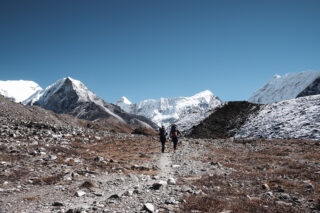
The location is part of the appeal. Island Peak is not an isolated climbing day added to a short holiday. The approach gives you time among the villages, trails and high mountain landscapes of the Everest region before trekking changes into mountaineering.
Island Peak route overview
The standard Island Peak route sits in the Everest region of Nepal. Most guided expeditions begin with the journey from Kathmandu to Lukla, then follow the classic Khumbu trail through villages such as Phakding, Namche Bazaar, Tengboche, Dingboche, and Chukung before moving toward Island Peak Base Camp.
A well designed Island Peak itinerary often includes Everest Base Camp and the option to climb Kala Patthar before Island Peak. This is not only for scenery. It also helps with acclimatisation by giving your body more time at altitude before the summit attempt. A slower approach usually gives climbers a better chance of arriving at Base Camp prepared rather than rushed.
The climbing section begins from Island Peak Base Camp on a very early summit push, usually around midnight. From there, climbers move over rocky ground, onto glacier terrain, then toward the steep headwall below the summit ridge. The final section involves fixed ropes and careful movement at altitude.
Taken together, the approach and summit route make Island Peak a full expedition rather than a single climbing day. The exact line across the glacier and upper mountain can change according to snow, ice and weather conditions, so route decisions remain guide led.
Island Peak compared with Everest Base Camp
Everest Base Camp is a high altitude trekking journey. You walk on trails, sleep in tea houses, and reach an iconic destination rather than a summit. Island Peak includes much of the same Khumbu approach, but then adds Base Camp life, climbing equipment, glacier terrain, fixed ropes, and a summit above 6,000 metres.
That distinction matters. If you want the Everest region experience without technical climbing, the classic Everest Base Camp trek may be the right choice. If you want to move from trekking into mountaineering, Island Peak is the more complete challenge.
If you are comparing Island Peak with a more technical Himalayan objective, read Island Peak versus Lobuche East. That comparison should help you decide whether Island Peak or Lobuche East is the better next step for your experience level.
Understanding the Island Peak challenge
Island Peak combines altitude, endurance, glacier travel and fixed rope movement. It can suit a fit, well prepared first time mountaineer with professional support, but it should not be treated as an easy extension of Everest Base Camp.
The challenge comes from managing several demands together during summit day rather than from one isolated obstacle. For a detailed breakdown of the technical sections, who tends to struggle and what the mountain actually feels like, read our guide to how hard Island Peak really is.
What makes Island Peak a mountaineering expedition?
Island Peak goes beyond high-altitude trekking because the summit route can involve glacier travel, roped movement, crampons, a climbing harness, a jumar on fixed ropes and controlled descent from steeper ground.
The transition is gradual. On the approach, you are trekking between tea houses. At Base Camp, the rhythm changes. Equipment is checked, the climbing team reviews current conditions and you prepare for a very early summit departure. Above crampon point, movement becomes more deliberate and guide-led.
That change is exactly why Island Peak can be such a meaningful first Himalayan climb. You experience the discipline of an expedition without pretending that one training session makes the mountain simple.
Training for the Island Peak expedition
Island Peak training should prepare you for sustained effort across several days, a long summit day, uneven terrain, cold conditions and technical movement at altitude. Build aerobic endurance, uphill strength, leg and core stability, and the ability to move for several hours on consecutive days.
You should also become comfortable wearing mountain boots and handling basic climbing equipment. Technical familiarity can reduce uncertainty, but it does not replace fitness, acclimatisation or the ability to follow guide instructions when tired.
Use our complete how to train for Island Peak for the week by week schedule, strength sessions and final preparation checklist. Our high altitude preparation guide explains why being fit and being acclimatised are related but separate parts of Himalayan preparation.
What does the Island Peak summit route involve?
Summit day normally begins at Island Peak Base Camp around midnight. Climbers initially follow a dry trail across the southeastern slopes of the mountain. As the route becomes steeper, it moves through switchbacks and a rocky section before reaching crampon point, often around sunrise.
At crampon point, the team puts on the technical equipment required by the conditions. From here, climbers follow the guide team onto glacier terrain. The route can include fixed lines, bridges, short roped descents and changes of direction as the team moves through the ice formations towards the upper plateau.
After crossing the more open snow and glacier terrain, climbers reach the Island Peak headwall. Fixed ropes and a jumar help the team ascend this steeper section with controlled, steady movement. The headwall leads to the summit ridge, where altitude, exposure and careful foot placement remain important until the final steps to the summit.
Reaching the summit is only half the climb. The descent requires the same concentration. The guide team manages spacing, rope systems, abseils where required, turnaround decisions and the return through the glacier to Base Camp.
Snow, ice, crevasses and rope placements can change between expeditions. This description explains the normal Island Peak route, but the Nepal climbing team decides the exact line and safety systems used on the day.
Does the Island Peak route use a High Camp?
Some Island Peak itineraries include a High Camp to shorten part of summit day. The current Life Happens Outdoors expedition follows the published plan from Island Peak Base Camp, so climbers should prepare for the full summit day described in the live itinerary.
Camp strategy can change with conditions and operational decisions. Always use the current Island Peak expedition page as the source of truth for the itinerary being sold.
Typical Island Peak itinerary and logistics
LHO’s published 20-day itinerary at a glance
| Days | Route and focus |
|---|---|
| 1–2 | Arrive in Kathmandu, meet the team, check equipment and prepare for the Lukla journey. |
| 3–9 | Travel to Lukla and trek through the Khumbu to Lobuche, with acclimatisation days in Namche Bazaar and Dingboche. |
| 10 | Visit Everest Base Camp; Kala Patthar is optional, depending on conditions, timing and energy. |
| 11–12 | Return through Dingboche to Chukung and begin technical climbing training. |
| 13 | Move to Island Peak Base Camp for further technical training and summit preparation. |
| 14–15 | Summit attempt and a reserve summit or recovery day, with the final plan decided by the climbing guides. |
| 16–18 | Descend through the Khumbu and trek back to Lukla. |
| 19–20 | Return to Kathmandu and depart after the expedition. |
This summarises the standard expedition published on 20 September 2026. Weather, route conditions and the team’s progress can change the daily plan. See the full current Island Peak itinerary and inclusions and exclusions before booking.
A properly acclimatised Island Peak expedition is usually around 20 days when it includes the Khumbu approach, Everest Base Camp, the option of Kala Patthar, technical training, Island Peak Base Camp, a summit attempt, weather contingency and return travel. This length matters because the mountain deserves time rather than speed.
The journey normally begins with arrival and preparation in Kathmandu before travelling to Lukla and following the Khumbu trail. The approach builds altitude gradually through Namche Bazaar, Tengboche and Dingboche before continuing towards Chukung. After the Everest Base Camp and Kala Patthar phase, the team moves into technical training, Base Camp preparation and the Island Peak summit phase.
What is life like at Island Peak Base Camp?
At Island Peak Base Camp, accommodation changes from tea houses to technical mountaineering tents. After arriving, the team eats, settles in and completes the second stage of technical training, focusing on efficient fixed rope movement and crampon technique. An early dinner creates as much time as possible to rest before the summit window.
The climbing guides decide whether the team attempts the summit the following day or spends an additional day training and resting. That decision considers the weather, route conditions, any further training needs and the energy levels of the team.
The exact itinerary, transport arrangements, accommodation, inclusions and climbing plan can change between departures. Review the current Island Peak expedition for the live day by day itinerary, dates, prices, inclusions and booking information.
What is the best time to climb Island Peak?
The main Island Peak climbing seasons are spring and autumn. Spring expeditions generally operate from March to May, while the autumn season normally runs from late September to November.
Spring can bring comparatively warmer climbing conditions, while autumn often brings clear post monsoon views and colder nights. Conditions vary between years and expeditions, so the month alone cannot guarantee weather, snow or route quality. Check the live expedition page for current departure dates and rely on the Nepal climbing team for condition specific decisions.
Technical equipment and skills you will use
The exact equipment and rope systems depend on current mountain conditions and the decisions of the climbing team. On a guided Island Peak expedition, climbers should expect to use or become familiar with:
- Mountaineering boots and crampons for snow and ice.
- A climbing harness, helmet and safety attachments.
- An ice axe for balance and security.
- Fixed ropes on the steeper upper section.
- A jumar for ascending fixed ropes efficiently.
- A suitable descending device for controlled descents.
- Rope spacing and guide instructions during glacier travel.
Personal boots, clothing and non technical equipment also require careful planning. Technical items can be rented in Chukung where required, but fit sensitive items should be chosen and tested in advance. Use the current expedition guidance and the Life Happens Outdoors gear check rather than relying on a generic equipment list.
Technical training is not a substitute for fitness, acclimatisation or judgement. Its purpose is to help you use the equipment calmly and efficiently when you are cold, tired and above 6,000 metres.
The current Life Happens Outdoors itinerary includes technical training before the summit phase. The climbing team will still determine the equipment, rope system and movement techniques required by the conditions.
Guided versus independent for Island Peak
Island Peak is not an objective we would frame as an independent beginner climb. Even experienced trekkers should think carefully before treating it like a simple add on to an Everest region itinerary. The mountain involves permits, technical equipment, route management, glacier travel, fixed ropes, weather decisions, altitude response, and emergency planning.
A guided Island Peak climb gives you structure. It helps with logistics, pacing, acclimatisation, equipment, instruction, and safety decisions. It also allows you to focus more fully on the experience rather than carrying every operational concern yourself.
A guided climb is especially valuable if it is your first Himalayan climb, if you have not used fixed ropes before, or if you are unsure how to manage altitude risk. Going guided does not remove the challenge. You still have to train, carry yourself well, and make the effort. What it changes is the quality of decision making and support around you.
If you want to understand the wider question of guided versus independent travel in Nepal, read Everest Base Camp Guided Trek or Independent EBC Trek. The same principle becomes even more important once a trek becomes a technical climb.

What does an Island Peak climb feel like?
The expedition changes character several times. The lower Khumbu is social and cultural, with villages, tea houses and familiar trekking trails. Higher up, the air becomes thinner, the nights colder and the pace more deliberate. At Base Camp, tents, equipment checks and a midnight departure make the objective feel unmistakably different from a trek.
Summit day is long and cumulative. Rocky ground leads towards the glacier. Crampons, rope systems and spacing require concentration. The headwall demands steady movement when energy is already limited, and the summit ridge adds exposure before the descent asks you to remain precise.
The strongest memory is rarely one isolated obstacle. It is the complete transition from walker to climber, supported by a team but earned through preparation and personal effort.

Is Island Peak worth it?
Island Peak is worth it if you want more than a trek and are ready to step into real Himalayan climbing. It gives you a rare combination of the Khumbu trail, Sherpa culture, Everest region scenery, technical learning, expedition life, and a summit above 6,000 metres.
For many people, the value is not only the summit. It is the moment they realise they are capable of entering a bigger world. The trek into the Khumbu gives you time to adjust. The training gives you new skills. The climb asks for patience and courage. The descent teaches humility. The whole journey can change how you see yourself.
That is why Island Peak sits naturally within the Life Happens Outdoors mission. It is not about proving something to the mountain. It is about answering the call to adventure with preparation, support, and respect, then coming back different.
What comes next
If Island Peak feels like the right first Himalayan climb, your next step is to explore the Island Peak Expedition and speak with the Life Happens Outdoors team. We can help you understand the route, training expectations, equipment, itinerary, dates, and whether this objective matches your current experience.
If you are still comparing first Himalayan peaks, your next research step should be Island Peak versus Lobuche East. Lobuche East can be a powerful next objective for climbers who want something more technical after Island Peak, or for those who already have stronger alpine experience.
You do not need to have all the answers before enquiring. You need to be honest about where you are starting from, open to training, and ready to prepare properly. If that sounds like you, Island Peak may be the climb that turns a dream of the Himalayas into something real.
FAQs about the Island Peak climb
How high is Island Peak?
Island Peak, also known as Imja Tse, is 6,189 metres high. Its altitude makes acclimatisation, pacing and itinerary design important parts of the full expedition.
Is Island Peak difficult?
Yes, Island Peak is difficult because it combines high altitude, a long summit day, glacier travel, fixed ropes, cold conditions, and a steep headwall. It is more demanding than a trek such as Everest Base Camp because you are not only walking at altitude. You are also using mountaineering equipment and moving through technical terrain. With training and a strong guide team, it is achievable for fit first time climbers, but it should never be treated as easy.
Where is Island Peak?
Island Peak is in Nepal’s Everest region, close to Chukung and the Imja Valley. Most expeditions reach it through the Khumbu after travelling from Kathmandu to Lukla.
What is the Island Peak route?
The route normally follows the Khumbu trail through Namche Bazaar, Tengboche and Dingboche before continuing to Chukung and Island Peak Base Camp. Many itineraries include Everest Base Camp and the option of Kala Patthar before the climb. The summit route moves over rocky ground, glacier terrain, a fixed rope headwall and the final summit ridge.
How long does an Island Peak expedition take?
A properly acclimatised Island Peak expedition is usually around 20 days when it includes the Khumbu approach, Everest Base Camp, technical training, Base Camp, a summit attempt, weather contingency and return travel. The mountain should be understood as a complete expedition rather than a standalone summit day.
When is the best time to climb Island Peak?
The main Island Peak climbing seasons are spring and autumn. Spring generally brings warmer climbing conditions, while autumn often brings clearer post-monsoon views and colder nights. Snow, ice, glacier features and weather vary between seasons and individual expeditions, so the route and summit decision always remain condition-dependent and guide-led.
Why climb Island Peak with a guide?
A guided Island Peak expedition provides route management, technical instruction, equipment checks, glacier leadership, fixed rope support, weather assessment, pacing and turnaround decisions. Guides do not remove the mountain’s risks, but experienced leadership helps manage them and gives climbers a clearer structure throughout the expedition.
Does Island Peak have a High Camp?
Some Island Peak routes use a High Camp, while others attempt the summit directly from Base Camp. The current Life Happens Outdoors itinerary follows the published summit plan from Island Peak Base Camp. Because camp strategy can change, check the live expedition itinerary for the departure you are considering.
This article was reviewed for Nepal mountaineering accuracy by Lakpa Tsheri Sherpa, a senior Nepalese high-altitude guide and Nepal Mountaineering Association-registered Sardar (Registration No. 592).
Expert review
Reviewed by
Dr. Nima Namgyal Sherpa
Mountaineering guide and expedition doctor
Dr. Nima is LHO’s high-altitude and wilderness medicine reviewer. He has reviewed the altitude-related medical and physiological guidance in this article.
CONTINUE YOUR RESEARCH





ABOUT THE AUTHOR

Rami Rasamny
Rami Rasamny is the founder of Life Happens Outdoors, a premium adventure travel company that uses the outdoors as a catalyst for human transformation. His work brings people into the mountains not only for challenge, but for clarity, confidence, and connection. He believes that when people answer the call to adventure truthfully, they come back different.