Outdoor Skills & Safety | BY Rami Rasamny | PUBLISH DATE: May 28 2025 | READ TIME: 10 mins | UPDATED DATE: August 22 2026
How Difficult Is the Annapurna Base Camp Trek?
DOWNLOAD YOUR Annapurna Base Camp Trek GUIDEBOOK
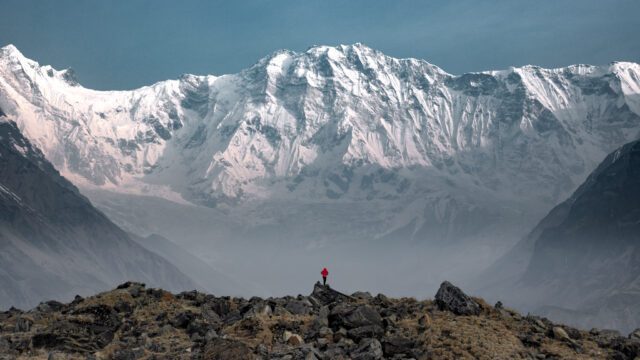
LHO rates the Annapurna Base Camp trek as Moderately Challenging. Understand the stone steps, descents, altitude, fitness and preparation that determine how hard ABC feels.
Life Happens Outdoors rates the Annapurna Base Camp trek as Moderately Challenging.
The route is non technical. You do not need ropes, crampons or mountaineering experience. What makes it difficult is the combination of repeated stone steps, substantial ascent and descent, five consecutive trekking days, changing trail conditions and an upper point of 4,130 metres where altitude can affect anyone. Read our route specific guide to altitude sickness at Annapurna Base Camp before travelling.
An active person who trains consistently can prepare well for ABC. That does not make it easy, and fitness alone cannot predict how someone will respond to altitude.
Annapurna Base Camp difficulty at a glance
| Factor | What to expect on the current LHO itinerary |
|---|---|
| LHO fitness rating | Moderately Challenging |
| Highest point | Annapurna Base Camp at 4,130 metres |
| Technical difficulty | Non technical trekking with no climbing skills required |
| Trekking pattern | Five consecutive trekking days, with repeated stone steps, ascent and descent |
| Hardest current stages | Day 3 from Chhomrong to Himalaya, Day 4 from Himalaya to Annapurna Base Camp, and Day 5 from base camp to Bamboo |
| Main duffle allowance | Up to 12 kg, carried through the supported porter system |
| Day pack | You carry water, layers, waterproofs and personal essentials. Follow the current pre departure guidance rather than a generic fixed weight. |
| Support | Certified local trekking guides and porters, LHO Team Leader coordination and LHO Base Camp support |
The table is a summary, not a guarantee. Weather, trail conditions, individual fitness and altitude response can change how hard the same itinerary feels.

What makes the Annapurna Base Camp trek hard?
Repeated climbs and stone steps
The Annapurna trail rarely feels flat for long. It moves through villages and valleys, descends towards rivers and climbs again towards the next settlement or section of forest.
Stone steps are one of the route’s defining features. They demand strength on the way up and control on the way down. First time trekkers often expect the climbs to be the main problem, then discover that prolonged descending places as much strain on the legs and knees.
This is why stair work, step ups, hillwalking and controlled descending should form part of ABC preparation.
Consecutive trekking days
One long hike does not fully reproduce the challenge of a multi day trek. On ABC, you need to walk again after the previous day’s effort.
Cumulative fatigue changes the experience. Small issues with boots, pacing, nutrition or recovery become more important when they are repeated. Preparation should therefore include longer walks and appropriately planned back to back training rather than only isolated hard workouts.
The upper stage altitude
Annapurna Base Camp sits at 4,130 metres. That is lower than Everest Base Camp, but it is still high enough for acute mountain sickness and other altitude problems to occur.
Physical fitness does not prevent altitude sickness. Hydration supports general wellbeing but does not make someone immune. What matters is following the planned pace, communicating symptoms early and respecting the decisions of the guiding team.
The upper part of the route also brings a noticeable change in environment. The landscape becomes more exposed, the nights colder and the effort more affected by the thinner air.
Read our dedicated guide to altitude sickness at Annapurna Base Camp before travelling.
Trail and weather conditions
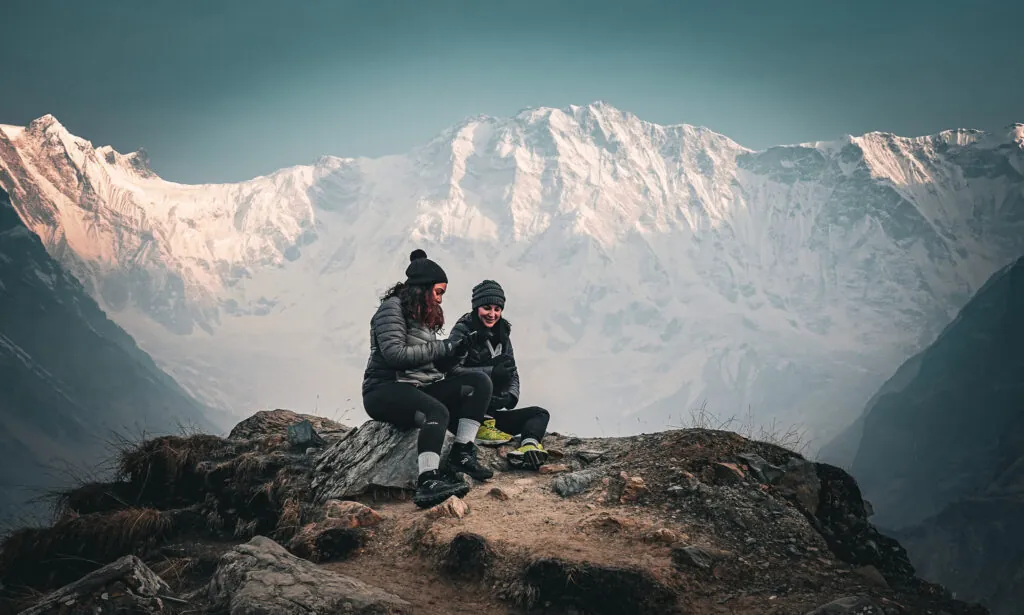
ABC passes through terraced hillsides, forest, rivers and the high Annapurna Sanctuary. Conditions can change significantly across those environments.
Rain can make stone and earth slippery. Colder periods can bring ice or snow higher on the route. Heat and humidity lower down can also increase the effort. The same section may feel very different according to the season and recent weather. Our guide to the best time to visit Nepal explains what each trekking season normally feels like.
A waterproof system, reliable footwear and correctly used trekking poles are therefore practical tools rather than optional decoration. Use our essential Annapurna Base Camp gear list when preparing.
The mental challenge
The trek requires patience. Mountain weather does not follow personal schedules, mobile signal may be limited and teahouse comfort becomes simpler as the route gains height.
The most useful mindset is not aggression or speed. It is the ability to settle into a sustainable rhythm, accept temporary discomfort and keep making sensible decisions when tired.
Which stages are usually the hardest?
The hardest stage depends on the individual, but the current LHO itinerary contains three obvious pressure points.
Day 3, from Chhomrong to Himalaya, covers 12.6 kilometres with 1,300 metres of ascent and 678 metres of descent. It combines descent, a river crossing and renewed ascent as the route passes Upper Sinuwa, Bamboo and Dovan. It can feel longer than a simple distance figure suggests because the route repeatedly gives away and regains height.
Day 4, from Himalaya to Annapurna Base Camp, covers 9 kilometres with 1,800 metres of ascent and 505 metres of descent, reaching 4,130 metres. This brings the greatest altitude exposure. The technical movement remains straightforward, but breathing, appetite and pace can feel different as the group moves through Deurali and Machhapuchhre Base Camp into the high sanctuary.
Day 5, from Annapurna Base Camp to Bamboo, covers 14 kilometres with 572 metres of ascent and 2,380 metres of descent. Losing altitude can feel physically easier at first, but sustained descending loads the knees and requires concentration after the emotional high of reaching ABC.
Day 6 remains a substantial final trekking day, with 9.2 kilometres, 595 metres of ascent and 1,191 metres of descent before Jhinu Hot Springs and the return to Pokhara.
Is the Annapurna Base Camp trek technical?
No. ABC is a trekking route rather than a mountaineering climb. Under normal itinerary conditions, it does not require climbing ropes, crampons, an ice axe or previous technical training.
Non technical does not mean risk free. Slippery stone, snow, uneven ground, altitude and fatigue still require judgement. The route can demand more endurance than many first time trekkers expect.
The relevant skills are practical trekking skills:
- Pacing yourself on long ascents.
- Descending with control.
- Using trekking poles correctly.
- Managing layers before becoming too hot or cold.
- Eating and drinking consistently.
- Looking after feet and minor problems early.
- Communicating symptoms rather than hiding them.
How fit do you need to be?
You do not need elite athletic fitness, but you should arrive with a reliable endurance base and enough leg strength to handle repeated stairs and descents.
A useful readiness test is whether you can complete a sustained hilly walk with good control, recover appropriately and train again the following day. You should also be comfortable using your intended boots and day pack before departure.
Preparation should combine:
- Aerobic endurance.
- Leg and core strength.
- Hills, stairs or step ups.
- Progressively longer walks.
- Back to back training sessions.
- Descending practice.
- Mobility and recovery.
Use the dedicated Annapurna Base Camp training plan rather than trying to turn this difficulty guide into a full programme.
How much does your pack affect the difficulty?
Carrying unnecessary weight makes every stair and descent harder. On the supported LHO trek, the current main duffle allowance is up to 12 kg and porter logistics are included. You carry the essentials needed during the walking day.
Follow the current pre departure guidance rather than a generic online number. Your day pack normally needs to accommodate water, layers, waterproofs, personal items and other equipment specified by the team.
Test the complete system before travelling. A pack that feels acceptable for twenty minutes may create shoulder, back or balance problems after several hours.
How guiding and support change the experience
Guiding does not remove the physical challenge or the effects of altitude. It reduces avoidable uncertainty.
The certified local trekking guides are the main source of route and pacing support on the trail. They work with the porter team, the LHO Team Leader and LHO Base Camp to manage accommodation, logistics and operational decisions when health, weather or trail conditions change. This allows trekkers to focus more attention on movement, recovery and the experience itself.
Good pacing is particularly important. Moving too quickly early in the day rarely creates a useful advantage at altitude. A calm, consistent rhythm protects energy and makes it easier for the team to observe how everyone is responding.
Trekking poles can also make a meaningful difference when used correctly, especially on long descents. They help distribute load and improve stability, but they need to be adjusted and practised with before the hardest stages.

Is Annapurna Base Camp suitable for beginners?
It can be. ABC may suit an active and prepared first time trekker who understands that beginner friendly does not mean easy.
Someone with no mountaineering background can prepare successfully because the trail is non technical. Someone who is unprepared, uncomfortable with consecutive walking days or expecting hotel level comfort may find it a poor first choice.
Read our separate Annapurna Base Camp guide for first timers for the full suitability decision.
How does ABC compare with Everest Base Camp?
ABC is shorter and reaches a lower maximum altitude than Everest Base Camp, but the comparison is not as simple as calling one easy and the other hard.
ABC contains extensive stone steps and significant ascent and descent. Everest Base Camp normally involves more days, greater altitude exposure and a longer expedition style rhythm. The right choice depends on available time, previous experience, fitness and the kind of journey you want.
Read the complete Annapurna Base Camp versus Everest Base Camp comparison or use our Nepal trekking and mountaineering hub to compare the wider range of journeys.
The difficulty verdict
Annapurna Base Camp is a Moderately Challenging, non technical high altitude trek.
Its difficulty comes from endurance rather than climbing skill: repeated stairs, sustained ascent and descent, consecutive days, variable conditions and the way the body responds at 4,130 metres.
For an active person who trains consistently and approaches the route with respect, it can be a realistic goal. The preparation, itinerary and support still matter.
View the current guided Annapurna Base Camp trek, itinerary and dates to assess the actual journey rather than relying on a generic grade.

Frequently asked questions
Is Annapurna Base Camp harder than it looks?
It can be. The route is non technical, but the repeated stone steps, lost and regained height, long descents and consecutive trekking days often make it more demanding than first time trekkers expect.
Is Annapurna Base Camp difficult for a beginner?
It can be an appropriate first major trek for an active beginner who trains consistently and accepts the realities of altitude and mountain accommodation. It should not be described as easy.
Do I need climbing experience?
No. ABC is a trekking route and does not normally require technical climbing skills. Hillwalking experience helps with pacing, equipment and confidence.
Are the stairs the hardest part?
For many people, the repeated stairs and descents are the main physical challenge. For others, cumulative fatigue or altitude is more significant. Preparation should cover all three.
Can fitness prevent altitude sickness?
No. Fitness helps with the walking workload but does not prevent acute mountain sickness. Follow the planned pace and report symptoms promptly.
Do I carry all my luggage?
No. The supported LHO itinerary includes certified local porters and a main duffle allowance of up to 12 kg. You carry the items needed during the walking day.
This article was reviewed for trekking accuracy by Shiva Raj Bastakoti, a Nepalese Trekking Guide licensed by Nepal’s Department of Tourism (Licence No. 2997).
CONTINUE YOUR RESEARCH




ABOUT THE AUTHOR

Rami Rasamny
Rami Rasamny is the founder of Life Happens Outdoors, a premium adventure travel company that uses the outdoors as a catalyst for human transformation. His work brings people into the mountains not only for challenge, but for clarity, confidence, and connection. He believes that when people answer the call to adventure truthfully, they come back different.