Adventure Travel Destinations | BY Rami Rasamny | PUBLISH DATE: June 16 2025 | READ TIME: 11 mins | UPDATED DATE: August 22 2026
Annapurna Base Camp Trek Guide for First-Timers
DOWNLOAD YOUR Annapurna Base Camp Trek GUIDEBOOK
Annapurna Base Camp can be a rewarding first Himalayan trek for active people who prepare properly. This guide explains who it suits, what first-timers find hardest and how to decide whether ABC is right for you.
The Annapurna Base Camp trek can be a rewarding first Himalayan trek for an active person who prepares properly, understands the effects of altitude and is comfortable walking on demanding terrain for several days in a row.
You do not need mountaineering experience or technical climbing skills. You do need consistent fitness, patience on long stair sections, a willingness to accept simpler mountain accommodation and the judgement to speak up early if you feel unwell.
That distinction matters. Annapurna Base Camp is beginner-friendly for the right beginner, but it is not easy and it is not automatically suitable for everyone.
If your first question is about the physical challenge, read our full guide to how difficult the ABC trek is.
What does “beginner-friendly” mean on Annapurna Base Camp?
On a Himalayan trek, “beginner-friendly” does not mean flat, low, comfortable or risk-free. It means that the objective does not require previous climbing experience and that the essential trekking skills can be learned before and during the journey.
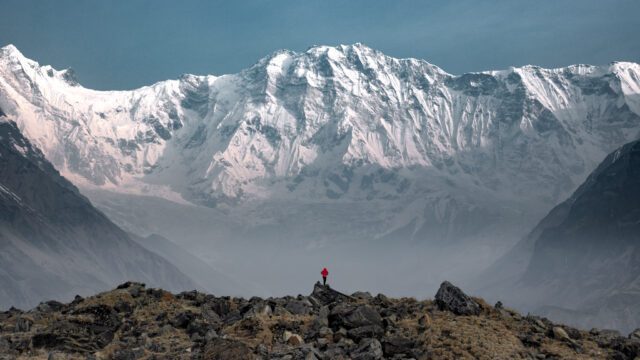
Annapurna Base Camp sits at 4,130 metres inside the Annapurna Sanctuary. The route reaches that height without crampons, ropes or technical climbing, but the challenge comes from repeated ascents and descents, long stone staircases, changing weather, consecutive trekking days and the way altitude can affect energy, appetite and sleep.
For a first-timer, the question is therefore not simply, “Have I trekked before?” It is:
- Am I active and willing to train consistently?
- Can I manage several days of walking without expecting every day to feel comfortable?
- Am I prepared for basic teahouses, shared facilities and changing mountain conditions?
- Will I follow the guide’s pace and communicate symptoms early?
- Do I want a genuine challenge rather than an easy holiday?
If the answer is yes, ABC may be a strong first step into high-altitude trekking.
Who is the Annapurna Base Camp trek suitable for?
ABC can suit first-time trekkers who already have a reasonable base of activity and enough time to prepare. You do not need to be a runner or an experienced mountain athlete, but regular walking, gym training or another form of endurance exercise gives you a better place to start.
It may be particularly well suited to people who:
- Want their first Himalayan journey to feel significant without requiring technical climbing skills.
- Are comfortable training for a clear goal.
- Can accept basic comforts in exchange for extraordinary mountain scenery.
- Prefer a guided and supported experience with logistics handled.
- Have limited annual leave and want a focused eight-day LHO itinerary.
- Enjoy a team environment and understand that the group moves at a sustainable mountain pace.
Previous hiking experience helps, but it is not the only measure of readiness. A first-time trekker who trains consistently, listens well and manages their pace can arrive better prepared than an experienced walker who underestimates the route.
Who should choose a different first trek?
ABC may not be the right first objective if you are currently unable to walk comfortably on hills or stairs, have not allowed enough time to train, dislike basic accommodation or expect the route to feel easy because it is non-technical.
You should also seek appropriate medical advice before committing if you have a health condition that may affect exercise or travel at altitude. A fitness test cannot predict how your body will respond at 4,130 metres.
Choosing another trek first is not a failure. It can be the most intelligent way to build confidence and enjoy the Himalayas. Our guide to the best beginner hikes in Nepal can help you compare other starting points.
What do first-timers usually find hardest?
The stone steps
The Annapurna region is famous for its stone staircases. The repeated climbs can be tiring, but the descents often surprise people even more. They place sustained load on the knees and require concentration when your legs are already tired.
Training on stairs, hills and step-ups is more useful than relying on flat-road fitness alone. Trekking poles can also help when they are fitted and used correctly.
Consecutive days rather than one hard workout
ABC is not about producing one heroic effort. The challenge is waking up and moving again after the previous day’s work. First-timers often discover that recovery, eating, sleep and pacing matter as much as raw fitness.
The upper-stage altitude
At 4,130 metres, Annapurna Base Camp is high enough for altitude to affect anyone. Fitness does not prevent acute mountain sickness, and hydration does not make someone immune to it.
The sensible approach is steady pacing, early communication and following the decisions of the guiding team. Learn the route-specific warning signs in our guide to altitude sickness at Annapurna Base Camp.
Changing comfort
The lower trail feels green, inhabited and culturally rich. Higher up, the accommodation becomes simpler, nights become colder and the environment feels more remote. That progression is part of what makes the journey powerful, but it is easier when you expect it.
The mental rhythm
There will be moments when your legs are tired, the weather is less cooperative or the next staircase feels unnecessary. A good team rhythm helps: walk steadily, eat when you need to eat, rest when it is time to rest and focus on the next manageable part of the day.
What does a normal day feel like?
The day begins with breakfast and a briefing from the trekking team. You prepare the layers, water and essentials needed in your day pack while the main duffle is handled according to the trip’s porter arrangements.
On the trail, the aim is not to race. The group moves at a sustainable pace, stopping for food, water, photographs and the practical checks that help everyone remain steady. The scenery changes constantly, from villages and terraces to forest, rivers and the high walls of the sanctuary.
Each trekking day ends at a teahouse or mountain lodge. Rooms are simple and facilities may be shared, particularly higher on the route. Meals commonly include dishes such as dal bhat, soups, noodles, rice, eggs and potatoes. Consistent eating matters because appetite can change as you gain altitude.
The evening is for warmth, food, recovery and preparing for the next day. It is also where much of the community forms. People arrive with different backgrounds, but the shared effort quickly creates its own rhythm.
How quickly does the trek begin to feel remote?
One of the distinctive qualities of ABC is how quickly the experience changes. The route moves through settlements such as Ghandruk and Chhomrong before entering narrower valleys, bamboo forest and increasingly dramatic mountain terrain.
That creates a strong sense of progression within a relatively compact itinerary. You do not need to spend weeks away to feel that you have entered a very different landscape and way of living.
On the current LHO itinerary, the journey to base camp takes place during the day rather than through a summit-night-style start. After arriving at ABC, the team stays in the sanctuary and can experience the changing light before beginning the descent the following day. Check the live itinerary for the most current route details and inclusions.

Villages, culture and recovery are part of the experience
ABC is not only about the final sign at base camp. Ghandruk and Chhomrong bring the route through communities shaped by the Annapurna landscape. The hospitality, food and daily life in these villages give the trek cultural depth before the scenery becomes more alpine.

The current Life Happens Outdoors itinerary also includes access to the hot springs at Jhinu during the return towards Pokhara. After days of stairs and sustained walking, the change in rhythm is memorable, not because it removes the challenge, but because it gives the body and the group a moment to recognise what they have completed.

How should a first-timer prepare?
Preparation should develop the ability to walk uphill, descend under control and repeat the effort on consecutive days. A useful programme normally combines:
- Regular aerobic training.
- Leg and core strength.
- Step-ups, stairs or hill sessions.
- A progressively longer weekly walk.
- Back-to-back training sessions.
- Practice using your boots, poles and day pack.
- Consistent recovery and sleep.
Avoid leaving the work until the final few weeks. The goal is not to arrive exhausted from training; it is to reach the start with a reliable fitness base and confidence in your equipment.
Use our complete Annapurna Base Camp training plan for the progressive programme.
A practical first-timer readiness check
Before departure, you should be able to:
- Complete a sustained hilly walk without your movement deteriorating badly towards the end.
- Train again the following day at a moderate level.
- Climb and descend stairs with control.
- Walk in your chosen boots without unresolved pain or blisters.
- Carry the day pack specified in your pre-departure information.
- Eat, drink and manage layers while moving.
- Accept that some discomfort is normal while reporting illness or unusual symptoms promptly.
This is not a guarantee of success. It is a practical way to identify gaps while there is still time to address them.
Build your preparation plan with our ABC training guide, altitude guide and route-specific packing list.
What should you pack?
ABC moves through different temperatures and environments, so a layering system matters more than packing for one fixed forecast. Your equipment should cover warm lower sections, rain, colder evenings and sub-zero conditions that may occur higher on the route.
Do not build your kit from this summary. Use the route-specific Annapurna Base Camp packing list and the current LHO pre-departure information.
How long should you allow?
ABC itineraries vary according to the trailhead, transport, side trips and the amount of time included before and after trekking. Life Happens Outdoors currently offers an eight-day airport-to-airport format using domestic flights and a focused route through the Annapurna Sanctuary.
Shorter does not automatically mean easier. The daily ascent, descent and altitude profile still need to be respected. Compare the available formats in our guide to how long the Annapurna Base Camp trek takes.
If you are still deciding when and where to travel, use our best time to visit Nepal guide and explore the wider Life Happens Outdoors Nepal collection.
Is a guided trek better for a first-timer?
A guided and supported trek removes many avoidable decisions. The team manages route logistics, accommodation, porter arrangements, group pace and the response when weather, health or trail conditions change.
Support does not remove the physical work or the effects of altitude. It gives you a clearer structure in which to manage them.
For someone travelling to Nepal for the first time or attempting a first multi-day high-altitude trek, that structure can make the experience more understandable and allow more attention to go towards the journey itself.
So, can a beginner trek to Annapurna Base Camp?
Yes. ABC can be an appropriate first Himalayan trek for an active beginner who trains consistently, accepts the realities of mountain travel and approaches 4,130 metres with respect.
The better question is not whether a generic beginner can do it. It is whether this route, itinerary and level of support match your current fitness, preparation time and appetite for challenge.

If you want to see how Life Happens Outdoors structures the journey, view the guided Annapurna Base Camp trek, itinerary and dates.
Frequently asked questions
Do I need previous trekking experience for Annapurna Base Camp?
No previous mountaineering experience is required, and the route is non-technical. Previous hiking helps, but appropriate fitness, preparation, pacing and the ability to follow guidance matter more than collecting earlier summits.
Is Annapurna Base Camp easy?
No. LHO classifies the trek as Moderately Challenging. It involves repeated ascents and descents, extensive stone steps, consecutive walking days, changing conditions and altitude up to 4,130 metres.
Can an unfit beginner complete ABC?
Someone starting from a low fitness base should not rely on motivation alone. Allow enough time to build aerobic endurance, leg strength and confidence on hills and stairs. If you cannot prepare adequately, choose a later departure or a different first trek.
Will being fit prevent altitude sickness?
No. Physical fitness does not prevent acute mountain sickness. Follow the planned pace, communicate symptoms early and follow the decisions of the guiding team.
How early should I start training?
The right lead time depends on your starting point. Begin early enough to increase your workload progressively rather than cramming preparation into the final weeks. Use the dedicated ABC training plan and seek professional advice where appropriate.
What is the next step if I am unsure?
Read the detailed difficulty and altitude guides, compare your present fitness with the readiness checklist and review the current trip itinerary. You can then speak with the LHO team about whether the departure is a sensible match.
Written by Rami Rasamny.
This article was reviewed for trekking accuracy by Shiva Raj Bastakoti, a Nepalese Trekking Guide licensed by Nepal’s Department of Tourism (Licence No. 2997).
CONTINUE YOUR RESEARCH



ABOUT THE AUTHOR

Rami Rasamny
Rami Rasamny is the founder of Life Happens Outdoors, a premium adventure travel company that uses the outdoors as a catalyst for human transformation. His work brings people into the mountains not only for challenge, but for clarity, confidence, and connection. He believes that when people answer the call to adventure truthfully, they come back different.