Adventure Travel Destinations | BY Rami Rasamny | PUBLISH DATE: May 14 2026 | READ TIME: 16 mins | UPDATED DATE: September 23 2026
Annapurna Base Camp vs Everest Base Camp: Which Nepal Trek Should You Choose?
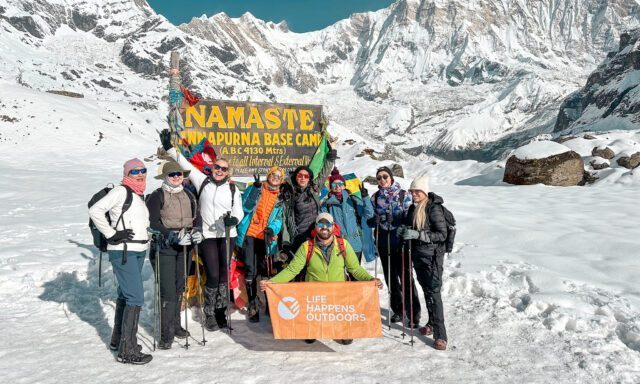
DOWNLOAD YOUR Annapurna Base Camp Trek GUIDEBOOK
If you are choosing between Annapurna Base Camp and Everest Base Camp, choose Annapurna Base Camp if you want the more accessible first Himalayan base camp trek. It is shorter, lower, usually more affordable, and easier to fit into a busy calendar. Choose Everest Base Camp if the Everest story is the reason you are […]
If you are choosing between Annapurna Base Camp and Everest Base Camp, choose Annapurna Base Camp if you want the more accessible first Himalayan base camp trek. It is shorter, lower, usually more affordable, and easier to fit into a busy calendar. Choose Everest Base Camp if the Everest story is the reason you are going, and you are ready for a longer, higher, more committing journey through the Khumbu. For most first time trekkers, Annapurna Base Camp is the better starting point. For people who have always dreamed of Everest, Everest Base Camp is the one.
Both treks are extraordinary. Both take you into the Himalayas. Both give you tea house culture, big mountain scenery, and the feeling of travelling on foot through one of the most powerful landscapes on earth.
Annapurna Base Camp and Everest Base Camp are different destinations in Nepal. Annapurna Base Camp is in the Annapurna Sanctuary, reached via Pokhara, while Everest Base Camp is in the Khumbu region, reached via Lukla.
The Annapurna Base Camp Trek is a shorter journey into the Annapurna Sanctuary, reaching 4,130 metres over an 8 day Life Happens Outdoors itinerary. The Everest Base Camp Trek is a longer 16 day Life Happens Outdoors itinerary through the Khumbu, reaching 5,364 metres with carefully planned acclimatisation and one included helicopter sector between Kathmandu and Lukla, used according to weather and flight operations.
The right choice depends on your time, fitness, budget, altitude experience, and what kind of Nepal experience is calling you.
Quick answer: ABC vs EBC
Choose Annapurna Base Camp if you want the more accessible first Himalayan base camp trek, with lower altitude, a shorter itinerary, and simpler logistics.
Choose Annapurna Base Camp if you want:
- A shorter Nepal trek
- A lower maximum altitude
- A more accessible first Himalayan base camp experience
- A guided tea house trek with beautiful variety
- Strong mountain scenery without the longer altitude commitment of Everest
- A more affordable Nepal trip
- A journey that feels big, but not overwhelming
Choose Everest Base Camp if you want:
- The iconic Nepal trekking experience
- The emotional pull of Mount Everest
- Sherpa culture, Namche Bazaar, monasteries, and the Khumbu Valley
- A longer and more expedition style journey
- More time at altitude
- A bigger physical and psychological objective
- A classic bucket list trek that many people remember for life
If both treks excite you equally, choose Annapurna Base Camp first. If Everest has lived in your imagination for years, choose Everest Base Camp, but give it the time, training, and respect it deserves.
Annapurna Base Camp vs Everest Base Camp comparison table
| Category | Annapurna Base Camp | Everest Base Camp |
| Best for | First time Himalayan trekkers who want a shorter and more accessible base camp trek | Trekkers who want the iconic Everest journey and are ready for a longer commitment |
| Life Happens Outdoors duration | 8 day guided tea house trek | 16 day guided tea house trek with one Kathmandu to Lukla helicopter sector included |
| Base camp elevation | 4,130 metres | 5,364 metres |
| Difficulty level | Moderately challenging | Challenging |
| Day to day feel | Can feel intense because of steep steps and concentrated elevation change | More sustained because of length, altitude, and repeated trekking days |
| Main challenge | Steep ascents, descents, stone steps, and adapting to trail rhythm | Altitude, endurance, colder conditions, and time at high elevation |
| Training expectation | Several weeks of consistent walking, stairs, and hill training | A longer preparation window with endurance walking, stairs, and back to back effort |
| Access | Flight to Pokhara, then road transfer to the trailhead | Everest region aviation via Lukla, with one Kathmandu to Lukla helicopter sector included on the LHO itinerary |
| Landscape | Forest trails, villages, rivers, stone steps, and the Annapurna Sanctuary | Sherpa villages, suspension bridges, monasteries, high valleys, and Everest region mountain views |
| Cultural feel | Annapurna region village life and mountain hospitality | Sherpa culture, Buddhist monasteries, and Everest history |
| LHO from price | From £1,725 early bird | From £3,151 early bird |
| Best season | Spring and autumn are generally the strongest trekking seasons | Spring and autumn are generally the strongest trekking seasons, with autumn often quieter than peak Everest climbing season |
| Our short recommendation | Best first Nepal base camp trek for most people | Best choice if Everest is the dream |
Prices listed above are live LHO from prices at the time of drafting. Always check the trip pages for current dates, availability, inclusions, and pricing.
The core difference between ABC and EBC
The biggest difference between Annapurna Base Camp and Everest Base Camp is commitment.
Annapurna Base Camp is shorter, lower, and easier to fit into a normal holiday window. It still feels like a real Himalayan journey, but the altitude exposure is lower and the total itinerary is much shorter. On the Life Happens Outdoors Annapurna Base Camp Trek, the route reaches 4,130 metres and includes Kathmandu, Pokhara, the Annapurna Sanctuary, tea houses, local guides, porters, permits, and support from the LHO team.
Everest Base Camp is longer, higher, and more demanding overall. The Life Happens Outdoors Everest Base Camp Trek runs for 16 days and includes carefully planned acclimatisation, local guides and porters, tea house accommodation, Kathmandu hotel stays, ground logistics, required permits, and one helicopter sector between Kathmandu and Lukla to reduce the risk of disruption around one of Nepal’s most weather sensitive airport links.
In plain English, Annapurna Base Camp is the better first Himalayan base camp trek for most people. Everest Base Camp is the bigger objective if the Everest story is what pulls you to Nepal.

Difficulty comparison: which trek is harder?
Everest Base Camp is harder overall, but Annapurna Base Camp can feel intense day to day.
This is the nuance that matters.
Annapurna Base Camp is shorter and lower, which makes it more accessible for most first time Himalayan trekkers. You reach 4,130 metres instead of 5,364 metres. You also spend fewer days trekking at altitude. That usually makes ABC the more manageable choice overall.
But ABC is not easy. The trail includes steep stone steps, repeated ascents and descents, and some concentrated elevation change. On certain days, your legs will work hard. The challenge is not technical climbing. It is steady movement, patience, and managing the rhythm of Nepal trekking.
For a deeper breakdown of what makes the trail feel hard and how to prepare, read our guide to how difficult Annapurna Base Camp is.
Everest Base Camp is different. The walking is not technically difficult, but the journey is longer, higher, colder, and more affected by altitude. LHO classifies Everest Base Camp as challenging because of the length of the trek, the number of nights spent at high altitude, and the total distance covered through the Khumbu.
For a full explanation of the effort, altitude, and day to day feel, read our guide to Everest Base Camp trek difficulty.
So the clear answer is simple. ABC can feel steeper and more intense on certain days. EBC is harder overall because it asks more of your body for longer.
If you are worried about whether you are ready for Nepal, Annapurna Base Camp is usually the better first step.
Altitude comparison: how high do ABC and EBC go?
Altitude is one of the clearest differences in the ABC vs EBC decision.
Annapurna Base Camp altitude: 4,130 metres
Everest Base Camp altitude: 5,364 metres
That is a difference of 1,234 metres.
The figures above compare the base camps. LHO’s Everest itinerary also offers an optional hike to Kala Patthar, a higher viewpoint, when weather, timing, energy levels and your response to altitude allow.
At Annapurna Base Camp, you are high enough for altitude to matter. You should still move steadily, hydrate well, listen to your guide, and take symptoms seriously. But the altitude profile is lower and the exposure is shorter than Everest Base Camp.
If you want to understand what 4,130 metres means in real terms, read our guide to how high Annapurna Base Camp is.
At Everest Base Camp, altitude becomes one of the defining features of the journey. You spend more nights at high altitude, including several nights above 3,500 metres. You move more slowly. Sleep can become lighter. Appetite can drop. Even strong hikers can feel humbled by the thinner air.
This does not mean Everest Base Camp is only for elite athletes. It means the itinerary must be paced properly, and the group must respect the environment. That is why LHO’s Everest Base Camp itinerary includes built in acclimatisation and buffer time.
If altitude is your biggest concern, choose Annapurna Base Camp. If altitude is part of the challenge you want, and Everest is the dream, choose Everest Base Camp.
Experience comparison: what does each trek feel like?
Annapurna Base Camp feels intimate, varied, and dramatic.
You move through villages, forest trails, stone steps, river valleys, and tea houses before entering the Annapurna Sanctuary. The final approach toward Annapurna Base Camp is one of the most powerful moments in Nepal trekking. The mountains rise around you in a natural amphitheatre, with Annapurna and Machhapuchhre shaping the skyline.
Everest Base Camp feels iconic, historic, and expansive.
The journey through the Khumbu is not only about reaching base camp. It is about the whole approach. Lukla. Namche Bazaar. Suspension bridges. Prayer flags. Mani walls. Buddhist monasteries. Ama Dablam. The slow movement toward Everest, Lhotse, Nuptse, and Pumori.
ABC gives you variety and beauty in a shorter window.
EBC gives you the emotional weight of Everest and the atmosphere of one of the most famous mountain regions in the world.
Logistics and access: which trek is easier to organise?
Annapurna Base Camp is generally easier logistically.
The LHO Annapurna Base Camp itinerary begins in Kathmandu, then uses a flight to Pokhara followed by a road transfer to the trailhead. From there, the trek moves into the Annapurna region and toward the Sanctuary. This still requires proper coordination, but it is less exposed to the specific flight disruption challenges associated with the Everest region.
For more detail on the access route, read our guide to how to get to Annapurna Base Camp.
Everest Base Camp usually involves aviation into and out of Lukla. Mountain weather can affect operations, and delays are part of the reality of the Khumbu. This is one reason LHO includes one helicopter sector between Kathmandu and Lukla, used either on the way into the mountains or on the way back depending on weather, flight operations, and the best plan for the group. The other sector is usually completed by fixed wing domestic flight.

This does not remove all risk of delay. No operator can control mountain weather. But it does give more flexibility around one of the most unpredictable parts of the Everest Base Camp journey.
If you want simpler logistics, Annapurna Base Camp has the edge. If you want Everest, build in flexibility and travel with a team that knows how to manage the moving parts.
Cost comparison: which trek is more expensive?
Everest Base Camp is usually more expensive than Annapurna Base Camp.
There are clear reasons for this. EBC is longer. It needs more nights on trail. It involves more altitude management. It uses Everest region aviation and requires more operational time and support.
The Life Happens Outdoors Annapurna Base Camp Trek starts from £1,725 early bird, while the Everest Base Camp Trek starts from £3,151 early bird.
Price should not be read only as a number. In Nepal, the kind of support you have matters. Good guides, safe pacing, reliable logistics, proper permits, team leader coordination, tea house selection, airport transfers, and contingency planning all affect the quality of the experience.
If budget is a major factor, Annapurna Base Camp will usually be the more accessible choice. If Everest is the objective, the higher cost is part of taking on a longer and more complex journey.
Time commitment: how many days do you need?
Annapurna Base Camp is the better choice if you have limited time.
LHO’s Annapurna Base Camp Trek is an 8 day itinerary. It includes time in Kathmandu and Pokhara, the trek into the Annapurna Sanctuary, tea house accommodation, guide support, and airport to airport logistics.
LHO’s Everest Base Camp Trek is a 16 day itinerary. It includes Kathmandu hotel nights, the Lukla aviation sector, the trek through the Khumbu, acclimatisation time, tea house accommodation, guide and porter support, and buffer planning for mountain weather.
That difference matters.
Allow 8 days in Nepal for LHO’s Annapurna Base Camp trek, or 16 days for the standard Everest Base Camp trek, plus travel time for your international flights. Keep onward travel flexible because mountain weather can affect domestic transport.
Do not choose Everest Base Camp and then try to compress it too aggressively. Altitude does not adapt to your calendar. A good itinerary gives your body time to respond.
Best season: when should you trek ABC or EBC?
Spring and autumn are generally the best seasons for both Annapurna Base Camp and Everest Base Camp.
For many adventure holidays in Nepal, spring and autumn are the most popular seasons. These months often bring clearer skies, strong trekking conditions, and the dramatic mountain landscapes that define high altitude trekking in Nepal, especially in the Everest and Annapurna regions.
For Everest Base Camp, LHO’s trip page highlights March to May and October to early December as the strongest dry season windows. It also notes that early April can be busy because Everest climbing expeditions are moving into the region. Autumn can therefore be a strong choice for trekkers who want a quieter trail.
For Annapurna Base Camp, spring and autumn are also strong choices. Because the trek is shorter and lower than EBC, it can sometimes feel like an easier trip to fit into a travel calendar, but weather still matters. Mountain conditions change quickly in Nepal, and the best season is not a guarantee of perfect weather.
If you want the classic Nepal trekking conditions, look first at spring and autumn. If you want Everest atmosphere with climbing expedition energy, spring can be special. If you want clearer skies and a quieter feel, autumn is often a beautiful choice.
You can compare more Nepal options on our Nepal trekking and climbing hub.
Scenery comparison: what will you see on each trek?
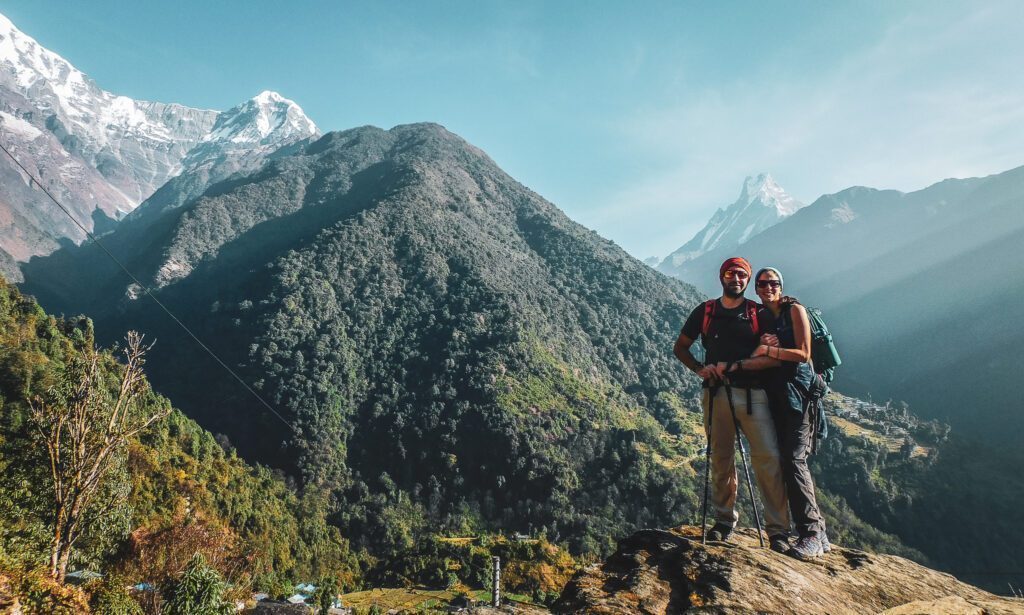
Annapurna Base Camp gives you variety.
The route moves from city arrival to Pokhara, then into villages, forests, river crossings, tea houses, stone steps, and finally the high mountain world of the Annapurna Sanctuary. The final setting at base camp is enclosed and dramatic. You feel surrounded by the mountains.
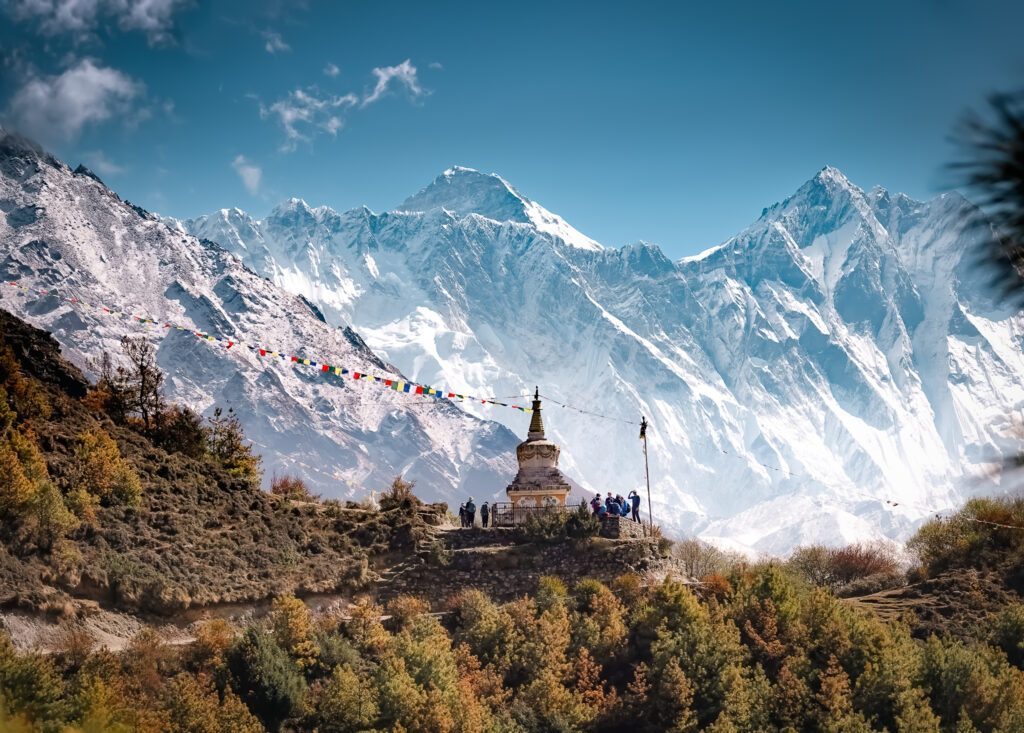
Everest Base Camp gives you scale.
The Khumbu landscape becomes bigger and more open as you move higher. The trail passes through Sherpa villages, suspension bridges, monasteries, wide valleys, and glacial terrain. The views of Ama Dablam, Lhotse, Nuptse, and the surrounding peaks build the feeling that you are moving through one of the great mountain regions of the world.
Choose ABC if you want variety and a shorter scenic journey. Choose EBC if you want the atmosphere of Everest and the wider Khumbu.
Culture comparison: Annapurna region vs Everest region
Both treks offer cultural depth, but the feel is different.
In the Annapurna region, the journey passes through mountain villages, tea houses, and communities connected to the rhythm of daily life in the foothills and valleys. The experience feels grounded, warm, and varied.
In the Everest region, the cultural identity of the Khumbu is central to the journey. Sherpa villages, Buddhist monasteries, prayer flags, mani walls, and the story of Himalayan mountaineering shape the trek. Namche Bazaar is not just a stop on the map. It is one of the great mountain towns of the world.
If you are drawn to village life and landscape variety, Annapurna Base Camp is wonderful. If you are drawn to Sherpa culture and Everest history, Everest Base Camp has the stronger pull.
Fitness requirements: how fit do you need to be?
You do not need to be an elite athlete for either trek. You do need to be prepared.
For Annapurna Base Camp, you should be comfortable walking for several hours a day on uneven ground. You should be ready for steps, hills, descents, and consecutive trekking days. Most first time trekkers should prepare with several weeks of consistent walking, stairs, step ups, and hill training.
For a more structured approach, use our guide on how to train for the Annapurna Base Camp Trek.
For Everest Base Camp, you need more endurance. The trek is longer, the altitude is higher, and the tiredness builds over more days. It is sensible to allow a longer preparation window, with regular long walks, back to back training days, leg strength work, and steady cardiovascular training.
For both treks, the best preparation is simple.
Walk often.
Use stairs.
Build time on feet.
Carry a light pack.
Train consistently.
Arrive humble.
The goal is not to prove you can suffer. The goal is to arrive prepared enough to enjoy the experience.
Safety and support: which trek is safer?
Both treks can be done safely when the itinerary, preparation, support, and decision making match the mountain environment.
Annapurna Base Camp has a lower maximum altitude, which makes it the more accessible option for many first time trekkers. But it is still a high altitude trek. You still need to respect symptoms, listen to your guide, and avoid treating it like a casual hill walk.
Everest Base Camp has more altitude exposure. That makes pacing, acclimatisation, honesty, hydration, and guide judgement even more important. The most common avoidable issues come from rushing, under training, or pushing through symptoms such as headache, nausea, unusual fatigue, dizziness, or loss of appetite instead of speaking up.
This is where travelling with the right support matters.
With LHO, Nepal trips are designed with local guide expertise, LHO team leader coordination, airport to airport planning, permit handling, tea house logistics, and pre trip preparation. We also advise community members on appropriate trekking insurance, including emergency evacuation cover, before departure.
The goal is to help you feel informed, supported, and ready for the journey rather than left to figure it out on the trail.

Choosing the right Nepal trek with Life Happens Outdoors
At Life Happens Outdoors, we do not believe the hardest option is always the best option.
The right adventure is the one that matches your experience, ambition, fitness, time, and reason for going. Some people need Annapurna Base Camp first. Some people are ready for Everest Base Camp now. Some people should begin with a different Nepal journey altogether.
If you want a shorter, lower, and more accessible first Himalayan base camp trek, start with Annapurna Base Camp.
If Everest is the reason you are looking at Nepal, review the Everest Base Camp Trek and read our guide to Everest Base Camp difficulty.
If you want to compare all your options before choosing, explore our Nepal trekking and climbing hub.
What Comes Next
If you are still researching, start with the guide that answers your biggest concern.
If you are worried about fitness, read our Annapurna Base Camp training guide.
If you are worried about altitude and effort, read our Everest Base Camp difficulty guide.
If you are choosing dates, review the live trip pages for the Annapurna Base Camp Trek and the Everest Base Camp Trek.
If you are unsure which trek fits you best, speak to our team. Tell us your fitness level, available dates, previous trekking experience, and what is drawing you to Nepal. We will help you choose the journey that fits.
Nepal has a way of changing people. Not because the mountains are easy, but because they ask you to slow down, pay attention, and keep going one step at a time.
Choose the journey honestly, prepare properly, and let the mountains do what they do best: help you come back different.
Annapurna Base Camp vs Everest Base Camp FAQs
Is Annapurna Base Camp better than Everest Base Camp?
Annapurna Base Camp is better for most first time Himalayan trekkers who want a shorter, lower, and more accessible Nepal base camp trek. Everest Base Camp is better if your main dream is to experience the Khumbu and stand at the foot of Mount Everest. The better trek depends on your time, fitness, budget, altitude experience, and emotional reason for going.
Which is harder, Annapurna Base Camp or Everest Base Camp?
Everest Base Camp is harder overall because it is longer, higher, and involves more nights at altitude. Annapurna Base Camp can still feel intense day to day because of steep stair sections and concentrated elevation change. If you want the more accessible first trek, choose ABC. If you want the bigger endurance and altitude objective, choose EBC.
Is Annapurna Base Camp good for beginners?
Yes, Annapurna Base Camp can be a good choice for beginners who are reasonably fit and willing to prepare. It is not effortless, but it is one of the more accessible Himalayan base camp treks because it is shorter and lower than Everest Base Camp. You should still train, walk regularly, and take altitude seriously.
Is Everest Base Camp suitable for beginners?
Everest Base Camp can be suitable for beginners if they prepare properly and follow a well paced itinerary. You do not need technical climbing skills, but you do need endurance, patience, and respect for altitude. LHO’s Everest Base Camp itinerary is 16 days and includes acclimatisation, local guides, porters, tea house accommodation, and support throughout the journey.
Which trek is cheaper, Annapurna Base Camp or Everest Base Camp?
Annapurna Base Camp is usually cheaper than Everest Base Camp because it is shorter and logistically simpler. LHO’s Annapurna Base Camp Trek starts from £1,725 early bird, while LHO’s Everest Base Camp Trek starts from £3,151 early bird. Always check the live trip pages for current prices, dates, and availability before booking.
When is the best time to trek Annapurna Base Camp vs Everest Base Camp?
Spring and autumn are generally the best seasons for both treks. For Everest Base Camp, March to May and October to early December are strong dry season windows, while autumn can be quieter than the spring Everest climbing season. Annapurna Base Camp is also commonly trekked in spring and autumn, when conditions are often more stable and views can be excellent.
Do I need permits for Annapurna Base Camp or Everest Base Camp?
Yes, both treks require permits. Annapurna Base Camp usually requires the Annapurna Conservation Area Permit and TIMS card. Everest Base Camp usually requires the Sagarmatha National Park permit and the Khumbu Pasang Lhamu rural municipality permit. If you travel with LHO, the required permits for your guided itinerary are handled as part of the trip arrangements.
Which Nepal trek should I choose first?
For most first time trekkers, Annapurna Base Camp is the better first Nepal base camp trek. It is shorter, lower, usually more affordable, and still gives you a powerful Himalayan experience. Choose Everest Base Camp first only if Everest is the reason you are going and you are ready for a longer, higher, more committing journey.
Are Annapurna Base Camp and Everest Base Camp the same place?
No. Annapurna Base Camp and Everest Base Camp are different destinations in Nepal. Annapurna Base Camp is in the Annapurna Sanctuary, reached via Pokhara. Everest Base Camp is in the Khumbu region, reached via Lukla. They are separate treks with different routes, elevations and time commitments.
This article was reviewed for trekking accuracy by Shiva Raj Bastakoti, a Nepalese Trekking Guide licensed by Nepal’s Department of Tourism (Licence No. 2997).
Expert review
Reviewed by
Dr. Nima Namgyal Sherpa
Mountaineering guide and expedition doctor
Dr. Nima is LHO’s high-altitude and wilderness medicine reviewer. He has reviewed the altitude-related medical and physiological guidance in this article.
CONTINUE YOUR RESEARCH





ABOUT THE AUTHOR

Rami Rasamny
Rami Rasamny is the founder of Life Happens Outdoors, a premium adventure travel company that uses the outdoors as a catalyst for human transformation. His work brings people into the mountains not only for challenge, but for clarity, confidence, and connection. He believes that when people answer the call to adventure truthfully, they come back different.