Mountains & Peaks | BY Rami Rasamny | PUBLISH DATE: August 05 2026 | READ TIME: 12 mins | UPDATED DATE: September 03 2026
Lobuche East Climb: Route, Difficulty and Preparation Guide
DOWNLOAD YOUR Lobuche East Expedition GUIDEBOOK
Lobuche East is a serious 6,119-metre Himalayan climb with mixed terrain, fixed ropes and an exposed upper mountain. Understand the approaches, summit route, skills and preparation.
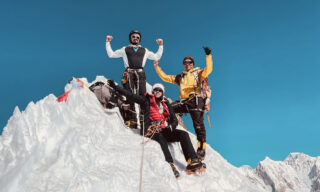
Lobuche East is a 6,119-metre Himalayan climbing objective in Nepal’s Everest region. It combines a long high-altitude approach with rocky and snowy terrain, crampons, fixed ropes, a jumar and an exposed upper mountain.
For most climbers, Lobuche East is a progression peak rather than a first outdoor adventure. It can suit someone with strong trekking fitness, previous altitude experience and the willingness to train for precise movement on steeper ground. It is generally a more technical and exposed choice than Island Peak.
This guide explains the mountain, approach options, summit route, difficulty, skills, preparation and guided support. For live dates, prices, inclusions and the complete itinerary, visit the Lobuche East Expedition.
Lobuche East at a glance
| Summit elevation | 6,119 metres |
|---|---|
| Location | Everest region, Nepal |
| LHO approach options | Gokyo Lakes and Cho La Pass, or Everest Base Camp and Kala Patthar, subject to the live itinerary |
| Upper terrain | Rock, hard snow, ice and mixed ground, depending on conditions |
| Technical systems | Crampons, ice axe, harness, fixed-rope attachments, jumar and guide-directed descents |
| Experience profile | Strong multi-day mountain fitness, with previous altitude experience strongly recommended |
| Principal seasons | Spring and autumn |
| Main challenges | Altitude, sustained endurance, steep mixed terrain, exposure, technical movement and descent |
Conditions can change the route and how hard the mountain feels. The table describes the broad expedition character, not a guarantee of a fixed line or summit outcome.
Lobuche East and Lobuche West are different climbing objectives
Lobuche Peak has two principal summits. Lobuche East rises to 6,119 metres and is the climbing objective discussed in this guide. Lobuche West is higher at 6,145 metres and belongs to a different expedition category.
The distinction matters because generic references to “Lobuche Peak” can hide meaningful differences in permits, route character and experience. Life Happens Outdoors’ commercial expedition is to Lobuche East.
Where is Lobuche East?
Lobuche East rises above the Khumbu Valley near Lobuche village and the Khumbu Glacier. The mountain sits within the wider Everest landscape, with views towards peaks that can include Everest, Lhotse, Nuptse, Ama Dablam and other Himalayan giants when conditions are clear.
Most climbers reach the region through Lukla, then spend many days approaching through the Khumbu. That journey is part of the expedition. It provides cultural context, progressive altitude exposure and time for the team to learn how each climber is moving and recovering. Explore the wider Nepal trekking and mountaineering hub for more regional context.
Why climb Lobuche East?
Lobuche East is compelling because it asks for more than endurance. The approach is a significant Himalayan journey in its own right, but the summit phase introduces a steeper and more technical character.
The mountain can be a strong next step for someone who has completed a high-altitude trek or an introductory alpine objective and now wants to develop greater precision with crampons, fixed ropes and mixed terrain. The attraction is not simply reaching above 6,000 metres. It is learning to move efficiently and make calm decisions in a demanding environment.
Lobuche East is also closely tied to the Everest region. Depending on the selected LHO route, the approach can include either Gokyo Lakes and Cho La Pass or the classic Everest Base Camp and Kala Patthar journey.
The two LHO approach options
Gokyo Lakes and Cho La Pass
The Gokyo approach travels through a quieter western side of the Khumbu before crossing Cho La Pass towards the Lobuche area. It brings glacial lakes, remote-feeling valleys and a high pass into the acclimatisation journey.
Cho La is not merely sightseeing. Snow, ice, rocky ground and current conditions can make the pass a meaningful mountain day. It adds variety and gives the expedition a strong sense of progression before the climbing camps.
Everest Base Camp and Kala Patthar
The classic approach follows the main Khumbu trail towards Everest Base Camp, with the option of Kala Patthar as set out in the live LHO itinerary. It gives climbers the cultural and geographic progression of the Everest trail while building time at altitude before Lobuche East.
Neither approach removes altitude risk or guarantees acclimatisation. The value lies in measured pacing, appropriate overnight elevations, observation by the guide team and honest communication from each climber.
Use the commercial Lobuche East Expedition page to compare the current selectable itineraries. Do not rely on an old blog article for live trip logistics.
Base Camp and High Camp
After the trekking approach, the expedition changes rhythm. Climbers leave the normal tea-house pattern, move into tents and prepare equipment for the upper mountain.
Base Camp is used for recovery, organisation and technical preparation. The climbing team checks personal equipment, reviews the current route and works through the rope and movement systems that may be used above.
High Camp places the team closer to the summit route. Comfort becomes simpler, the night is short and the focus narrows to rest, hydration, equipment and the guide briefing. Exact camp locations can vary with the expedition plan and current conditions.
The Lobuche East summit route
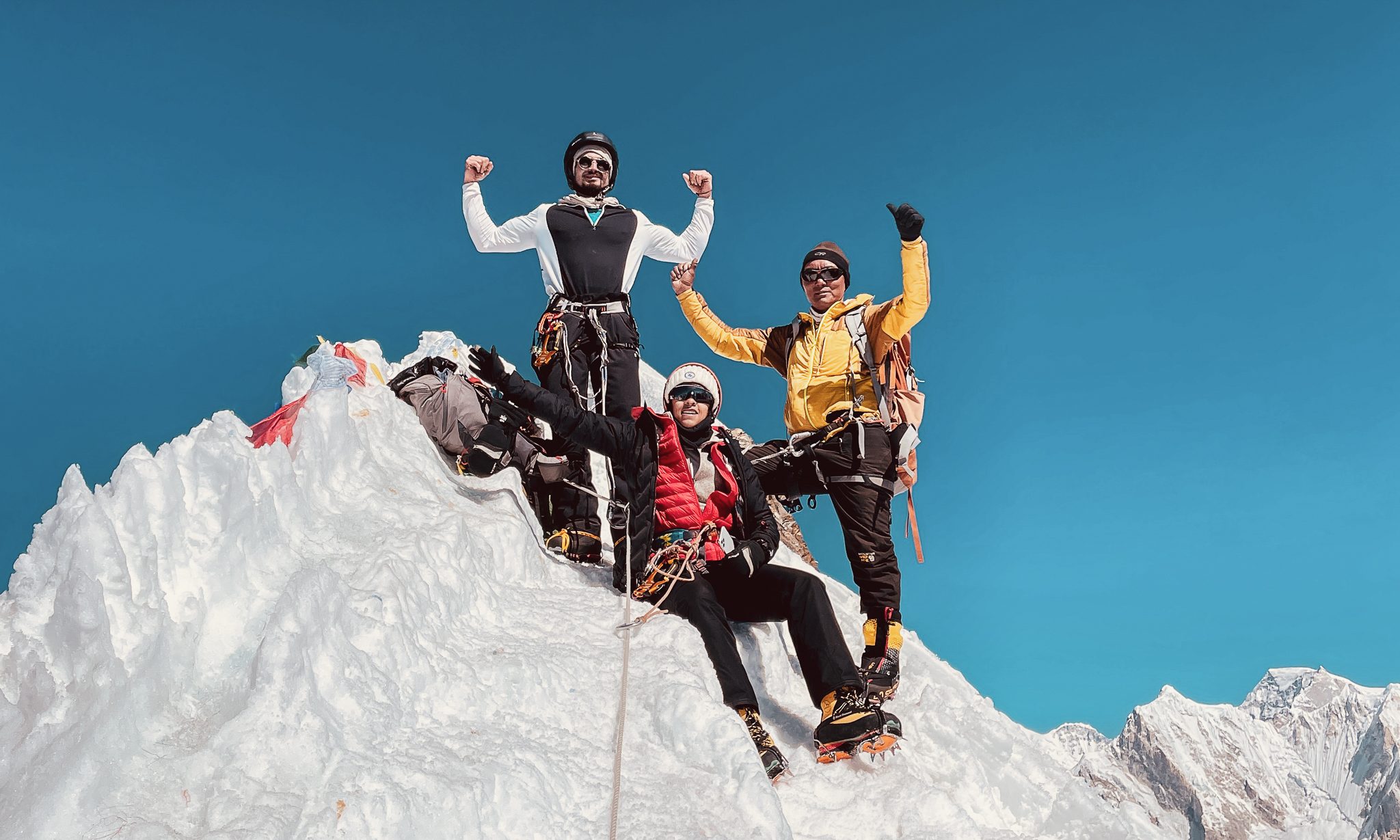
Summit day begins before dawn. From camp, climbers move over rocky and increasingly steep ground towards the snow and ice of the upper mountain.
Crampons may be required as conditions change. Fixed ropes protect steeper sections, and climbers use a jumar to progress while maintaining the safety system set by the guides. The terrain can mix rock, hard snow and ice, so efficient foot placement matters more than trying to pull yourself up the rope with your arms.
The upper mountain can feel exposed. The space around you becomes more obvious, fatigue has accumulated and every movement takes place at significant altitude. The guide team manages spacing, rope systems, current hazards, pace and the turnaround decision.
Reaching the summit is only half the work. The descent requires concentration when legs are tired and excitement can reduce attention. Controlled rope descents, careful crampon movement and patience remain essential until the team is back on easier ground.
The precise line is never guaranteed. Snow, ice, weather and mountain changes determine the route used by the climbing team.
How difficult is Lobuche East?
Lobuche East is difficult because altitude, endurance, technical movement, exposure and descent arrive together. The label “trekking peak” can be misleading: it describes an administrative category, not an easy walk-up mountain.
Altitude
The summit is 6,119 metres. At this height, the thinner air reduces pace and makes ordinary actions feel more demanding. Fitness supports the work, but it cannot prevent altitude illness.
Good acclimatisation planning, conservative pacing and early communication matter. A climber who hides symptoms or chases the person ahead can undermine the preparation built during the approach.
Endurance
The challenge is cumulative. You arrive at the climbing phase after many days in the Khumbu, then complete a long summit effort and a careful descent. Training must prepare you to move for sustained periods and recover well enough to perform again on the following day.
Technical movement
Lobuche East can involve crampons on mixed ground, an ice axe, fixed ropes, a jumar and controlled descent systems. The equipment is learnable, but the mountain is not the ideal place to discover that poor balance or inefficient footwork causes panic.
Technical familiarisation before the expedition helps you use the guide-led training more effectively.
Exposure
Exposure is the sensation of moving on steep or open ground with obvious space below or beside you. Lobuche East generally feels more exposed than Island Peak, particularly on the upper mountain.
Confidence does not mean ignoring the feeling. It means being able to slow down, follow the system and keep moving accurately while the environment feels serious.
The descent
Many climbers focus their preparation on going up. On Lobuche East, the descent can be one of the most demanding phases because concentration and leg strength are already reduced.
Controlled lowering or abseiling may be required where the route and fixed ropes demand it. Below the ropes, careful footwork remains important on snow, ice and rock.
Skills and equipment required
Climbers should expect to use or become familiar with:
- Mountaineering boots and crampons.
- An ice axe.
- A climbing harness and helmet.
- Safety attachments for fixed ropes.
- A jumar for ascending fixed lines.
- A controlled descent device or system as directed by the guides.
- Efficient footwork on snow, ice and mixed ground.
- Rope spacing, communication and guide instructions.
The expedition team provides the operational system and training, but every climber remains responsible for arriving physically prepared, paying attention and practising the skills seriously.
Use How to Train for Lobuche East for the full endurance, strength, pack-carrying, technical familiarisation and taper structure.
Can a first-time Himalayan climber climb Lobuche East?
Possibly, but a first Himalayan climb should not also be your first serious mountain experience.
Lobuche East can suit a climber who has strong trekking fitness, has already spent time at altitude, trains consistently and is comfortable learning technical systems. Previous alpine movement, scrambling or crampon experience is a clear advantage.
Someone whose experience is limited to flat walking, who has never completed consecutive mountain days or who is very uncomfortable with exposure may be better served by a more progressive first objective.
For most fit trekkers taking their first step into technical Himalayan climbing, Island Peak is the more structured introduction. Lobuche East is normally the stronger progression peak. Use the full Island Peak and Lobuche East comparison to make that decision.
Why guided support matters
Lobuche East involves permits, high-altitude logistics, technical equipment, camp systems, changing route conditions, weather assessment, fixed ropes, turnaround decisions and emergency planning.
A guided expedition gives the climb a clear operating structure. Trekking leaders manage the approach and observe how the team is acclimatising. Specialist high-altitude climbing guides manage the upper route, technical systems and summit decision. LHO Team Leader and Base Camp support connect the mountain operation with the wider participant journey.
Guides do not make the mountain easy and cannot guarantee a summit. Their value is experienced judgement, instruction, logistics and a decision-making system when fatigue and ambition can distort personal judgement.
When is the best time to climb Lobuche East?
The principal seasons are spring and autumn. Spring generally brings warmer conditions. Autumn often brings clearer post-monsoon views and colder nights.
Season labels do not guarantee a particular surface or weather window. Snow, ice, wind and temperature vary between expeditions, so the final route and summit decision remain condition-dependent and guide-led.
How should you train?
Training should build aerobic endurance, strength for steep mixed terrain, the ability to complete consecutive mountain days and confidence carrying the specified day pack.
Add technical familiarisation with mountaineering boots, crampons, an ice axe, a harness, fixed ropes, a jumar and controlled descent. Balance, scrambling and calm movement on exposed ground are as important as raw strength.
Fitness does not create acclimatisation. The goal is to arrive capable of doing the work while the itinerary and guide team manage the altitude progression. Follow the complete Lobuche East training guide rather than trying to build a plan from this summary.
Rami’s Lobuche East questions answered
The central lesson is that Lobuche East should be chosen for the complete experience, not simply because its summit is above 6,000 metres. Preparation includes endurance, technical familiarisation, honest self-assessment and the willingness to follow guide-led decisions.
The approach and climbing phase are one system. Time in the Khumbu builds context and altitude exposure. Camp life creates focus. Technical training gives climbers a common process. Summit day then asks them to apply that process while tired, cold and high above sea level.
The correct question is not only, “Can I reach the summit?” It is, “Am I prepared to move safely, support the team and make good decisions throughout the expedition?”
Island Peak or Lobuche East?
Choose Island Peak if you are a fit trekker seeking a structured first step into glacier travel, crampons and fixed ropes. Choose Lobuche East if you already have strong altitude or alpine experience and want steeper, more exposed movement on mixed terrain.
Height alone should not decide. Read Island Peak vs Lobuche East: Which Is Right for You? before choosing.
What comes next?
If Lobuche East matches your experience and the way you want to progress, explore the Lobuche East Expedition. The trip page owns the current route options, dates, prices, inclusions and booking details.
If you are unsure, speak to the Life Happens Outdoors team. Tell us what you have climbed, how you train, your previous altitude and how you feel about exposure. We can help you choose the right next step.
FAQs about Lobuche East
How high is Lobuche East?
Lobuche East rises to 6,119 metres in Nepal’s Everest region. Its altitude makes acclimatisation, pacing and a properly structured approach essential.
Is Lobuche East harder than Island Peak?
Lobuche East is generally the more technical and exposed objective. Island Peak is still a serious climb, but it normally offers the more structured introduction for a fit first-time Himalayan climber.
Do you need climbing experience for Lobuche East?
Previous high-altitude trekking is strongly recommended, and alpine movement or crampon experience is a clear advantage. A guided expedition can teach and reinforce route-specific systems, but it does not replace endurance, balance, preparation or sound judgement.
What equipment is used on Lobuche East?
The climb can involve mountaineering boots, crampons, an ice axe, a harness, helmet, fixed-rope safety attachments, a jumar and controlled descent systems. Follow the current LHO gear list and guide briefing rather than an old generic checklist.
Can Lobuche East be approached through Gokyo Lakes?
Yes. The current LHO expedition offers a Gokyo Lakes and Cho La Pass approach as well as an Everest Base Camp and Kala Patthar approach. Confirm the live route options on the commercial expedition page.
What is the best season to climb Lobuche East?
Spring and autumn are the principal climbing seasons. Actual snow, ice, wind and temperature vary, so the route and summit decision remain condition-dependent.
Continue Your Research
- How to Train for Lobuche East
- Island Peak vs Lobuche East: Which Is Right for You?
- Island Peak Climb: Route, Itinerary and Expedition Guide
Ready to take the next step towards Lobuche East?
Explore the complete guided Lobuche East Expedition, compare the Gokyo Lakes and Everest Base Camp approaches, and see the current inclusions, dates and booking options.
Discover More Adventures
This article was reviewed for Nepal mountaineering accuracy by Lakpa Tsheri Sherpa, a senior Nepalese high-altitude guide and Nepal Mountaineering Association-registered Sardar (Registration No. 592).
CONTINUE YOUR RESEARCH




ABOUT THE AUTHOR

Rami Rasamny
Rami Rasamny is the founder of Life Happens Outdoors, a premium adventure travel company that uses the outdoors as a catalyst for human transformation. His work brings people into the mountains not only for challenge, but for clarity, confidence, and connection. He believes that when people answer the call to adventure truthfully, they come back different.