








Adventure Travel Destinations | BY Rami Rasamny | PUBLISH DATE: August 13 2025 | READ TIME: 7 mins | UPDATED DATE: October 31 2026
How to Prepare for Ama Dablam: Experience, Training and Kit
DOWNLOAD YOUR Ama Dablam Expedition: A Guided Technical Climb in Nepal GUIDEBOOK
Jump to: Readiness · Training · Packing · Applications and logistics Planning with LHO? The current expedition lasts 25 days and requires an experience review before acceptance. View the Ama Dablam itinerary, requirements and application process. The written quote is specific to the confirmed departure. Ama Dablam, with its sweeping ridges and soaring 6812 meter […]
Jump to: Readiness · Training · Packing · Applications and logistics
Planning with LHO? The current expedition lasts 25 days and requires an experience review before acceptance. View the Ama Dablam itinerary, requirements and application process. The written quote is specific to the confirmed departure.
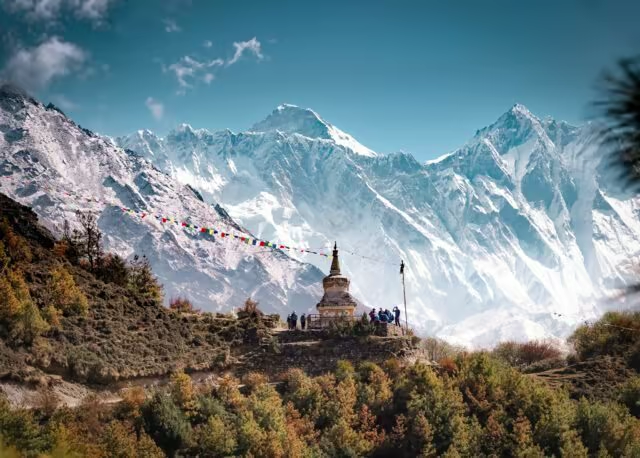
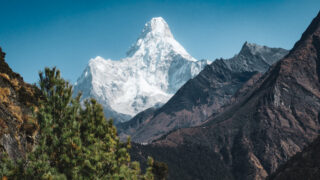
Ama Dablam, with its sweeping ridges and soaring 6812 meter summit, is often called the most beautiful mountain in the world and for good reason. Towering above the Khumbu Valley, it is a striking presence for trekkers heading to Everest Base Camp, and for climbers, it represents one of the finest alpine style ascents in the Himalayas. But beauty does not mean easy. Ama Dablam is a serious expedition with sustained technical climbing, exposure, and high altitude conditions that demand skill, preparation, and respect.
Use this guide to review the preparation, experience and equipment questions to discuss with LHO before applying for Ama Dablam. The current expedition is 25 days, and acceptance depends on a review of recent technical climbing and high-altitude expedition experience.
Why Climb Ama Dablam?
Climbing Ama Dablam is more than just a summit attempt. It is a masterclass in technical Himalayan mountaineering. The route blends rock, ice, and mixed terrain, all in a high altitude environment, and it offers some of the most aesthetic climbing lines in the world.
Standing on its summit rewards you with a panoramic view that sweeps across Everest, Lhotse, Makalu, and the rugged Khumbu region. The climb is also a deeply personal journey, one that tests mental resilience, sharpens technical skills, and immerses you in the culture and grandeur of the Himalayas.
For many, Ama Dablam is a stepping stone between high altitude trekking peaks like Island Peak and bigger 8000 meter expeditions. For others, it is a lifetime goal in its own right.
At Life Happens Outdoors, we design Ama Dablam expeditions to be transformative, not transactional, focusing on skill building, safety, and the shared experience of a rope team moving with purpose and trust.
Is Ama Dablam Right for Me?
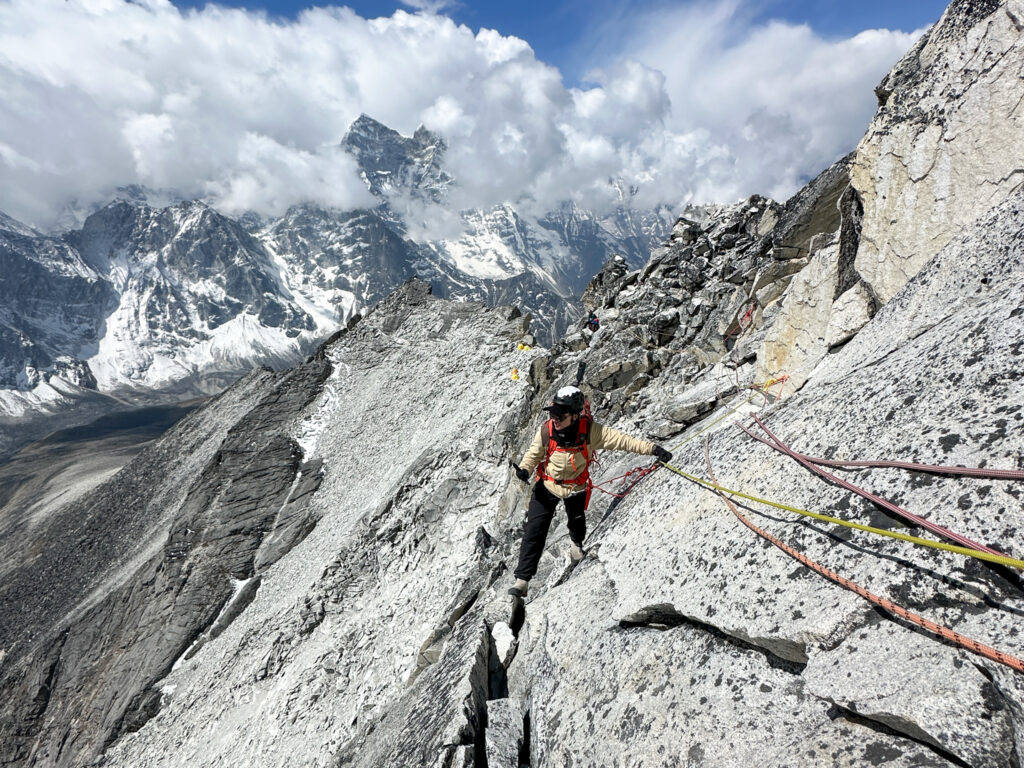
Ama Dablam is not an entry-level Himalayan climb. LHO requires recent competence on steep rock, snow and ice, fixed-line ascent, independent abseiling, efficient crampon and ice-axe use, and prior high-altitude expedition experience.
Before applying, prepare a record of recent routes, highest sleeping altitude, technical systems and training. Trekking experience or a single non-technical 6,000-metre summit is not enough on its own. Discuss the departure’s expected carrying requirements and baggage support with the team before acceptance.
If your background is mainly trekking, review LHO’s Nepal progression framework and build appropriate technical experience before applying.
When Is the Best Time to Climb Ama Dablam?
Spring and autumn are the usual planning windows discussed for Ama Dablam. Confirm the proposed departure with LHO: a calendar window does not guarantee favourable weather, an uncrowded route or a summit. The climbing guide team sets the operational plan according to conditions and the team’s readiness.
Which Route Should I Take?
The Southwest Ridge is the standard approach described in LHO’s itinerary. The route progresses through Base Camp and Camp 1, then the technical Yellow Tower section to Camp 2 before the summit attempt and descent.
The current LHO itinerary normally starts the summit push from Camp 2 and passes through the Camp 3 area. It does not usually plan an overnight stay at Camp 3, which remains an emergency backup if needed. This is not a bypass of the terrain or its hazards: the lead climbing guide decides camp use, movement and turnaround according to conditions.
Review the 25-day itinerary summary. Days 13–20 are held as a flexible summit window; camp use and timing depend on conditions and the lead guide’s decisions.
How to Train for Ama Dablam
Training for Ama Dablam means preparing for long days of sustained technical climbing at altitude:
- Climbing specific training with regular multi pitch climbing (both rock and ice) to build movement efficiency and rope skills
- Endurance conditioning with long hikes carrying a weighted pack, stair climbs, and high intensity cardio sessions
- Strength training focused on legs, core, and pulling strength for jumar ascents
- Altitude preparation by taking part in high altitude treks or climbs in the months leading up to the expedition if possible
Discuss your training and recent climbing history during LHO’s experience review. Base Camp skills sessions refresh existing competence; they do not replace the prior experience required for acceptance.
What to Pack
Every gram counts on Ama Dablam. Your kit needs to handle rock climbing, ice climbing, and sub zero Himalayan nights:
- Clothing with a layered system including a warm down jacket, technical shell, and insulated pants
- Climbing gear such as harness, helmet, double boots, crampons, ascenders, and belay devices
- Sleeping system with an expedition sleeping bag rated to at least minus 20 degrees Celsius
- Gloves including multiple pairs such as technical climbing gloves and warm summit mitts
Treat this as an outline, then obtain the current personal kit list, group-equipment list, baggage allowance and any rental inventory, prices and deadlines from LHO before accepting the quote. Personal climbing equipment and rentals are excluded.
Food and Hydration
The departure-specific package confirms meals, high-camp food and treated drinking water within the itinerary, with any exceptions identified before booking. Beverages and personal food are separate where not expressly included. Discuss dietary needs and what personal snacks to carry with the expedition team.
Do I Need to Acclimatise?
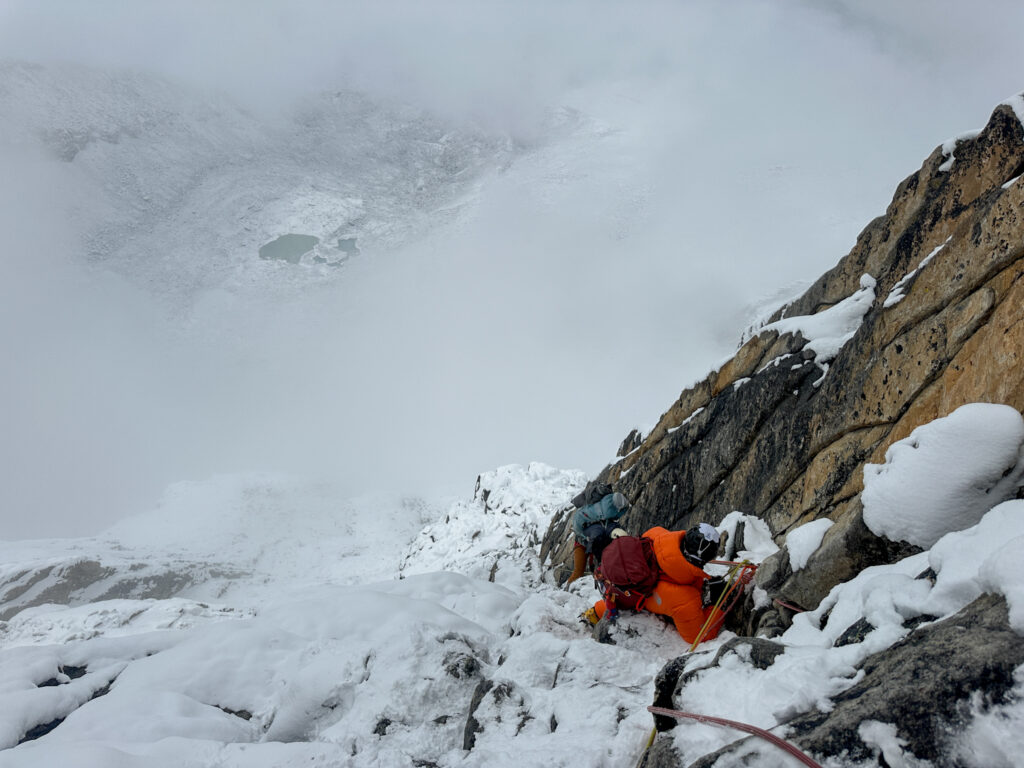
The current itinerary includes a second night and acclimatisation walk at Namche Bazaar, Base Camp preparation and a Camp 1 rotation before the summit window. Pangboche is an approach stop, not a scheduled acclimatisation rest day in the published plan.
The guide team adjusts the plan according to altitude response, team welfare and conditions. Preparation and acclimatisation do not guarantee adaptation or a summit; illness or guide judgement may require descent or a turnaround.
Booking Permits and Logistics
LHO’s Ama Dablam expedition uses an application and experience-review process. After acceptance, LHO provides a written, departure-specific quote. A public package price is not shown until the departure, guide plan, accommodation basis and commercial terms are confirmed.
Review the Ama Dablam application and accommodation information, then request the written package before committing.
The confirmed package sets out expedition permits and regulatory costs, guide support, accommodation, meals, group equipment and baggage arrangements. One helicopter sector and one fixed-wing sector between Kathmandu and Lukla are described in the trip inclusions; direction, baggage allowance and substitution plans depend on operations and weather. This transport provision is separate from conditional rescue or evacuation.
Why Go With a Guide?
The technical climb is led by NNMGA-certified mountain guides. The named lead, phase-specific guide ratio and staff roles are confirmed before booking. The LHO Team Leader coordinates the wider expedition from the departure-specific, legally permitted location; the lead climbing guide controls technical movement, summit timing, turnarounds and descent.
Guides manage technical movement and make route, timing and turnaround decisions. They cannot remove objective hazards or guarantee a summit or rescue. Confirm the named lead guide, phase-specific ratio and separation support plan before booking.
Final Thoughts
Climbing Ama Dablam is a life defining experience, a blend of high altitude challenge, technical precision, and the pure joy of moving through one of the most beautiful mountain environments on Earth.
The expedition can be meaningful whether or not the summit is reached. Preparation, technical judgement and the willingness to turn around remain central to the experience.
If you are ready to take on Ama Dablam with a team that believes adventure should transform you, not just test you, explore our Ama Dablam expeditions at Life Happens Outdoors and start your journey today.
Planning a trip to Nepal? Explore our complete Nepal guide covering treks, climbs, and everything you need to know.
This article was reviewed for Nepal mountaineering accuracy by Lakpa Tsheri Sherpa, a senior Nepalese high-altitude guide and Nepal Mountaineering Association-registered Sardar (Registration No. 592).
Expert review
Reviewed by
Dr. Nima Namgyal Sherpa
Mountaineering guide and expedition doctor
Dr. Nima is LHO’s high-altitude and wilderness medicine reviewer. He has reviewed the altitude-related medical and physiological guidance in this article.
CONTINUE YOUR RESEARCH



ABOUT THE AUTHOR
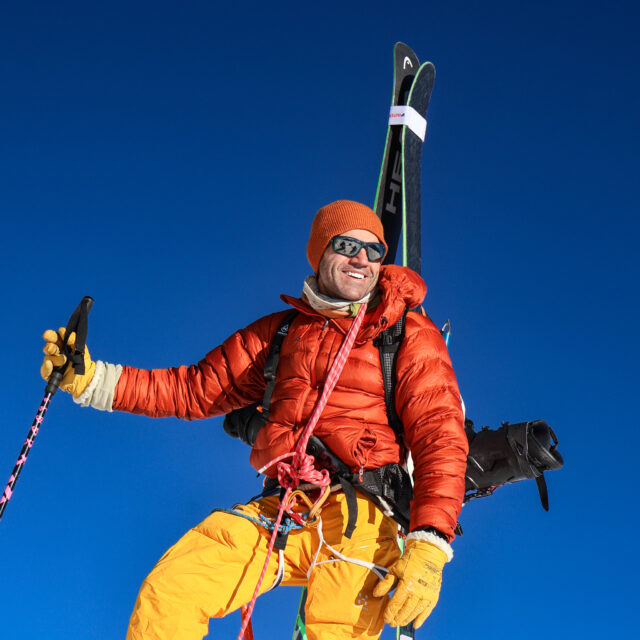
Rami Rasamny
Rami Rasamny is the founder of Life Happens Outdoors, a premium adventure travel company that uses the outdoors as a catalyst for human transformation. His work brings people into the mountains not only for challenge, but for clarity, confidence, and connection. He believes that when people answer the call to adventure truthfully, they come back different.