Adventure Travel Destinations | BY Rami Rasamny | PUBLISH DATE: August 11 2025 | READ TIME: 7 mins | UPDATED DATE: September 21 2026
The Ultimate Guide to Climbing Ama Dablam

DOWNLOAD YOUR Ama Dablam Expedition: A Guided Technical Climb in Nepal GUIDEBOOK
Jump to: 25-day itinerary · Experience required · Pricing and applications · Route and camps Planning with LHO? The current expedition lasts 25 days and requires an experience review before acceptance. View the Ama Dablam itinerary, requirements and application process. The written quote is specific to the confirmed departure. Soaring to 6,812 meters (22,349 feet) […]
Jump to: 25-day itinerary · Experience required · Pricing and applications · Route and camps
Planning with LHO? The current expedition lasts 25 days and requires an experience review before acceptance. View the Ama Dablam itinerary, requirements and application process. The written quote is specific to the confirmed departure.
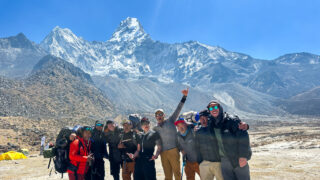
Soaring to 6,812 meters (22,349 feet) in the heart of the Khumbu region of Nepal, Ama Dablam is often called the “Matterhorn of the Himalayas” for its striking pyramid shape and sheer beauty. Rising above the Sherpa villages on the way to Everest Base Camp, its name meaning “Mother’s Necklace” comes from the long ridges that drape down each side like protective arms, with a hanging glacier forming the pendant.
Ama Dablam is more than a mountain. It is a defining landmark for trekkers on the trail to Everest and a dream objective for climbers who want to test themselves on one of the most beautiful technical peaks in the world. Its combination of altitude, commitment, and sustained climbing make it an achievement that stays with you for life.
The History of Ama Dablam Climbing
The first ascent of Ama Dablam was made in 1961 by a team led by Sir Edmund Hillary’s trusted climbing partner Mike Gill, alongside Barry Bishop, Mike Ward, and Wally Romanes. They reached the summit via the now-classic Southwest Ridge, a line that has since become one of the most iconic routes in the Himalayas. In the decades since, Ama Dablam has developed a reputation as a climber’s mountain — a place where skill, preparation, and patience come together in one of the most rewarding alpine experiences on earth.
When to Climb Ama Dablam
Spring and autumn are the usual planning windows discussed for Ama Dablam. Confirm the proposed departure with LHO: a calendar window does not guarantee favourable weather, an uncrowded route or a summit. The climbing guide team sets the operational plan according to conditions and the team’s readiness.
How Long Does It Take to Climb Ama Dablam
The current LHO Ama Dablam Expedition lasts 25 days from arrival in Kathmandu to departure. Days 13–20 form a flexible summit window, not a promised summit date. Contingency time sits within those 25 days; once the expedition window is exhausted, the team descends.
| Days | Current LHO itinerary |
|---|---|
| 1–2 | Kathmandu arrival, briefing, equipment checks and travel preparation |
| 3–6 | Lukla to Phakding, Namche Bazaar with an acclimatisation day, then Tengboche |
| 7–8 | Trek to Ama Dablam Base Camp; rest, briefing and technical skills refreshers |
| 9–11 | Camp 1 acclimatisation rotation, with the plan adjusted to the team’s response, then return to Base Camp |
| 12 | Base Camp recovery, rope work and summit-window briefing |
| 13–20 | Flexible summit window: Camp 1, technical movement to Camp 2, summit attempt, descent and contingency |
| 21–23 | Descend through Tengboche and Monjo to Lukla; stops may change with conditions |
| 24–25 | Return to Kathmandu, then departure |
Read the full 25-day Ama Dablam itinerary for the current daily plan and operating limits.
How Hard Is It to Climb Ama Dablam
Ama Dablam is a sustained, exposed technical expedition for experienced mountaineers. It is not a first mountaineering objective. LHO requires recent competence on steep rock, snow and ice, efficient fixed-line ascent and independent abseiling, together with prior high-altitude expedition experience. This includes efficient crampon and ice-axe use, high-altitude camping experience and the ability to manage long, exposed days.
Acceptance follows a review of recent routes, highest sleeping altitude, technical systems and training. Island Peak or Lobuche East can form part of a wider progression, but one summit alone does not establish readiness. Weather, route conditions, altitude response, pace or guide judgement can require a turnaround; neither preparation nor guiding guarantees a summit.
How Much Does It Cost to Climb Ama Dablam
LHO’s Ama Dablam expedition uses an application and experience-review process. After acceptance, LHO provides a written, departure-specific quote. A public package price is not shown until the departure, guide plan, accommodation basis and commercial terms are confirmed.
Review the Ama Dablam application and accommodation information, then request the written package before committing.
The technical climb is led by NNMGA-certified mountain guides. The named lead, phase-specific guide ratio and staff roles are confirmed before booking. The LHO Team Leader coordinates the wider expedition from the departure-specific, legally permitted location; the lead climbing guide controls technical movement, summit timing, turnarounds and descent.
The written package confirms the 25-day itinerary, accommodation and sharing basis, guide support, meals, transport, permits, group equipment, communications and baggage arrangements. Confirm exceptions and optional costs before acceptance, including personal equipment, rentals, insurance, oxygen, discretionary tips, rescue costs and costs caused by changed plans. Do not treat an older guide price or currency conversion as the current LHO quote.
How to Climb Ama Dablam: The Southwest Ridge
The Southwest Ridge approach progresses from Base Camp to Camp 1, followed by sustained technical and exposed climbing through the Yellow Tower to Camp 2. The summit objective is 6,812 metres, followed by a long descent that demands continued concentration.
While there are other lines on the mountain, including technical north and west face routes, they are rarely climbed and require a completely different level of commitment and logistics. For most climbers, the Southwest Ridge is the route of choice, and it remains one of the most aesthetic climbs anywhere in the world.
The current LHO itinerary normally starts the summit push from Camp 2 and passes through the Camp 3 area. It does not usually plan an overnight stay at Camp 3, which remains an emergency backup if needed. This is not a bypass of the terrain or its hazards: the lead climbing guide decides camp use, movement and turnaround according to conditions.
What Do You Need to Climb Ama Dablam
Technical competence is as important as gear. You will need to be comfortable with fixed line ascents and descents, multi day high altitude exposure, and efficient rope management in alpine conditions.
Here is a basic equipment checklist for Ama Dablam:
- Double mountaineering boots warm enough for 6,800 meters
- Crampons
- Ice axe or tools specified in the current guide-approved kit list
- Helmet
- Climbing harness with ascender and lanyards for fixed lines
- Down suit or high altitude down layers
- Waterproof and windproof shell layers
- Warm gloves, mitts, and liner gloves
- Glacier glasses and ski goggles
- Headlamp
- Sleeping bag rated to minus 20°C or colder
- Expedition backpack plus a smaller pack for summit day
Use this list as an outline only. Obtain the current personal kit list, group-equipment list, baggage allowance and rental terms from LHO before accepting a quote. Personal equipment and rentals are excluded. Base Camp skills sessions refresh existing competence; they do not replace the experience required for acceptance.
For a closer look at training, equipment and acclimatisation, read our Ama Dablam preparation guide.
Final Thought
Climbing Ama Dablam is not just about reaching a Himalayan summit. It is about immersing yourself in the culture, landscape, and spirit of the Khumbu. It is mornings in base camp watching the sun paint Everest gold, it is moving together along an airy ridge with your team, it is pushing beyond what you thought possible.
The mountain will test you, teach you, and leave you changed. Whether or not you stand on the summit, Ama Dablam has a way of becoming part of your story — a reminder that the most beautiful journeys are the ones that challenge us to grow.
When you are ready for that journey, we will be there with you every step of the way.
Planning a trip to Nepal? Explore our complete Nepal guide covering treks, climbs, and everything you need to know.
This article was reviewed for Nepal mountaineering accuracy by Lakpa Tsheri Sherpa, a senior Nepalese high-altitude guide and Nepal Mountaineering Association-registered Sardar (Registration No. 592).
CONTINUE YOUR RESEARCH






ABOUT THE AUTHOR

Rami Rasamny
Rami Rasamny is the founder of Life Happens Outdoors, a premium adventure travel company that uses the outdoors as a catalyst for human transformation. His work brings people into the mountains not only for challenge, but for clarity, confidence, and connection. He believes that when people answer the call to adventure truthfully, they come back different.