







Training for Hiking, Treks & Climbs | BY Rami Rasamny | PUBLISH DATE: November 17 2025 | READ TIME: 3 mins | UPDATED DATE: October 31 2026
How Fit Do You Need to Be to Climb Chimborazo?
DOWNLOAD YOUR Chimborazo & Cotopaxi Expedition GUIDEBOOK
You do not need to be an elite athlete to climb Chimborazo, but you do need durable mountain fitness. The useful question is not “How fast am I?” It is “Can I keep moving uphill for hours, recover, and repeat the effort while staying organised and positive?” What “fit enough” looks like A prepared climber […]
You do not need to be an elite athlete to climb Chimborazo, but you do need durable mountain fitness. The useful question is not “How fast am I?” It is “Can I keep moving uphill for hours, recover, and repeat the effort while staying organised and positive?”
What “fit enough” looks like
A prepared climber usually has a steady aerobic base, strong legs and calves, experience on long hills, tolerance for a daypack and enough recovery capacity for consecutive mountain days. Summit night adds cold, darkness and altitude, so the same pace will feel harder than it does at home.
Practical readiness benchmarks
These are diagnostic guides, not summit guarantees. Terrain, weather and personal history change the meaning of any single number.
- Long uphill day: complete a six-to-eight-hour hilly walk at a sustainable pace with the daypack you expect to carry.
- Vertical work: accumulate roughly 1,000 m of ascent in a day where terrain allows, without needing several days to recover.
- Back-to-back capacity: follow a demanding hiking day with another moderate endurance session and still move with control.
- Pack comfort: carry your normal mountain-day load without shoulder, foot or lower-back problems dominating the day.
- Basic efficiency: eat, drink, adjust layers and manage small equipment tasks without long stops.
A simple self-assessment
- Choose a safe, familiar hilly route and carry your expected daypack.
- Keep the effort conversational for most of the day rather than racing.
- Record ascent, time moving, energy, foot comfort and how well you ate and drank.
- The next morning, take an easy walk and assess soreness, motivation and movement quality.
- Use the weakest result—not your fastest segment—to choose the next training priority.
Where climbers commonly need more work
- Aerobic base: breathing becomes hard too early on steady climbs.
- Leg endurance: the quadriceps or calves fail before the cardiovascular system.
- Descent resilience: knees or feet deteriorate on the way down.
- Fuelling: energy collapses because eating or drinking starts too late.
- Recovery: one long day is manageable but the following day is not.
Fitness is not acclimatisation
Very fit people can still respond poorly to altitude. Training helps with the mechanical and aerobic work; it does not guarantee acclimatisation or prevent altitude illness. The itinerary must gain height progressively, and symptoms must be reported honestly to your guide.
What to do with your result
If you meet the benchmarks comfortably, maintain the base and add expedition-specific practice. If one area is marginal, there is time to build it systematically. If several areas are well short—or pain appears during testing—adjust the plan before adding more load.
The next step is the structured 12-week Chimborazo training plan. For difficulty, timing and equipment in one place, use the complete planning guide; for the actual day-by-day demands, see the expedition itinerary.
Expert review
Reviewed by
Dr. Nima Namgyal Sherpa
Mountaineering guide and expedition doctor
Dr. Nima is LHO’s high-altitude and wilderness medicine reviewer. He has reviewed the altitude-related medical and physiological guidance in this article.
CONTINUE YOUR RESEARCH



ABOUT THE AUTHOR
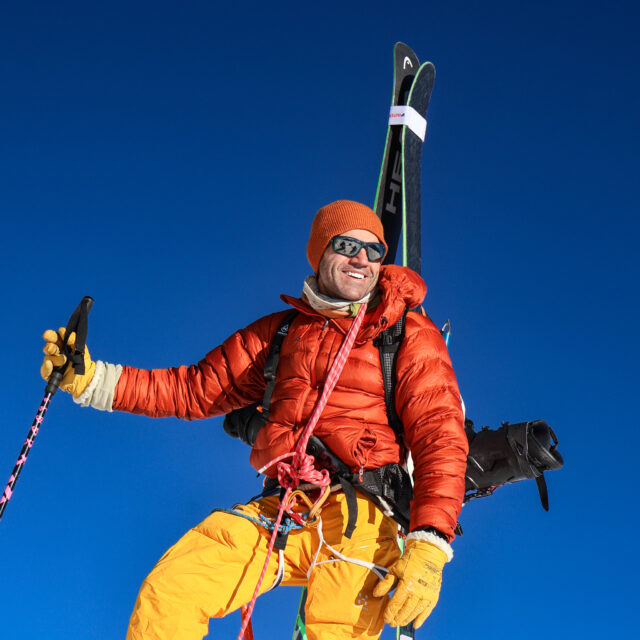
Rami Rasamny
Rami Rasamny is the founder of Life Happens Outdoors, a premium adventure travel company that uses the outdoors as a catalyst for human transformation. His work brings people into the mountains not only for challenge, but for clarity, confidence, and connection. He believes that when people answer the call to adventure truthfully, they come back different.