Adventure Stories | BY Rami Rasamny | PUBLISH DATE: September 24 2026 | READ TIME: 92 mins | UPDATED DATE: September 24 2026
Climbing Mont Blanc: An Interview with IFMGA Guide Pavlos Tsiantos

DOWNLOAD YOUR Climb Mont Blanc GUIDEBOOK
IFMGA mountain guide Pavlos Tsiantos joins Rami Rasamny to discuss readiness for Mont Blanc, sustained effort, decisions on the mountain and life in Alpine huts.
What does being ready for Mont Blanc actually mean? In this conversation, IFMGA mountain guide Pavlos Tsiantos joins Life Happens Outdoors founder Rami Rasamny to discuss the skills, preparation and judgement behind an ascent. Their conversation moves from beginner readiness and training to the Goûter Route, the descent and life in mountain huts.
Watch the interview below, then explore the main explanations and chapters. For the wider picture, including routes and planning, visit our Mont Blanc planning guide.
Interview chapters
The full episode runs for 1 hour, 28 minutes and 24 seconds. Times refer to the interview video.
| Time | Conversation |
|---|---|
| 00:00 | Opening |
| 00:27 | Meet Pavlos and understand the IFMGA qualification |
| 09:11 | Can a beginner climb Mont Blanc? |
| 16:59 | Training when you live away from the mountains |
| 21:09 | Altitude, oxygen and breathing |
| 27:37 | Mindset, expectations and changing plans |
| 34:17 | Understanding the Goûter Route |
| 42:04 | The Grand Couloir, summit ridge and descent |
| 01:03:30 | Learning towards independent mountaineering |
| 01:05:38 | Choosing a guide or operator |
| 01:08:57 | Altitude medication and personal experience |
| 01:11:53 | What mountain hut life is like |
| 01:21:22 | What stays with you after the climb |
| 01:28:07 | Closing thoughts |
Notes to accompany the conversation
The interview includes personal experience and informal explanations. These editorial clarifications accompany the relevant passages:
- At 13:23, the discussion refers to a number of symptoms. Do not wait for a symptom count before reporting illness at altitude. Do not ascend to a higher sleeping altitude with symptoms; worsening symptoms require descent. Fitness does not prevent altitude illness. Medication decisions require individual medical advice. See the CDC’s altitude guidance.
- At 21:43, the wording about oxygen percentage needs clarification. At mountain altitudes, the proportion of oxygen in air remains approximately constant; its partial pressure falls as atmospheric pressure decreases. See the FAA’s explanation of altitude hypoxia.
- At 40:08, the reference to sleeping at Vallot should be read with this distinction: Vallot is an emergency shelter, not planned overnight accommodation. See La Chamoniarde’s Mont Blanc guidance.
- At 01:10:28, the discussion describes rapid helicopter access. Rescue availability and response time cannot be assumed. Bad weather may prevent a flight and delay help considerably. See Swiss Air-Rescue Rega’s explanation of weather limits.
Readiness is more useful than a beginner label
From 09:11
Pavlos begins by questioning what experience really tells us. Someone can spend years in the mountains while repeating the same mistakes. Another person may be new to mountaineering but arrive willing to learn, with a useful physical foundation and an honest understanding of their limits.
His answer brings together several demands: sustained effort, movement on rock, an understanding of glacier terrain and the ability to absorb instruction. The preparation period gives a guide opportunities to observe those abilities and develop them. It does not turn attendance on a course into a promise of readiness for the summit.
That changes the conversation from whether you fit a label to what you can demonstrate, what you still need to learn and how you respond as the week develops. Our guide, Can I Climb Mont Blanc as a Beginner?, explores that readiness question in more detail.
Train for an effort you can sustain
From 16:59, with a further discussion of pacing from 51:15
Asked about preparing away from the mountains, Pavlos recalls two climbers from a flat part of Poland who trained on the stairs of their apartment building with rucksacks. It is an example from his guiding experience, rather than a complete training programme. Its value lies in the intention behind it: finding a practical way to prepare for repeated uphill and downhill movement.
Later, he remembers trying to move quickly in the Alps as a younger climber, only to find that a guide maintaining a steady pace kept getting ahead. The lesson he draws is consistency. Moving well for a short section tells you less than being able to sustain your effort through the day.
For a fuller discussion of fitness, skills and preparation, continue to Training for Mont Blanc.
Preparation includes listening and changing plans
From 27:37 and 45:00
Rami and Pavlos discuss the expectations people bring from other mountain journeys. A previous achievement can be meaningful without answering every question about a new objective. Different terrain asks for different movement skills, and the conditions on the day can change what is possible.
Pavlos also explains why preparation involves more than demonstrating a technique once. Around the Grand Couloir discussion, he describes the importance of equipment checks and understanding instructions well enough to act on them. These are things to practise with the guide before reaching consequential terrain.
Flexibility is part of the same preparation. Changing the objective, turning around or spending more time learning can be a considered decision within a longer relationship with the mountains. His examples of other Alpine objectives illustrate that broader perspective; they are not interchangeable alternatives for every group or set of conditions.
The descent belongs in every summit decision
From 34:17, with the descent discussed in detail from 01:00:00
The route conversation follows the Goûter approach through changing ground: the approach to Tête Rousse, the Grand Couloir and scrambling above it, the glacier and the upper ridges. Rami asks what participants should expect from each section, including how exposure can feel to someone encountering it for the first time.
Pavlos repeatedly brings the discussion back to movement and attention. Near the summit, a climber may be tired just as careful footwork becomes especially important. On the descent, the relief of reaching the top can make it harder to maintain that concentration.
This explains why a guide’s assessment includes what remains after the summit. A climber’s ability to continue upwards is only part of the decision. Pavlos describes watching for fatigue and changes in movement that may affect the return.
Use the interview to understand that reasoning, and our Goûter Route guide for the route’s stages, hazards and access considerations. The timings and techniques discussed in the recording describe particular situations and require interpretation by a qualified guide in current conditions.
Choose people you can communicate with
From 01:03:30
When the conversation turns to independent climbing, Pavlos speaks about teaching skills that participants can continue to develop. He values seeing people progress towards autonomy over time. He does not describe one course as proof that someone is ready to undertake every mountain objective independently.
Asked what to look for in a guide or operator, he emphasises the human relationship as well as the qualification. You need to understand one another, feel able to communicate and share a realistic approach to the experience. He also acknowledges that professional guiding cannot remove all risk.
For the wider decision about support and responsibility, read our guide to choosing guided or independent climbing on Mont Blanc.
Mountain huts are part of the experience
From 01:11:53
Pavlos divides hut life into three parts: eating, sleeping and the hours between arriving and setting off again. That last part can be easy to overlook. There may be time to sit, talk and wait, while other teams follow different schedules around you.
Rami and Pavlos describe shared sleeping spaces, early alarms and the importance of being considerate. Their practical suggestions include arranging the things you will need before going to sleep, knowing where your head torch is and organising equipment without disturbing others. Individual hut facilities and requirements still need checking for the actual itinerary.
Understanding that setting helps you arrive with realistic expectations. The hut is part of being in the mountains, with its own rhythms and shared responsibilities.
What stays with you after the climb
From 01:21:22
The conversation closes with people who arrived focused on Mont Blanc and discovered a wider interest in the Alps. Rami describes participants returning for other objectives, including people whose original summit plans did not work out.
For Pavlos, the relationships formed during the experience matter alongside the climbing. He hopes people leave with something valuable to carry into everyday life. The summit remains an objective, but learning, judgement and time shared with others give the week a meaning that can continue beyond it.
About the speakers
Pavlos Tsiantos is an IFMGA mountain guide who guides with Life Happens Outdoors. In the interview, he describes his path into climbing, instruction and professional guiding. Read his professional profile.
Rami Rasamny is the founder of Life Happens Outdoors and the host of this conversation. His questions draw on the preparation concerns and expectations discussed with participants in LHO’s Alpine programmes.
For more preparation topics, explore our training and preparation guides.
Interview transcript
Read the full interview transcript
Source: the subtitle transcript supplied by Life Happens Outdoors for the Mont Blanc conversation with Rami Rasamny and Pavlos Tsiantos. All 1,479 cues are included below. Subtitle lines have been joined into paragraphs; the supplied spoken wording is retained, including repetitions and possible transcription errors. The file does not mark every speaker change, so speaker labels have not been invented. Editorial annotations are separate from the spoken text.
00:00:00 · Opening
Were you making a coffee? I was making coffee for the two of us. Super. And real coffee, not the, not the crap they make over here. All right. Oh.
00:00:27 · Meet Pavlos and understand the IFMGA qualification
tell me a little bit about, uh, your, about, like, uh, your background in, in mountain guiding for people who don't know you already. Uh, most people who've joined us here in the Alps, uh, kn- probably know you very well. But, uh, for those, uh, people who are out there who are, uh, you know, they have no idea what, what, what, what a mountain guide is, what kind of, uh, uh, history you would have with the mountains, uh, and then, and how you, you end up being, you know, doing what you're doing right now.
So maybe- Yeah, so for, for me personally, it was, uh, uh, I've, I've, I was born in, uh, Czech Republic, and, uh, to Czech mother and a Greek father. And, uh, at the age of 12, I moved to, we moved to Greece, so the environment was completely different. From a, from a mountain area and, uh, nation supportive to outdoor, I suddenly found myself in a plain, very hot, uh, no mountains, no ice hockey I used to play.
And it was very, you know… The, the transition to my teenage years was, uh, kind of sad for me, and struggling. So at some point, uh, I, I realized there are mountains in the area as well. That was in the age of 18. Olympus, the most known of the Greek mountains. And I went there, and then the connection came to me from my childhood in Czech Republic.
And, and I thought, like, "Hey, this is not the end. There's still mountains even where I am now." And, uh, it gave me this, uh, this realization that mountains are a part of my life. And slowly I started, uh, engage in courses and, um, going to the mountains with friends and with instructors and stuff. I never thought at the time that, uh, I'm gonna do it professionally, but, uh, piece by piece and, uh, year by year I was doing things and, uh, at some times it came naturally that, uh, I did my certifications and as an instructor and as a ski instructor and a climbing instructor and at the end, uh, the
international IFMGA mountain guide thing. And, uh, here I am, uh, And, and, and, and actually you, you… This is a really, like, interesting question, and we'll come back to it more, but what, what… Like, for, for people who don't know, what is IFMGA? What is this whole… What is this, this, this, this thing that is IFMGA? Well, uh, if you think, uh, of Mont Blanc, Mont Blanc sometimes it's, uh, like a, like a trademark, like a beginning of the mountaineering of, uh, for no, uh, reason of, um- life, uh, what you say, for, for your living.
But it can be also just for the fun and the, the entertainment. And, uh, so, so the ascent of Mont Blanc in 1786, if I'm not wrong, the first ascent of Mont Blanc, is like a starting point of the new era of mountaineering as a joy and as a entertainment. So, uh, the first people was actually British more or less. They started coming to the Alps and, uh, looking for the back to the nature kind of, uh, uh, act from the revo- industrial revolution in London.
It's already the, the, the city environment was beginning to be difficult to live and, uh, dirty and stuff. So people started going, uh, to the Alps and other places. And, uh, in, in here, in Chamonix, it started being, uh, like a place of those people meeting, sorry, meeting, uh, the people who wanted to go back to the nature, meeting the locals who knew about the mountains. And so the first, uh, mountain guide association was formed in 1821.
1821 was the first, uh, worldwide, uh, mountain guide association. And they tried to look in after the issues which are the safety and, uh, you know, the proper service, whatever it, uh, belongs to the whole thing. And slowly it developed and it spread to other countries. First of all, in the Alpine environment like Swiss and Austrian, Italian, uh And afterwards, also in other continents. And so at some point there was a association, uh, like, um, a, a federation which combined all these associations which, uh, had the criteria, uh,
required to be, you know, correct and safe, uh, services of mountain guides. And they formed the IFMGA, so that's the international federation which makes sure that the, the, the level is there. They, they require the minimum level combined in all those countries that, uh, you can, uh, prove that you are a IFMGA guide.
And here, and here in the Alps, in order to guide in the high mountains, so that's glaciated mountains or mountains that require technical expertise, IFMGA is required in order to be able to do that. Is, is that correct? Yeah, yeah. That's, uh, that's right. Right. And, uh, I think the, the most, uh, important is the, the certification you can get in any country which is a full member of IFMGA Federation.
So that's for sure Swiss, uh, Switzerland and, uh, Germany and Austria and, uh- And, uh, Italy and France and other countries, uh, Spain, of course. And, uh, uh, in this order that you have this, uh, certification, you can get also the insurance, which is necessary. As a professional, you must be insured because you are, you are guiding, you are getting people, uh, in a hostile Environment, yeah.
Mountain is, uh, in, in fact, is a hostile. Right. We are not used to be in high altitude and, uh, living in glaciers and stuff like this. It's just to go there and to expose yourself a little bit to the risk and adventure and stuff. So it has to be controlled and balanced and, uh, and after, um, looked after, uh, by some, some, uh, federation or some, uh, uh, companies or whatever.
So being an IFMGA with a year stamp, because you can be a IFMGA guide, but you cannot, you Maybe you don't have a, the year stamp. The- You're not current, right? You are not current. Yeah, yeah. Yeah. So the year stamp you now is 20- to 2026. If you want me to show you, I must produce my ID, which is 2026, and I'm ins- insured, and I'm valid for this, uh, year.
And so, um, with, with that certificate, can you guide anywhere in the world as an IFMGA guide? Yeah. Y- more or less, yes. You're recognized- Yes, yes, yes … anywhere in the world. Okay. That's, uh … And, and, and you're recognized to a minimum standard, basically. So there's a minimum standard that all IFMGA guides would have had to achieve in order to be called a guide. Not anyone- Yes … can … Not, not any Tom, Dick, and Harry- Yes can just decide, "Here's a rope. I know how to tie some knots." Sure, sure.
"Let me take you to the mountain." There's a, there's a minimum s- standard. Yeah. It's like the universities, for example. Right. You, you have to … There is a minimum standard, but if the candidates are- Mm … like 20, let's say, and the places are 10- Yeah and the, and the 10 who are really above the, the, the minimum standard, then they raise the standard, right? So it can be like the, the, the, that the France, for example, has a higher standard this year than Italy or than, uh, some other country.
Right. But the minimum, uh, level is there. Right. If you, if you don't fill the minimum standard, then you fail the- So, so
now, like you, you've been, you've been You're an IFMGA guide. You've been guiding for many years, and you've been guiding with LHO, actually, now since 2021, if I'm not mistaken, or '22. I'm su- I'm sure it's something like that, yeah. It's something like that. So it's, it's been a good half of a decade already. Right. Um, the, the, the question that we get asked the most often, and perhaps the most controversial question that we get, because d- it's, it's actually very difficult to answer, so maybe you can help us unpack it a little bit,
00:09:11 · Can a beginner climb Mont Blanc?
is can a beginner climb Mont Blanc? Because … And the reason I ask you this is because a lot of people will, will, will, will come to the Mont Blanc not having ever done anything before, uh, or m- maybe or, or maybe having some kind of minimum level in terms of trekking but never done anything quite like what are the demands of the Mont Blanc actually are that you and I already know.
So how can I … How do we answer that question, can a beginner climb Mont Blanc, in your mind? It's a quite complex, uh, question. And, and the answer is also not easy. Uh, I would say beginner means that, uh, you don't have… For sure you don't have much of time experience, that you, you are not in the mountains for many years. In the same way, s- sometimes there's some accident happens, whatever, outside of Mont Blanc, wherever on the mountains, and the press says he was experienced climber, and because he just, uh, happened to be many years in the mountains.
But, uh, doesn't mean that you are, uh, experienced, uh, in the right way, you know? You may be a long time in the mountains, but you can do the same mistakes all the time. So somebody who is, uh, in short time can be much more completely ready for, for the task than somebody who is, uh, for a long time. So in that way, I don't think it requires long, uh, relationship.
What it, uh, I think requires is the… It's… I, I do this in the, my courses, uh, wherever I am. It's like the, the… I think the most important thing is to understand the level required for some task in compared to the, to the skills you have. It c- It, it never ends. You can be the total beginner, you can be high rank, uh, mountaineer, but still you have, you must always level these, uh, two things: your skills in compared to the target you are having as a, i- in your, uh, project.
So in that way, Mont Blanc, for example, requires for me a physical, uh, level, that you are not, uh, completely out of blue, that you have some, some, uh, some- You're not coming straight off the couch, basically. Yeah. Right. Right. So that you maybe run, you maybe go to gym, you maybe swim, you maybe cycle. Some, some kind of activity that you're, you can withstand some, s- uh, for some, uh, hours, some effort to… It's physical effort you must, uh, sustain.
And, and, um, after, after this is the skills you are, uh, that are required for Mont Blanc is some, some kind of basic level of climbing, rock climbing for the middle section, and the understanding of, uh, the glacier, uh, travel. So glacial travel means that you are in an environment where are the crevasses, the, you know, the, the holes in the, in the glacier. And, uh, then you need to understand what's, what problem could, uh, uh, cause a fall in the crevasse, and- Yeah.
N- next, uh, thing is, uh, to understand a little bit, uh, high altitude, uh, physiology, that there is a low pressure in the altitude and you may have, uh, some AMS symptoms. AMS is like acute mountain sickness. These are the, the, the results of, uh, being exposed in a high altitude, which means less pressure. It can cause headache, it can cause, uh, nausea, it can cause, uh, loss of appetite, it can cause bad sleep, things like that you don't really understand, but you feel them happening.
So this is, um, for me, it's important to have a good psychology in these cases, not to get too stressed about it, just to, just to understand and listen to your body. And if, if in some cases, very rarely, the AMS symptoms add up and, uh, you have, uh, more than three, for example, then it can be a cause to stay in the same level or even worse, you have to descend.
So it's all combined. It's the, the skills, the rock climbing skills, the glacier understanding, the high altitude understanding, little bit, um, of a basic, uh, uh, condition, physi- physiology condition. And if you have this with a guidance and with a course, you are undergoing those s- minimum six days, you are joining a Mont Blanc ascend, you should be okay in that, uh, way, yeah. So, so let me, let me… And like, I'm, what I'm gonna do is maybe gamify this a little bit.
I'm gonna d- describe a, a person to you, and in, uh, I'd like to hear in your opinion whether this person is ready for Mont Blanc, not ready for Mont Blanc, or could be ready for Mont Blanc if they join a course. Okay? Okay. So for example, if I tell you that I've never done any kind of trekking or outdoors experience whatsoever, and I'm not really a fit person, I just kind of watched some nice documentary on Netflix, and I picked up the phone and I called one of the agencies and I said, "I wanna climb Mont Blanc."
What would you say to that person? Huh. I'll, I'll try to, to go through the, this season. We are at the end of the season 26, 2026, so I, I, I'll just recall what cases, uh, or maybe even, uh, the years before. So one thing is, uh, one, one category is that people who are, uh, not exactly from the couch, but they are used to, to go to gym and, uh, they are in good conditions, and they come and they- They are, uh, waiting to see what happens.
And then slowly, step-by-step, we are introducing them in the, in the thing. Some people have, uh, experience in glacier walking or climbing, so they know how to wear the crampons, and they know how to use the ice axe in case of a fall. There's a certain, uh, technique. How can, how can you self-arrest? Uh, some people know this, some people don't know this. And I have a group with LHO, for example, with, uh, six people.
Two of them li- are, uh, in this level. The other two are in the next level. The other two are in the next level. So we have to… I, I always like to start from the beginning to make sure that all aspects and all the subjects are covered. So I can… If I see that, uh, people are, uh, already, uh, experienced in some way, then I rush through this.
If I see they are total beginners, then we go a little bit more in depth and, uh, repeating and, uh, exercising and stuff like this. So the six days of Mont Blanc course, uh, I think they are enough if people have a basic, uh, uh, condition, physical condition, and basic, uh, w- uh, uh, understanding and, uh, willing to learn, and they are focused to the project. I think, uh, in that way, we can cover the whole thing, uh, even for a, for a novice.
And, and what do you think… Okay. So, so that, that's really interesting. So what do you think if, if… Because a lot of people struggle with understanding what fitness means. You know, we call it here in Chamonix, we
00:16:59 · Training when you live away from the mountains
call it the Chamonix baseline, right? It's like the, the, the, you know, the, the, the minimum person who lives in the valley, uh, runs the vertical kilometer, you know, for, uh, for sport every, every now and then. And for people coming from outside, that's, they come here just to try that one time, you know? Yeah. So there is a, there is… So sometimes things don't translate from what people understand in the city to what it means in the mountains.
So my… So I, I guess my question here is- What kind of sports would be more beneficial to come… Assuming you don't have access to climbing and you don't have access to hiking- Yes … and, and trails. You're a city person. You live in the city of London or you live in the middle of Dubai and you don't have access to all of this. What would be, in your mind, the best kind of physical training that will give you the best opportunity to be here?
What kind of training would you, would you propose? Yes, it's a good question. I can tell you two examples because from my perspective, I cannot tell exactly because I do a, a broad range of sports. I c- I do play ping pong, for example. I do cycle. I do swimming. I do running. Not that much running because I have a little bit, uh, knees with meniscus and stuff, so I, I try to avoid running.
But, uh, mountaineering of course by itself it's like, uh, our, uh, training. But, uh, this year I encountered two different, uh, companies. The… There was like a couple and another guy, if I remember right. They were in the flat areas. The couple was, uh, in north of Poland by the, by the Baltic Sea or North Sea, what, what's there. And they were, uh… They didn't have mountains for, uh, for kilometers and hours of drive.
So they were wearing their rucksacks and they were going up and down the 14-story- Building building. Right. And I had it again in the, our last group. So… And I tried to, to see their condition and their condition was really good. So I guess it's beneficial even this kind of, uh, training, right? And the other, uh, the other, uh, example I forgot. Well, I, I, actually, I was, I was gonna tell you.
So I remember, um, we had… So we had a group of, uh, of, uh… This was, I, I don't think you were with us at the time. It was with Babis. And, uh, and there was Greg and a, a few other guides. And we had a group, and if you looked at the group, everybody was quite surprised because I remember it was a group of six people.
Three of them knew each other. And the three of them that came together, they were all friends from the gym. And the other… And the, and the, and the, and, and there was one person who was, like, the alpha between them, right? Very strong guy, bodybuilder, big guy, calves are big, everything's big. And, and he was kind of the person that everybody in the group assumed would do the best, right?
Because he looks- Okay … he looks your traditional city fit person. Right. In the end, as fate would have it, he was the one who struggled the most, but… And the people who did very well were the people who didn't look physically, you know, city fit in the minds of people, but who actually had something a little bit different. And so I think- Yes … th- that's kind of the, the, kind of the counter to what, to the other example that you were giving, which is that, um, I think what we're trying to say is that cardio and endurance are super important.
Yes. I think somebody who does, like, long distance running or, uh, or, or sprinting or anything that brings the heart rate up and makes you comfortable with that does better than people who can lift 200 kilograms, right? Yes, yes. And in, in short bursts of energy. Definitely. Because you have such a, what, eight hours, nine hours sometimes on the Mont Blanc- Yes … exposed, and you have to be able to sustain that zone two, zone three heart rate for that entire period as opposed to that zone five for a short period of time.
Yes. Does that translate? Definitely. It's a, it's a, it's a clear, uh, explanation for this because, uh, w-
00:21:09 · Altitude, oxygen and breathing
when we go high, the pressure is less. That's the main, uh, physical, uh, event. The, the pressure is less, and that means th- th… We often s- used to say that oxygen is less. But theoretically, the oxygen is the same, but, uh, in a… The amount of oxygen in a certain, uh, volume is less because the pressure is less, so it spreads out.
So when you inhale one liter of oxygen at the sea level, it's of, uh… Or, sorry, one l- one liter of volume of air, the p- the percentage of oxygen is much bigger in the sea level than in 4,000 meters or 5,000 meters. So you need to breathe more to, to get the, the, the enough oxygen to, to, to get, uh, keep going. And, uh, if you have a big body mass because you trained and, uh, and y- and you have, uh, muscles and you are, you know, strong- Then the oxygen needs to feed up all this body mass.
So usually, high altitude climbers are skinny. You can see this. So the, there's a minimum of need for, to cover the, your body. So in that ways, um, if you are a endurance, uh, athlete, and now remember, uh, what I was saying as a second example. Right. When we, when we were, when… I, I climbed Everest in 2004, Mount Everest. And as a preparation, we did, uh, the expedition to Cho Oyu, which is the sixth highest mountain of the world, 8,200 meters something.
And, um, we climbed it without, uh, supplemental oxygen. But on the way, we lost our leader because he suffered on some pulmonary edema. We don't exactly know, but it was like a org- collapse, uh, body and organism collapse. So he, he died, unfortunately. And then, uh, we came back to, to the base in Athens. And, uh, together with our sponsor, we tried to make our best for the next level of the Everest- Yes w- which was the Everest expedition, and we decided to bring to the summit the picture of Christos, who was a member of that team, so we continued.
But before this, the sponsor required that we all undergo all the possible physiology tests in order to make sure that, uh, we don't have another, uh, case like that. So we went, uh, to one of the best, uh, uh, physio- ergo- ergo physiology, I don't know in English if it's, uh, the right word. Right. There's like a lab, laboratory. Yeah. And we underwent all the possible tests, the endurance, the metabolism, the, uh, VO2 max, and, uh, the strength and whatever.
Everyone got a leaflet like this with the results, with the graphs and everything, and we thought, "He's gonna give us some very, very specific, uh, training program." And as we went and, uh, there was… he was giving us the results, the chief of the laboratory. He said, "The best you can do is to swim for the next two months," uh, that were left until the expedition. So there was not much time to improve anything else than the oxygen volume, uh, in- inception or the, you know- Absorption.
Yeah, yeah. Yeah. Absorption. Yeah, yeah, yeah. So, so we had to swim. That was the best, to, to make the lungs Uh, more, uh, productive in the, in the, in the metabolism of the oxygen and to send it to wherever it's necessary in the body. Y- you know something that's so interesting, and I don't know, there is no science behind this whatsoever, but it's because you've mentioned breathing.
I've found that ever since I took up, um, yoga, I, I found that I'm much more capable, especially when I have to push very hard in the mountains. I find that my ability to control my heart rate and bring that, bring it under control is, has, has, has improved exponentially. And I see that in my, in my performance, especially over the last five years. And I see it year on year improving because I continue to do that.
So that, that breathing correlation, I think when you do like kind of long distance endurance or swimming or, uh, cycling or anything like that, training your, your, your… A, you're training your, your body to absorb efficiently. You're using the full capacity of your lungs. And then of course, you're also training yourself. You can't be with your heart rate going as you're going up on an uphill on your bike, right?
Or, or- Yes … so you have to, but you also can't stop. So you have to find that ability to pace yourself and bring your heart rate under control. And I think that really is the key, uh, that I find is that, uh, when we see from our groups, the ones who are, are capable of pacing themselves, you almost know… You know, you can… We always do that thing where we ch- check between the Tête Rousse and the Goûter, and you kind of know who's gonna make it and who isn't at that point.
Yes. And it's mainly the pace that we're looking at, right? Yes. More than anything else. And the pace is directly correlated with the ability to control the heart rate, absorb the breathing, and move confidently. And I think those three kind of move together, right? Somehow. Yes. Definitely. They move together.
And, uh, also in my experience, the, the, the mental process, it's very important because we are talking about the physiology, about the cardio, and about the exercises and everything. But, uh, in the high mountains, then it comes to the mental state because things are happening to you definitely, is nobody is spared of, of any, uh, symptoms. There are some symptoms for sure, because you are getting in an environment where the, where there's a low pressure and the body expands and you are, uh, required to perform and you… But you are sud- suddenly you are on a different level And then you have to process this, uh, through your mind.
And, uh, if you are relaxed and, uh, know about things, then, uh, you are… That's beneficial to you. I think that, that, that's, that's actually really interest- Let's, let's segue into this a little bit. So psy- Because people come, like, you do have a big chunk of people that'll come physically prepared.
00:27:37 · Mindset, expectations and changing plans
But the psychology of the Mont Blanc is very difficult for people to comprehend on multiple levels. So there is the level of preparation and the fact that things are… This is not trekking, right? So there, you know, when we wear a helmet, when we have a harness, when we have ropes, we're not doing it because it looks nice in pictures. They have, they have an application, and that application is because there is objective risk.
Crevasse, rock fall, um, uh, sharp ridges, et cetera, right? So that's one psychological hurdle that people have to overcome. And then there's another psychological hurdle, which is that usually up until the point, if Mont Blanc is, is a first mountain, a first Alpine mountain, mostly people would have come having achieved maybe Kilimanjaro, maybe gone to Everest Base Camp, maybe, maybe even gone to Elbrus. Uh, these are, these are kind of mountains where, um, the, the success rate is Much higher- Higher … than, than, than the Mont Blanc.
And they come here with a sense of, well, this is the natural next step. And sometimes they're taught a lesson, not just on the mountain itself, but maybe by not going to the mountain at all because of conditions. And that also has a kind of a, a s- like, there's no, there's no psychological preparation for having, let's say, what I, what I call the open mind of Mont Blanc.
You have to come here with an open mind, with the idea that it's not, it's… You don't… It, it's your plan most probably will not happen the way you think it will. You may achieve the summit, but even then, it might not be the linear progression that you think it's going to be. And a good example of that would be that we, you know, sometimes the training summit that we intend to do is not possible, but then the Mont Blanc does become possible, and a big chunk of people do actually end up doing it.
Yeah. Maybe the, the day that we're supposed to do crampon training, you know, conditions don't allow it. There's lightning- Exactly … on the glacier. There, there, there are so many moving parts that require, you know, a, a, a, the preparation of the mind that I feel we don't really talk about that much. So I wanted to get your, your f- your, your take on this. Like, how it… So somebody who's coming to the Mont Blanc for the first time, no idea.
Maybe they have some background, maybe they don't. H- what should be their expectation in their mind? How should they approach it? This is, this is a… We have to go back to the general approach to mountaineering. So mountaineering is like a, it's a s- steady and gradual pro- progress. It's a, it's a, it's a sport which you have to be trained, and you have to be educated and, uh, you know, slowly, slowly go forward.
It's not like a bungee jumping, for example, which is like a one, one of fun. It's really strong, uh, feeling and adrenaline, but, uh, you just guide it, and you jump, and, uh, that's it. In mountaineering, you have to, you have to… Even if you, uh, s- choose a guide, you still have to have a basic, uh, level of your own, of your own. So in that way, if you decide out of nowhere to come to Mont Blanc, it can happen, but it cannot happen.
And as you say, there are factors like, uh, bad weather, or you may not be in your best days. It's short period, like six days. Even if you go for, uh, whatever, uh, other sport, you may not perform as well as you would be month ago or month after, whatever. So that's for sure is, uh, a consideration. So in my opinion, if things go well and you are prepared in the minimum level required and, and the things go well through the six days course, for example, then that's okay.
If something doesn't fit, then you must be, I think, prepared to, to follow a plan B. And there, uh, there are plenty of plan Bs in the Alps. You can go to Monte Rosa. We are doing, uh, Weissmies courses or, uh, Rifugio Torino and, uh, Gran Paradiso. Even other mountains which are less known, but are very nice and aesthetically very worth to do. And that's, that's my main kind of, um, um, consideration that, uh, you should be flexible in mountaineering.
And that's, that's one of the main, uh, and most important, uh, assets you have to be as a mountaineer. To be flexible, to, to know how to say, "That's, uh, that's, uh, this year didn't work. Mont Blanc is there," or, "Elbrus is there," or, "Kilimanjaro is there. It's always there." But you as a mountaineer, you progress, and maybe you go to Mont Blanc, uh, three years after or next year or next month or whatever. So the flexibility and the understanding of, uh, where to say, " That's my limit, and let's do some other preparation and some other, um, undertakings, uh, in order to be able and ready for this," it's, uh, it's,
uh, the main, uh, thing you should have. I sometimes do some presentation for myself, and I have two graphs. One graph is, uh, my, my whole life mountaineering ca- career kind of graph. And is that the right, uh, graph, graph, yeah? Right. Yeah, yeah, yeah. And, uh, one is the, our E- Everest expedition. And it's mo- mostly the same kind of progression. Yeah. It's, it's going up slowly.
It's going down as well. It's going, uh, but progressively, it, uh, it raises. Right. It, it doesn't go, like, in a linear way. 100%. Yeah. It's not linear. It's not. That's, that's for sure. Yeah. The, so, so last, last week, we encountered, uh, uh, a challenge, right? Which is, uh, we got a question w- which, or, or rather we were, we were confronted with a, with a, with a- An expectation setting situation, right?
Where somebody said to us, uh, if you recall, um, you know, "Nobody told us how- what the challenges are." And sp- here we're specifically talking about the Goûter.
Because as you know, we had, uh, this season there's been a, a, you know, this is 2026, and we had a lot of, uh, rockfall in the corridor. Uh, August, uh, a lot of, for a lo- a big chunk of the time the huts were closed as a result to discourage climbers. We don't do, uh, as a policy, we don't have, um, public trips i- in the month of August.
Yeah. So, um, uh, uh, it, it … Maybe I, I'd like just to, to kind of take
00:34:17 · Understanding the Goûter Route
the Goûter route for a moment, section by section, and explain to people what are the, what are the challenges of each section. So obviously the f- the bit, first part is Nid d'Aigle to, uh, uh, to the, to the, to the Tête Rousse, which is, it's, it's a trek, and that's probably the least challenging part. Maybe if we get some rain and lightning, that's the only consideration.
But apart from that, I think it's generally just trekking. Yes. But what do you, what do you think from a, fr- section by section, going from Tête Rousse onwards? What are the challenges that people face, um, along the way? Okay. Bef- before we go to this- Yeah I just want to say something what's in my mind, and it's, uh- Of course … uh, it's, uh, in, in the mind of most of the mountain guides and people who are, uh, their whole life in the mountains.
Yeah. That, uh, we are, um, we think that, uh, it's a pity that there is so much concentrations on, uh, mountains like, uh, Mount Olympus in Greece, or Mont Blanc here, or Elbrus or Kilimanjaro. In the same way, uh, or at the same moment, there are s- thousands of other mountains and other targets, okay? So I w- I would like, I would prefer that people are more, uh, informed about the, uh, uh, the plenty of mountains.
Not all, of course. It's, uh, thousands of them. But, but un- i- instead of one in France, let's know another five, you know, at least. Or Italy or something. So in this way, uh, Mont Blanc has a certain, uh, not, I wouldn't call it problem, but a certain, uh, specific, uh, uh, characteristic that this is one way to the summit. So if you don't achieve this, there's nothing else to, to do.
You know, y- you somewhere at the, in the middle, you may, uh, give up the, the try and, uh, and you did nothing. Nothing. You did, of course, something, but, uh, you didn't do the summit. For, for people and for all mountaineers, the, the, the, the crescendo, the, the achievement is the summit, of course. But, um, for example, in other places, y- if you don't do the main summit, you can do some other summits around, and, uh, you can still have some sense of achievement.
Okay? So in Mont Blanc- Definitely there's one way to the summit in the most popular route, which is the, from G route. So you start, uh, the f- the stages are one from the valley. You are using a lift and the, the train. You're going to Nid d'Aigle. That's the last, uh, point where, uh, where you use, uh, some, uh, transport, and you start walking on the dry, uh, dry, um, uh, path.
Usually, sometimes in the springtime it may be a little bit with snow, but mainly in the center of the season it's a dry path. Very easy technically, no problem. Um, you have your own weight, whatever is, uh, in your rucksack, and, uh, ski, uh, sticks, poles, and you need two to three hours, uh, to get to the Tête Rousse. That's the first stage. Then, uh, you spend the night in the Tête Rousse, uh, hut, and That next day is, uh, the most challenging because, uh, it requires, uh, a lot of hours, quite a lot of hours, and different envi- the different, um, um, uh, not environment, different, um, uh- Elements … elements, yeah,
different, uh, style of, uh, climbing. So from Tête Rousse, you usually wake up in the first light or start with the first light. You wake up in the night, five o'clock. It, it's always depends of the, of the season, of the month you are, uh, doing this because what we, what we try is to be with the first light in the crossing the couloir, and that's different in, uh, June, different in September.
So more or less it's like, uh, 4:00 or 5:00 in the morning you wake up and, uh, have a breakfast. Then you start, uh, uh, crossing the couloir. Once you cross the couloir, you enter the main ridge, which is usually rocky. I mean, usually because sometimes it's dry rock, so you don't need the crampons. You just, uh, bare hand. You s- you climbing, scrabbling, uh, six, uh, 600 vertical meters.
And in order to arrive to the next hut, which is the Goûter hut, in 3,800 meters, from 3,200 meters to 3,800 meters, so 600 vertical meters difference. And, um, sometimes there is a snow, so you need crampons. But, um, still it's, um, yeah, it's quite challenging. That, that part is, uh, maybe the most challenging technically because it's early in the morning. It's a long way.
It's like, uh, two, uh, half to three hours required, maximum three hours. And then you get, uh, to the Goûter hut. You get a rest, half an hour, 20 minutes, some tea, some snack. Then you enter in the actual glacier, uh, part, and that's, uh, the second part is like from Goûter hut to Vallot, which is the emergency shelter kind of without, uh, guardians or something. It's just, uh, to get there and to protect yourself from the wind.
There are some blankets for emergency.
If you want to spend the night there, it's possible. But, um, usually we use this for a small break again to eat something, to get some energy bars or some gels or something for, uh, the last push. And from the Vallot to the summit, it's another, I say, one and a half hour, which is then we are with ice axe. It's a alpine environment. It's, uh, ridges, snow ridges, and some, uh, some traverses under seracs, uh, or, uh Just on the, on the main ridge.
And, uh, it's, uh, it's quite psychological that, uh, part because, um, also physical of course, but, um, you seem to be on the summit and then there is a next part, a next part, and, uh, still everybody ask, uh, "When are we gonna reach the summit?" And sometimes, I don't know, it's better to say soon or, uh, later, because, uh, you're giving the false, uh, expectation sometimes and, uh, you know.
But at some point you are there on the summit and, uh, that's, um, breakout of the joy and, uh, some people cry, some people hug each other. And, uh, you know, for everybody it's, uh, it's like a, the end of the s- it's not the end of the story because then you have to return. The mountaineering is like this. When you are in the summit, it's not the peak of the, of the effort.
It's the, when you are down in the valley by your car or whatever, in your hotel room or whatever, then you can say you've done it. So it's a serious project, yeah. It's, uh, almost 5,000 meters, uh, high mountain. S- s- so, so, so I just wanna take a couple of section by sections, and then I'll, I'll move on to something else. But the… So, so the crossing of the, of the corridor.
All right?
00:42:04 · The Grand Couloir, summit ridge and descent
Everybody, the Grand Couloir, everybody is always concerned about the crossing of the Grand Couloir. Yes. Um, so what, what are the considerations that we need to have in order to determine whether we should be taking somebody across the Grand Couloir or not? This is a, this is a, this is a key point because a lot of the, part of the training is we always say, you know, "In the corridor, we cannot do this." In the… That's, we repeat this a lot in the, in the- Yeah … in the training part.
Yeah. Right? So, so what are the things that we're looking for to make the crossing of the corridor, um, you know, as, as, as, as safe as, as possible for both the guides that are leading and our community members- Yes who are joining? This is a good question, and it gets more to the details now. So in springtime, there, there are two variations, main variations in the couloir.
In springtime when the, when it's still snow-covered- You are, uh, having, uh, the dia-diagonal, uh, variation, which goes quite steep, uh, to the right, as you see it from, uh, below. And, uh, you are entering the main ridge in, in a higher point. Uh, this is, uh, quite safe because it's snowed down, and there is, uh, usually a snow pa- snowy path, and you can do it easily, technically easily, but it goes steep up, and it, it, uh, takes your breath, you know, because you are ascending.
Then, uh, as, uh, the summer approaches, then snow starts melting, and at some point, that diagonal version is too lean of, uh, the snow coverage, and it starts being icy and sometimes rocky, and it start being a little bit more technically demanding because w- you don't have the snow anymore to make the, the path, and you don't have the snow to, to, to put your ice axe correctly.
So sometimes it's– you feel like you are, you have nothing to hold on. So then we change, and we make the horizontal traverse, which is totally horizontal, and it takes like forty minutes to… forty seconds, sorry, to one minute. Uh, and it's, uh, if it's, uh, paved by the people who pass up and down, it's, it's kind of easy. So in this, uh, mid-range, when you change from one, uh, section to the other, this is the most difficult period.
Uh, in that way, in that period, you need to be stable. You need to how, you need to know how to, uh, use your ice axe maybe in some points. You need to have, uh, properly wear the, the crampons. For example, for me, like two years ago, we did… Another consideration is you have the crampons on your boots from the, from the hut from the Tête Rousse up or from the bouteille down all the way.
So in that case, you're, you have tested your crampons. So usually they're okay in that section. But sometimes there is a conditions that there is a dry path leading to the couloir or down to the couloir from, from below or from above, and you need to wear your crampons just to cross the couloir. And in that case, I didn't check that the girl's, uh, the, the girl, how she put the crampons.
There was some, some, uh, mistake, and as she entered the couloir, the crampon went off. So suddenly we were in the middle of the couloir, and I was freaked out because, uh, it was like the worst place to this to happen. So that was one thing I would consider very important, that you are set up, that you have set up your gear properly, and, uh, wearing the crampons and the harness and, uh, the rope is, uh, well, uh, tight and, uh, the ice axe is, um, in position, and you know how to use it This, this would be my main consideration.
As well as, uh, f- of course, the condition, the, the breathing and, uh, your ability to… You don't need to run, but you have to be efficient. You just don't have to stop for some reason in the middle of that part. W- would you say also the ability to hear instructions and translate that into action would be something important? Like, if you say you want to know, I guess, that if some- if you say, "Go," they understand go, and if they, and they, it's not like, uh, what, what, what to do, or if you say, "Go back," they, um, they can translate those instructions, and you wanna see that during the training, I imagine, for that part as well.
Yes. Uh, of course. This is, uh, this is the most important thing in all the process. Right. To be able to absorb the information and, uh, and from our side, it's important to, to train the people before. So if you go the three days, uh, preparation course, one of the things for me is to train that sh- that one-minute section. It's very important. So sometimes, you know, the maximum, uh, the maximum, uh, ratio, uh, I can have only two people maximum as a guide.
It can be one if the, if the group is, uh, allowing it this or it ends up like this, but I cannot have three people. So it's different if I have, uh, behind me one person or two persons because we say, we… You cross the couloir, you have two options. Either it's a- all good, or you have to react to some, uh, happening. A happening means a rock fall.
So if there is a rock fall occurrence, then you hear it, you sense it. S- some stones small are falling. You may anticipate some bigger after. So either you are before the half of the couloir or after. If you are after the half, you have to run, uh, to finish the, the, the passage. If you are before, then you have to turn around. That's better not to try to cross the whole thing because you are just at the beginning.
But the turning around requires some, uh, some technique because you have to change your ice axe in the hand and turn around and the rope, uh, work. So this something, it may not, uh, occur as a very important, uh, thing in the whole, like, three days, uh- you are requiring one minute attention for three days, uh, project. But it can be life-saving. It can be very important.
So I try to, um, train this, the turnaround in case of n- of need. Yeah And, and then, and so, and then on the second section, so that's the section between after we've crossed the couloir, we're now on the scrambling. What are the, what, what is the expectation that people should have for that? Because what I, what we f- what we saw last, uh, in our, in our last week together was that there was a, oh, there, this is rock climbing.
Now, for you and I and a lot of people who rock climb regularly, we might not consider this rock climbing. But for people who are coming for the first time and seeing that exposure and having to put the hands on the rocks for the first time, this is, this is, this is, uh, you know, this is something big, and it is big when you do it- Yeah … for the first time.
So, or, or, or you're, you're fairly new to it. So, um, what are the, what are the considerations and the expectation that people should have for that section? What are the things that they need to think about? So f- I think first of all, you shouldn't, they shouldn't, uh, think there's something technically difficult. It's, it's a base, base, uh, level of rock climbing. So it's like the second degree we say in the UIAA terms.
There are some, uh, scales of, uh, how to grade in the climbing. So it's the second ma- means you used, you have to use your hands in some, uh, sections, but it's nothing, uh, really demanding physically. You know? It's just, uh, the understanding of the basic elements in rock climbing and u- using more, having this mindset more than a, like a dancing, uh, fe- uh, procedure rather than, uh, something very dynamic.
Just to keep balanced your body and okay, you have some weight on your back, uh, naturally with, in your rucksack on your back. But, um, other than that, it's usually, uh… For me, from my experience, it's more, um, uh, rewarding and a jo- enjoyable part for lots of people. They say, "We enjoy this because we like climbing. We like rock climbing." You know, the people comes and then after we enter the high altitude, uh, glaciers, for some people it's more boring.
It's easier, yeah, but it's, uh, it, hours and hours you just walk on the glacier and, uh, for some people it's boring. Right. You know? So they like the challenge. And I haven't seen somebody who, who would be stuck in some section because he couldn't overcome this. It's, uh, very easy. Theoretically, we have, uh, the second level, I can pull with a rope and help him, but, uh, I don't really need it.
It's- And I suppose here, like pacing is very important as well, right? Because it's, it's a direct ascent, so it's easy to move too fast and get the heart rate up too prematurely and get too tired too early in the night. Yeah. Because you're strong at the beginning, right? Yeah. So getting to that section is within the first 45 minutes, right? Yes. So, so you still feel quite strong, but having the full body engagement, I suppose this is where psychologically you need to be prepared to slow it down even if you feel strong, to keep that pace for what's coming, right?
Because you're still- Yeah, surely, surely. We, it, it comes naturally because you are already in h- some altitude over 3,000 meters, so you cannot really run. Right. It, it, it'll, it'll come to take a deep breath and, uh, you know, and, uh, try to get some oxygen more. So- The, the pace comes naturally, more or less. Right. We, we, we, as the guides, we also try to put down the… Because people sometimes thinks, "Ah, the guides are, are very experienced and, uh, they have all their life in the mountains, so they're gonna rush and they are anxious if they can keep up the pace with us." But for us, it's the ex- exact opposite.
We are very slow. You know, if you see a guide going… When I was in my teenage or, uh, my first, uh, climbing years, I, I came to Matterhorn and things in the Alps, and I was watching around, and I was speeding up and, uh, trying to perform. Then I, I was out of breath, and behind me was this guide. He was s- very slow pace, going all the time the same, and he was always, uh, ahead of me.
For some reason, I was so frustrated about this. And later on, I, I understand this because, uh, when you keep the slow pace, you are, you are able to sustain this. Yeah, yeah. And, uh, yeah. And that's- So, so, so, so then the next section, I guess, is the part where, i- in my head, I, I, I always, I always say this is where you go into the, into the darkness a little bit because it's, it's… You- We're here, we're talking about the Goûter Hut.
So top of the Aiguille du Goûter up until, uh, the Vallot Hut, right, which is the bivy hut. So this section, I think, is maybe the least technically demanding because it's a long walk on the glacier. Yes. But this is where you, you know, because it's one, one to one and a half hours, maybe sometimes a little bit more, and sometimes when you're doing it at night, if you move from the Goûter first, uh, you spend the night at the Goûter and you, you, you summit it from there.
You have this, you know, this is where you, I call it the Kilimanjaro moment, you know, where, where you… Th- this night doesn't end, right? Yeah. And this section has that, that sensation, where you go into your head and you're just walking, walking, walking. Yes. Um, what, what, what are you looking for there? What kind of skills are you looking for for people to be able to do that section?
It's, uh, it's difficult to say because it's, uh, like in any project, you have, uh, the, the beginning, which you, you are enthusiastic. You are entering something, you know. You are keen to absorb the information, everything. Then you have the middle part, which is kind of the most boring, theoretically, because it's, uh, it's, uh, it's, uh, away from the enthusiastic beginning, but it's still away from the, from the end.
From the peak And, uh, once you overcome this, then you are starting, uh, uh, getting near to the peak of the, of the project, and, uh, that's another story again. So that middle part is important your psychology keeps high, that you can overcome this, uh, this boring or this, uh, middle part which is, uh, with no characteristics, uh, special. So it's like, uh, going up, uh, zigzag in, uh, for, uh, two hours in the, in the glacier, and, um, it depends on the condition sometimes.
It, uh, sometimes, um, I prefer, it's, uh, strange, but I prefer to have some- something to occupy my mind. So I hate to have my hands cold, but sometimes I want them to be cold so I can Occupy m- myself with something Do my taxes. I do my taxes in my head. Yeah, yeah. Something like that, yeah. Yeah. Or, uh, I ha- I put in my head some subject which, uh, I need to, to, to go through, you know?
It's, uh, with about my family, about my life, uh, in general, about my, uh- Bitcoin. We did a lot of Bitcoin there. Yeah. About cryptocurrency, whatever. The business, the, the work- Yeah the future, whatever other things. Mountain is, uh, is a, is a good place to, to, you know, to clear up your head and, uh, just focus on something. Yes. And, uh, once, uh, you are, um, in the good environment, there is nothing, uh, extra, like, uh, fog or, uh, wind or, uh, bad conditions.
Uh, as you know, you have adapted to things like that. Yeah. It's, uh, two hours which can be actually productive in the, in this way. Right. Right. Yeah. And then you have the Vallot to the, to the summit, and I think this is the part that maybe people somehow underestimate a little bit because you, the higher you go, the more challenging it becomes, right? And technically speaking, but the more tired you are.
So as you get closer to the summit ridge, you have to concentrate more on the crampons, on how you're placing the ice axe, um, on being very aware of your environment. But at the same time, you are the most knackered probably. You're quite tired. You're quite done. Yeah. And you… And, and that summit, you know, you would've done four or five moguls thinking that you're at the top, and then finally you're reaching that- that- that summit.
So, so here, what are, what are the skills that we're looking for? Uh, we've got narrow ridge. We've got void as well as we get higher. What, what do you look for in terms of skills to, to make sure that section feels safer for the people who are up there? Yeah. Uh, so w- wherever, where- wherever there is, uh, snow involved, snow or ice, I mean, like, it's not rocky.
Rocky place, uh, places are, uh, standard. They don't change much. But, uh, in a snow environment, snow can build differently from day to day, not, uh, not only from season to season, day to day. There's this new snowfall with a west wind, and suddenly you have a, on the crest, on the ridge, you have, uh, big cornices, for example, and you have to be very careful how you move.
Or, uh, another instance, there can be for long time there's no snowfall, and snow melts, and suddenly there is an only icy, um, uh, surface, which the, the spikes of the crampons don't, don't even penetrate through the ice, and you are feeling, uh, exposed. So it de- Sorry. It depends of the conditions Mostly the conditions are favorable because there's always some snow coverage in, in the top of mountains, in the top of Mont Blanc.
Even in August or July, there are some days of, um, of, uh, s- storms, uh, storms, afternoon sto- snowstorms. They can add, they can add, uh, let's say five centimeters, uh, like two inches of snow, and it's enough to make the new coverage, which makes it softer and, uh, the crampons fit well. So That was gonna happen at some point. Yeah. Do you wanna bring this forward a little bit?
Yeah, yeah. That's- And then it's a bit easier to sit on. Yeah. Yeah, yeah. Okay. Yeah, sorry. So, yeah, it depends on, on the conditions, but, uh, usually the conditions are quite favorable so that you can, uh, walk and, uh, there's nothing really extreme about it, you know? There can be some sections you have to, you have to be more concentrated on your balance. It's not that you're hanging from somewhere, but if you do a mistake, for example, your crampons are gonna trip, you're gonna trip because your crampons got cut to the, to the trousers or the gaiters, and you can lose the balance.
That, that kind of, uh, consideration. So in general, it's not technically difficult, but, uh, yeah. Good crampon techniques then, you know, making sure that you're, you're- Yes. I think one of the things that I always, um, you know, when I'm up there, especially when I'm with people who are not as experienced as, as I am, is I always try to remind them that when they think that it's easy, that's when you make the mistake, right?
So- Yeah, because you st- you s- you lose your concentration and you, uh- You lose your concentration. Yeah. So, so in the beginning, you reach the ridge and you're a bit nervous because you see the void and you're very conc- you're concentrating on your crampons, right? But then as, you know, that goes into five minutes, 10 minutes, you start… your mind starts to wander, and that's when… and you lose that concentration.
Yeah, exactly. And that's when you clip the crampons. That's when you make the mistake. And, and, and especially on the way down. Right. Because then you, you have, uh, this, uh, euphoria achieving your goal, and then you are just thinking of going back. But then, where, then is where your mind, uh, may go and, uh, travel. So you have to be keeping concentrated on, on the, on your descent especially.
And, and not to kind of speed through this, but one of the things that we… uh, but just kind of, I think this kind of applies to the whole way down. So one of the conversations that we often have when we're making decisions and when, you know, when, when you guys call me and tell me, "Hey, Rami, we're thinking maybe this is not possible for some people," you often talk about the way down.
You say, "I don't think they're gonna be okay to… on the way down." So what is it that, that, that you look for, for that way down? Okay, so fatigue, we under- definitely understood. But what is it in terms of techniques that you're looking for, for the, for the traverse, and then lower down for going back down the c- the, the couloir? Yeah, so for my, for my experience, uh, I… just to explain the setup, when we go up, the guide is on the front and, uh, the, the climbers are behind.
When you do this the opposite, when you go down, the climb- the guide is at the back, so y- you can have control of your people who is in front of you. Right. So often, I can see the legs are going more loose because they are tired and, uh, you know, the, the going down is also technically a little bit more difficult. So I can see click, and I can hear the crampons just touching each other, and I'm, I'm, I'm saying, "Concentrate. W- widen your legs a little bit, your feet, so that, uh, you're, you're not in danger of, uh, tripping and, uh, falling." And, um, sometimes we do course, uh- Teaching how to walk with crampons, and we do this, uh, direction.
We give the direction that they must be a little bit wide apart. But it's different to do it on the flat ground, and it's different to do it in a 30, 40 degrees of, uh, inclination slope. And you traverse, and then the, the, the space is much more narrow. So then it's more difficult to keep this. And, yeah, we're, we are there to, at any stage, to give the directions and, uh, keep, uh, people concentrated on this.
That's, that's one of the, our main roles to, at any stage, to just keep encouraging people and take care of their behavior and, um, yeah. Sometimes it's, uh, the red line for us, then we have to call it a day. And that's usually, I think usually it's the, the physical condition. Because when you don't have the physical condition to, to sustain the rhythm and, and, and overcome all these difficulties, then the body gets weak.
And when body is weak, it, uh, is more prone to mistakes. So kind of shifting gear a little bit.
01:03:30 · Learning towards independent mountaineering
Um, can you climb Mont Blanc unguided? Definitely. Yeah, definitely. I support this, uh, for sure.
Uh, that's why we in, with LHO, we, we call it a course, like six-day course. It has a, it's a, it has a target. It has a summit, either Mont Blanc or Matterhorn or Monte Rosa, whatever it is. But I think, uh, our main goal is to, to teach as well people for, for, uh, for, uh, this project, but the knowledge stays there, and you can develop it, and, uh, you can, uh, be auto- autonomous at some stage.
I think this is the, this is the, the joy of, uh, us as instructors and teachers that we see at some point the people going autonomous and do their own things, yeah.
The, by law, it's, uh, also not required to have a guide. Uh, you can go. The, the main requirement is to have, uh, the booking in the huts. But other than that, you can go. The, there is a, you know, there, there's a, the police control and the checkpoints in the, in the path of Mont Blanc. You, you're gonna encounter it every day. It's, uh, for sure there, the, the, the last years.
And, uh, what they require, if you are guide, then they may ask you for ID and for your year stamp, as we said, that you are a real guide, IFMGA, uh, certified. Or if you are just a company of, uh, friends, whatever, without guide, then they, they require that you have, uh, the booking in the huts, that you don't stay somewhere outside in a tent on the glacier, which is forbidden now.
If I'm somebody who's, uh, like I'm, I'm looking… I don't know anything about, uh, climbing in the Alps. I'm coming here for the first time, and I'm interested in looking for, uh, for an operator, right? And you have so many different kinds, you know, you can, uh, of, of, of, of, of ways to come and climb Mont Blanc. W- what to your mind, um,
01:05:38 · Choosing a guide or operator
should people be looking for, uh, when they are choosing who to go with in the mountains? Beyond the, of course, IFMGA certification, which goes without saying. But beyond that, what do you think people should be looking for in terms of, you know, preparation, in terms of support, in terms of logistics? What would… W- you know, where do you, where do you, where do you think people should be… Yeah, what should, what should people be concentrating on when they're searching for that, that, that, uh, that first step out here?
I, I think the main, uh… It's a difficult, uh, question because there are lots of aspects in that. But, uh, I think the main, uh, thing they would, they should set, seek for is the to- the general enjoyment, that you enjoy the, the, the, the, the week or the two weeks or whatever it is for the… You are spending your time, you're spending your money, you're, uh, having, uh, some vision of, uh, you know, which, uh, uh, adventure or outdoor activity which is, for some reason, beneficial to you in whatever anybody can think of.
And, um, and, uh, in that way, it's important, uh, you have a good company. Yeah. With somebody you are g- you are understanding each other and you are, uh, you can, uh, make, uh, fun of things or, you know, what- whatever, either on the mountain and through the activity or later on when you meet for a couple of beers or whatever, uh, for a nice, uh, dinner, and that's important.
Who- whoever it is. Is it a company? Is it a outdoor provider? Is it a guide, uh, office? Is it, um, some more experienced, uh, people you are, um, um, coming in contact and, uh, making a party? And, um, you know, it can be anything. Uh, but important is that you have a good time and a good company, and, uh, feeling safe and being safe. Not… Feeling safe is not enough.
You… But actually being safe. I mean, 100% safety, you cannot guarantee. Even, uh, us as, uh, IFMGA, whatever, uh, certification we have, 100% safety we cannot guarantee. We… Of course, there is, uh, accidents even in guided, uh, process. Uh, it doesn't happen often, but it can occur because, uh, it's a long process and there are certain m- seconds, milliseconds, whatever you call it, it can happen. Some, uh, some, uh, mistake can happen.
Uh, but in general Yeah, you can have, you, you still are looking for a safety margin. Not 100%, but safety margin. You still have, um… You can push things to the limit, or you can push things to some level of comfort out of co- your comfort zone, but still in some comfort, uh, that you are not overdoing it. Absolutely. Yeah. And, and, and, uh, there, there is another, like, uh, one of these questions that we get all the time.
I have to throw it in here because you can't have a conversation about altitude without asking
01:08:57 · Altitude medication and personal experience
the question about Diamox or about, uh, medication- Conditioning … on mountains. W- what, what, what is your… And, and of course, granted you're not a doctor and you can't give medical advice, so that's not what I'm asking. I'm just… What I'm asking is in your, in your, um, in your experience- Do many climbers in the Alps take medication for altitude? Is that a common practice that you see over here?
And why do you think that is, or why do you think it isn't? Um, i- the only, the truth is that I, I'm not asking too much about it. It's a, some personal, uh, thing. So I'm, I don't have a clear picture. Uh, i- if you ask me, I would say there's not many. I think it's, most of people, uh, don't use in, uh, don't use the, this, uh, supplemental medi- medical, uh, products.
I, as a guide, I have some Diamox in my, uh, first aid kit, but actually I never use it. You know, it's, uh, in the Alps you have this, uh, support of the air lift, helicopters, uh, rescue, whatever. If there is some case in the hut in the evening, because usually you wouldn't use Diamox on the way. It doesn't, it's, it's not so instant that, uh, it, it helps you that much.
It's usually in the hut in the evening, maybe you don't have a good sleep and you are considering taking some, some, some, uh, help, uh, medical help.
But in the same way, if it's too bad, you can call and the helicopter is coming. Of course, you have some insurance because, uh, otherwise, uh, in the Alps, uh, normally everybody has some level of insurance. It's not that expensive, you know, to, to be sure that, uh, if you are need to be airlifted, it's not, uh, costing you a fortune. And, uh, in that way, yeah, in, in the Alps, in, in Mont Blanc area, in 15, 10, 15 minutes you can be down in the hospital.
So it's not, uh, the primary consideration. Maybe in Himalayas it's more, uh, used, uh, than the, the Alps. But the Alps, I don't think so. Also, I imagine you spend more time in higher altitude. Like here, I think you reach 4,000 meters only to do the summit, whereas in the Himalayas and even on Kilimanjaro, you spend nights above 4,000. Of course. Yeah. And then you go next day to a higher level, and next day to a higher level.
Right. So you are in that range for many days. Yeah. So it's a different consideration. Yeah, sure. Okay. One more, one more question about expectation setting before we wrap up. Um, many, many people will come from, um, Kilimanjaro background or, uh, uh, Everest Base Camp or, you know, the like, and they have their first ever hut experience, uh, mountain hut experience, alpine mountain hut experience here.
01:11:53 · What mountain hut life is like
Um, what are the expectations that people need to have for what this is actually like? Because it is, it is unique. It's not, for instance, it's not gender segregated. That's something that's might be a consideration for, for some people. Um, it's also, uh, very particular because not everybody sleeps at the same time and wakes up at the same time. You have different objectives and different people moving around in different ways.
So there's a lot of, of, you know, being considerate in, in, in these environments, but also unders- also dealing with… I mean, now it's gotten a lot different, but you would remember from 10 years ago, uh, hut, hut guardians were, were rough and not necessarily the nicest people- Yeah, sure uh, because they have a very tough life. But, you know, now it's changed, but you'll still, if you're coming from an environment where you're used to a high degree of service and you're in, you're in the mountain huts for the first time, you may be taken aback by, you know, "What? In the Torino hut I have to stand with my tray?"
And, you know, it's, it's sometimes, for some people it's a little bit, it's a little bit unusual if they're not used to it. So how could, how, how would you set expectations of what the mountain huts are like during the Mont Blanc, uh, course, for instance? Yes. So when you talk about the mountain huts, that means three things. One is the, the dinner and the, the food, the breakfast, the dinner.
One is the sleeping environment where you sleep. And one is the, the, the time between, because sometimes you arrive to the hut and you have to spend there four hours, five hours waiting for the dinner or whatever. So it's a long process. And, uh, so in the, in the, uh, question of food, I think it's, uh, in decent level Either in Italy or France or Switzerland, more or less it's in decent level.
I, I never encountered the, the, the food is really bad, you know? It's, uh, it's good. Uh, breakfast, it's basic. Sometimes it's the coffee is, like, uh, very basic. They– we, we used to joke that, uh, it's a coffee like tasting like a tea or tea like tasting a coffee. It's something in between. So yeah, but usually there is some, uh, cereal, uh, or, uh, salamis or cheese and bread.
If you are lucky, bread is delivered maybe not every day. So sometimes the helicopter delivers the, the, the bread supply, and, uh, you are the next, uh, morning, so the bread is really fresh. But you may be unlucky, and, uh, it's after four days or five days before the next, uh, come. So the bread is already a little bit hard or dry. So it depends, uh, exactly of what point you are, uh, arriving.
But in general, it's decent. The s- the sleeping time, that's the question. For many people, of course, it's, it depends on the season. Uh, sometimes the season is, uh, at the beginning or at the end, so it's not so crowded. So you may be in the hut, and, uh, the room which, uh, you are sleeping is, um, of course, with blankets and, uh, pillows. And, uh, you don't need to have a sleeping bag with you.
It's warm enough. Sometimes the warmth is the problem r- rather than the cold. People thinks, uh, it's a high hut and, uh, we are gonna be freezing in the night. But it's the opposite because, uh, the bodies are kind of warming the place, and, uh, then you look for opening the window in the night sometimes. And, uh, so it depends, uh, how many people are in the room.
It can be in June that, uh, the half room is empty. It can be in middle of August where that's totally crowded, and, uh- Then, uh, of course, somebody can be snoring or, you know, or looking through things in the morning and, uh, usually you should be prepared and, uh, just when you wake up, take your bag outside in the corridor and then do the rest of the things.
But some people are not ve-very cautious about it or not experienced, and they are looking through things, and you're, uh, trying to sleep, and they can annoy you. It– There are things like that. It's not like a private room in the hotel. It's, of course, a mountain hut. But, uh, in general, it's okay. Some, some people, uh, use the earplugs or a cover for the eyes, uh, for, uh, as a help.
So sleep, it's question mark because, uh, because of the altitude, you already have some difficulty to sleep sometimes. If you are, uh, in the first stages, the first night or second night in, uh, above three thousand meters, you may have some waking up ti- hours or times, and, uh, you are thinking, "What's… Why am I awake?" And doesn't really… There's, there's not really obvious reason, but the reason is the, the low pressure and the body is adapting to the new environment, so it makes you waking up.
Sometimes, uh, the lack of oxygen, mind is thinking, "I'm choking," or something, and you're waking up, and after you sleep again, wake up again. So it's, it's not that you are, uh, really enjoying your sleep, that's for sure. And, um, and the, the, the last aspect is the time between you are in the restaurant and, uh, you can have a lunch in between the dinner, which is Usually at half past six, seven o'clock in the afternoon.
You arrive at the hut at two or three in the midday time so you can s- you still want something, so you can have a nice omelet or some sweets with cream and, um, you know, depending on the hut. But usually there are, there are, uh- There are options … yeah, there are options- Yeah … you can, uh, use. And, and, and I think one of the, um, things that we always brief on when we're, when we're talking about, uh, climbing and we're going to the hut is, uh, just some, some things that people who are not aware of, um, hut life, like how that works.
So for ex- there are basic things that I think apply everywhere. So the first thing is, um, that every- you know, all the things that can scratch the woodwork, uh, go into a gear room. So we always enter through the gear room. That's where we put all of our, you know, ice axe, crampons, all of that. Yeah, all the sharp things, yes. Uh, in places like the Goûter Hut, you can't take your sack into the main, uh, into the main, uh, seating area.
So they ask you to leave it out in the corridor so that's, you know, you're always aware of, like space is, is, is always an issue. Um, but then there's also the idea of how do you protect your sleep? And one of the things I think you mentioned is, of course, having earplugs is very important. I think not looking at your phone is also very important. Set your alarm and just put the phone away.
Even if you keep waking up, if the alarm hasn't gone off, it's not time to wake up yet. So try t- so try to put that head back and just kind of sleep as, for as much as you can. Um, if you are somebody whose extremities get cold, like maybe bring an extra pair of just sleeping socks. That can help from time to time. And I think prepare your bed For sleep when you arrive.
So you get… So when you are done with dinner, you go straight into the room. You've got your earplugs where you want them. You've got your- Yes … sleeping whatever- Of course … wherever you want them. Your head torch. Yeah. Your t- light. So for in the night, in the middle of the night, you can wake up and you may need to go to the bathroom or something.
So y- if you start looking for the light- Yeah … w- when it's dark, it's, uh, very important to h- to know where your light is, whatever it is. Uh, usually we have the head torch because- Yes … next day we are gonna use it on, uh, our helmets or- Yeah … for the, for the beginning of the day in the darkness. And yeah, the, your toiletry.
As, as minimum as possible. Right. Of course. Always. Yeah. And, and, and consider, and consider it part of the experience, right? Like, don't go there thinking, "I wish it was more comfortable." Go there understanding that this is part of climbing Mont Blanc.
This is part of climbing in these, in this, in these mountains. Yes. Is, is going to these places, and they are a refuge at the end of the day. They're, there's… I- it's a place to seek refuge. It is, yes. It's not a hotel, right? It's a, it's a shelter. It's a shelter. Yeah. It's a shelter. Um, and it's, it's, it's just because it's become very well-equipped as time has moved on, that our expectations start to go higher and higher.
But if you go back 20 years, uh, they were not what, what we, what we experience today, right? So it's very important to have a kind of a mindset that this is part of the mountaineering experience. Yes. Yes. Right. And the w- the main distinction is, uh, when the, when the huts are open with the guards and the cooks and, uh, all the person- personnel who's taking care of things.
But when the season ends- Then the, the, the, the personal goes away and the huts keeps open the winter room, which is like, um, a shelter that's real shelter without, uh, any service. But you have to have your own things, uh, for, uh, uh, for food. Uh, there are blankets. There are some, some beds, uh, for the, for the, for real, um, e- not emergency exactly, but, uh, for the, you know, mountaineering, uh, shelter which shelters you from the wind and the cold, uh, the outside environment.
And, uh, yeah, that's, uh, it's, um, it's more demanding because you have to carry more things with you, but, uh, it's really mountaineering experience. Yeah, I like sometimes from time to time to, to sleep in the winter room. I don't. Yeah. I want, I, I want my omelet. Yeah.
01:21:22 · What stays with you after the climb
But, but, um, o- one, one, one, one last thing, all right, before we wrap up. Of course. Which is, so we spoke a lot about some, some of the challenges, some of the difficulties, but we, you know, we've… W- over the years that we've, uh, we've been doing this together, we've experienced a lot of, um, of people discovering their own potential, discovering their strength, discovering something over here, a sensation.
Interestingly, we found people who came for Mont Blanc, who never got the Mont Blanc, but also who never stopped coming to the Alps and never stopped climbing and never stopped doing other things as well. And the Mont Blanc maybe eventually became possible, maybe never, maybe dropped off the agenda altogether. Yeah. But the one thing that we, that we've seen, this kind of arc that we, that is consistent throughout all of these years is you… There are people who arrive here with no idea of what they're going to go through.
They go through these incredible experiences that we get to be a part of, and they come out, no matter how you want to, to, to flip it, whether the Mont Blanc was achievable, whether it was a, a, a ch- a very challenging week, whether they found it, uh, to be less challenging than expected, but they always come out with something different, something, a sensation that's different. And so I, I, you know, maybe, maybe we could speak a little bit to that, to that idea of, like- What happens, what have we been able to see in these people and, you know, that brings them here and then brings them back again, um, over the course of these years?
What have, what have you observed that's, uh- It's- Uh, always difficult. I don't ask easy questions. Yes, yes. But it comes to my mind, uh- Yeah … one, one story you told me. I, I wasn't involved in that, but, uh, there was, uh, somebody who wanted to climb, uh, who, who wanted to do the Tour du Mont Blanc, the round of Mont Blanc. And because he was busy and, uh, he was in a rush, he booked it, but he actually booked Mont Blanc ascent.
Is that right? Yeah. That's absolu- 100% that actu- that actually happened. They, they… I- in the briefing he said, "But I…" And although, you know, you go through everything. We have the forms, and we have the, all the, you know, the gear that you need and everything, and he showed up and he goes, you know, "I, I, I, I, I thought we were just doing the-" Tour trek around the Mont Blanc." And what was the result?
How, how did he feel? Amazing. The guy- Amazing. The guy- Did he, did he summit? He got the summit as well. Yeah? He got the… He, he not only he got the summit when, when it was, when, when most people didn't get the summit in that group as well. Really? And, uh, and he, and yeah, he's, he's come back for Mountaineer. We… It, it unlocked a door that he wasn't… Maybe he didn't even know he needed to open.
Yeah. Um, and in a funny sense, I think that happens with a lot of people, is that they come here with a different expectation, and then they open a door that they're not expecting. Yes. Even if they came with the target of Mont Blanc, even if they came… Even if they were turned around, or they were not turned around, or they got the best conditions, or they got no- like, the worst conditions, I think that everybody comes here at the beginning of the week thinking that this is how the week is gonna go.
We know that it's not gonna go the way they think. And then they leave having opened something that they didn't know they needed to open maybe. Yes. So I think, uh, for me, the main thing is, is the, the understanding that mountaineering is a human creation. It's, it's, it's, uh, natural, it's in nature, it's, uh, in the world environment, wherever it is, Himalaya, Alps, uh, Andes or whatever.
But, but as a, as activity, it's a human, uh, crea-creation. Because mountaineering, like going to the mountains, was for living before. It was either hunters or, uh, uh, the crystal, uh, hunters or, or the shepherds or s- people who was going to the mountains for living. From, from some point, uh, after, it, it start became, um, like a outdoor activity, uh, f-for fun, for, for entertainment. Okay, we already said it, but I bring it back because it's important to understand this.
And in that way, because it's the human creation, I think the human factor is always number one in this. Uh, so if whatever the result of the, of the six-day course or, uh, whatever it is, it's, it's the human, uh, relation very important. So LHO, uh, for me is important to, to have the people come, trust the process, and at the end of the day, we are meeting and, uh, wherever we do the last, uh, farewell dinner or whatever it is, and I, I want to see the people feeling and, and, uh, expressing the vibe that they had a good time and that, uh- It's either they come or not.
It's a n- it's a next question, uh, if they come again. But at least this one thing has, uh, some… left some reference in their lives that, uh, they had a good time and they achieved something and, uh, yeah. And maybe they take some of those skills and some of that achievement back into their lives and- Yes … you know, and have that, uh, you know, go through them to themselves, to better themselves, to better their communities, to better their families.
Of course. Of course. There's, there is this saying from my mentor, kind of. Uh, I never met him personally, but, uh, he's a mentor as a, as a historical person. It's, uh, Wojciech Kurtyka. He's a Polish, uh, very significant, uh, climber. He was awarded the Life Achievement Piolet d'Or, like the bes- best, uh, uh, uh, prize you can get as a mountaineer. For life achievement, he was, uh, awarded.
And, uh, he… There's a book, it's called, um, uh, The Art of Freedom. It's about his life. And in somewhere he says, "If you cannot bring…" I don't remember exactly, exactly the words, but something like that. "If you cannot bring the joy and the power of love you are experiencing in the, in that environment, in the mountain environment, if you can- cannot bring it into your everyday life, then it's senseless to do it."
And that's for me, the, the essence of the thing, that, uh, your experiences, experiencing something out there which is valuable and, uh, it's different from what you have lived before. And then try to translate it and bring it back to your everyday life, either it's your family or your friends or your colleagues, whatever it is, or just your own s- self, uh, but still. And on that, Pavlos, uh, see you next season.
01:28:07 · Closing thoughts
Yeah, of course. It was my pleasure. Looking forward. Thank you so much for doing this. Yeah. Thank you. Thank you. Bye-bye.
Explore a guided Mont Blanc course
If Mont Blanc is an objective you would like to discuss, explore the LHO Mont Blanc Summit Course. Review the itinerary, preparation, inclusions and available dates, then consider how the programme fits your experience and the questions you still need to resolve.
CONTINUE YOUR RESEARCH





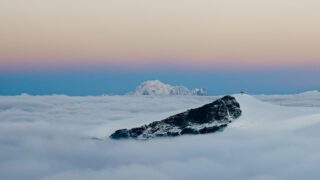

ABOUT THE AUTHOR

Rami Rasamny
Rami Rasamny is the founder of Life Happens Outdoors, a premium adventure travel company that uses the outdoors as a catalyst for human transformation. His work brings people into the mountains not only for challenge, but for clarity, confidence, and connection. He believes that when people answer the call to adventure truthfully, they come back different.