Adventure Travel Destinations | BY Rami Rasamny | PUBLISH DATE: March 28 2024 | READ TIME: 3 mins | UPDATED DATE: June 05 2026
Understanding the Differences: Mont Blanc vs. Matterhorn

When it comes to alpine climbing, each peak presents its own set of challenges and requirements. Let’s examine the key differences between climbing Mont Blanc and the Matterhorn in terms of fitness level and skills profile. Mont Blanc Fitness Level: Enduring To successfully climb Mont Blanc, climbers must possess enduring fitness levels. Regular high aerobic, […]
When it comes to alpine climbing, each peak presents its own set of challenges and requirements. Let’s examine the key differences between climbing Mont Blanc and the Matterhorn in terms of fitness level and skills profile.
Mont Blanc

Fitness Level: Enduring
To successfully climb Mont Blanc, climbers must possess enduring fitness levels. Regular high aerobic, endurance, and strength training are essential to prepare for the physical demands of the ascent. Cardiovascular exercises such as running, hiking, trail running, and cycling help build endurance, while strength training exercises like push-ups, squats, lunges, and planks enhance overall strength and stability. Flexibility training through yoga aids in preventing injuries and improving agility. Mental resilience is equally important, requiring climbers to engage in mental training and stress management techniques such as meditation and isometric holds.

Skills Profile: Learn New Skills
Climbers do not need prior mountaineering skills to attempt Mont Blanc. The foundational skills of mountaineering and the use of technical equipment are taught as part of the experience. However, climbers should be prepared for a challenging ascent, with the highest mountain grade being AD (Assez Difficile) and the highest rock grade being 4b. The maximum altitude reached is 4810m. Our LHO Mont Blanc Summit Course offers a comprehensive program that includes alpine knowledge and skills enhancement to prepare climbers for the ascent
Matterhorn

Fitness Level: Scale Breaker
Climbing the Matterhorn requires a higher level of fitness compared to Mont Blanc. Regular and sustained high aerobic, endurance, and strength training are crucial to tackle the demanding ascent. In addition to cardio and strength exercises similar to those recommended for Mont Blanc, climbers should incorporate high-intensity interval training (HIIT) to boost endurance and agility. Mental resilience training remains essential for facing the challenges of high-altitude climbing
Skills Profile: Experience Required
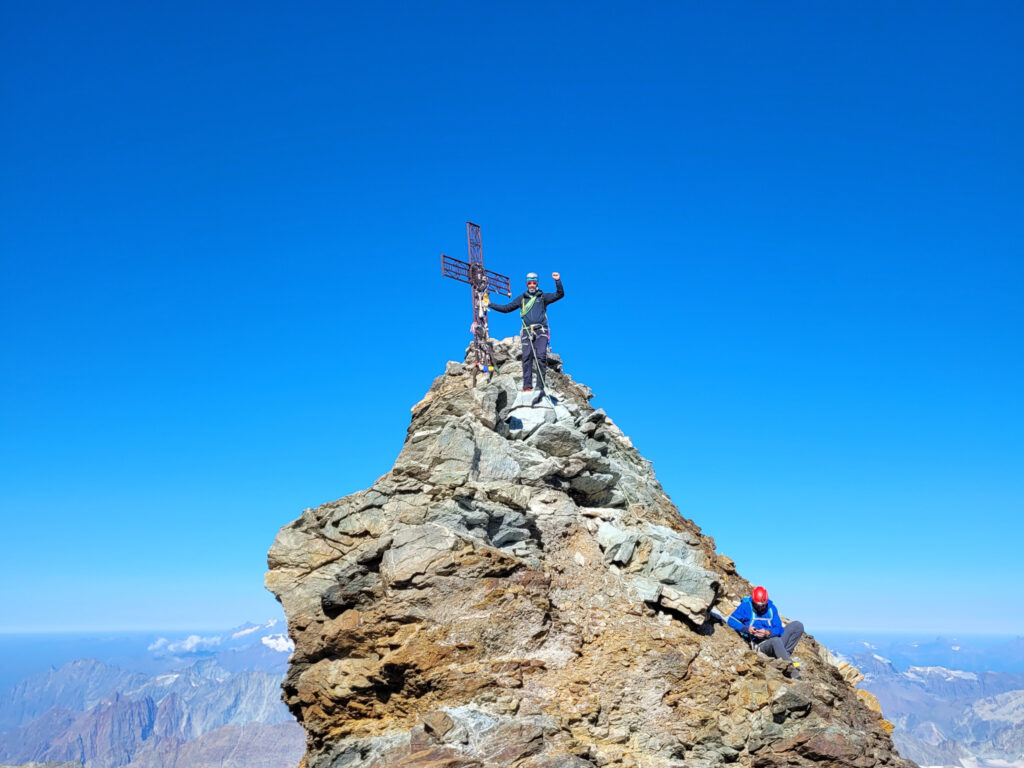
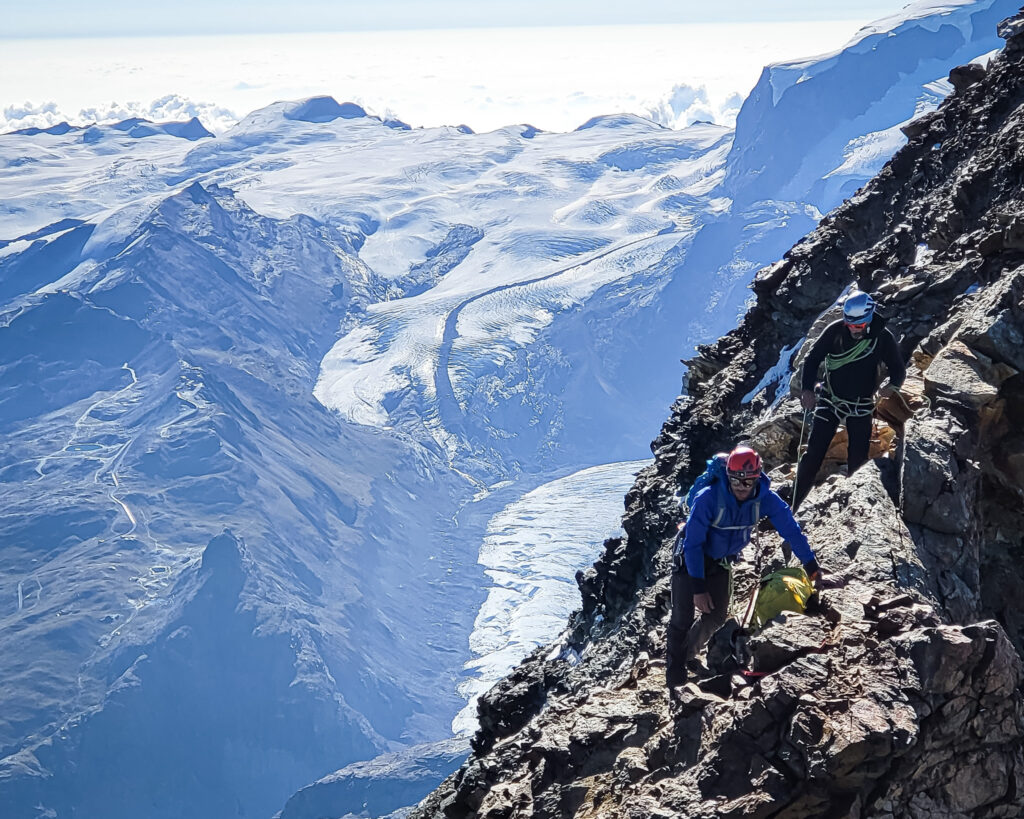
Unlike Mont Blanc, climbers attempting the Matterhorn must already possess foundational knowledge in the use of crampons, ice axes, ropes, and other technical mountaineering equipment. Prior experience in alpine climbing is highly recommended, with climbers encouraged to join our Mont Blanc Summit Course or Alpine Mountaineering Course before attempting the Matterhorn. The Matterhorn presents a higher level of technical difficulty, with the highest mountain grade being AD+ (Assez Difficile Plus) and the highest rock grade being 4c. The maximum altitude reached is 4478m. Our LHO Matterhorn Course offers an advanced alpine itinerary designed for experienced climbers seeking to elevate their skills to summit the iconic peak.
In summary, while both Mont Blanc and the Matterhorn offer exhilarating alpine challenges, climbers should carefully consider their fitness levels and skill proficiency before attempting either ascent. Whether embarking on the Mont Blanc Summit Course or the Matterhorn Course with Life Happens Outdoors, climbers can expect a meticulously crafted program designed to prepare them for the journey ahead and foster a passion for alpine adventure.
Planning a climb in the Alps? Explore our complete Alps guide covering mountaineering courses, classic climbing objectives, and everything you need to know.
CONTINUE YOUR RESEARCH







ABOUT THE AUTHOR

Rami Rasamny
Rami Rasamny is the founder of Life Happens Outdoors, a premium adventure travel company that uses the outdoors as a catalyst for human transformation. His work brings people into the mountains not only for challenge, but for clarity, confidence, and connection. He believes that when people answer the call to adventure truthfully, they come back different.