Adventure Travel Destinations | BY Elie Abi Akar | PUBLISH DATE: January 14 2023 | READ TIME: 8 mins | UPDATED DATE: September 23 2026
Kilimanjaro vs Everest Base Camp: Which Trek Is Right for You?

DOWNLOAD YOUR Everest Base Camp Trek GUIDEBOOK
Choose Kilimanjaro if you want a shorter, summit-centred expedition with supported tent camping and the clear objective of standing on Africa’s highest point. Choose Everest Base Camp if you want a longer tea-house trek through the Khumbu, with more time among Himalayan villages and the goal of reaching the foot of the world’s highest mountain. […]
Choose Kilimanjaro if you want a shorter, summit-centred expedition with supported tent camping and the clear objective of standing on Africa’s highest point. Choose Everest Base Camp if you want a longer tea-house trek through the Khumbu, with more time among Himalayan villages and the goal of reaching the foot of the world’s highest mountain.
Both are challenging, non-technical high-altitude adventures. Both can suit a prepared first-time high-altitude trekker, and neither should be treated as the option that requires no experience or preparation.
Kilimanjaro vs Everest Base Camp at a Glance
| Decision factor | Kilimanjaro | Everest Base Camp |
|---|---|---|
| Main goal | Summit Uhuru Peak, Africa’s highest point | Reach Everest Base Camp; this is not an Everest summit climb |
| Highest objective | 5,895 metres | 5,364 metres at Base Camp |
| Current LHO trip | 9 days, arrival to departure | 16 days, arrival to departure |
| Accommodation | Hotel in Moshi and supported tent camps on the mountain | Hotel in Kathmandu and tea houses on the trail |
| Technical skills | Non-technical; no previous mountaineering experience required | Non-technical trek; no mountaineering experience required |
| Defining challenge | Higher endpoint and a concentrated summit night | More consecutive trekking days and cumulative effort |
| Experience style | A compact expedition with a single summit objective | A longer journey through the Khumbu to the foot of Everest |
These are the current Life Happens Outdoors trip formats. Other operators and routes may use different schedules.
Hiking Experience and Skills
Both adventures can be a first step into multi-day hiking in a challenging environment, but prior walking experience helps. Local hikes let you test your boots, daypack, layers and pacing before you commit to consecutive days at altitude.
Kilimanjaro is a non-technical high-altitude summit. The current LHO trip is designed for active first-time climbers and ambitious hikers who prepare properly. Everest Base Camp is also non-technical and can suit a prepared first-time high-altitude trekker, but you should be ready to walk for several hours on consecutive days and stay comfortable in simple mountain accommodation.
Neither trip requires ropes, technical climbing or previous mountaineering qualifications on the standard itinerary. Both require consistent training, patience and honest communication with your guides.

Which Is More Challenging?
There is no useful one-word answer. Kilimanjaro concentrates much of its difficulty into a higher endpoint and summit night. Everest Base Camp spreads its challenge across a longer itinerary, repeated trekking days and the cumulative demands of the Khumbu.
Altitude and Acclimatisation
Both Kilimanjaro and Everest Base Camp treks pose risks of altitude sickness. However, the rapid ascent on Kilimanjaro makes it more challenging in terms of acclimatization. Everest Base Camp, with its gradual ascent, allows for better adjustment to the high altitude.
Terrain and Endurance
Kilimanjaro moves through rainforest, moorland and alpine desert before the rocky summit approach. The Machame itinerary includes sustained ascents, the Barranco Wall, cold camps and a long summit push followed by descent.
Everest Base Camp follows rugged valley trails through the Khumbu. Expect stone steps, suspension bridges, repeated climbs and descents, and higher rocky or moraine terrain as you approach Base Camp. The standard trip does not have a single summit night, but it asks you to keep walking across more days.
Fitness and Preparation
Both trips require physical and mental preparation. Build an aerobic base, strengthen your legs and core, practise hiking on consecutive days and use the footwear and daypack you will take.
Use the Kilimanjaro training guide or Everest Base Camp training guide for destination-specific preparation rather than trying to fit a complete plan into this comparison.
Accommodation and Daily Comfort
Accommodation is one of the clearest differences.
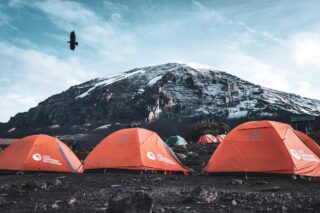
On Kilimanjaro, the current trip combines a hotel in Moshi with supported tent camps on the mountain. The LHO camp setup includes tents, foam sleeping mats, private portable toilets, treated drinking water and prepared meals. You sleep outdoors and move through a more compact expedition rhythm.
On Everest Base Camp, the current trip combines a hotel in Kathmandu with tea houses on the trail. Tea houses are simple mountain lodges. Standards are generally stronger in lower villages and become more basic higher up; shared facilities and paid extras are common in some locations. The indoor bed and dining-room routine may appeal if you prefer not to camp, but it is still simple mountain accommodation rather than a hotel experience.
Choose by the format you will enjoy: supported camping and a wilder expedition rhythm on Kilimanjaro, or village-to-village tea-house trekking on Everest Base Camp.

Duration and Travel Logistics
The current LHO Kilimanjaro trip is 9 days from arrival to departure. The current Everest Base Camp trip is 16 days, including 12 days in the Khumbu and planned acclimatisation time in Namche Bazaar and Dingboche.
Everest Base Camp also involves Lukla aviation. The current trip includes one helicopter sector between Kathmandu and Lukla, while the other sector is normally completed by fixed-wing flight. The direction depends on weather and airport operations. A separate high-altitude helicopter return may be available as a paid option under suitable conditions, but it is not the standard itinerary and should not be treated as a guaranteed shortcut.
If your available leave is limited, Kilimanjaro is usually the easier format to fit into a calendar. If you want a longer journey and have more time, Everest Base Camp gives the landscape, villages and trail rhythm more room to unfold.
The Achievement Factor
Kilimanjaro offers a summit. Reaching Uhuru Peak means standing at 5,895 metres on the highest mountain in Africa. The experience builds toward one clear objective and a demanding summit push.
Everest Base Camp offers a different achievement. You do not climb Everest; you trek to Base Camp at 5,364 metres and stand at the foot of the world’s highest mountain. The reward comes from the full journey through the Khumbu as much as the final destination.
Choose the form of achievement that matters more to you: standing on a major summit or completing a longer Himalayan pilgrimage to an iconic base camp.

Scenery and Cultural Experience
Kilimanjaro changes dramatically with altitude. The route moves from rainforest to moorland, alpine desert and high-altitude wilderness. Time in Moshi and the close relationship with the Tanzanian guide and porter team form an important part of the experience.
Everest Base Camp moves through Sherpa villages, tea houses and monastery landscapes beneath some of the Himalayas’ most recognised peaks. Kathmandu adds another layer before and after the trek, while the trail gives you more time in settled mountain communities.
Neither destination is culturally “better”. Kilimanjaro feels like a concentrated mountain expedition supported by a large local team. Everest Base Camp feels like a longer journey through an inhabited Himalayan landscape.
Choose Kilimanjaro If You Want
- a true summit rather than a base-camp objective;
- the shorter of the two current LHO trips;
- supported camping and an expedition atmosphere;
- one concentrated summit challenge; and
- changing ecological zones on a single mountain.
For routes, costs, training and preparation, use the guide to plan a Kilimanjaro climb.
Explore the Climb Kilimanjaro trip.
Choose Everest Base Camp If You Want
- a longer journey rather than a single summit objective;
- tea-house accommodation instead of tent camping;
- more time among Khumbu villages and monasteries;
- repeated trekking days and a gradual sense of progression; and
- the experience of reaching the foot of Mount Everest.
Explore the Everest Base Camp Trek.

Final Recommendation
If the summit itself is your strongest motivation and you have less time, Kilimanjaro is likely the better fit. If you want the longer trail journey, tea-house culture and Himalayan setting, choose Everest Base Camp.
If neither preference is decisive, choose by accommodation. Ask yourself whether you would rather sleep in a supported tent camp and focus on one summit, or walk village to village and sleep in simple tea houses. That answer is often more useful than trying to label one trip universally harder or better.
Frequently Asked Questions
Is Kilimanjaro harder than Everest Base Camp?
Kilimanjaro reaches a higher objective and has a concentrated summit night. Everest Base Camp is longer and builds fatigue across more trekking days. The harder trip for you depends on how you respond to those different demands, so neither should be treated as the universally easier option.
Which is better for a first-time high-altitude trekker?
Either can be a first high-altitude trip with serious preparation and suitable support. Choose Kilimanjaro if a summit and camping motivate you; choose Everest Base Camp if tea houses and a longer trail journey appeal more. “First time” does not mean “no preparation”.
Which trip is shorter?
The current LHO Kilimanjaro trip is 9 days from arrival to departure. The current LHO Everest Base Camp trip is 16 days. Check the live trip pages before booking because published formats can change.
Do I need mountaineering experience?
No technical mountaineering experience is required for either standard LHO itinerary. You do need appropriate walking fitness, preparation for consecutive days and the willingness to follow the team’s pace and guidance.
When should I go?
The destinations have different weather patterns and departure windows. Compare the current dates on both trip pages rather than choosing from a generic calendar, then assess which season fits your schedule and preferred conditions.
Do I need a guide?
The rules and practical considerations differ between the two destinations. Use the separate guided-versus-independent comparison for that decision.
What training do I need?
Prepare for consecutive walking days with hiking, aerobic work, leg and core strength, gradual progression and practice with your equipment. Follow the destination-specific training guides in the article for the full plan.
What about travel insurance?
When embarking on high-altitude treks like Kilimanjaro or Everest Base Camp, it is essential to have comprehensive travel insurance that covers high-altitude trekking and emergency evacuation. This will provide you with peace of mind during your adventure.
Remember to consult with your healthcare provider before undertaking any high-altitude trek to ensure you are in good health and physically capable
The Nepal trekking content in this article was reviewed for accuracy by Shiva Raj Bastakoti, a Nepalese Trekking Guide licensed by Nepal’s Department of Tourism (Licence No. 2997).
This article was reviewed for Kilimanjaro accuracy by Emmanuel Matinde Asseno, a Tanzanian mountain guide licensed by Tanzania’s Ministry of Natural Resources and Tourism (Mountain Guiding Licence No. 037979) and a current Board Member of the Kilimanjaro Guides Association.
Expert review
Reviewed by
Dr. Nima Namgyal Sherpa
Mountaineering guide and expedition doctor
Dr. Nima is LHO’s high-altitude and wilderness medicine reviewer. He has reviewed the altitude-related medical and physiological guidance in this article.
CONTINUE YOUR RESEARCH





Trail Running for Trek Training: How to Use the Trails to Prepare for Kilimanjaro, Everest Base Camp and More


ABOUT THE AUTHOR

Elie Abi Akar
Elie is the Base Camp Chief at Life Happens Outdoors, orchestrating every adventure from first step to summit. He believes the outdoors offer something essential which is a space to disconnect from routine and reconnect with what truly matters. His mission is simple: to make every journey feel meaningful and unforgettable.