








Trip Planning for Treks & Climbs | BY Rami Rasamny | PUBLISH DATE: December 10 2025 | READ TIME: 5 mins | UPDATED DATE: September 28 2026
How Long Does the Annapurna Base Camp Trek Take?

DOWNLOAD YOUR Annapurna Base Camp Trek GUIDEBOOK
LHO’s current Annapurna Base Camp itinerary spans eight calendar days, with trekking on five of those days. That is one specific programme, not a universal length for every Annapurna Base Camp trek. Other itineraries count from different starting points and may include extra walking, overnight stops or travel days. The useful question is not simply […]
LHO’s current Annapurna Base Camp itinerary spans eight calendar days, with trekking on five of those days. That is one specific programme, not a universal length for every Annapurna Base Camp trek. Other itineraries count from different starting points and may include extra walking, overnight stops or travel days.
The useful question is not simply “How many days?” It is “How many days from where to where, and what happens on each of them?” Once those boundaries are clear, you can compare trips and work out how much time to take away from home.
Walking days and total trip days are different
A walking-day count describes days spent on the trail. A total itinerary count may also include arrival, transfers and departure. Some days contain both walking and transport, so adding every category together can accidentally count the same day twice.
| Count | What to look for | Why it matters |
|---|---|---|
| Walking days | Every day that includes a trekking stage, including the descent | Reaching base camp is only part of the journey |
| Programme days | The operator’s start and finish, including arrival and transfer days | This is the schedule you are booking |
| Time away from home | International travel and any extra nights you arrange | Your leave requirement can be longer than the advertised trip |
Check the nightly stops as well as the day count. Two trips with the same number of days can ask very different things of you.
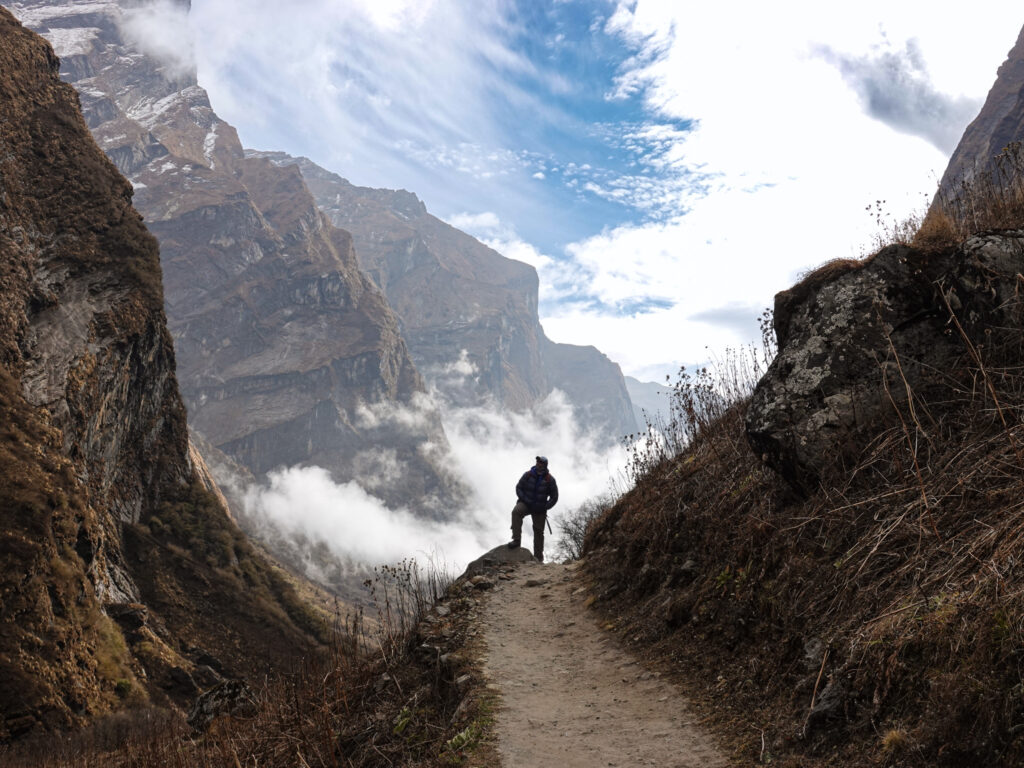
How LHO’s eight-day itinerary fits together
The published Annapurna Base Camp trip currently uses this structure:
| Programme day | Main purpose | Includes trekking? |
|---|---|---|
| Day 1 | Arrive in Kathmandu and meet the team | No |
| Day 2 | Travel towards the Annapurna region and begin the trek | Yes |
| Days 3–4 | Continue through the sanctuary and reach base camp | Yes |
| Days 5–6 | Descend, finish the trek and return to Pokhara | Yes |
| Day 7 | Return from Pokhara to Kathmandu | No |
| Day 8 | Depart from Kathmandu | No |
Days 2–6 make five walking days. Days 2 and 6 also contain transport, so they should not be counted again as additional transfer days. International flights sit outside the package: check their timing against the itinerary before booking.
The full trip page owns the current daily plan, inclusions and any changes. Use this summary to understand its structure, then check the details for your departure with the team.

Why another itinerary may take longer
Different walking starts and finishes. A road transfer can change how much of the approach you walk. A place name alone does not establish a trek’s length: you need the precise start, finish and overnight sequence. Our Annapurna Base Camp access guide explains the journey into the region.
Extra sections and stops. A route with additional village stays or a side trip is a different itinerary. Compare what is included before treating a shorter schedule as the same experience delivered faster.
Different daily demands. Look at the longest ascent and descent days, the overnight locations and the time allocated to each stage. Your recent walking experience is useful information for the team when discussing whether the itinerary fits you.
Travel arrangements. Check whether a quoted duration starts in Kathmandu, Pokhara or at the trailhead. Also check where it finishes. A trek-only quote and a complete in-country programme cannot be compared by their headline day counts alone.
Five questions to answer before booking
- Does the stated duration include the return walk from base camp?
- Which days combine a transfer with trekking?
- What are the nightly stops and the most demanding walking days?
- When must I arrive, and when does the programme release me for onward travel?
- If transport is delayed or the itinerary changes, what arrangements and costs fall within the booking?
Keep your flight plans flexible enough for the arrangements you agree with the team. No fixed number of spare days removes every possibility of disruption, and extra time outside the published programme should not be assumed to be included.
Common questions about ABC duration
Can Annapurna Base Camp fit into five walking days?
The current LHO programme includes five walking days within eight calendar days. That does not mean five days is suitable for every walker or every route. Discuss the actual stages and your experience before choosing the programme.
Is a seven-day itinerary automatically more comfortable?
The number alone does not tell you. Seven days from Kathmandu may contain fewer walking days than seven days measured from a trailhead. Compare the stops, transfers, daily demands and return journey.
Should I choose the shortest available trip?
Choose a schedule that fits your experience and the journey you want. A compressed itinerary is not made appropriate simply by being fit or willing to walk faster. Discuss the plan with the trekking team rather than selecting solely by price or leave allowance.
Where should I look if I am still choosing a Nepal trek?
Use the Nepal trek chooser to compare the wider options. This page explains how to count Annapurna Base Camp days; the chooser helps you decide whether ABC is the journey you want.
Once the eight-day itinerary fits your time, use the Annapurna Base Camp budget guide to plan the complete cost.
Plan the whole journey
Start with the Annapurna Base Camp itinerary and inclusions. Once its start, finish and walking stages fit your plans, bring the team your questions about arrival timing and preparation. A clear schedule makes it easier to arrive ready for the experience ahead.
CONTINUE YOUR RESEARCH


ABOUT THE AUTHOR

Rami Rasamny
Rami Rasamny is the founder of Life Happens Outdoors, a premium adventure travel company that uses the outdoors as a catalyst for human transformation. His work brings people into the mountains not only for challenge, but for clarity, confidence, and connection. He believes that when people answer the call to adventure truthfully, they come back different.