







Adventure Travel Destinations | BY Rami Rasamny | PUBLISH DATE: December 02 2025 | READ TIME: 8 mins | UPDATED DATE: October 05 2026
Annapurna Base Camp Trek Guide: How to Get There
DOWNLOAD YOUR Annapurna Base Camp Trek GUIDEBOOK
Annapurna Base Camp sits at 4,130 metres in the Annapurna Sanctuary, north of Pokhara. Most international travellers fly to Kathmandu, continue to Pokhara by domestic flight or road, then transfer to a trailhead such as Jhinu Danda before trekking through villages and forest into the sanctuary. The exact trailhead and number of trekking days depend […]
Annapurna Base Camp sits at 4,130 metres in the Annapurna Sanctuary, north of Pokhara. Most international travellers fly to Kathmandu, continue to Pokhara by domestic flight or road, then transfer to a trailhead such as Jhinu Danda before trekking through villages and forest into the sanctuary. The exact trailhead and number of trekking days depend on the itinerary. On the trekking route, you continue on foot beyond the road access.
This guide breaks down everything: where ABC is on the map, how to reach it, where the trail starts, how it differs from the Annapurna Circuit, and why this trek is one of the world’s most transformative multi-day journeys.
Where Is Annapurna Base Camp?
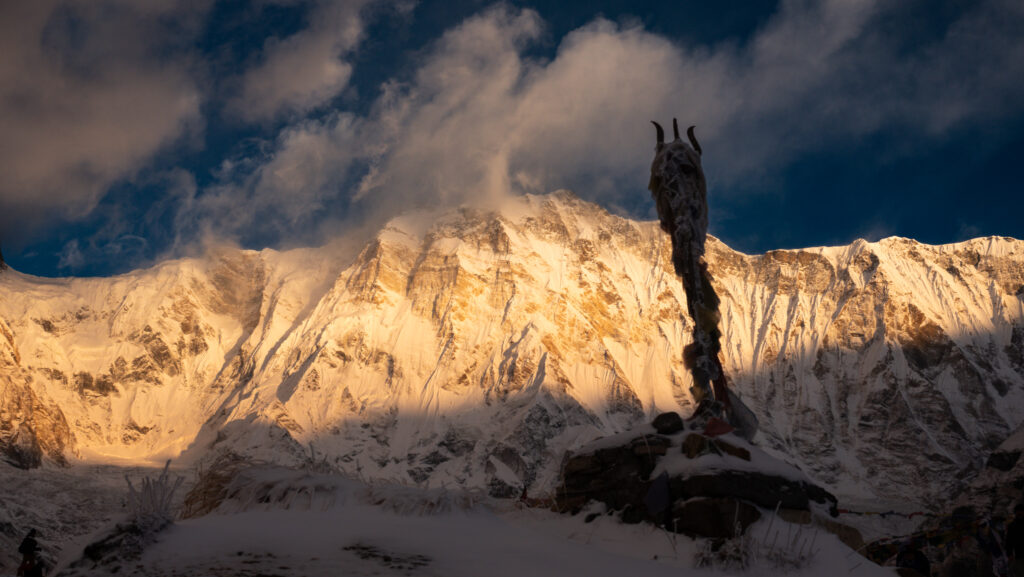
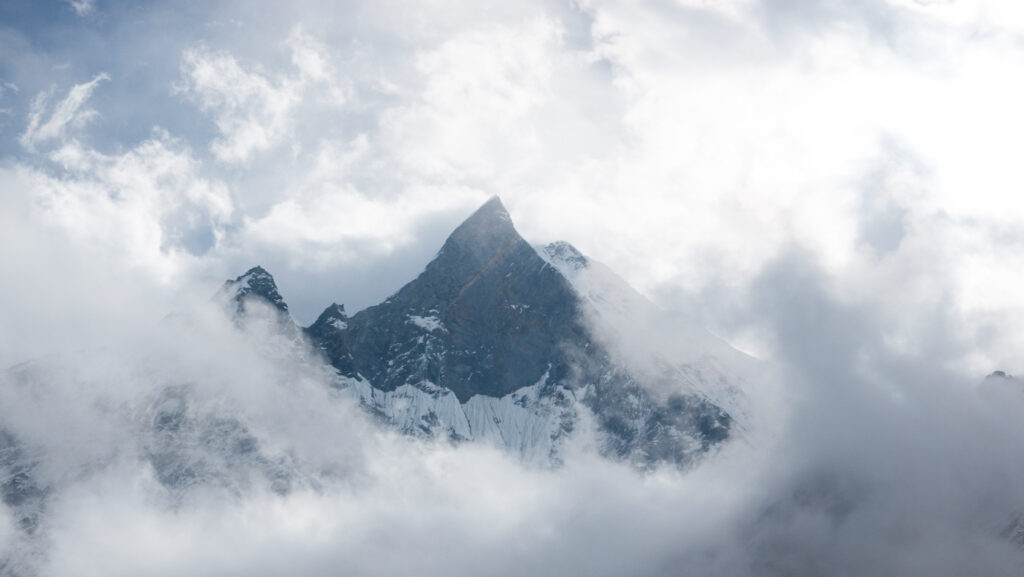
Annapurna Base Camp, often called ABC, sits at roughly 4,130 m (13,550 ft) in central Nepal. It lies north of the lakeside city of Pokhara, inside the Annapurna Sanctuary: a natural amphitheatre surrounded by Annapurna I, Annapurna South, Hiunchuli, and the sacred peak Machapuchare.
Unlike Everest Base Camp, which is a long approach through gradually rising valleys, Annapurna Base Camp is tucked deep inside a high Himalayan bowl. Reaching it feels like stepping into a secret world that only reveals itself to those willing to earn it on foot.
What Airport Do You Fly Into for Annapurna Base Camp?
For the Life Happens Outdoors trip, arrive at Tribhuvan International Airport (KTM) in Kathmandu. The guided itinerary starts and finishes in Kathmandu, with Pokhara as the gateway to the Annapurna trekking region.
Travel from Kathmandu to Pokhara is by domestic flight or road. LHO’s published itinerary uses scheduled flights in both directions; if weather prevents a flight from operating, a private van transfer is included at no extra cost. Flight schedules and road journey times vary, so use your confirmed departure arrangements and allow flexibility for onward travel.
The access sequence is Kathmandu, Pokhara, a road transfer to the trailhead, and then the walk into the Annapurna Sanctuary.
LHO access plan at a glance
| Stage | How you travel | Published LHO plan |
|---|---|---|
| Kathmandu–Pokhara | Scheduled flight, or the included private van if weather prevents flying | Travel to Pokhara on Day 2; return to Kathmandu on Day 7 |
| Pokhara to the trailhead | Road transfer, followed by walking towards Chhomrong | Day 2; confirm the final trailhead and road access with your team |
| Trailhead to ABC and back | Walking through the Annapurna Sanctuary | Five trekking days, Days 2–6, including an overnight at ABC and a return via Jhinu |
| Departure from Kathmandu | Airport transfer | Day 8; allow additional time for international travel |
This table summarises the published eight-day LHO itinerary. Weather, road access and guide decisions can affect the daily plan. Confirm the arrangements for your departure before travelling.
Where Does the Annapurna Base Camp Trek Start?
Annapurna Base Camp has several possible starting points. The Annapurna Rural Municipality’s route overview describes different approaches and combinations. These are general route options; the start used for a particular departure depends on the itinerary and current road access.
- Nayapul: a traditional starting point for Annapurna Sanctuary routes and itineraries that include Poon Hill.
- Jhinu Danda area: an upper-valley approach used by shorter itineraries when road access allows. Confirm the vehicle drop-off and walking start with your guide.
- Kande: an alternative approach via Australian Camp and connecting trails towards Landruk and the Sanctuary, adding different villages and walking stages.
LHO’s published route heads towards Chhomrong, then continues through Sinuwa, Bamboo, Dovan and Himalaya before Deurali, Machhapuchhre Base Camp and Annapurna Base Camp. Overnight stops and daily stages depend on the itinerary; the names of places passed along the way are not a list of separate overnight stays.
How Do You Trek to Annapurna Base Camp?
Think of the journey as a climb through layers of landscape. In the early days you’re walking beside rice terraces, river valleys, and warm lowland forests. Soon you enter steeper, narrower trails lined with bamboo and deep green forest. Eventually the trees drop away and you step into the high valley near Machapuchare Base Camp, where everything opens and the mountains surround you.
The final push from MBC to ABC is a slow, steady ascent across open terrain where altitude makes each step deliberate. When you reach the base camp plateau at 4,130 m, the entire Annapurna massif rises in a 360-degree wall of ice and rock. The sense of arrival is unmistakable.
The time and distance needed for ABC depend on the trailhead, side trips and overnight stops. LHO’s trip is eight days from arrival to departure in Kathmandu, including five consecutive trekking days. The published plan reaches ABC on Day 4, stays overnight for sunrise, and returns via Jhinu to Pokhara on Day 6.
Five trekking days still involve sustained effort. For stage distances, ascent, descent and preparation advice, read our Annapurna Base Camp difficulty guide.
Annapurna Base Camp vs Annapurna Circuit: What’s the Difference?
Although they both sit in the same mountain range, the two treks offer very different experiences.
The ABC trek is an out-and-back route that climbs into the heart of the Sanctuary, topping out at 4,130 m. It is shorter, more accessible, and focuses on a single dramatic objective.
The Annapurna Circuit is a long loop around the entire range, often 15–20 days, crossing the high Thorong La Pass at 5,416 m. The landscapes shift dramatically as you circle the mountains, from jungles to high alpine deserts. The Circuit is a larger, more committing expedition.
If you want an achievable yet epic journey with one unforgettable destination, ABC is the one.
Is Annapurna Base Camp Worth It?
Absolutely. The Annapurna Base Camp trek delivers some of the most varied and rewarding scenery of any hike in the Himalaya. You pass through rural villages, deep forests, narrow gorges, high alpine valleys, and finally into one of the most dramatic mountain bowls on earth. You do not need technical climbing skills; just determination, basic fitness, and good pacing at altitude.
Trekking here means constant change, a growing sense of anticipation, and a final sunrise you will never forget.
When Is the Best Time to Trek Annapurna Base Camp?
The broad Annapurna trekking seasons are spring (March–May) and autumn (September–November). March–April and October–November are common core-season choices within those wider windows. September can still overlap with monsoon rain, while conditions in May vary as summer approaches.
The Nepal Tourism Board’s climate guidance places the monsoon broadly in June–September and highlights clearer post-monsoon skies in October and November. Winter is colder, particularly higher on the route. Treat seasonal patterns as planning guidance: visibility, trail conditions and transport can change in any month.
The Life Happens Outdoors Experience: Seamless From Kathmandu to Kathmandu
Here’s something few people talk about: the trek itself is only part of the journey. The rest is everything that happens around it: navigating airports, managing paperwork, arranging transport, choosing the right lodges, pacing yourself safely, and making good altitude decisions. When you trek with Life Happens Outdoors, all of that becomes effortless.
From the moment you land in Kathmandu, we take care of you. We pick you up at the airport, guide you through the city, help you prepare gear, and ensure every detail is ready before you travel to Pokhara. Your permits are handled, your logistics are coordinated, and your itinerary is planned with precision.
Local trekking guides lead the trail days and manage pace and route decisions, working with the LHO Team Leader, porter team and Base Camp support. You carry the daypack items you need and remain responsible for preparing for consecutive walking days and telling the team how you feel. Read the published ABC itinerary for the accommodation, transport, inclusions and arrangements when plans change.
When you wake up at Annapurna Base Camp for sunrise, the world opens around you. All the effort that brought you there becomes worth it, and the only thing left is the moment.
Afterward, we bring you down the valley, back to Pokhara, then back to Kathmandu, where a hot shower, a comfortable bed, and a celebration dinner wait. No loose ends, no post-trek stress, no figuring things out while exhausted.
With Life Happens Outdoors, your Annapurna Base Camp journey begins and ends in Kathmandu with complete support, connection, and care. You get to focus on the mountains. Review the full inclusions and exclusions before booking, including personal equipment, insurance, discretionary tips and services outside the itinerary.
Now that you know how to get there, use our ABC for first-time trekkers guide for first timers to plan the full experience, including timing, training, altitude, and what to pack.
Planning a trip to Nepal? Explore our complete Nepal guide covering treks, climbs, and everything you need to know.
This article was reviewed for trekking accuracy by Shiva Raj Bastakoti, a Nepalese Trekking Guide licensed by Nepal’s Department of Tourism (Licence No. 2997).
CONTINUE YOUR RESEARCH




ABOUT THE AUTHOR
Rami Rasamny
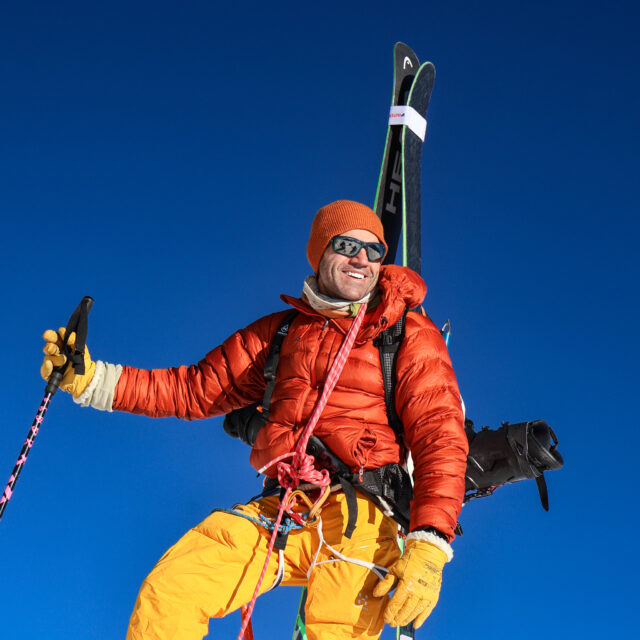
Rami Rasamny is the founder of Life Happens Outdoors, a premium adventure travel company that uses the outdoors as a catalyst for human transformation. His work brings people into the mountains not only for challenge, but for clarity, confidence, and connection. He believes that when people answer the call to adventure truthfully, they come back different.