









Trip Planning for Treks & Climbs | BY Rami Rasamny | PUBLISH DATE: January 07 2025 | READ TIME: 12 mins | UPDATED DATE: October 31 2026
Guided vs Self-Guided Tour du Mont Blanc: Costs, Logistics and Support Compared
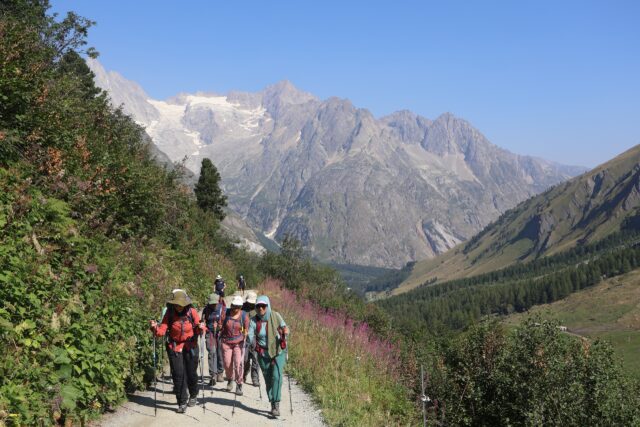
DOWNLOAD YOUR Guided Tour du Mont Blanc Trek GUIDEBOOK
Choose how to organise the Tour du Mont Blanc by comparing the responsibilities, support and complete costs of self-guided, guide-only and fully supported travel.
Reviewed by Lucía Guichot Martín, IFMGA Mountain Guide. Reviewed October 2026.
A self-guided Tour du Mont Blanc gives you responsibility for decisions on the trail, even when an operator books your accommodation. A guide-only arrangement adds mountain leadership within an agreed scope. A fully supported trip coordinates more of the journey around that guiding. The right choice depends on the independence you want, the responsibilities you can manage and the complete cost of the itinerary you will actually walk.
Start with those questions rather than the cheapest headline. Support can give you more time and attention for the mountains and the people around you. Independent travel can offer the satisfaction of shaping the journey yourself. Both require preparation for the walking.
Three ways to organise the Tour du Mont Blanc
These models describe different divisions of responsibility. They are useful starting points, but suppliers do not use the labels consistently. Before paying, ask who organises each component, who helps when something changes and which costs remain yours.
Independent or self-guided
You walk without a guide accompanying you. On a trip you plan yourself, you also choose the stages, arrange beds and meals, book transport and coordinate any luggage service. You take responsibility for navigation, daily decisions and changes to the plan.
An organised self-guided package can take care of some bookings and provide route information or remote assistance. For example, Altitude Montblanc’s self-guided programme includes accommodation and meals, with a luggage-transport option. Self-guided therefore does not necessarily mean carrying every possession or booking every supplier yourself. Check the actual assistance offered, including its availability and limits.
Guide-only
A guide-only arrangement centres on professional leadership during the agreed walking days. It can suit people who want a guide on the trail while retaining control over the rest of the trip.
The quotation may leave accommodation, meals, luggage and transport for you to organise and pay for. Some arrangements include more. Confirm the guide’s working days and responsibilities, and whether their accommodation, meals and travel expenses sit inside the fee or are additional costs for the group.
Fully supported
A fully supported trip combines guiding with a broader set of arranged services. Depending on the programme, these may include accommodation, meals, luggage movement, transfers and a team coordinating the itinerary.
You exchange some freedom to choose individual components for fewer separate arrangements. The boundaries still matter: flights, equipment, insurance, supplements or changes outside the itinerary can remain your responsibility. The label alone cannot tell you what is included.
Who manages what?
Use this table to compare responsibilities before comparing quotations. The written itinerary and booking terms take precedence over these general distinctions. In particular, separate the person leading the walking from the person coordinating accommodation and transport.
| Decision | Independent or self-guided | Guide-only | Fully supported |
|---|---|---|---|
| Planning and bookings | You arrange them, or an operator books the components listed in your package. | You or your agent coordinates services outside the guiding agreement. | The operator coordinates the services included in the programme. |
| Navigation and daily decisions | You navigate and assess the plan. Route notes and remote help have their own limits. | The guide leads during the agreed guiding days. Confirm arrangements outside those hours. | The guide leads the walking; the wider support team handles its contracted logistics. |
| Independence and flexibility | You can choose your approach, within booked accommodation, available services and conditions. | Flexibility depends on whether the booking is private or shared and what the guide agrees. | You join a defined programme. Changes depend on the team, conditions and available alternatives. |
| Accommodation and meals | Check every reservation, room type and meal plan, including an organised package. | Confirm who books and pays for both your arrangements and any guide expenses. | Check the included rooming and meal arrangements, plus supplements and personal spending. |
| Luggage | A transfer can be included or purchased separately. Check each overnight stop. | Do not assume baggage service comes with the guiding fee. | Check the transferred bag, weight limit and access schedule. Daily essentials remain with you. |
| Transport | You arrange it unless your package specifies otherwise. | Confirm client transport, guide transport and who coordinates connections. | Specified transfers can be included. Individual travel and changes may remain extra. |
| Disruptions | You manage changes, with any contracted remote assistance. | The guide handles mountain decisions; booking changes and payments depend on the agreement. | The team coordinates within its scope. Excluded changes can still create costs. |
| Pace and social experience | You choose your companions and walking approach within the itinerary’s constraints. | Private or shared arrangements determine group pace and company. | A shared departure creates an organised group setting with a common walking plan. |
| Budget certainty | Add all paid components and a contingency. A package can fix some costs in advance. | Add exclusions and guide expenses to the fee. | More costs may be bundled, but exclusions, supplements and contingency still matter. |
Compare the complete cost on the same basis
Two trips called “Tour du Mont Blanc” may differ in their walking stages, nights, rooming and transport. A shorter programme with selected stages is a different proposition from a longer continuous circuit. Establish what you are buying before deciding which total represents better value.
Write down the calendar days, walking days, accommodation nights and arrival and departure points. Then match the room standard and services you want. The TMB duration guide helps distinguish walking time from the whole travel commitment.
For each quotation, mark the following categories as included, excluded, optional or unclear:
- Accommodation: nights, shared or private rooms, supplements and extra nights before or after the trek.
- Meals: breakfast, dinner, lunches, picnic orders, snacks and drinks.
- Guiding and support: guiding days, wider coordination and any separately charged guide expenses.
- Travel and local transport: getting to the meeting point, airport or rail connections, buses, lifts and itinerary transfers.
- Luggage: transfer, storage, any supplied bag, weight restrictions and overnight stops without access.
- Personal requirements: equipment purchases or rental, insurance and other expenses excluded by the provider.
- Contingency: a realistic reserve for additional costs if plans change.
Accommodation deserves particular attention. A dormitory bed, a shared hotel room and private occupancy are different purchases. Check the actual meal plan rather than assuming every night works the same way. Our TMB accommodation guide covers the rooming and comfort questions in more detail.
Keep insurance in the planned budget rather than treating it as an emergency reserve. Ask your insurer to confirm that the policy fits your intended trip; inclusion in a package or ownership of a policy does not by itself establish the cover you need.
Add the same categories and a comparable contingency to each model. Include payment, amendment and cancellation terms in the comparison, because a lower quotation can still leave you with more separate commitments. No model is always cheapest once you match the journey and account for its exclusions.
You can record planning time alongside the financial total without assigning it an invented cash value. Someone who enjoys choosing every stage may see that work as part of the pleasure. Someone with limited time may value having those arrangements coordinated.
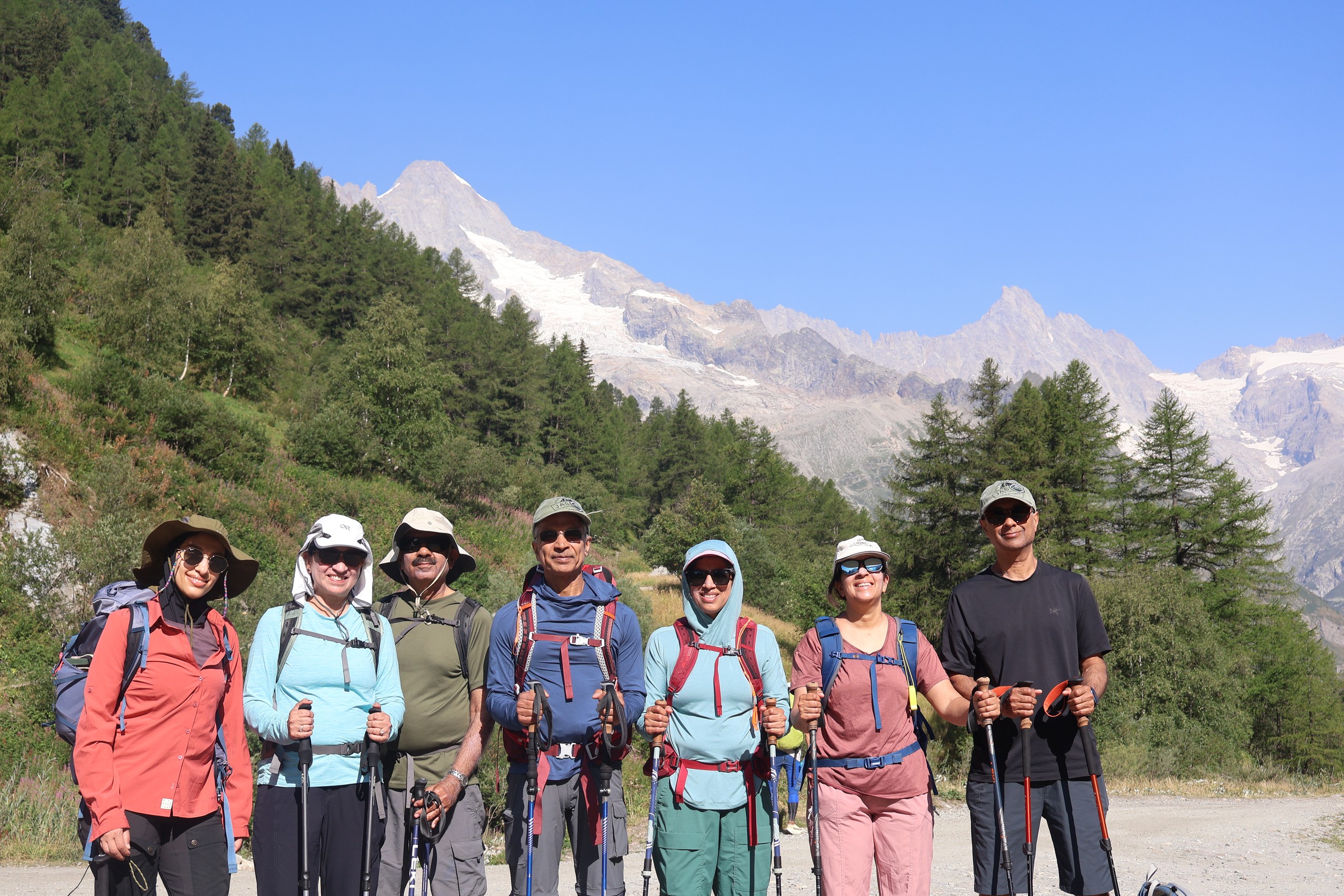
The coordination behind a mountain journey
A booking is one part of the plan. The connections between bookings matter too: the walking stage must fit the next bed, the luggage service must reach that stop and the transfer must work with the day’s arrival.
Consider a hypothetical delayed connection. Who checks whether the next accommodation can still receive you? Who contacts the baggage provider? Who arranges an alternative, and who pays if it costs more? On a self-planned trip, those tasks are yours. An organised self-guided operator may assist within its terms. A guide-only agreement may cover mountain leadership without those bookings. A fuller support team may coordinate more of the response, while additional charges remain possible.
This example is a way to test responsibilities, not a promise that a particular alternative will be available. Ask the provider to explain the process before departure. Seasonal services and lift operations can change; use the TMB transport guide and current official lift opening information when checking the plan.
What a guide changes, and what remains yours
A guide brings professional judgement to the walking: assessing the day’s plan, leading the group and making decisions within the agreed role. That is different from following a route file or having a telephone number for remote help. Confirm who leads the trek, which days they accompany you and how decisions are communicated.
Guiding also changes pacing. On a shared departure, the group follows a common plan rather than each traveller independently deciding when to start, stop or change direction. A private arrangement may offer different flexibility, but it still has an agreed scope and practical limits.
You remain responsible for preparing, bringing the required kit and giving the team relevant information about your experience and needs. A lighter transferred bag does not remove the effort of consecutive ascents and descents. Support also cannot guarantee weather, completion of every planned stage or an outcome for every participant.
Discuss suitability for the actual itinerary before choosing it. If you are new to multiday trekking, use the TMB preparation and training guide as a starting point and raise questions with the operating team. A support label is not a substitute for understanding the walking demands.
What fuller support means in the LHO programme
Life Happens Outdoors’ published TMB programme combines eight calendar days with six selected walking stages and planned transport connections. It is not a continuous full circuit on foot. That distinction matters when comparing its time commitment and cost with another itinerary.
The programme brings together guiding, accommodation, meals and specified transport and luggage arrangements. The practical value is having those components coordinated around the selected walking stages. Use the current LHO TMB itinerary and inclusions for the exact services, exclusions, departure details and bag rules.
Keep three things separate when packing: luggage stored away from the walking itinerary, the bag transferred between accessible accommodation and the essentials you carry yourself. A transfer service does not mean every possession is available at every moment. Check what reaches each stop and what must stay in your daypack.
Coordinating these arrangements can leave more attention for the walk, a conversation or the evening ahead. That is a reason some travellers choose fuller support. It does not make independent organisation a lesser experience, or promise that the trek will feel the same for everyone.
Joining a group when you travel alone
Travelling without a companion and walking without a guide are separate choices. You can arrive on your own and join an organised group, or arrange an independent trip with friends. Neither decision tells the whole story about the support you want.
A shared guided departure gives the journey a common walking plan and an organised setting for meeting others. It also asks you to accommodate a group pace and shared arrangements. Check the rooming policy, opportunities for personal space and how the team handles differing needs. Do not assume a private room or a particular social experience.
Independent walkers can also enjoy companionship and encounters along the route. The distinction is the structure you book, not whether meaningful connection is possible. Our guide to walking independently or joining a TMB group alone explores that decision.
Which model fits the trip you want?
Choose self-guided for independence you are prepared to manage
This can suit you if choosing stages and managing decisions are part of the experience you want, and you have the relevant navigation and mountain judgement for your plan. Decide separately whether you want to book everything yourself or purchase an organised self-guided package. Be clear about what assistance remains available.
Choose guide-only when you want leadership but retain coordination
This can suit a traveller or group comfortable arranging the wider journey who wants professional leadership during the walking. Make the responsibilities explicit, including accommodation, transport, guide expenses and what happens outside the guiding days. Its value depends on that agreed division.
Choose fully supported when coordinated arrangements matter more
This can suit you if you want a defined itinerary and fewer separate suppliers to manage, and you are comfortable with its route, group pace and rooming. Check that the actual support answers your needs. Paying for more services is useful when you value them; it is not automatically better value for everyone.
Make your next comparison more useful
Write down three things: the journey you want to walk, the responsibilities you want to keep and the complete costs still payable outside each quote. Where an answer is unclear, resolve it before treating the total as comparable.
If you are still defining the broader trip, start with the Tour du Mont Blanc planning guide. When you are ready to explore LHO’s approach, the trip page holds its current itinerary, inclusions, dates and price.
If you are considering another supported Alps trek, compare the Alta Via 1 in the Dolomites with its own itinerary and walking demands. The Walker’s Haute Route from Chamonix to Zermatt is a progression: its published programme asks for previous multiday trekking experience, with repeated six to nine hour days, substantial ascent and rough or exposed ground. It deserves a separate readiness conversation.
CONTINUE YOUR RESEARCH





DISCOVER MORE ADVENTURES


ABOUT THE AUTHOR

Rami Rasamny
Rami Rasamny is the founder of Life Happens Outdoors, a premium adventure travel company that uses the outdoors as a catalyst for human transformation. His work brings people into the mountains not only for challenge, but for clarity, confidence, and connection. He believes that when people answer the call to adventure truthfully, they come back different.