







Trip Planning for Treks & Climbs | BY Rami Rasamny | PUBLISH DATE: July 24 2025 | READ TIME: 12 mins | UPDATED DATE: October 31 2026
Tour du Mont Blanc Accommodation, Meals and Luggage Transfers: What to Expect
DOWNLOAD YOUR Guided Tour du Mont Blanc Trek GUIDEBOOK
What should you expect between walking stages on the Tour du Mont Blanc? Compare refuges and hotels, plan meals and dietary needs, understand luggage transfer, and know what still belongs in your daypack.
On the Tour du Mont Blanc, expect a mix of mountain refuges, simple lodges and hotels rather than the same level of comfort every night. Shared rooms and bathrooms are common in mountain accommodation. Dinner and breakfast are often available, but lunch, snacks and dietary options need checking. If luggage transfer is included, it usually moves a separate bag to selected stops. You still carry the water, food, layers, personal medication and essentials needed for the whole walking day.
The variety rewards preparation. Do not assume that every room is private, every bathroom is ensuite or the main bag is available nightly. Ask: “What can I use and access at each stop?”
What living on the Tour du Mont Blanc is actually like
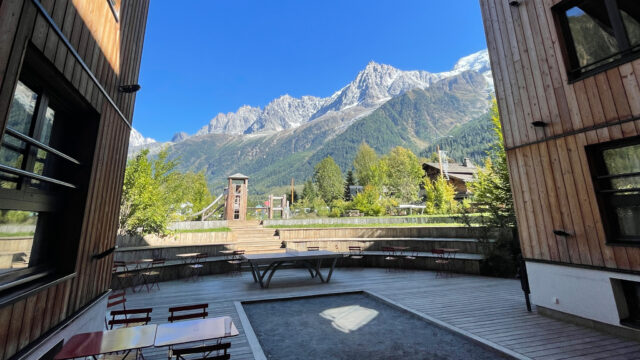
The Tour du Mont Blanc is a journey between mountain valleys and high passes, not a chain of identical hotel stays. In the larger towns, you may have the privacy and space of a hotel or guesthouse. On mountain sections, a refuge or lodge can place you closer to the next stage and give the evening a more communal rhythm.
That rhythm is part of the trek. Walkers organise their sleeping space and sit down for a shared meal. Conversation comes easily, but there is less control over noise, privacy, meal times and facilities than in a town hotel.
Availability also shapes the route. The official Tour du Mont Blanc booking platform recommends planning accommodation in advance, particularly for popular dates. If you are travelling independently, your beds, walking stages and transport connections must work as one plan. If you are joining an organised trip, ask for the actual arrangement for your departure rather than assuming that a property used in a photograph or previous year is guaranteed.
For the wider route, season and planning decisions, use the Tour du Mont Blanc planning guide. This page stays focused on what happens between the walking stages.
Mountain refuges, lodges and hotels compared
Labels do not settle the details. A refuge may have a private room as well as dormitories, while a lodge can resemble a guesthouse or a hut. A hotel may still use twin rooms, small bathrooms or fixed meal times. Confirm the room, bathroom and meal arrangement, not just the category.
| Accommodation pattern | Sleeping and bathroom expectation | Meal questions | Carried kit and luggage access |
|---|---|---|---|
| Mountain refuge or simple lodge | Shared rooms or dormitories and shared bathrooms are common. Privacy, showers, towels, bedding and charging vary. | Ask whether dinner and breakfast are included, whether lunch can be ordered, and when dietary needs must be declared. | Bring every item required before the next confirmed bag access. A liner, hut footwear or towel may be required by the property. |
| Hotel or guesthouse | More privacy is likely, but twin, double, single and ensuite arrangements still depend on the booking. | Breakfast may be included. Dinner, early breakfast and packed lunch must be checked rather than assumed. | A transferred bag may be available if that stop is on the transfer plan. Keep walking essentials and irreplaceable items with you. |
| Mixed supported itinerary | Comfort and privacy can change from one night to the next. This is often deliberate, balancing trail access with recovery. | Inclusions may change by night. Ask for a simple meal schedule that shows breakfast, walking food and dinner separately. | Confirm every night when the main bag is and is not accessible, then pack the daypack for the longest gap. |
The official TMB refuge directory shows why property level checking matters. Individual listings state their own room types, bedding rules, meal service, arrival information and dietary process. One listing cannot be generalised to every refuge.
Shared rooms and bathrooms in practice
From LHO’s experience, guests are often pleasantly surprised by how well kept TMB refuges and lodges are. The nerves usually come from sharing bedrooms and bathrooms after years of private space. A simple routine helps: keep evening items together, use earplugs or an eye mask if useful, and place your headlamp where you can reach it without unpacking after lights out.
Some mountain properties ask guests to leave boots, poles or larger bags outside sleeping areas. Others require a sleeping bag liner even when duvets or blankets are provided. Do not bring a full sleeping bag by default, and do not assume a liner is optional. Ask each property or your organiser what bedding is supplied and what you must carry.
Shared bathrooms require planning around other walkers. Showers may be limited by time, water or a separate charge, while towels and toiletries may not be supplied. Confirm rather than assume. A small wash kit, quick drying towel when required, clean sleep layer and sandals add comfort without much weight.
If privacy is important because of sleep, health, gender, family needs or simple preference, ask direct questions before paying. “Private room requested” is not the same as “private room confirmed”. The same applies to single supplements and ensuite bathrooms.
Meals, breakfast and dietary planning
Mountain meals are usually designed to feed walkers efficiently rather than offer a restaurant menu. On the official TMB platform, individual refuge listings commonly describe half board as the overnight stay, dinner and breakfast. The exact format and drinks, lunch or snacks included with it remain property specific.
Dinner may be served at a fixed time and shared table. Breakfast can be simple and early. In towns, hotels and restaurants may provide more choice, but an early departure can affect what is available. Ask for each day to be described separately:
- Is breakfast included, and can it be served before the planned start?
- Is dinner included or paid locally?
- Is lunch supplied, available to order, or bought during the walk?
- Are trail snacks included?
- Which drinks are included, and is safe drinking water available for the next stage?
Dietary requirements need a specific conversation, not a box ticked at the last moment. Tell the organiser or accommodation about allergies, coeliac disease, religious requirements, vegetarian or vegan needs and any medically necessary diet well in advance. From LHO’s experience, halal and strict no alcohol diets need especially clear disclosure. Fondue may be prepared with wine even when alcohol is not obvious from the dish. Tell LHO early, particularly before restaurant meals on the Swiss side of the itinerary, so an alternative can be arranged rather than assumed. A remote kitchen may also have limited ingredients, equipment and separation space. “We can offer an alternative” does not automatically mean an allergen free preparation environment.
Carry any personal allergy medication or emergency treatment prescribed to you, and discuss medical needs with an appropriate clinician. The organiser can explain the meal plan; it cannot replace personalised medical advice.
Food and water during walking days
Breakfast and dinner do not solve the walking day. Before each stage, know what lunch and snacks you will carry, where the next reliable food stop is and where you can refill with water that local guidance identifies as suitable to drink.
On LHO’s itinerary, guests are generally expected to begin with about 1.5 litres of water, adjusted for the stage, forecast and guide briefing. There are opportunities to refill, but confirm the next reliable point rather than assuming every stop is available. When travelling independently, check current route and accommodation information. On a guided trip, follow the guide’s instructions for the planned conditions.
Keep walking food in the daypack even when lunch is included. Weather, pace or a route change can delay the planned stop. Carry a small personal reserve, but confirm the actual meal arrangement.
How luggage transfer works
Luggage transfer separates the bag you walk with from a main bag that moves according to the itinerary’s transport plan. This can reduce the weight on your shoulders and make it easier to keep clean clothing and overnight items for later. It does not mean unlimited access to everything you packed.
The exact supplier, bag type, size or weight limit, collection time and delivery pattern are operating details. They vary between itineraries and can change. The current Guided Tour du Mont Blanc Trek is the correct source for LHO’s current arrangement. Check it again for your departure rather than carrying a number from an older article.
From LHO’s experience, transferred bags can be delayed by border inspections or bad weather at mountain passes. Vehicle routes are often much longer than the trekking route, and a diversion can add substantial time. Patience helps, but preparation matters more: keep the absolute necessities with you.
Before booking, ask for a night by night answer to these questions:
- Which overnight stops receive transferred luggage?
- Are there any nights when the main bag is not available?
- What bag type, dimensions and weight are allowed?
- When and where is the bag handed over each morning?
- When is it expected at the next accessible stop?
- What items are prohibited or should never be placed in it?
- What happens if weather, a route change or a vehicle issue delays access?
Label the transferred bag exactly as instructed and keep it closed and ready before the stated collection time. Do not put your passport, critical medication, keys, money, fragile valuables or anything needed during the walking day inside it. If you would struggle to spend a night without an item, carry it unless the organiser gives a different confirmed plan.
What still belongs in the daypack
Luggage transfer changes the load, not your responsibility for the day. Your daypack still needs to support several hours of walking in changeable mountain conditions. The precise list depends on the stage, forecast and organiser’s instructions, but the core categories remain stable:
- waterproof jacket and trousers;
- warm layer, hat and gloves appropriate to the conditions;
- water and the day’s food;
- sun protection;
- personal medication and a small personal first aid or blister kit;
- phone, navigation and power backup appropriate to the route;
- headlamp, emergency contacts and any guide required safety items;
- passport or identity document, payment method and other irreplaceable essentials;
- overnight items needed before the next confirmed luggage access.
Use the Tour du Mont Blanc gear list for the detailed packing system. Load the real daypack and test it on long, hilly walks before the trip. A small pack that is overfilled or unstable can be less comfortable than a slightly larger pack that fits properly.
How support affects difficulty and recovery
From LHO’s experience, good sleep and access to clean clothes and toiletries make a material difference to rest and recovery. Those items often account for much of the weight moved in the transferred bag. A planned bed and meal also reduce the time spent arranging logistics, preserving attention for the walk, the group and the places you pass through.
It does not flatten the climbs, shorten the descents or guarantee good sleep. You still walk on consecutive days, manage weather and look after your feet, hydration and pacing. Someone assessing readiness should use the Tour du Mont Blanc difficulty guide alongside this article. Choose support because it matches how you want to travel, not because it turns the route into an easy holiday.
Independent versus organised logistics
Independent travel gives you control over the route, pace, accommodation and budget. It also makes you responsible for joining the pieces together. A bed is only useful if the walking stage to reach it is realistic. A luggage booking is only useful if it serves the stops you selected. A meal plan is only complete if you know what happens during the walking day.
An organised itinerary moves much of that coordination to the operator. The value is not only a guide on the trail. It can include route choices, reserved beds, meal planning, bag movements and help when the plan changes. You still need to read the inclusions and declare requirements. “Organised” does not mean every meal, room or bag movement is automatically included.
If independent travel is part of your decision, the guide to walking the Tour du Mont Blanc as a solo hiker explains the safety, navigation and contingency questions to consider. It complements this logistics guide without pretending that every solo or organised itinerary uses the same accommodation or luggage model.
Whichever model you choose, compare the actual work left with you. Booking beds is only one task. Navigation, transport connections, dietary communication, weather decisions, luggage gaps and contingency planning also matter.
Questions to ask before booking
Use this checklist with an operator or with every independent booking:
- What is the exact overnight stop for each stage, and how does it connect to the walk?
- Is the room private, twin, shared or a larger dormitory?
- Is the bathroom ensuite or shared, and is a shower expected to be available?
- What bedding is supplied, and must I bring a liner, towel or hut footwear?
- Which breakfasts, walking lunches, snacks and dinners are included?
- How and by when should I declare dietary needs or allergies?
- Where should I obtain food and water during each walking day?
- Which nights receive transferred luggage, and where are the access gaps?
- What are the current bag type, size, weight and handover rules?
- What must stay in the daypack for the longest stage or luggage gap?
- How are accommodation or route changes communicated?
- What support is available if weather, illness or transport affects the plan?
Ask for important answers in writing and keep them with your trip documents. The best itinerary is not necessarily the one with the most inclusions. It is the one whose arrangements you understand and can prepare for honestly.
Check the current LHO arrangement
This guide explains the living experience and the questions that protect it. For the properties, rooming, meals, luggage arrangement, dates and booking details currently attached to LHO’s supported journey, use the live Guided Tour du Mont Blanc Trek page. For other walking journeys in the region, explore the Alps hiking collection.
Expert review
Alps trekking review
Reviewed by: Lucía Guichot Martín, AMM Trekking Guide and IFMGA Mountain Guide.
Review scope: Refuges and hotels, room and bathroom expectations, food and water planning, luggage access, daypack essentials and the practical effect of support.
Reviewed: October 2026.
Reviewer
Lucía Guichot Martín
AMM Trekking Guide and IFMGA Mountain Guide
Lucía is a Spanish AMM trekking guide and IFMGA–IVBV–UIAGM mountain guide who guides LHO programmes and reviews its Alps trekking content.
CONTINUE YOUR RESEARCH




DISCOVER MORE ADVENTURES

ABOUT THE AUTHOR
Rami Rasamny
Rami Rasamny is the founder of Life Happens Outdoors, a premium adventure travel company that uses the outdoors as a catalyst for human transformation. His work brings people into the mountains not only for challenge, but for clarity, confidence, and connection. He believes that when people answer the call to adventure truthfully, they come back different.