Adventure Travel Destinations | BY Elie Abi Akar | PUBLISH DATE: May 13 2025 | READ TIME: 4 mins | UPDATED DATE: September 18 2026
Can First-timers Trek to Everest Base Camp?

DOWNLOAD YOUR Everest Base Camp Trek GUIDEBOOK
There’s something about the words Everest Base Camp that sends a pulse through the body. Maybe it’s the sheer scale of the Himalayas. Maybe it’s the legacy of the climbers who dared to go beyond. Or maybe it’s that quiet question echoing in the back of your mind: “Could I do that?”Everest Base Camp can […]
There’s something about the words Everest Base Camp that sends a pulse through the body. Maybe it’s the sheer scale of the Himalayas. Maybe it’s the legacy of the climbers who dared to go beyond. Or maybe it’s that quiet question echoing in the back of your mind: “Could I do that?”
Everest Base Camp can be achievable for many first-time trekkers with appropriate preparation, a suitable itinerary and experienced support. It is not suitable for everyone, and individual health and circumstances need consideration.
It helps to know what you are getting into. The trail to EBC isn’t just about altitude. It’s about patience, grit, and a willingness to step outside your comfort zone, one careful footstep at a time.
It’s Not a Climb, It’s a Trek
Let’s clear something up: you don’t need crampons, ropes, or climbing skills to get to EBC. This is a trek, not a mountaineering expedition. The trail winds through charming Sherpa villages, past prayer wheels and mani stones, across swaying suspension bridges, and into the heart of the Khumbu region.
But don’t mistake that for easy.
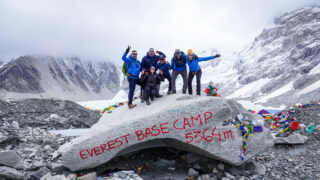
You’ll be hiking 130 km (80 miles) round-trip, often walking 5 to 7 hours a day, and gaining elevation up to 5,364 meters (17,598 feet) at Base Camp.
The challenge is real—but so is the reward.
What It Takes Physically
You don’t need to be an athlete to trek to EBC, but you do need reasonable fitness and endurance. If you can walk 10–15 km (6–9 miles) with a daypack over uneven terrain—and do it again the next day—you’re on the right track.
Walking fitness is useful preparation, but it does not protect against altitude illness. Your response to altitude cannot be predicted from fitness alone, which is why the ascent profile and response to symptoms matter.
Look for routes with built-in acclimatization days, usually at Namche Bazaar and Dingboche. These rest days aren’t lazy days. You’ll still hike to higher altitudes and return to sleep low—a proven way to help your body adjust.
Mental Game: The Untold Challenge
Most first-time trekkers worry about their legs or lungs. But out there, it’s the mental game that often defines the experience.
Weather can change quickly, and long walking days can bring moments of doubt. Changes in sleep or appetite need attention too; they should not automatically be treated as a mental challenge. Report new symptoms to your guide rather than trying to push through them.
You find rhythm. You look up, breathe deep, and realize: You’re walking in the Himalayas.
You’re Not Alone
The trail to Everest Base Camp is well-established and teeming with support. From your guides and porters to fellow trekkers, there’s a shared energy on the trail—a mix of awe, struggle, and camaraderie.
And at night? Warm lodges, simple meals, and stories traded over ginger tea or garlic soup. It’s a community built on shared purpose.
A Few Things to Know
Best Time to Go: Pre-monsoon (March–May) or post-monsoon (late September–November).
Altitude Sickness: report headache, nausea, dizziness, unusual fatigue or loss of appetite promptly. Do not ascend to sleep higher while symptoms persist. Worsening symptoms at the same elevation require descent and medical assessment. Read the CDC’s altitude guidance.
Gear matters, but it doesn’t have to break the bank. Rent or buy second-hand if needed.
Training for 2–3 months with hikes, cardio, and leg strength pays off.
Final Thoughts
Trekking to Everest Base Camp isn’t about bagging a summit. It’s about walking among giants, tracing the footsteps of legends, and seeing how far you can go with your own two feet and a willing heart.
So, can a first-timer do it?
Many can, with suitable preparation and an appropriate itinerary. Discuss your readiness with the trip team, and remember that stopping or descending when needed is a sound decision.
Climb On!
This article was reviewed for trekking accuracy by Shiva Raj Bastakoti, a Nepalese Trekking Guide licensed by Nepal’s Department of Tourism (Licence No. 2997).
CONTINUE YOUR RESEARCH






ABOUT THE AUTHOR

Elie Abi Akar
Elie is the Base Camp Chief at Life Happens Outdoors, orchestrating every adventure from first step to summit. He believes the outdoors offer something essential which is a space to disconnect from routine and reconnect with what truly matters. His mission is simple: to make every journey feel meaningful and unforgettable.