EARLY BIRD! Challenging Nepal

TRIP TYPE
Trekking

DURATION
16 Days

DESTINATION
Nepal
Life Happens Outdoors runs Everest Base Camp as a 16-day guided trip from arrival to departure in Kathmandu. The route reaches Everest Base Camp at 5,364 metres and includes two planned acclimatisation days, tea-house accommodation, meals on the trek, porter carriage of a personal duffle up to 12 kg per guest, permits, airport transfers, local ground transport and one helicopter sector between Kathmandu and Lukla. The other Lukla sector is normally completed by fixed-wing flight, subject to weather and airport operations. The 12 kg duffle allowance is per guest; it is not a porter’s total carrying limit.
Curated by Rami Rasamny Reviewed by Shiva Raj Bastakoti
This is a challenging, non-technical trek for prepared first-time high-altitude trekkers and experienced hikers who can walk for several hours on consecutive days. You do not need mountaineering skills, but you do need consistent training, patience with altitude, comfort with simple mountain accommodation and flexibility around Himalayan weather.
The live dates and prices below show the current departure options. International flights, visa, insurance, tips, personal equipment, trail extras and any optional high-altitude helicopter return are not included. Read the complete Everest Base Camp cost guide for the wider travel budget, or speak to us if you are unsure whether this is the right trip for you.
Still deciding how to approach the Khumbu? Use our Nepal trek chooser to compare EBC with Gokyo, Annapurna Base Camp, Mardi Himal and Three Passes by time commitment, altitude and terrain. Compare the quieter Gokyo Lakes route. If your next step is a first technical Himalayan summit, explore the Island Peak expedition. For departure planning, read when to trek to Everest Base Camp.
Add a helicopter return from Lobuche to Lukla for £1,700 per passenger on any public or private Everest Base Camp departure.
After reaching Everest Base Camp and completing the normal opportunity to visit Kala Patthar at sunset, you leave the standard trekking group the following morning. You descend from Gorak Shep to Lobuche, take the helicopter to Lukla and continue to Kathmandu on the trip’s included Lukla–Kathmandu sector. A seasonal aircraft change may be required in Pheriche.
This changes the planned trip length from 16 days to approximately 12 days. Mountain aviation remains weather dependent, so the shortened end date cannot be guaranteed.
Choose a departure and add at checkoutHow weather, baggage and refunds work
Traveller fit: Best for prepared first-time high-altitude trekkers and experienced hikers who can walk for several hours on consecutive days. No mountaineering skills are required, but consistent training, patience with altitude and comfort with simple mountain accommodation are essential. This trip is not suitable for: anyone unwilling to prepare, communicate altitude symptoms early, follow the trekking team’s pace and safety decisions, or accept weather-related itinerary and aviation changes.
Considering a climb after EBC? Use our Nepal trekking-to-climbing progression guide to review what your trek demonstrates, the technical skills still needed and the decision gates before Island Peak, Lobuche East, Mera Peak or a later expedition.
The included Lukla helicopter sector is not a helicopter return from base camp and is not emergency evacuation cover. The optional upper-valley helicopter arrangement has its own price, route, baggage and weather conditions in the itinerary; read those terms before choosing it.
If a shorter journey may suit your time better, compare ABC and EBC by difficulty and commitment. If you are deciding among several routes, use the Nepal trek chooser.
Use the Nepal trekking insurance checklist to ask your insurer about the complete itinerary, optional high points, transport and disruption arrangements.
Before choosing your dates, work through EBC planning questions about the journey, accommodation and preparation.
Explore the day-by-day journey and departures below. To discuss your hiking background, time away or the transport options, speak to an Adventure Specialist.
1
Carefully paced for altitude. The 16-day itinerary includes second nights in Namche Bazaar and Dingboche before the route moves higher.
2
Guided trail support. Experienced local Khumbu guides set the daily pace, while the porter team carries a duffel allowance of up to 12 kg per guest. This is not a porter’s total carrying limit.
3
More flexibility around Lukla. The trip includes one helicopter sector between Kathmandu and Lukla and one fixed-wing sector for the other direction, allocated according to operations and weather.


Prices are per person and include all taxes. Where shown, the Early Bird price applies to that departure; the crossed-out price is the standard price. See our inclusions and exclusions, trip cost guide and Booking Terms before booking.Shared accommodation is standard. See room upgrades, equipment, tipping and weather-delay costs below.
2026
DATE & STATUS
PRICE
AVAILABILITY
2027
DATE & STATUS
PRICE
TEAM LEADER
AVAILABILITY
2028
DATE & STATUS
PRICE
TEAM LEADER
AVAILABILITY
WHAT'S INCLUDED IN THIS TRIP
WHAT'S NOT INCLUDED IN THIS TRIP
DAY 1: WELCOME TO KATHMANDU
Kathmandu is an incredible, vibrant, and wild city that we’ve fallen in love with. That’s why we’re always so excited to receive you on the first day and share the gateway to the Himalayas with you.
On arrival day, you’ll be met by an LHO representative at the airport and driven to our centrally located hotel by private transfer. Navigating Kathmandu airport can be an adventure in and of itself, so you’ll receive a text with detailed instructions on how to efficiently make your way to us.
Your LHO Team Leader will be waiting to receive you at our hotel, help you settle in, and make sure you have everything you need for the adventure ahead. If you arrive early, your Team Leader will share a curated list of restaurants, coffee shops, heritage sites, and markets so you can make the most of your first day in Kathmandu.
Our first official event is a team dinner at 7:30 pm, hosted by your LHO Team Leader and local lead guide. This is where we meet the group, set expectations, answer questions, and begin building the rhythm of the journey together.
DAY 2: EXPLORE KATHMANDU AND PREPARE FOR THE TREK
Our first full day together gives us an opportunity to discover the magical city of Kathmandu, check our gear, and get to know each other before we head out to the trail. We’ll visit the nearby sites of Durbar Square and the Monkey Temple as well as get our first taste of Nepali cuisine during our team lunch.
Because aviation into the Everest region is highly weather dependent, the exact Lukla travel plan is confirmed close to departure. Your itinerary includes one helicopter sector between Kathmandu and Lukla and one fixed wing domestic flight sector between Kathmandu and Lukla. The helicopter may be used on the way into Lukla or on the way back from Lukla, depending on weather, airport operations, and the plan that gives the group the smoothest overall journey. Your LHO Team Leader will confirm the plan in Kathmandu and make sure everyone is clear before we leave for the mountains. Regardless, our team dinner will be at the accommodation we sleep at on the night.
DAY 3: FLIGHT TO LUKLA AND TREK TO PHAKDING
Distance: 8.7 KM | Ascent: 364 M | Descent: 521 M | Max Altitude: 2,860 M
Our day starts early as we make our way to the airport for the journey into Lukla, the gateway to the Everest region. Depending on conditions, this sector may be operated by helicopter or fixed wing flight. Your trip includes one helicopter sector between Kathmandu and Lukla, used either inbound or outbound, and one fixed wing domestic flight sector for the other direction. This gives us more flexibility around one of the most delay prone parts of the Everest Base Camp experience while keeping the trip sensibly priced.
Once in Lukla, we’ll be met by our porter team who will collect our duffle bags and take them to a local tea house where we’ll have lunch and prepare ourselves for the trek to Phakding. Lukla is one of the most vibrant villages in the Khumbu region. It’s an important hub of local and regional commerce as well as the border to the sacred high-altitude regions. Above Lukla, animal slaughter is religiously banned. That’s why we don’t recommend choosing any meat or chicken options above Lukla.
The trail begins at the entrance of the village and is actually mostly descending in the alpine forests and through the many towns that dot this section of the trail. The Tibetan influence and Buddhist character of the area are immediately apparent in the calligraphy, architecture, and religious stupas and shrines.
Our accommodation sits just above Phakding near the Khumbu river that is formed from the melting glaciers of the towering summits of the region, including Everest. In Phakding, we use one of the better available tea houses in the village, giving you a more comfortable first night on the trail while still keeping you fully connected to the atmosphere of the Khumbu.
Depending on our arrival time, it may be possible to explore the coffee shops and market streets of the village before dinner.
DAY 4: NAMCHE BAZAAR
Distance: 9.1 KM | Ascent: 1,095 M | Descent: 380 M | Max Altitude: 3,440 M
Our second day on the trail will be a full-on ascent to an impressive altitude of 3,445 meters, arriving at one of the most vibrant and remote high-altitude towns on the planet: Namche Bazaar. The trail begins by following the river and passes through the alpine forests. The trail is once again dotted by a series of villages and farming communities that add an incredible element of rural life to the walk.
Our first main objective is reaching the town of Monjo. This is the official entrance to the Sagarmatha National Park. There is a brief checkpoint where we present your permits to the authorities. Once through, we’ll descend a series of staircases flanked by Tibetan calligraphy carved into the rocks. We’ll stop for lunch at the last village in the valley before the direct ascent to Namche Bazaar. The trail to Namche is predominantly ascending and sustained. Our trekking team will set a slow, steady pace so we can manage the ascent to Namche efficiently without wasting energy unnecessarily.
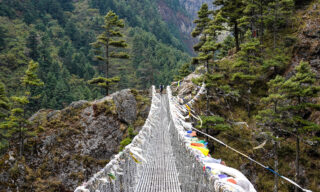
Slow and steady is the name of the game here as we make our way up a series of stairs, cross the epic Tenzing-Hillary suspension bridge, and join the winding trail through the pine forest that leads to the village entrance. There’s a viewpoint of Everest halfway up to the top. On a clear day, this offers the first opportunity to see the world’s highest summit, albeit from afar. We’ll also use this as an opportunity to take a break and use the serviced bathrooms available there.
The reward at the end of our ascent is our arrival in the incredible Sherpa town of Namche, nestled between the towering summits of the high Himalayas. After checking into our tea house, we’ll have plenty of opportunities to explore the markets, coffee shops, and bars that give this place so much life. In Namche, we use one of the stronger available tea house options in the village, giving the group a more comfortable base for rest, acclimatization, and recovery before we move higher into the Khumbu.
This will be our home for the next two nights. Dinner will be at our tea house.
DAY 5: ACCLIMATISATION DAY IN NAMCHE BAZAAR
Distance: 5.5 KM | Ascent: 503 M | Descent: 503 M | Max Altitude: 3,700 M
We’ll be staying in Namche Bazaar for a second night. That means we don’t have to repack our bags or check out from the Tea House. Our day will slowly start after breakfast. We’ll climb to the top of the town and visit the Sherpa museum where we can learn about the Sherpa culture, mountaineering history of the region, and about new sustainability practices that your visit to the region helps finance.
From there, we’ll trek to the hilltop high above the village to acclimatize by exposing ourselves to higher altitudes. The hilltop offers a jaw-dropping view of Everest, Lhotse, and Ama Dablam, three of the most iconic summits on the planet. We’ll be able to see all the way up the Khumbu valley and get a visual representation of what lies ahead of us.
There’s an opportunity for a short tea break at the Everest View Hotel nearby before we descend back to Namche for lunch at our Tea House and a free afternoon to enjoy the town. Dinner will also be at our Tea House.
This second night in Namche is also one of the places where our accommodation selection matters most, giving you a better chance to rest, recover, and enjoy the village before the trail becomes more remote.
DAY 6: TREK TO TENGBOCHE MONASTERY
Distance: 9.4 KM | Ascent: 901 M | Descent: 454 M | Max Altitude: 3,860 M
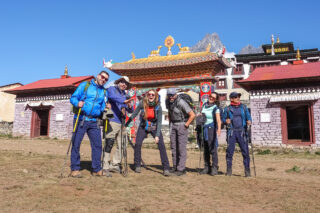
If you’ve ever watched a movie or documentary about climbing Everest, then you’ve surely seen scenes from the Tyanboche monastery. This is where climbers come to receive a blessing of protection before ascending the giants of the region. The monastery is exactly where we’re heading.
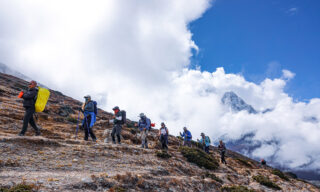
After breakfast, we’ll depart in the direction of the Sherpa museum, but this time we’ll continue past it and follow the wide trail that heads straight down the valley. The trek is characterized by incredible photo opportunities, stupas, and the unlimited views of towering summits all around and the fewer villages that inhabit these parts. Although the trail does begin above the tree line, we will eventually start descending toward the valley floor, re-entering the thick forest and reaching the riverside once again.
We usually stop for tea along the descending portion of the trail and have a lunch break at the riverside. After lunch and a bit of rest, we begin the long ascent to Tengboche at a manageable pace set by our trekking team, helping the group arrive feeling strong. At 3:30 pm, the monastery opens for visitors, and we’ll have a chance to visit and participate in the rituals of one of Buddhism’s holy sites before dinner and rest at our Tea House.
DAY 7: TREK TO DINGBOCHE
Distance: 10.6 KM | Ascent: 773 M | Descent: 279 M | Max Altitude: 4,410 M
The 4000-meter mark is universally considered the start of the high-altitude environment. Today is the day we’ll breach that ceiling and reach 4,400 meters. After breakfast, we’ll descend into a Rhododendron forest. The Rhododendron is the national flower of Nepal, and this forest has an incredible energy that really feels like a border between worlds.
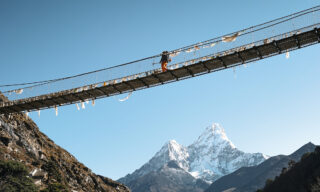
We’ll emerge from the forest onto an iconic suspension bridge, which is where it’s possible to take a photo of trekkers walking above the mountain of Ama Dablam. Once we cross the bridge, we’ll start climbing a series of staircases with the summit of Ama Dablam immediately to our right.
The trail eventually enters the remote town of Pengboche, our lunch stop for the day. After a good meal and some rest, we’ll continue along the trail as it turns behind Ama Dablam and closer to the south face of Lhotse, the world’s fourth-highest summit. The forests are now replaced with limited short grass vegetation as the drier climate becomes more apparent.
Our final destination for the day is Dingboche, our home for the next two nights. Dingboche was once primarily herding grounds for yaks. The town has developed substantially over the past decades due to its position at the crossroads of the main climbing and trekking routes in the region. Dinner will be at our Tea House.
DAY 8: ACCLIMATISATION DAY IN DINGBOCHE
Distance: 3.1 KM | Ascent: 476 M | Descent 476 M | Max altitude: 4,600 M
We’ll be staying in Dingboche for two nights to rest and acclimatize. The Tea Houses in this area are relatively comfortable, giving us the opportunity to relax before pushing into the higher altitude environment.
Depending on the conditions and the spirits of the group, we may choose to take a short walk up to the pass to enjoy the views and acclimatize. This is completely optional, and it’s perfectly fine to choose not to exert yourself at all on this day. There are a few coffee shops worth visiting in the town, and we’ll also have plenty of free time to do that. Both lunch and dinner will be at our Tea House.
DAY 9: THE THUKLA PASS AND THE EVEREST MEMORIALS
Distance: 8.2 KM | Ascent: 951 M | Descent: 91 M | Max Altitude: 4,940 M
We’ll get an early start from Dingboche, departing after breakfast in the westerly direction. The close proximity of the mountains and glaciers is immediately apparent when we exit the town. On our left are the towering summits of the Cholatse and Taboche mountain ranges. Ahead of us is Lobuche. Behind us is Ama Dablam, and to our right is the south side of Lhotse and Nuptse. This area is full of wild yaks grazing in the open spaces.
The first portion of the trail is Nepali flat, which means it’s inclined but interrupted regularly by brief flat sections and even small descents. We’ll follow the trail until we reach a river crossing that can sometimes be a little tricky to navigate because of the regularly changing trails. Our trekking team will brief the group on staying together, particularly around the river crossing, where trail conditions can change regularly.
Once we cross the river, we’ll find a small cluster of Tea Houses known as Thukla. This will be the location of our lunch break for the day. After lunch, we’ll begin the ascent to the Thukla pass. Many people will describe this as the most challenging section of the trail. With a slow, sustained, and adaptive pace set by our trekking team, the climb to the Thukla Pass becomes much more manageable than many people expect.
The top of the trail is the infamous Thukla pass, home to the dedications to the many climbers who have died in the surrounding mountains, including Everest. This is a holy place for many, and although we can certainly take pictures, we should also be respectful to those of us who come here to mourn loved ones. After a break, we’ll follow the glacier moraine in the direction of Lobuche. It’s possible to see Pumori for the first time, an impressive 7000-meter mountain that stands freely in the shadow of nearby Everest. The Lobuche Tea Houses will gradually emerge from behind the northeast slopes of Lobuche summit, and we’ll make our way directly to our accommodation. Unlike previous villages, there are no more coffee shops or market streets. We are now in the wild outback of the Nepali Himalayas. Dingboche is the last village on this trail.
DAY 10: TREK TO EVEREST BASE CAMP AND RETURN TO GORAK SHEP
Distance: 13.3 KM | Ascent: 997 M | Descent: 312 M | Max Altitude: 5,364 M
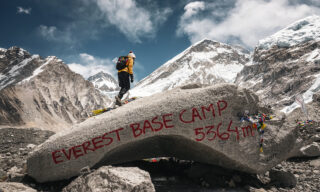
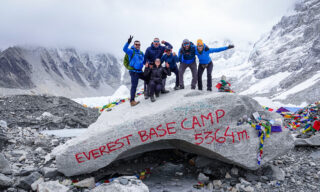
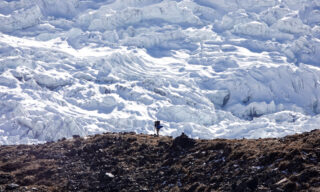
Unlike traditional trekking groups, we choose to depart very early for our hike to Everest Base Camp. The reason for this is that we would like to give ourselves the opportunity to optionally climb Kala Patthar on the same day to catch the sunset on Everest. It is the sunset rather than the sunrise that is exceptionally beautiful from the top because we will be observing the mountain from its west face, which means the colors are most spectacular at sunset. The trail from Lobuche starts flat and is quite similar to the final stretches of our previous day. All that changes when we begin ascending the glacier moraine. The trail shifts dramatically from flat to incredibly hilly as we go up and down the terrain dug up by the glaciers. The trail even goes onto the glacier itself, albeit a section of the glacier almost fully covered by small stones. Once the trail starts to level out, it means we’re arriving at Gorak Shep, the final collection of tea houses before Everest Base Camp. We’ll stop there for tea, and it’s also possible to leave anything we don’t need for the final walk to base camp since we will be staying in the same place tonight. Once we’ve regained some energy, we’ll make our way out along the glacier’s side. The trail is less dramatic than the previous section with more easily navigable areas. The excitement is now super high as the base camp starts to become more and more visible ahead of us. As we approach, the towering summits of Nuptse and Pumori start to give way to the black summit pyramid previously concealed behind them. Mount Everest is finally revealed. From there, it’s a short descent onto the historic Khumbu glacier as we make our way to the famous rock that has welcomed trekkers and climbers to Everest Base Camp for a century. If conditions are favorable, we can take our time at the base camp to take pictures, enjoy the views, and appreciate the incredible achievement of just being there. Our way back is a short retracing of our steps along the side of the glacier and back to Gorak Shep. After lunch, for those of us feeling motivated and capable, it is possible to trek to the summit of Kala Patthar just above Gorak Shep. It takes about three hours and offers the most stunning views of Everest and the region. Our trekking team will discuss the Kala Patthar option with the group at lunchtime, taking into account weather, timing, energy levels, and how everyone is responding to the altitude. Otherwise, it is possible to rest at Gorak Shep for the afternoon and enjoy the achievement.
For helicopter-return guests: After returning to Gorak Shep from Everest Base Camp, the normal plan—when weather, timing, energy and altitude response allow—is to visit Kala Patthar for sunset. Guests who have selected the helicopter-return add-on follow the same plan and leave the trekking group the next morning.
DAY 11: TREK TO PHERICHE
Distance: 12 KM | Ascent: 162 M | Descent: 1,020 M | Max Altitude: 5,164 M
Our first day descending from the Everest region will start after breakfast as we make our way over the glacier and down to Lobuche Tea Houses.
Optional helicopter return: Guests who have selected the add-on descend from Gorak Shep to Lobuche, where the helicopter return to Lukla is normally planned before 13:00. The flight may require a seasonal aircraft change in Pheriche. From Lukla, guests continue to Kathmandu using the trip’s included Lukla–Kathmandu sector. All flight timings remain subject to weather and operations.
The standard trekking group continues the published descent. If the helicopter cannot operate, the contingency described in the FAQs applies.
For the rest of us, we’ll pause for a tea break here before continuing down to the Thukla pass and then to the Thukla Tea Houses below. The lunch break will be at the Thukla Tea Houses. After some rest, we’ll begin a descending portion of the trail that differs from what we used on the way up. The descent is quite steep as we drop altitude rapidly and find ourselves on a flat, easy walk near the north faces of Cholatse and Tabouche. Ama Dablam will once again come into view straight ahead of us. At the end of the valley is the town of Pheriche, our home for the evening. Pheriche is a hub for helicopter traffic because it has a high-altitude clinic that provides medical support to nearby climbing expeditions. There are a few coffee shops to visit as life slowly starts to return to the villages of the lower altitude environment. Dinner will be at our Tea House.
DAY 12: TREK BACK TO TENGBOCHE OR NAMCHE BAZAAR
Distance: 10.4 KM | Ascent: 800 M | Descent: 1,029 M | Max Altitude: 4,371 M
After breakfast, we’ll reconnect with the trail that follows the Khumbu River in the direction of Ama Dablam. As the valley starts to get steeper, the trail will veer to the right and follow an embankment that reconnects with the ascending trail that goes up to Dingboche. We’ll continue along the descending route until we reach the familiar town of Pangboche, where we’ll stop for lunch and take our time to enjoy the views of the border regions between the lush lower valley and the dazzling white peaks of the upper regions. We’ll resume the descent along the stairs that lead to the suspension bridge on the edge of the rhododendron forest. The challenging portion of the trail is actually the final ascent in the forest to the pass, where Tengboche Monastery sits. Depending on the pace of the team, it may be possible to descend beyond the monastery to tea houses closer to Namche Bazaar. Our trekking team will assess the conditions closer to the time and brief the group on the final destination.
DAY 13: TREK TO MONJO OR PHAKDING
Distance: 14.5 KM | Ascent: 688 M | Descent: 1,685 M | Max Altitude: 3,985 M
Tengboche is the last truly remote village along the trail, and nothing represents this more acutely than departing from the monastery and passing through Namche Bazaar. Both are charming and beautiful in their own rights, but they couldn’t be more different. The trail starts with a long descent to the valley floor before crossing a series of suspension bridges and ascending the pine forest to the junction between the Khumbu and Gokyo valleys. In the forest, we’ll stop at a tea house for a break before continuing to the high point of the day. This is the final big ascent of the entire experience. As we approach Namche, we’ll start to see small market stalls along the trail and the familiar sight of donkey caravans that are replaced by yaks in the higher altitudes. From there, it’s a short walk to Namche, where we’ll stop for lunch. Depending on our pace, it may be possible to roam around before we continue our descent through the forest, across the Tenzing-Hillary suspension bridge, and finally to the valley floor where the town of Monjo awaits. Our night will be spent at a Tea House in the town.
DAY 14: TREK TO LUKLA
Distance: 12.6 KM | Ascent: 722 M | Descent: 715 M | Max Altitude: 2,835 M
The end of the trail is the Sherpa village of Lukla, home to the Tenzing-Hillary airport. Monjo is within a few hours of Lukla. This gives us the option of catching a flight out on this day instead of the next, should we find that weather may obstruct flights on the following day. Assuming that the conditions are favorable, we’ll start slowly after breakfast and take our time to visit and enjoy the many villages that are along this section of the trail. Yes, we did pass through them on the way up, but the mindset was different. It’s so much more enjoyable to have this experience once the objective of the adventure is behind us. Lunch will be in Phakding along the trail, and we’ll have plenty of opportunities to stop for tea and coffee. The final push to Lukla is a mild challenge as we ascend a series of stairs and village trails to the entrance of the town. The afternoon is free to explore the coffee shops, pubs, markets, and stores. We’ll spend our last night on the trail at a local Tea House, where we’ll also share our last trail dinner.
Because the trip includes one helicopter sector between Kathmandu and Lukla, the final aviation plan will depend on how the inbound journey was operated and what the weather allows. If the helicopter sector has not yet been used, it may be used from Lukla to Kathmandu to reduce the risk of delay. If it was used on the way in, the return from Lukla is usually by fixed wing flight, subject to weather and airport operations.
DAY 15: FLIGHT TO KATHMANDU
Hot showers await us on our return to Kathmandu. Depending on how the journey into Lukla was operated, today may involve either the included helicopter sector from Lukla to Kathmandu or the fixed wing flight back toward Kathmandu. The decision is made according to weather, airport operations, and the best available plan for the group. Patience is still part of Himalayan travel, but including one helicopter sector gives us more flexibility around one of the most unpredictable parts of the Everest Base Camp journey.
Depending on when we move, lunch will either be in Lukla, Kathmandu, or the alternative airport sometimes used to direct Lukla air traffic that is inbound to Kathmandu. Wherever we finally land, we’ll do our best to get you to the hotel as soon as possible so that you can shower, rest, and enjoy Kathmandu before our farewell dinner.
DAY 16: NAMASTE!
The last day together is dedicated to airport transfer and farewells. Breakfast is included on the day. Please make sure to provide us with the correct departure details when filling out your Team Details Form before the first day of the trip so that arrangements can be made. We’ll be arranging your shuttle 3 hours before departure, so please make sure to be near the hotel at the time so as not to be late. For those of us departing late, we’re happy to recommend places to visit or arrange for a city tour if you weren’t able to attend it on the first day. Please communicate any changes to your flight with your LHO Team Leader as soon as possible so that arrangements can be made.
CAN’T TAKE THIS MANY DAYS OFF?
To shorten the return trek, you can book the optional paid helicopter from Lobuche to Lukla after your Everest Base Camp visit. On Day 11, you walk from Gorak Shep to Lobuche for the planned pickup, then continue to Kathmandu using the trip’s included Lukla–Kathmandu sector. This add-on is separate from the included helicopter sector between Kathmandu and Lukla. Flights, any Pheriche aircraft change or lower pickup, and the shortened itinerary remain subject to weather and operations. Read the helicopter-return FAQs above for baggage, delays and refunds. Ask us about the shorter itinerary by reaching out to info@lifehappensoutdoors.com







OUR COMMITMENT
We are dedicated to ensuring that everyone involved in our services receives a fair living wage in their respective countries. We invest in our team members, fostering upward mobility within the adventure travel industry, expanding educational opportunities, and offering support wherever we can. By joining an LHO adventure you are directly impacting the incredible people and the remote communities that make these life-changing experiences possible.
LEARN MORE
HEALTH & SAFETY GUIDELINES
We take practical steps to support your wellbeing throughout every Life Happens Outdoors adventure. We work with trusted local partners and expect the accommodation, transport and activity providers used on the trip to follow applicable health and safety requirements. We also follow the laws and current guidance of each destination. Before departure, we will share any material entry, health or public-health requirements that may affect your trip. In the mountains, conditions can change, so guests must follow briefings and the decisions of Life Happens Outdoors Team Leaders and local guides. Contact us if you need the latest destination-specific information.
LEARN MORE
Brilliant!! A beautiful experience :)
Brilliant!! A beautiful experience :)
Noor Arar

The most professional, knowledgeable, organized, supportive and fun adventure group. Thank you for the trip of a lifetime!
The most professional, knowledgeable, organized, supportive and fun adventure group. Thank you for the trip of a lifetime!
Greg E

I recently trekked to Everest Base Camp with LHO, and it honestly felt like being taken care of by family in the middle of the Himalayas. Our team leader Hazem was incredible—calm, patient, funny, and always checking in on us. He knew exactly when to push, when to slow down, and how to keep everyone’s spirits high, even on the tougher days. A real expert! The accommodation along the way was surprisingly very decent and far beyond what I had expected. The team made sure we had everything we needed each night—hot meals, hot water, and genuine comfort despite the altitude. The local guides were also amazingly caring. They were always there offering help, assistance, and keeping morale high! You could truly feel their dedication to making our journey smooth and enjoyable. Overall, the support and assistance were beyond professional; they were heartfelt. LHO didn’t just guide us to Base Camp—they made the journey safe, meaningful, and unforgettable. I’m truly grateful for the experience and would recommend LHO to anyone dreaming of EBC.
I recently trekked to Everest Base Camp with LHO, and it honestly felt like being taken care of by family in the middle of the Himalayas. Our team leader Hazem was incredible—calm, patient, funny, and always checking in on us. He knew exactly when to push, when to slow down, and how to keep everyone’s spirits high, even on the tougher days. A real expert! The accommodation along the way was surprisingly very decent and far beyond what I had expected. The team made sure we had everything we needed each night—hot meals, hot water, and genuine comfort despite the altitude. The local guides were also amazingly caring. They were always there offering help, assistance, and keeping morale high! You could truly feel their dedication to making our journey smooth and enjoyable. Overall, the support and assistance were beyond professional; they were heartfelt. LHO didn’t just guide us to Base Camp—they made the journey safe, meaningful, and unforgettable. I’m truly grateful for the experience and would recommend LHO to anyone dreaming of EBC.
EXPANDRaymond
Quick answers to the questions that matter before you book: support, suitability, duration, altitude, accommodation, Lukla aviation, contingency, extra budget and preparation.
Is this Everest Base Camp trek guided?
Yes. Life Happens Outdoors coordinates the trip, including the Kathmandu briefings and on-the-ground support, while experienced local Khumbu guides lead the trail. If you are still comparing support models, read Guided or Independent Everest Base Camp.
Is this trip suitable for a first-time high-altitude trekker?
It can be, provided you train seriously, can walk for several hours on consecutive days and are comfortable with simple mountain accommodation. The route is non-technical, but the altitude and cumulative effort make it challenging. Read the Everest Base Camp trek difficulty guide or speak to us before booking if you are unsure. If you want a quieter Everest-region alternative, consider Gokyo Lakes.
How long is the Everest Base Camp trip?
The published trip is 16 days from arrival to departure in Kathmandu. It includes 12 days in the Khumbu, with acclimatisation time in Namche Bazaar and Dingboche, the walk to Base Camp and the return to Lukla.
What altitude does the trip reach?
Everest Base Camp is 5,364 metres above sea level. Kala Patthar may be offered as an optional additional walk when weather, timing, energy and altitude response allow. Read Altitude Sickness on the Everest Base Camp Trek for warning signs, prevention principles and decisions about continuing higher.
What accommodation is used?
The trip uses hotel accommodation in Kathmandu and tea houses on the trail. Tea houses are simple mountain lodges. The available standard is generally stronger in lower villages and becomes more basic as you move higher, with shared facilities and paid extras common in some locations. The Everest Base Camp packing list explains what to bring for tea-house nights.
The standard trip price uses shared rooms, with solo travellers normally paired with another traveller of the same sex. The £230 single-room upgrade, including all taxes, covers the three Kathmandu hotel nights only. It excludes tea-house nights and extra nights outside the itinerary, is subject to availability and must be selected or requested when booking.
Is a helicopter transfer included between Kathmandu and Lukla?
Yes. One helicopter sector between Kathmandu and Lukla is included. It may be used inbound or outbound depending on weather and airport operations. The other sector is normally completed by fixed-wing flight.
Is this the helicopter flight already included in the trip?
No. The standard Everest Base Camp trip includes one helicopter sector between Kathmandu and Lukla, with the direction allocated according to weather and operations. The flight from Lobuche to Lukla is a separate paid add-on.
What happens if Lukla flights are delayed?
The team confirms the most appropriate aviation plan using the included helicopter and fixed-wing sectors. The descent schedule may also be adapted when conditions justify it. These measures improve flexibility but cannot remove the possibility of delays, so flexible onward travel and appropriate insurance remain important.
What should I budget for outside the trip price?
Budget separately for international flights, your Nepal visa, appropriate insurance, tips, personal equipment, trail extras, additional hotel nights outside the itinerary and any optional high-altitude helicopter return. The Everest Base Camp trek cost guide explains the complete travel budget.
Tips for local guides, porters and support staff are discretionary. Refer to your trip guidebook for recommendations where available. Any currency exchangeable in Nepal into Nepalese rupees or US dollars is acceptable.
Do I need mountaineering experience?
No. The standard Everest Base Camp route is a trek rather than a technical climb. You do need appropriate walking fitness, preparation for consecutive days, and the willingness to follow a conservative pace and communicate honestly about how you feel. Use How to Train for Everest Base Camp to plan your preparation.
What should I pack?
You need clothing and equipment for consecutive trekking days, cold high-altitude mornings and evenings, simple tea-house accommodation and changing conditions. Use the complete Everest Base Camp packing list rather than duplicating the full checklist on this commercial page.
LHO supplies your duffle bag with a porter allowance of up to 12 kg. You bring your daypack, clothing, footwear and other personal equipment. Rental equipment is subject to availability.
How is acclimatisation built into the itinerary?
The ascent includes second nights in Namche Bazaar and Dingboche before the route moves higher. The local guiding team sets a conservative daily pace and checks how the group is responding. Fitness, previous altitude experience and planned acclimatisation do not guarantee adaptation or reaching Base Camp. Read Altitude Sickness on the Everest Base Camp Trek for the warning signs and decisions that matter at altitude.
What support is provided on the trail?
Local Khumbu guides lead the walking days and set the daily pace. Porters carry an allowance of up to 12 kg per guest while you carry your daypack; this is not a porter’s total load limit. LHO provides preparation, Kathmandu briefings and trip coordination. Ask us to confirm the Team Leader’s on-trail presence for your chosen departure if this is central to your choice.
Are meals and drinking water included?
Meals throughout the trek, welcome and farewell dinners in Kathmandu, and the drinking-water provision described in the pre-departure information are included. Personal snacks, drinks and optional tea-house extras are not included unless the itinerary states otherwise.
How do I choose and book a departure?
Use the live dates and prices on this page to compare current departures. Select Book Now when you are ready to secure your preferred date, or send an enquiry first if you want to discuss fitness, altitude, insurance or whether the itinerary suits you.
Is this an emergency evacuation flight?
No. This is a planned itinerary add-on and does not replace medical evacuation, rescue arrangements or suitable travel insurance.
Is the shortened itinerary guaranteed to take 12 days?
No. Approximately 12 days is the planned itinerary when the helicopter and onward Lukla sector operate as intended. Weather, visibility, landing conditions, aircraft availability and safety decisions can extend the journey. Keep onward travel flexible and ensure your insurance covers relevant delay, interruption and curtailment risks.
What happens if the helicopter cannot fly from the planned pickup point?
You may remain near the pickup location until a helicopter becomes available, unless the Base Camp or trekking team identifies a safety risk. You may also descend with support—normally alongside the trekking group—and LHO will attempt collection from a suitable lower point. If remaining at altitude becomes unsafe, you must descend under the trekking team’s direction. The operating plan and any revised pickup point are confirmed by the Base Camp and trekking teams.
What costs does LHO cover during a weather delay?
LHO covers guide support, accommodation and meals through the end of the standard 16-day itinerary. If disruption continues beyond day 16, subsequent support, accommodation and meals are quoted per traveller at actual supplier cost; there is no fixed public daily rate.
Where practical, the Base Camp Team provides the written scope, cost basis and estimated amount and seeks your written agreement before committing to non-emergency services. International flights and onward-travel changes remain your responsibility. Insurance reimbursement depends on your policy and is not guaranteed.
When is the helicopter add-on refunded?
The add-on is refunded in full only when no helicopter return operates at any altitude. If a helicopter collects you from a lower point—even as low as Namche—the add-on has operated and no refund is due.
How much baggage can I take on the helicopter return?
Your porter duffel and daypack travel with you. The maximum allowance is a 12 kg duffel and a daypack under 4 kg, matching the trip’s Lukla fixed-wing restrictions. Baggage above this allowance cannot be accepted unless arranged in advance.
Which helicopter or aircraft will be used?
The aircraft type is not guaranteed. It is assigned according to the operating plan, season, conditions and supplier availability. Some flights require an aircraft change in Pheriche.
Who manages the helicopter return and any disruption?
The LHO Base Camp Team owns the add-on’s operational coordination and customer support, working with the trekking team and aviation providers in Nepal.
PAYMENT PLANS AVAILABLE
£3425
DOWNLOAD YOUR TRIP GUIDEBOOK


INQUIRE NOW
This adventure is only available as a private trip and is customized to your requirements, experience and skill level. To get started, please fill out the form below. We’ll be in touch soon to put it together for you.
"(Required)" indicates required fields
CONTACT US
We’re passionate about guiding you to epic adventures and beyond. If you have any questions at all, don’t hesitate to reach out. We’d love to hear from you.