Trip Planning for Treks & Climbs | BY Rami Rasamny | PUBLISH DATE: May 21 2026 | READ TIME: 23 mins | UPDATED DATE: May 21 2026

Everest Base Camp Trek Cost in 2027: What You Really Pay and Why

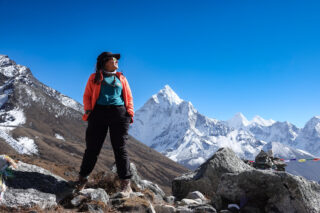
Life Happens Outdoors trekker standing on the Everest Base Camp trail with Himalayan peaks in the background

For most travellers planning Everest Base Camp in 2027, a realistic guided trek budget is about £1,500 to £3,600 per person, or roughly USD 2,000 to USD 4,800, before international […]

For most travellers planning Everest Base Camp in 2027, a realistic guided trek budget is about £1,500 to £3,600 per person, or roughly USD 2,000 to USD 4,800, before international flights. Very budget options may appear below this, but they usually involve more exclusions, less support, or tighter logistics. Premium guided experiences cost more because they include stronger support, safer logistics, proper acclimatisation, staff, permits, accommodation, meals, and contingency planning.

Life Happens Outdoors prices its Everest Base Camp trip in GBP. USD figures in this guide are included as rough international comparisons only and will move with exchange rates.

The real question is not only how much Everest Base Camp costs. The better question is what your price includes, what it leaves out, and whether saving money in the wrong place could make the experience harder, less safe, or less enjoyable than it needs to be.

The Short Answer: What Is a Realistic Everest Base Camp Trek Cost?

For most international trekkers booking a guided experience, a realistic Everest Base Camp trek cost is between about £1,500 and £3,600, or roughly USD 2,000 to USD 4,800, before international flights.

A very budget Everest Base Camp trek may appear from about £700 to £1,200, or roughly USD 900 to USD 1,600. These prices usually involve significant compromises, exclusions, basic services, or very careful spending.

A more realistic budget or independent style EBC trek often sits closer to £1,000 to £1,500, or roughly USD 1,300 to USD 2,000, before international flights.

A standard guided Everest Base Camp trek often costs around £1,200 to £2,000, or roughly USD 1,600 to USD 2,700. This may include local guide support, some porter support, permits, accommodation, meals on trek, and Lukla flights, although every operator defines “included” differently.

A premium guided Everest Base Camp trek often costs around £2,500 to £3,600, or roughly USD 3,300 to USD 4,800. This is where you are usually paying for better preparation, stronger logistics, smaller groups, more careful pacing, selected accommodation where available, trusted local teams, clearer safety systems, and stronger contingency planning.

Life Happens Outdoors sits in this premium guided category. Our Everest Base Camp trip is priced in GBP, with an early bird price of £3,151 and a standard price of £3,425. As a rough USD estimate, that is approximately USD 4,200 to USD 4,600, depending on exchange rate. The USD figure should be treated only as a guide, because exchange rates move.

A private, luxury, or high altitude helicopter return experience can cost more than this. This is a different category from a premium guided trek that uses a helicopter sector as part of its logistics.

Why LHO Prices Everest Base Camp in GBP

Life Happens Outdoors is a UK registered company and our trip prices are anchored in GBP. This matters because the price on our trip page is the commercial price.

USD is useful because many Everest Base Camp cost comparisons online use dollars. It helps international readers understand the market. But for LHO, GBP is the number that matters.

In this article, GBP is the anchor currency. USD figures are rough estimates only.

Why Does the Everest Base Camp Price Vary So Much?

The Everest Base Camp price varies because trekkers are not always comparing the same thing.

Two operators may both sell an “Everest Base Camp trek,” but one may include only the basics while another may include full support before, during, and after the journey.

The difference is not always visible from the headline price. It often appears in the details.

Route and Itinerary Length

Most classic Everest Base Camp itineraries take around 12 to 14 days in Nepal. Some are shorter. Some premium operators run longer itineraries because they include better acclimatisation, more buffer time, and more realistic contingency planning.

LHO runs a 16 day Everest Base Camp itinerary.

That is deliberate.

The extra time is not padding. It is part of the way the experience is protected. Everest Base Camp is a high altitude trek in a remote mountain region. Your body needs time to adapt. Lukla flights can be disrupted by weather. The Khumbu is not a place where every day can be treated like a fixed city schedule.

A 16 day itinerary gives the journey more breathing room. It supports acclimatisation. It allows for weather disruption. It reduces the feeling of being rushed. It gives the team a better chance of moving through the mountains in a calm, steady, and sustainable way.

This is one of the reasons a premium EBC trip can cost more than a budget trip. You are not only paying for more days. You are paying for a better structure.

If you are still working out whether Everest Base Camp is right for you, read our Everest Base Camp difficulty guide before comparing prices. Cost and difficulty are connected. A cheaper, faster itinerary may make the trek feel much harder than it needs to be.

If you are still learning how altitude affects the body, read our guide to altitude sickness before choosing an itinerary based only on price. The right pace matters, and so does understanding what your body will experience as you move higher.

Guided Support

A guide does far more than walk at the front of the group.

A good guide helps manage pace, checks how people are feeling, coordinates accommodation, communicates with local teams, supports decision making, and helps you understand the culture and landscape around you.

For first time trekkers, this is a major part of the value. You are not only paying for navigation. You are paying for judgment.

A lower cost trek may include a guide, but the difference often lies in experience, language ability, training, staff to trekker ratio, and how well the guide is supported by the operator behind them.

On a high altitude trek, the cheapest guide is not always the best value. The right guide can change the whole experience.

Porter Support

Porter support changes the physical experience of the trek.

Carrying a heavy pack at sea level is one thing. Carrying it above 4,000 metres after several days of walking is another.

On a well organised EBC trip, porters are not an afterthought. They are part of the mountain economy and should be treated responsibly. A price that looks unusually low may raise questions about how staff are paid, whether they are insured, and whether porter loads are being managed properly.

Choosing the cheapest trek is not always a saving. Sometimes it simply means the cost has been pushed onto local staff.

A responsible operator should be able to explain how local teams are supported.

Lukla Flights and Internal Logistics

Most Everest Base Camp treks involve flights to and from Lukla, the mountain airstrip that serves the Khumbu region. These flights are weather dependent and can be disrupted by cloud, wind, congestion, or seasonal airport routing.

At the time of writing, typical Lukla flights are often quoted around USD 150 to USD 250 each way, although rates fluctuate by season, routing, airport arrangements, and operator structure. Some packages include these flights. Some do not. Some include flights only in one direction or leave changes and rerouting costs unclear.

This is one of the most important details to check when comparing EBC prices.

LHO includes a Kathmandu to Lukla helicopter sector as part of the Everest Base Camp trip structure. This is not positioned as a luxury shortcut. It is an operational decision designed to reduce exposure to Lukla flight disruption and create a smoother start to the journey.

That is very different from a high altitude helicopter return from the upper Khumbu, which is usually a private or luxury add on.

This distinction matters. Not every helicopter inclusion means the same thing. A helicopter can be used for comfort, speed, evacuation, scenery, or logistics. In LHO’s case, the Kathmandu to Lukla sector is a premium logistics feature.

Accommodation Standard

Everest Base Camp is a teahouse trek. This means you stay in mountain lodges along the route.

Teahouses are part of the beauty of the journey. They are simple, warm, social, and deeply connected to the rhythm of the Khumbu.

However, standards vary. In lower villages such as Phakding and Namche, better lodges may be available. Higher up, accommodation becomes simpler because everything is harder to build, supply, and maintain.

A premium experience does not mean five star luxury at 5,000 metres. It means the best realistic choices for the region, arranged with care, clarity, and comfort where possible.

The higher you go, the simpler things become. That is not a flaw in the experience. It is part of the reality of trekking in the Himalayas.

Meals and Drinking Water

Food is a major part of the Nepal trekking cost.

Most trekkers eat three meals a day in teahouses. As you go higher, food becomes more expensive because supplies are carried by porters, yaks, mules, or helicopters.

Some packages include all meals on the trail. Others include only breakfast or leave meals to be paid directly. This makes a big difference when comparing prices.

You should also check whether drinking water is included. Bottled water becomes expensive and environmentally difficult higher on the route, so many trekkers use filtered, boiled, or treated water instead.

The food on EBC is usually simple, filling, and practical. Dal bhat, noodles, soup, rice, potatoes, eggs, porridge, tea, and basic baked goods all become part of the rhythm of the trail.

Permits

The classic Everest Base Camp trek usually requires the Sagarmatha National Park permit and the Khumbu Pasang Lhamu Rural Municipality permit.

These are not the biggest part of the total cost, but they are essential and should be included clearly in a proper package.

If an operator is vague about permits, ask for clarification before booking.

Pre Trip Support

This is one of the most overlooked parts of the Everest Base Camp price.

A strong operator does not only meet you in Kathmandu. They help you prepare before you arrive.

This includes training advice, kit guidance, altitude education, packing support, expectations around food and accommodation, and realistic answers to your questions.

For many first time trekkers, this support is where the experience begins.

Everest Base Camp is achievable for many people, but it should not be approached casually. Good preparation makes the journey safer, calmer, and more enjoyable.

Once you have understood the cost, the next step is to understand how to train for Everest Base Camp.

Guided vs Independent Style Everest Base Camp Cost

Many people ask whether it is cheaper to go to Everest Base Camp without a guide.

The simple answer is yes, it can appear cheaper on paper.

The better answer is that it depends what you mean by cheaper.

Independent Style Cost

An independent style trek may cost around £1,000 to £1,500, or roughly USD 1,300 to USD 2,000, before international flights. Some people report lower budgets, but those usually involve very basic choices, limited support, exclusions, or unusually careful spending.

This may appeal to experienced travellers who are comfortable managing their own logistics, handling uncertainty, and accepting more basic conditions.

However, Nepal trekking rules and local enforcement have changed in recent years, and travellers should not assume that fully unsupported trekking is always simple or advisable. For Everest Base Camp, it is safer to plan with proper local support and up to date guidance.

Independent style trekking can work for the right person. It is not always the right choice for a first time trekker.

Guided Trek Cost

A guided Everest Base Camp trek usually costs more because it includes more.

You are paying for guide support, porter arrangements, permits, accommodation planning, food logistics, airport transfers, local coordination, briefing, safety processes, and often a better structure around the entire journey.

For many trekkers, the extra cost is not simply about comfort. It is about reducing friction.

You do not need to negotiate rooms every night. You do not need to work out what is included. You do not need to manage language barriers alone. You do not need to make altitude decisions without support.

This is why our guided vs independent Everest Base Camp guide is worth reading before choosing based on price alone.

Which Is Better Value?

Independent style trekking may be cheaper if everything goes perfectly.

Guided trekking is often better value if you want a smoother, safer, and more supported experience.

The difference becomes most obvious when something does not go to plan. Weather delays, illness, altitude symptoms, changed flights, lost kit, or accommodation pressure can all turn a low cost plan into a stressful one.

Value is not only the price you pay. It is the experience you get in return.

Budget vs Premium Everest Base Camp Experience

A budget trek and a premium trek may follow the same trail. They do not always deliver the same experience.

Budget EBC Experience

A budget Everest Base Camp trek usually keeps costs down through larger groups, simpler services, more basic accommodation, fewer inclusions, less pre trip support, and limited flexibility.

This can work for confident travellers who understand what they are buying and are comfortable with a rougher experience.

The risk is when budget pricing creates unrealistic expectations.

Everest Base Camp is remote. Even a basic trek still involves flights, permits, staff, food, accommodation, and safety considerations. If a price looks too good to be true, something has usually been removed.

Standard Guided EBC Experience

A standard guided EBC experience usually gives you the basics in a more organised format.

You may have a guide, permits, accommodation, meals, Lukla flights, and some support with logistics. This can be a good fit for trekkers who want structure but are comfortable with limited extras.

The key is to check the exclusions. Does the price include all meals? Are Lukla flights included? Is porter support included? Are airport transfers included? What happens if weather delays your travel? How large is the group? Who is responsible for supporting you before arrival?

The answers to those questions matter more than the headline price.

Premium Guided EBC Experience

A premium Everest Base Camp trek is not about making the Himalayas feel artificial.

It is about making the experience feel well held.

That can mean better briefing, stronger pacing, more careful group management, selected teahouses where available, reliable local teams, fair treatment of staff, clearer contingency planning, and better communication from the moment you enquire.

For LHO, premium means you feel supported without losing the authenticity of the mountain journey.

The goal is not to remove challenge. The goal is to help you meet it well.

Private, Luxury, and High Altitude Helicopter Return Experiences

Private or luxury EBC experiences can cost significantly more than premium guided trips.

This may include private guiding, upgraded lodges where available, more bespoke services, additional hotel nights, helicopter returns from the upper Khumbu, or other comfort led upgrades.

This is different from a premium itinerary that includes a helicopter sector for operational reliability.

The distinction matters because “helicopter supported” can mean several different things. Always ask what the helicopter is used for, where it operates, whether it is included, and whether it is part of the main itinerary or an optional add on.

What Does LHO’s Everest Base Camp Price Include in Practice?

For 2027 planning, LHO’s Everest Base Camp trip sits in the premium guided category.

The trip is priced in GBP, with early bird pricing at £3,151 and standard pricing at £3,425. As a rough USD estimate, that is approximately USD 4,200 to USD 4,600 depending on exchange rate.

The price reflects the structure of the experience.

It is a 16 day itinerary, not a rushed 12 day version. It includes a Kathmandu to Lukla helicopter sector. It includes a buffer day in Kathmandu to help absorb weather related disruption around Lukla. It is designed for people who want a serious mountain experience without having to manage every logistical detail alone.

That is the commercial position.

LHO is not trying to be the cheapest way to get to Everest Base Camp. It is trying to be one of the clearest, most supported, and most experience led ways to do it.

Where Does the Money Actually Go?

Understanding where your Everest Base Camp trek cost goes helps you compare operators more fairly.

Local Staff

Guides, assistant guides, porters, drivers, airport teams, and local coordinators make the trip possible.

Their work is central to your experience.

Responsible staff payment and support should be part of the cost, not an optional extra hidden behind low advertising prices.

If an operator is dramatically cheaper than the rest of the market, it is fair to ask how that saving is achieved.

Permits and Local Fees

Permits support access to the region, national park management, and local authority systems.

These are essential costs and should be clearly listed.

Flights, Helicopter Logistics, and Transfers

The journey to Lukla is one of the major logistical costs of the trip.

Flights, helicopter sectors, Kathmandu transfers, airport coordination, and rerouting support all affect the final price.

A lower cost package may look attractive until you realise that internal flights, transfers, or disruption support are not included.

Trekker using poles on the Everest Base Camp trail with snow covered Himalayan mountains behind

Accommodation

Teahouse accommodation is usually simple, but availability and quality matter.

Better planning helps avoid poor room allocation during busy trekking seasons. It also helps make the journey feel more settled.

In a remote region, good logistics often show up in quiet ways. You may not notice them when everything works. You feel them when something goes wrong.

Food

Food costs rise as you gain altitude.

A bowl of soup, plate of dal bhat, tea, or bottle of water may cost more in higher villages because of the effort required to get supplies there.

This is normal. It is part of trekking in a remote mountain region.

Safety and Contingency Planning

This is one of the most important things you are paying for, even though it may not appear as a simple line item.

A responsible operator builds systems around altitude awareness, communication, evacuation planning, weather delays, and decision making.

LHO’s buffer day in Kathmandu is a concrete example of this. Lukla weather can cause delays. Building in a buffer means the itinerary is designed with mountain reality in mind, rather than pretending everything will run perfectly.

That does not mean there can never be disruption. It means the trip has been built with disruption in mind.

Operator Support

Good operators invest in preparation, communication, client care, local relationships, staff training, and post booking support.

This is part of why two EBC prices can look very different.

If one operator seems much more expensive than another, ask what is included. If one operator seems much cheaper, ask what has been removed.

Common Hidden Costs on the Everest Base Camp Trek

When comparing EBC cost, always ask what is not included.

International Flights

Most Everest Base Camp trek prices do not include international flights to Kathmandu.

This can be a major part of your total trip cost depending on where you are flying from.

Travel Insurance

High altitude trekking insurance is essential.

Your policy should cover trekking to the required altitude and emergency evacuation. Do not assume a standard travel insurance policy is enough.

If helicopter evacuation is not covered, you may be exposed to significant costs in an emergency.

Visa Fees

Most travellers need a Nepal visa. The cost depends on the length of stay.

This is usually arranged separately from the trek package.

Tips

Tipping guides and porters is customary on Everest Base Camp.

As a practical guide, LHO recommends budgeting around USD 250 for tips. This gives trekkers a clear number to plan around rather than treating tipping as a surprise at the end of the trip.

Tip culture can vary between operators, so always check what is expected before you travel.

Showers, Charging, WiFi, and Snacks

On the trail, hot showers, device charging, WiFi, bottled drinks, snacks, and extra tea often cost more as you go higher.

These may seem small individually, but they can add up over nearly two weeks.

A realistic budget should include personal spending money for these extras.

Gear

You may need to buy or rent trekking poles, a sleeping bag, a down jacket, a duffel bag, layers, gloves, waterproofs, a headtorch, or other equipment.

If you already own good mountain kit, your costs may be lower.

If this is your first high altitude trek, kit can become a meaningful part of your total budget.

Extra Nights in Kathmandu

Weather delays can happen.

If flights to or from Lukla are disrupted, you may need extra hotel nights, meals, or rearranged transport.

This is one reason LHO builds a Kathmandu buffer day into the itinerary. It is not a wasted day. It is a practical decision designed around the realities of the region.

What Is a Sensible Total EBC Budget?

A sensible total budget for Everest Base Camp should include more than the advertised trek price.

For a guided trek, many travellers should think in terms of the full cost picture.

Your trek package may range from about £1,200 to £3,600, or roughly USD 1,600 to USD 4,800.

International flights depend on your departure city.

Travel insurance depends on your country, age, provider, and level of cover.

Your Nepal visa depends on length of stay.

Gear depends on what you already own.

Tips and personal expenses should be planned in advance.

An emergency buffer is strongly recommended.

If you are travelling from the GCC, UK, Europe, Singapore, or the US, your total cost will usually be higher once international flights and gear are included.

This is why the advertised “EBC cost” is only part of the real answer.

Common Mistakes When Comparing EBC Prices

Mistake 1: Choosing the Cheapest Price Without Checking Inclusions

The cheapest Everest Base Camp price may exclude meals, porter support, airport transfers, hotels, permits, Lukla flights, or contingency support.

Always compare like for like.

A low headline price can become expensive once you add back the things you actually need.

Mistake 2: Ignoring Acclimatisation

A cheaper itinerary that removes acclimatisation time can make the trek harder and less enjoyable.

Your body cannot be rushed just because your itinerary is.

Altitude does not care how many days of annual leave you have.

Mistake 3: Assuming All Guides Are Equal

A guide is not just a line item.

Their experience, judgment, communication, and support can shape the whole trip.

This is especially true if you are new to high altitude trekking.

Mistake 4: Underestimating Personal Spending

Even with a guided package, you may still spend money on snacks, drinks, charging, showers, WiFi, tips, and souvenirs.

These costs are normal, but they should not be ignored.

Mistake 5: Forgetting the Cost of Poor Logistics

A low cost trek with weak logistics can become expensive if you lose time, miss flights, struggle with accommodation, or need to solve problems alone.

On Everest Base Camp, logistics are part of the experience.

When they are good, you feel calm. When they are poor, you feel every gap.

Mistake 6: Treating EBC Like a Normal Holiday

Everest Base Camp is a trek through remote high altitude terrain.

It is beautiful, achievable, and deeply rewarding, but it is still a serious mountain journey.

The cost should reflect that.

Should You Book Everest Base Camp Before You Arrive in Nepal?

Many budget travellers ask whether it is cheaper to arrive in Kathmandu and book locally.

Sometimes it can be cheaper.

But cheaper does not always mean better value.

Booking before you arrive gives you more time to understand the itinerary, check inclusions, ask questions, prepare properly, arrange insurance, sort your kit, and build confidence before the trek.

For experienced backpackers, booking locally may feel natural. For time poor professionals, first time trekkers, or anyone who wants a more supported experience, booking with a trusted operator before arrival is usually the better choice.

You are not only buying the days on the trail. You are buying the preparation that helps those days go well.

Is Everest Base Camp Worth the Cost?

For the right person, yes.

Everest Base Camp is not only about reaching a sign or a viewpoint. It is about walking through the Khumbu, crossing suspension bridges, moving through Sherpa villages, watching the landscape change day after day, and feeling yourself adapt to the rhythm of the mountains.

The cost pays for access, support, safety, and logistics.

But the value is in the experience.

You are paying for the chance to stand beneath the highest mountain on earth and realise that you got there on your own two feet.

That is not a small thing.

If you are deciding whether Everest Base Camp is the right Nepal trek for you, our Annapurna Base Camp vs Everest Base Camp comparison can help you understand the difference in cost, comfort, altitude, and overall experience.

life happens outdoors everest base camp price remote high altitude trekking nepal

Why Trek Everest Base Camp With Life Happens Outdoors?

Life Happens Outdoors is built for people who want adventure, but do not want to feel unsupported.

Our Everest Base Camp trips are designed for ambitious first time trekkers and experienced hikers who want a premium, calm, and well organised experience from start to finish.

We help you understand the training, the kit, the altitude, the route, and the realities of the trail before you arrive in Nepal.

Our 16 day itinerary is designed with acclimatisation, logistics, and mountain reality in mind. Our Kathmandu to Lukla helicopter sector is included to support smoother access into the Khumbu. Our Kathmandu buffer day gives the journey breathing room if the weather affects Lukla travel.

We work with trusted local teams, plan the logistics carefully, and create an environment where our community members can focus on the journey rather than constantly managing the details.

You will still feel the challenge.

You will still have tired legs.

You will still have moments where the mountain asks something of you.

But you will not be doing it alone.

Explore our Everest Base Camp trips or speak to us about whether EBC is the right next adventure for you.

What Comes Next: Training for Everest Base Camp

Once you understand the Everest Base Camp trek cost, the next question is preparation.

Money gets you to Nepal. Training helps you enjoy the journey when you are there.

The best next step is to understand how fit you need to be, what kind of walking matters most, how to train for back to back trekking days, and how to prepare your body for long hours at altitude.

Read our training for Everest Base Camp guide next.

It will help you move from research into action, and from interest into readiness.

Everest Base Camp is not just a place you visit. It is a journey you prepare for, step into, and come back different from.

FAQs Everest Base Camp Trek Cost

CONTINUE YOUR RESEARCH

Buddhist stupa on the Everest Base Camp trail with Himalayan peaks in the background in Nepal

How to Train for Everest Base Camp: An 8 Week Plan for First Timers

View Training for Hiking, Treks & Climbs
READ MORE
Trekker walking up stone steps toward Himalayan mountain views on the Everest Base Camp trail

Everest Base Camp Hygiene: How to Stay Clean, Comfortable, and Confident on the Trek

View Trip Planning for Treks & Climbs
READ MORE
Life Happens Outdoors climbers training for Mont Blanc on steep alpine snow with ice axes and rope

Training for Mont Blanc: Why Fitness Alone Is Not Enough

View Training for Hiking, Treks & Climbs
READ MORE
Climbers ascending a snowy alpine ridge on Mont Blanc during the summer climbing season with Life Happens Outdoors.

Best Time to Climb Mont Blanc

View Adventure Travel Destinations
READ MORE

ABOUT THE AUTHOR

Rami Rasamny headshot

Rami Rasamny

Rami Rasamny is the founder of Life Happens Outdoors, a premium adventure travel company that uses the outdoors as a catalyst for human transformation. His work brings people into the mountains not only for challenge, but for clarity, confidence, and connection. He believes that when people answer the call to adventure truthfully, they come back different.