Adventure Travel Destinations | BY Rami Rasamny | PUBLISH DATE: May 21 2026 | READ TIME: 20 mins | UPDATED DATE: September 23 2026
Machame vs Lemosho: Which Kilimanjaro Route Has Better Summit Success?
DOWNLOAD YOUR Climb Kilimanjaro GUIDEBOOK
Most online advice tells first time Kilimanjaro climbers to choose Lemosho because it gives more days for acclimatisation. That advice is not wrong, but it is incomplete. More time on the mountain can help. It can also add fatigue. The better question is not simply which route gives more days. It is which route gets […]
Most online advice tells first time Kilimanjaro climbers to choose Lemosho because it gives more days for acclimatisation. That advice is not wrong, but it is incomplete.
More time on the mountain can help. It can also add fatigue. The better question is not simply which route gives more days. It is which route gets you to summit night with enough acclimatisation and enough energy left to use it.
That is why, at Life Happens Outdoors, we usually recommend the seven day Machame Route for most first time Kilimanjaro climbers.
Not because Machame is the easiest route. It is not. Not because Lemosho is a bad route. It is excellent. We recommend seven day Machame because it offers one of the strongest balances on Kilimanjaro: enough time to acclimatise properly, enough variation to climb high and sleep lower, and not so much time in expedition living that avoidable fatigue builds before summit night.
Across more than 100 successful Kilimanjaro climbs, we have seen the same pattern repeatedly: summit success is not only about the number of days on the mountain. It is about how well a climber arrives at summit night.
Kilimanjaro is not usually lost in one dramatic moment. It is often lost gradually. A little less sleep. A little less appetite. A little more cold. A little more nausea. A little more time in camp. By the time you reach Barafu, the question is not only whether your body has adapted to altitude. It is whether you still have enough physical and mental energy to keep moving toward Uhuru Peak.
That is the real Machame vs Lemosho decision.
The answer in brief
For most first time Kilimanjaro climbers, we recommend the seven day Machame Route.
Lemosho usually gives a more gradual approach and more time for acclimatisation. That can be valuable, especially for climbers who have extra time, extra budget, or a known history of struggling at altitude.
But more days do not automatically mean better summit success. On Kilimanjaro, summit success depends on the balance between acclimatisation and energy preservation. Seven day Machame is often the best practical balance for the kind of climber who joins Life Happens Outdoors: ambitious, time poor, well prepared, and looking for a serious but supported mountain experience.
| Factor | Seven day Machame | Lemosho |
| Best for | Most first time LHO climbers | Climbers wanting a slower western approach |
| Main strength | Balance of acclimatisation and energy preservation | More gradual acclimatisation profile |
| Main risk | Too fast if done in six days or poorly paced | Extra expedition fatigue if recovery is poor |
| Route feel | Efficient, dramatic, proven | Longer, quieter early stages, scenic |
| LHO view | Default recommendation for most climbers | Excellent in specific circumstances |
Machame vs Lemosho at a glance
Machame and Lemosho are both excellent Kilimanjaro routes. Both can be used successfully by first time high altitude climbers when the itinerary is properly paced and the guide team manages the climb well.
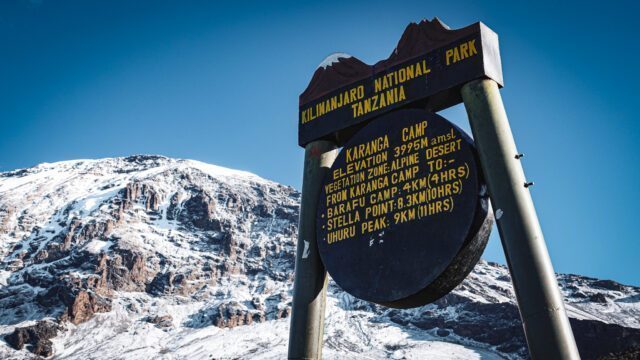
Machame approaches Kilimanjaro from the southwest. It moves through rainforest, moorland, alpine desert, Barranco, Karanga, and Barafu before the summit push. It is usually climbed over six or seven days, but for most climbers we would strongly favour the seven day version.
Lemosho approaches from the west. It usually begins through a quieter forest approach before crossing toward the Shira Plateau and eventually joining the southern circuit used by Machame. It is commonly operated over seven or eight days.
Both routes ultimately lead climbers toward Kilimanjaro’s highest point, Uhuru Peak. UNESCO lists Kilimanjaro as Africa’s highest point at 5,895 metres.
The key difference is not simply where the route starts. The key difference is how the route shapes your body and mind before summit night.

Why Lemosho became the default online recommendation
Lemosho is often recommended because it gives more time on the mountain. From an altitude perspective, that makes sense.
The Wilderness Medical Society’s 2024 clinical practice guidelines identify gradual ascent, especially controlling sleeping altitude gain above 3,000 metres, as one of the most important ways to reduce the risk of acute altitude illness. The guidance advises that, once above 3,000 metres, individuals should not increase sleeping elevation by more than 500 metres per day and should include a rest day every three to four days.
The CDC’s altitude illness guidance also recommends gradual ascent, extra acclimatisation days where possible, and avoiding rapid sleeping altitude gain. It also emphasises that travellers should not continue ascending to sleep higher if they are experiencing symptoms of altitude illness.
So the Lemosho argument is easy to understand.
More days can mean more adaptation. More gradual ascent can reduce stress on the body. A slower approach can give the climber time to settle into the mountain.
That is all true.
But it is not the whole truth.
The missing factor: energy preservation
Most Kilimanjaro route comparisons talk about acclimatisation as though it exists in isolation. It does not.
A climber is not just adapting to altitude. They are also spending energy every day. They are walking for several hours. They are sleeping in a tent. They are eating differently. They are dealing with dust, cold, changing weather, disrupted routines, camp life, digestion, nerves, group dynamics, and the slow mental friction of being on expedition.
That matters because Kilimanjaro is not only an altitude challenge. It is an energy management challenge.
A longer route can help if the extra time allows you to recover and adapt. But a longer route can hurt if the extra days add fatigue faster than they add benefit.
This is where some online advice becomes too simple. It assumes that more days always means higher summit success. In reality, more days only help when they leave the climber better prepared for summit night.
Why seven day Machame works so well
Seven day Machame works because it gives most climbers the balance they need.
It is not rushed like a six day itinerary. It gives the body time to adjust. It includes valuable acclimatisation features, including the classic climb high and sleep lower pattern around Lava Tower and Barranco. It also avoids adding more expedition time than many climbers need.
That is important for first timers.
Many people joining Kilimanjaro are not professional expedition climbers. They may be fit. They may train seriously. They may have strong hiking or endurance backgrounds. But they may not know how they will sleep in a tent for many nights, how their appetite will respond at altitude, or how they will feel after several days of camp life.
For that climber, the best route is not automatically the longest route. It is the route that gives them enough acclimatisation without draining the energy they need most when the climb becomes hardest.
That is why we usually recommend seven day Machame as the default first time choice.
Imagine yourself at Barafu
Most people choose a Kilimanjaro route by imagining the start. They picture the forest, the scenery, the map, the number of days, and the route name.
We think you should choose your route by imagining Barafu.
You are at high camp. You are tired. It is cold. You have probably slept lightly. You need to eat when you may not feel hungry. In a few hours, you will start walking in darkness toward the crater rim.
At that moment, the route that matters is not the one that sounded best on paper. It is the one that helped you arrive with the best combination of acclimatisation, energy, confidence, and calm.
That is the reason we keep coming back to seven day Machame.
It gives most climbers a strong acclimatisation profile, while still protecting them from unnecessary cumulative fatigue before summit night.
Why more days do not always mean higher summit success
More days can improve acclimatisation. They can also create more opportunities for small things to go wrong.
An extra day means another night of sleep that may or may not be good. Another day of appetite management. Another day of dust, cold, camp routines, and changing weather. Another day away from your normal rhythm. Another day in which morale can rise or fall.
For some climbers, the extra day is exactly what they need.
For others, it is one more day of fatigue before the most important night of the climb.
This is why we do not believe route choice should be reduced to a simple rule that Lemosho is always better because it is longer. That is too shallow for a mountain like Kilimanjaro.
The better rule is this:
Choose the route that gives you enough time to acclimatise and still lets you arrive at summit night with usable energy.
For many LHO climbers, that route is seven day Machame.
What about Lemosho’s higher success rates?
You may see online tables claiming that Lemosho has a higher summit success rate than Machame. Treat those numbers carefully.
Kilimanjaro success rates are usually operator reported, not independently verified, and they often compare different itinerary lengths, different guide standards, different safety systems, and different climber profiles.
A well paced seven day Machame climb with strong guide support is not the same as a rushed or poorly operated Machame climb. A carefully operated Lemosho climb is not the same as a poorly paced Lemosho climb either.
The route name matters, but the operating system matters more.
That is why we are careful with generic success rate claims. They can be useful as a broad signal, but they rarely tell you what will happen on your actual expedition, with your actual guide team, your actual preparation, your actual body, and your actual summit night.
Machame is not the “hardcore” option
One of the biggest mistakes in Kilimanjaro advice is framing Machame as the route for fitter or more experienced climbers and Lemosho as the route for beginners.
That is too simplistic.
A six day Machame itinerary can be too aggressive for many first timers. But a seven day Machame itinerary is a very different proposition. It gives more time, better pacing, and a more sensible acclimatisation profile while preserving the efficiency that makes Machame such a strong route.
That does not make it easy. Kilimanjaro is still a serious high altitude climb. But it does make Machame a highly suitable first time route when operated properly.
At Life Happens Outdoors, we do not recommend Machame because we want people to rush. We recommend seven day Machame because it is not a rush. It is a balanced expedition that respects altitude without assuming that more time is always better.

Lemosho is excellent, but it is not automatically better
Lemosho deserves its reputation. It is beautiful, gradual, and often quieter in the early stages. For some climbers, it is the right decision.
Lemosho may be the better route if you have the extra time and budget, if you particularly value the quieter western approach, if scenery and a slower journey matter more to you than expedition efficiency, or if you already know from past mountain experience that your body needs a more gradual altitude profile.
It can also be the better choice for someone whose priority is to maximise acclimatisation time, even if that means accepting more days in camp.
But Lemosho should not be presented as automatically better for every first time climber. That is where much of the online advice goes wrong.
A route can be better on paper and not better for the person standing at high camp.
The hidden cost of expedition living
Expedition living sounds romantic before the climb. It can be beautiful. It can also be demanding.
You are sleeping outside. You are waking early. You are packing and repacking. You are managing layers, water, snacks, hygiene, boots, headtorches, batteries, and weather. You are eating when your appetite may not be strong. You are walking slowly when your instinct may be to move faster. You are sharing a group rhythm and trusting a guide team.
These details matter because they affect performance.
A climber who is physically strong but mentally worn down may struggle on summit night. A climber who is acclimatising well but not eating may struggle. A climber who is moving well but sleeping badly may struggle. A climber who is cold, anxious, and low on morale may struggle.
This is why summit success is not just about the route profile. It is about the full expedition system.
The route matters. The guide team matters. Pacing matters. Food matters. Camp management matters. Medical judgement matters. The atmosphere of the group matters.
The role of operator quality
A good itinerary can fail if it is poorly operated. A strong route can become dangerous if the pacing is wrong. A climber can lose summit readiness through poor camp routines, poor communication, poor hydration, or weak decision making.
This is why we are careful about making route comparisons in isolation.
Seven day Machame is a strong route when it is operated properly. That means slow pacing from day one. It means honest communication about symptoms. It means monitoring climbers properly. It means supporting appetite and hydration. It means protecting energy rather than celebrating speed.
That is why our Kilimanjaro climbs are built around careful pacing, regular blood oxygen monitoring, one guide for every two clients (2:1 client-to-guide ratio), and 1:1 summit night support where needed. The LHO Team Leader is excluded from these ratios.
These details matter because the route creates the opportunity, but the operating system protects the climber.
If you want to understand this further, read our guide to how to prevent altitude sickness on Kilimanjaro.
The same is true of Lemosho. A longer route is not automatically safer if the pace is too fast, the group is poorly managed, or the climber is not supported well.
The route gives you the structure. The operator turns that structure into a real chance of success.
Why “I am fit, so I will be fine” is the wrong mindset
Fitness helps on Kilimanjaro. It helps you recover between trekking days. It helps reduce the relative effort of each stage. It helps you arrive at summit night with more strength left in your legs.
But fitness does not replace acclimatisation.
Altitude is not impressed by ego. A strong athlete, endurance trained climber, or regular hiker can still struggle if they ascend too quickly, fail to eat, under hydrate, or ignore symptoms.
The best Kilimanjaro climbers are not the ones who try to prove how strong they are. They are the ones who move slowly, eat early, drink consistently, communicate honestly, and leave their ego at the gate.
That is another reason seven day Machame works well. It rewards patience. It gives the climber enough time to settle into the mountain without turning the climb into a prolonged test of camp fatigue.
If you are unsure whether you are ready, start with our Kilimanjaro fitness checklist.
Why “better acclimatisation on paper” can fail in reality
A route can look ideal on paper and still fail in practice.
This often happens when people treat acclimatisation as a mathematical formula instead of a lived process.
The body does not adapt only because the itinerary says it should. It adapts in the context of sleep, nutrition, hydration, pace, stress, temperature, previous fatigue, and individual physiology.
Two climbers can follow the same itinerary and have very different experiences. One sleeps well, eats well, and feels stronger each day. Another sleeps badly, loses appetite, becomes anxious, and arrives at summit night depleted.
On paper, they had the same route. In reality, they had different expeditions.
This is why we prefer the concept of summit readiness.
Summit readiness means you have acclimatised enough, but also that you still have the physical and mental energy to keep going when the summit push becomes difficult.
Summit readiness is the real goal
Summit readiness has five parts.
1. Acclimatisation
Your body needs time to respond to reduced oxygen availability. This is why we do not recommend rushing Kilimanjaro on overly short itineraries.
2. Energy preservation
You need to save strength for summit night. The climb is not won in the first few days. It is built through restraint.
3. Sleep quality
Perfect sleep is unlikely at altitude, but repeated poor sleep can damage appetite, morale, and recovery.
4. Appetite and hydration
A climber who stops eating and drinking properly is in trouble, even if their route profile looks good.
5. Mental steadiness
Summit night is slow, cold, and repetitive. Calm matters. Trust matters. Group energy matters.
This is why the Machame vs Lemosho decision cannot be answered by duration alone.
When Machame is the better choice
Machame is usually the better choice for most Life Happens Outdoors climbers when it is done over seven days.
It is especially suitable if you want a strong acclimatisation profile without spending unnecessary extra time on the mountain. It is suitable if you are ready to train properly, follow the guide team’s pace, respect altitude, and commit to the process from day one.
It is also a strong choice if you are a time poor professional who wants a serious, beautiful, well supported Kilimanjaro climb without extending the expedition beyond what is useful for most first timers.
Machame is not the route for rushing. It is the route for disciplined pacing.
That distinction matters.
The six day version can be too compressed for many climbers. The seven day version is the one we recommend because it gives a better balance between adaptation and freshness.

When Lemosho is the better choice
Lemosho may be the better choice if your priority is a slower and more scenic approach, especially if you have the extra time and budget.
It may also be better if you know from previous mountain experience that you are particularly sensitive to altitude and benefit from more gradual ascent. If you have struggled above 3,500 or 4,000 metres before, the additional time may be worth considering.
Lemosho can also be the better choice if the journey matters to you as much as the summit. The western approach gives a beautiful sense of arrival into the mountain and can feel quieter in the early stages.
But that does not mean every beginner should automatically choose Lemosho. If the extra day simply adds fatigue without improving recovery, it may not be an advantage.
What about the Northern Circuit?
If your single biggest priority is acclimatisation time, then it is worth asking whether Lemosho is really the end of the conversation.
The Northern Circuit is generally considered one of Kilimanjaro’s longest and most gradual routes. It is often discussed as one of the strongest options for acclimatisation because it spends more days on the mountain and traverses quieter northern slopes.
But the same principle still applies. More time can help, but it also means more expedition living. For some climbers, that is exactly right. For others, it is more than they need.
That is why we come back to the same question: what route gives you the best summit readiness, not just the longest itinerary?
Machame vs Lemosho for first timers
For most first timers, we recommend seven day Machame.
That recommendation may surprise people who have read online forums where Lemosho is often described as the safer choice. But our view is that first timers need balance, not simply more time.
They need enough time to acclimatise. They need a route that has a proven rhythm. They need a pace that protects them from going too fast. They need a team that watches them carefully. They also need to avoid arriving at summit night worn down by avoidable fatigue.
Seven day Machame does that exceptionally well.
It gives first timers a serious Kilimanjaro experience without making the climb longer than it needs to be for most people. It asks for preparation, patience, and trust. It does not ask you to be an elite athlete.
If you are new to mountain travel, you may also find our beginner friendly trekking and climbing hub useful before choosing your next step.
Machame vs Lemosho for summit success
If both routes are operated well, Lemosho has an acclimatisation advantage because it usually gives more time. That is the part of the online advice that is correct.
But summit success is not only about acclimatisation.
Seven day Machame can be the better summit success choice for many climbers because it balances altitude adaptation with energy preservation. It gives the body time to adjust, but it also limits the cumulative strain of expedition living before summit night.
So the real answer is:
Lemosho may win on acclimatisation time.
Machame often wins on practical summit readiness.
For most LHO climbers, practical summit readiness is the more useful measure.
Life Happens Outdoors recommendation
At Life Happens Outdoors, we recommend the seven day Machame Route as the default Kilimanjaro route for most first time climbers.
We recommend it because it reflects the way we believe Kilimanjaro should be climbed: slowly, patiently, and with respect for altitude, but without assuming that extra time on the mountain is always an advantage.
Our focus is not simply getting people to the top. It is helping them arrive prepared, supported, and steady enough to give themselves the best possible chance of standing on Uhuru Peak safely and meaningfully.
That is why route choice is only part of the conversation.
Preparation matters. Training matters. Pacing matters. Guide judgement matters. Medical awareness matters. Camp culture matters. Community matters.
When those things come together, Kilimanjaro becomes more than a summit attempt. It becomes exactly what it should be: a challenge that changes how you see yourself.
You do not come to Kilimanjaro just to reach a sign. You come to discover what happens when you keep going, slowly and steadily, long after the easy part is over.
You come back different.
For a more personal perspective on the climb, read What I Wish I Knew Before Climbing Kilimanjaro.
Final recommendation
Choose seven day Machame if you want the best default balance for a first time Kilimanjaro climb.
Choose Lemosho if you have extra time and budget, want a quieter western approach, or know that your body needs more gradual altitude exposure.
Do not choose based only on which route has more days. Choose based on which route will help you reach summit night with the best combination of acclimatisation, energy, appetite, confidence, and calm.
For most Life Happens Outdoors climbers, that answer is seven day Machame.
FAQs Machame vs Lemosho
Is Machame or Lemosho better for Kilimanjaro?
For most Life Happens Outdoors climbers, we recommend the seven day Machame Route. Lemosho gives more time for acclimatisation and can be an excellent choice, but more days do not automatically mean better summit success. Seven day Machame gives most first time climbers a strong balance between acclimatisation and energy preservation before summit night.
Is Lemosho better than Machame for acclimatisation?
Lemosho usually has an acclimatisation advantage because it is commonly operated over more days and gives a more gradual western approach. Gradual ascent is one of the most important ways to reduce the risk of altitude illness, and sleeping altitude is especially important. However, acclimatisation is only one part of summit success. A climber also needs sleep, appetite, hydration, morale, and enough energy left for summit night.
Why does Life Happens Outdoors recommend Machame?
Life Happens Outdoors usually recommends the seven day Machame Route because it gives most first time climbers the best practical balance. It is long enough to respect acclimatisation, but efficient enough to avoid unnecessary expedition fatigue for many climbers. When paced properly, it gives climbers a strong route profile while protecting the energy they need for Barafu and the summit push.
Is Machame too hard for beginners?
Machame is not easy, but the seven day version can be very suitable for first time Kilimanjaro climbers who prepare properly and follow the guide team’s pace. The problem is not Machame itself. The problem is rushing it, especially on shorter itineraries. Seven day Machame is a balanced and serious route, not a shortcut.
Is Lemosho worth the extra day?
Lemosho can be worth the extra day if you want a slower approach, value the quieter western side of the mountain, or know that you need more time to adapt to altitude. It can also be a beautiful choice for climbers who want the journey to feel more spacious. But the extra day is only helpful if it improves recovery. If it simply adds fatigue, it may not improve summit readiness.
Which Kilimanjaro route has the highest success rate?
Success rates vary widely by operator and are not always independently verified. Longer routes such as Lemosho and the Northern Circuit are often associated with strong acclimatisation profiles. However, the route alone does not determine success. Pacing, guide quality, preparation, hydration, sleep, appetite, and decision making all matter.
Why is summit night so hard on Kilimanjaro?
Summit night is difficult because climbers start very early, usually in darkness and cold, after several days already spent trekking at altitude. The body is tired, oxygen availability is lower, sleep may be limited, and appetite may be reduced. That is why arriving at Barafu with both acclimatisation and energy matters so much.
Should fit climbers choose Machame or Lemosho?
Fit climbers often do very well on seven day Machame because they can preserve energy across the route while still benefiting from a sensible acclimatisation profile. But fitness does not remove the need for altitude adaptation. A fit climber still needs to move slowly, eat properly, hydrate consistently, and communicate honestly with the guide team.
What is the best Kilimanjaro route for first timers?
For most first timers, Life Happens Outdoors recommends the seven day Machame Route. It gives a strong balance between acclimatisation and energy preservation, which is exactly what most first time climbers need. Lemosho remains a strong alternative for people who want a longer, quieter, more gradual approach.
Ready to climb Kilimanjaro?
If you are deciding between Machame and Lemosho, the best next step is to understand which route makes sense for your body, preparation window, altitude history and the kind of experience you want.
Life Happens Outdoors operates a seven-day Machame itinerary designed around preparation, pacing, altitude awareness and summit readiness. It is intended for first-time climbers who want a serious, well-supported way to experience Africa’s highest mountain.
Speak to the Life Happens Outdoors team and we will help you decide whether this is the right mountain, route and moment for you.
This article was reviewed for Kilimanjaro accuracy by Emmanuel Matinde Asseno, a Tanzanian mountain guide licensed by Tanzania’s Ministry of Natural Resources and Tourism (Mountain Guiding Licence No. 037979) and a current Board Member of the Kilimanjaro Guides Association.
Expert review
Reviewed by
Dr. Nima Namgyal Sherpa
Mountaineering guide and expedition doctor
Dr. Nima is LHO’s high-altitude and wilderness medicine reviewer. He has reviewed the altitude-related medical and physiological guidance in this article.
CONTINUE YOUR RESEARCH

Machame Route Itinerary: A Seven Day Kilimanjaro Journey Designed For You To Come Back Different




ABOUT THE AUTHOR

Rami Rasamny
Rami Rasamny is the founder of Life Happens Outdoors, a premium adventure travel company that uses the outdoors as a catalyst for human transformation. His work brings people into the mountains not only for challenge, but for clarity, confidence, and connection. He believes that when people answer the call to adventure truthfully, they come back different.