Mountains & Peaks | BY Rami Rasamny | PUBLISH DATE: January 16 2025 | READ TIME: 5 mins | UPDATED DATE: August 19 2026
Goûter Hut on Mont Blanc: What Climbers Need to Know

DOWNLOAD YOUR Climb Mont Blanc GUIDEBOOK
The Goûter Hut is one of the defining places on Mont Blanc’s normal route. It sits at approximately 3,815 metres, high on the Aiguille du Goûter, and commonly forms the final hut stage before a summit attempt. It is not a hotel and it is not simply accommodation: it is a working mountain refuge in […]
The Goûter Hut is one of the defining places on Mont Blanc’s normal route. It sits at approximately 3,815 metres, high on the Aiguille du Goûter, and commonly forms the final hut stage before a summit attempt. It is not a hotel and it is not simply accommodation: it is a working mountain refuge in a remote, exposed environment.
This guide explains what the hut is like, what you can realistically expect from a stay and where to check the current rules. The personal observations come from a Life Happens Outdoors stay made before the original article was published on 16 January 2025. Facilities, services, reservations and access can change, so current official information takes priority over any evergreen article.
What the Goûter Hut is
The Refuge du Goûter is a staffed high-altitude hut on the Goûter route, also known as the normal route from the French side of Mont Blanc. The current FFCAM listing places it at approximately 3,815 metres and describes it as the last staffed refuge before the upper mountain.
Many Goûter-route plans use the hut, but not every itinerary is identical and a booking does not make the climb routine. Reaching it involves mountaineering terrain and the onward route continues across glaciated, exposed ground. Use our Goûter Route guide for the stages, hazards and access context. Current conditions and guide judgement still control the actual plan.
Where it fits into the Goûter route
The hut sits above Tête Rousse and the Goûter Couloir. For many teams, arriving here marks the end of a long approach day and the beginning of a short period of eating, organising equipment and trying to rest before an early start.
That position is what makes the hut useful, but it is also why expectations matter. At this altitude, everything from sleep and appetite to simple organisation can feel different. The hut provides shelter and a managed routine; it does not remove the effects of altitude, the objective hazards on the route or the possibility that the correct decision is to change the plan.
What staying there is actually like
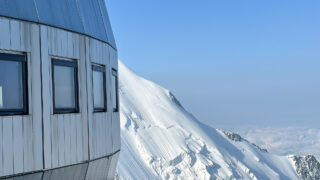
The first thing we remember is the setting. The building feels improbably placed on the edge of the mountain, with broad views across the massif when the weather allows. Reaching it gives the day a clear sense of arrival.
Inside, our experience was warmer and more comfortable than the altitude and exterior suggested. The common spaces gave teams somewhere to settle, eat and prepare. We also found the facilities well maintained during our visit. Those are personal observations from one stay, not promises about every room, team or season.
The trade-off is that this remains communal mountain accommodation. Privacy is limited, people move at different times and noise travels. Some climbers sleep well; others do not, particularly when altitude, anticipation and a warm shared room are added together. Plan on rest rather than assuming you will get a perfect night’s sleep.
Sleeping arrangements and normal hut routines
FFCAM currently describes shared dormitories with duvets and pillows. Guests need a personal sleeping-bag liner. The hut also provides a crampon room where boots and equipment can be left, with hut slippers available inside.
Normal refuge habits make the stay easier for everyone: organise equipment before people settle, keep noise and light to a minimum, follow the meal and breakfast routine and be ready to move when your team needs to leave. Exact arrangements can change, so confirm the current requirements rather than relying on an old packing list or timetable.
Food, water and practical facilities
During staffed periods, the hut normally provides meals, hot dishes and snacks according to its current service timetable. On our visit, the food was better than we expected for such a remote location. Treat that as our experience, not a guarantee of a particular menu or meal.
FFCAM currently lists a room for people who want to prepare their own food, but without cooking equipment. Toilets are available inside; running water is not. These details matter when deciding what to carry, but they are operational facts that can change.
Prices and exact service hours are deliberately not reproduced here. Check the current FFCAM hut information before travelling. FFCAM also recommends having a backup payment method in case one system is unavailable.
Reservations and access: check the current rules
Reservations on the Mont Blanc normal route require advance attention and operate under specific rules. Participant details and current supporting documents may be required, and a general article should not be used as a substitute for the current booking system.
Read our Mont Blanc permit, hut-booking and access guide, then confirm the live position through the official FFCAM normal-route portal. Availability, opening status, facilities and temporary access notices can all change.
The honest Life Happens Outdoors view
The Goûter Hut is memorable because of where it is and what it represents in the climb. We remember the views, the warmth of the common area and the feeling of teams preparing for the upper mountain. We also remember that shared dormitories, limited privacy, altitude and an early start do not create hotel-style rest.
That is the useful way to approach it. Expect a serious mountain refuge doing a difficult job in an extraordinary location. Appreciate the shelter, food and organisation it provides, while arriving ready to follow the hut routine and adapt if the mountain or your team changes the plan.
Plan the rest of your Mont Blanc climb
The hut is one part of the plan. Route choice, readiness, acclimatisation, conditions and guide decisions still need their own answers.
- Understand the Goûter Route stages, hazards and access
- Compare the main Mont Blanc climbing routes
- Check permits, reservations and access rules
- Return to the complete Mont Blanc planning guide
- See the current Mont Blanc Summit Course
CONTINUE YOUR RESEARCH






ABOUT THE AUTHOR

Rami Rasamny
Rami Rasamny is the founder of Life Happens Outdoors, a premium adventure travel company that uses the outdoors as a catalyst for human transformation. His work brings people into the mountains not only for challenge, but for clarity, confidence, and connection. He believes that when people answer the call to adventure truthfully, they come back different.