Trip Planning for Treks & Climbs | BY Rami Rasamny | PUBLISH DATE: May 28 2024 | READ TIME: 4 mins | UPDATED DATE: August 19 2026
How Long Does It Take to Climb Mont Blanc?
The short answer The summit ascent is only one layer of the timeline. On the classic Goûter normal route, official local guidance describes a two-day route schedule. LHO’s current Summit Course normally allocates two hut nights and three days to the Mont Blanc objective, typically using the Tête Rousse–Goûter sequence; the exact maintained itinerary and […]
The short answer
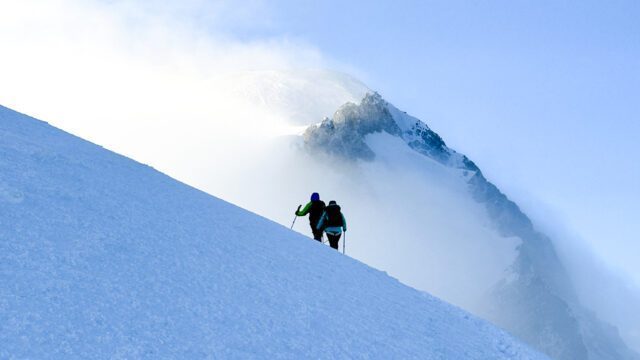
The summit ascent is only one layer of the timeline. On the classic Goûter normal route, official local guidance describes a two-day route schedule. LHO’s current Summit Course normally allocates two hut nights and three days to the Mont Blanc objective, typically using the Tête Rousse–Goûter sequence; the exact maintained itinerary and pricing remain owned by the trip page. Neither schedule represents the whole plan: acclimatisation, skills, travel, weather margin and contingency sit around the route itself.
Summit day is not the whole trip
La Chamoniarde describes roughly five to six hours from Nid d’Aigle to the Goûter Hut on the first day and a ten- to twelve-hour summit-and-descent day on the second. Treat those as official planning ranges, not promises. They describe movement on one route in a workable plan; they do not include your wider acclimatisation, training or travel schedule.
A two-day route schedule
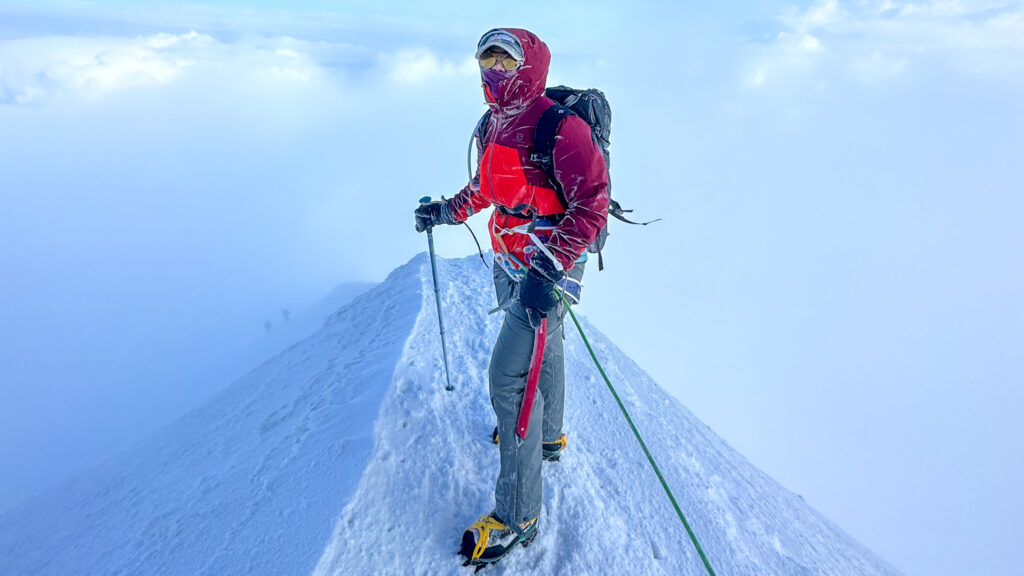
A two-day Goûter structure is a route schedule only for climbers who arrive appropriately prepared, acclimatised and capable of the compressed effort. It is not a skills-training or acclimatisation block. On the current LHO course, those foundations are developed before the Mont Blanc objective; as an internal operating standard, a participant who is not already recently acclimatised receives at least two prior nights at altitude. That is an LHO programme standard, not a universal medical prescription or summit guarantee.
A three-day route structure
LHO normally plans the Mont Blanc objective across two hut nights and three days, typically using the Tête Rousse–Goûter sequence. The additional night can spread effort and give guides more route-timing options, including choosing when to cross the Goûter Couloir according to current conditions; it does not make the objective easy or guarantee a safer crossing. The three-day route block is not, by itself, the acclimatisation plan: a participant who is not already recently acclimatised receives at least two prior nights at altitude under the current LHO operating standard. Hut access, team readiness and conditions still control the plan.
Five- to eight-day programmes
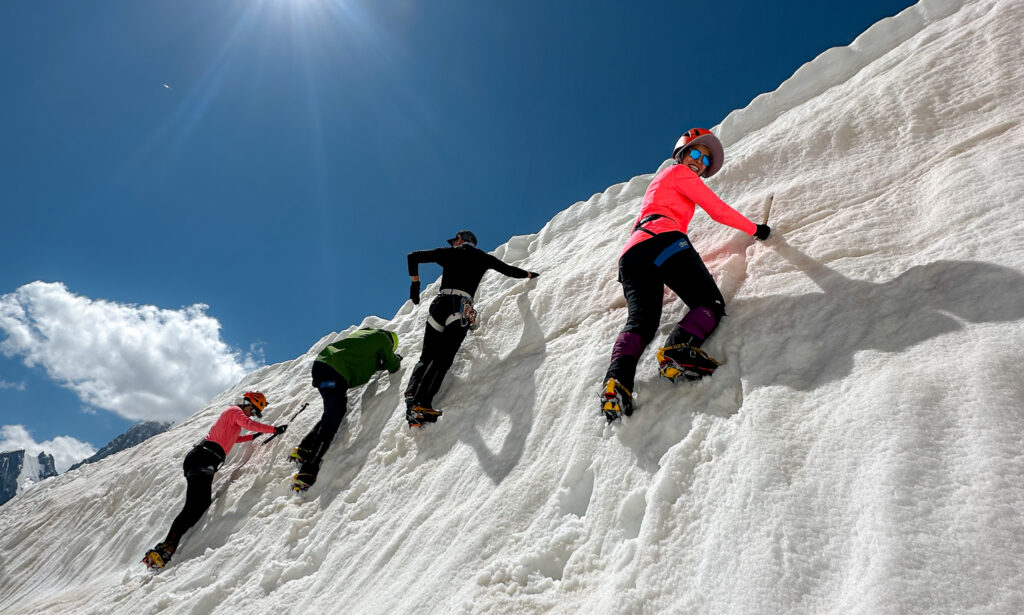
Longer programmes use additional days for acclimatisation, technical practice, assessment and alternative mountain objectives. LHO’s current Summit Course is eight days. LHO treats that as an established operational balance: enough time to build essential acclimatisation, skills and guide assessment while preserving energy for an honest, conditional Mont Blanc objective. It is not a universal answer to how long Mont Blanc takes, and the exact course details remain owned by the maintained trip page and itinerary.
Why acclimatisation changes the answer
The body needs time to adjust to reduced oxygen, and individual response varies. The CDC describes the first three to five days after ascent as a crucial period in acute acclimatisation. That does not create a personal prescription, but it explains why a fast route schedule and a realistic whole-trip schedule are not the same thing.
Huts, reservations and access
The Goûter normal route depends on regulated hut reservations and current access arrangements. On the current Summit Course, LHO administers the hut bookings, named-participant documentation, itinerary transport and access checks internally. Participants must supply requested identity information, carry the required documents and follow operational instructions, but they are not expected to manage the reservation or access process themselves. LHO rechecks volatile requirements for the actual dates; evergreen copy must not reproduce an old procedure as permanently current.
Why one-day attempts are a different question
A one-day or valley-to-summit speed attempt is not the planning baseline for a first alpine objective. It demands specific experience, equipment, acclimatisation and the ability to manage a very long high-consequence day. This page does not normalise that approach; the one-day specialist explains why it is a separate edge case.
Weather, conditions and turnaround time
More days do not guarantee a summit, but a plan with flexibility can avoid forcing one date to carry the whole objective. Wind, snowfall, heat, rockfall, hut access and team condition can change the decision. A realistic timeline includes the possibility that the correct choice is an alternative objective or no summit attempt.
Choosing your timeline
Choose the schedule by separating four questions: Are you already acclimatised? Do you already have the skills? How much route flexibility do you need? Are you joining a maintained course or building an independent plan? Start with honest readiness, then add hut and access constraints. The shortest itinerary on paper is not necessarily the most realistic one for you.
Continue your planning
- Understand why a one-day Mont Blanc attempt is a separate question
- See what summit day is like on Mont Blanc
- Prepare with the Mont Blanc training guide
- See the current Mont Blanc Summit Course
- Return to the Mont Blanc planning hub
CONTINUE YOUR RESEARCH







ABOUT THE AUTHOR

Rami Rasamny
Rami Rasamny is the founder of Life Happens Outdoors, a premium adventure travel company that uses the outdoors as a catalyst for human transformation. His work brings people into the mountains not only for challenge, but for clarity, confidence, and connection. He believes that when people answer the call to adventure truthfully, they come back different.