Mountains & Peaks | BY Rami Rasamny | PUBLISH DATE: October 12 2020 | READ TIME: 4 mins | UPDATED DATE: September 23 2026
Everest Base Camp VS Annapurna Base Camp

DOWNLOAD YOUR Everest Base Camp Trek GUIDEBOOK
“This pic was taken at Annapurna Base Camp just after sunrise. Annapurna can be seen in the background.” So, you’ve decided to journey to the Himalayas but unsure which of these classic base camp treks is for you? Although both experiences are epic, we’ve put together a comparison of some of the key considerations that […]

“This pic was taken at Annapurna Base Camp just after sunrise. Annapurna can be seen in the background.”
So, you’ve decided to journey to the Himalayas but unsure which of these classic base camp treks is for you? Although both experiences are epic, we’ve put together a comparison of some of the key considerations that most first-timers have when making their choice.
The Views
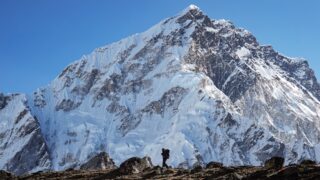
Let’s put this one to rest from the start. Both experiences are equal when it comes to epic views, beautiful villages, incredible mountains and remote nature. In fact, the two most iconic and most photographed mountains in Nepal are equally split between these two trails.
Length of Time
Our Annapurna Base Camp trek is 8 days in total, whereas the Everest Base Camp trek is 16 days from arrival to departure in Kathmandu. For those of us with limited time off work, Annapurna is the shorter option. Everest also offers an optional paid helicopter-return add-on that reduces the planned trip length to approximately 12 days. After visiting Everest Base Camp, with an optional visit to Kala Patthar when conditions allow, you walk from Gorak Shep to Lobuche the following morning for the helicopter to Lukla, then continue to Kathmandu using the trip’s included Lukla–Kathmandu sector. A seasonal aircraft change in Pheriche may be required. Flights depend on weather and operations, so the shortened end date cannot be guaranteed.
The Flying Experience
Nothing beats flying into Lukla, the starting point for the Everest Base Camp trail. Lukla is deep in the Khumbu region of the Himalayas, with mountain views along the approach when conditions allow. Our Everest trip includes one helicopter sector between Kathmandu and Lukla and one fixed-wing sector for the other direction. The helicopter may be used inbound or outbound, depending on weather and airport operations. The optional paid helicopter return from Lobuche to Lukla is a separate add-on. On the Annapurna side, we normally fly between Kathmandu and Pokhara by fixed-wing aircraft; if weather prevents the flight from operating, a private van transfer is included at no extra cost.

“Crossing the suspension bridge in the foothills of Ama Dablam on the Everest Base Camp trail.”
It’s not as thrilling as an aviation experience. If you’re not afraid of flying then Everest takes the point on this one.
Altitude & Challenge
Trekking to Everest Base Camp means reaching an altitude of 5,300 meters above sea level. This is a full 1,000 meters higher than Annapurna Base Camp. Although both treks are objectively similar, the higher altitude environment increases the difficulty making Everest Base Camp a bigger challenge. With the challenge it really comes down to what you’re looking for. Both treks are very doable even for first-timers but it’s a matter of what kind of experience you’re seeking.
Coffee
If you’re a big coffee drinker like me, you’ll appreciate this one. On the Everest trail there is hardly a village that doesn’t have a real coffee machine with epic java. You’ll find local baristas pretty much all the way to the base camp. On the Annapurna side there is far less access to coffee and you’ll have to bid farewell to the lattes and americanos by the end of the second day.
Hot Springs
The Annapurna Base Camp trail ends at the Jinhu hot springs, which is an amazing way to finish a big trek. The hot springs are naturally occurring and have been directed by the locals into pools for trekkers and villagers to swim in. Don’t forget your bathing suit!
Planning a trip to Nepal? Explore our complete Nepal guide covering treks, climbs, and everything you need to know.
This article was reviewed for trekking accuracy by Shiva Raj Bastakoti, a Nepalese Trekking Guide licensed by Nepal’s Department of Tourism (Licence No. 2997).
Expert review
Reviewed by
Dr. Nima Namgyal Sherpa
Mountaineering guide and expedition doctor
Dr. Nima is LHO’s high-altitude and wilderness medicine reviewer. He has reviewed the altitude-related medical and physiological guidance in this article.
CONTINUE YOUR RESEARCH





ABOUT THE AUTHOR

Rami Rasamny
Rami Rasamny is the founder of Life Happens Outdoors, a premium adventure travel company that uses the outdoors as a catalyst for human transformation. His work brings people into the mountains not only for challenge, but for clarity, confidence, and connection. He believes that when people answer the call to adventure truthfully, they come back different.