Trip Planning for Treks & Climbs | BY Rami Rasamny | PUBLISH DATE: December 21 2023 | READ TIME: 3 mins | UPDATED DATE: September 29 2026
Choosing Hiking Shoes or Boots for Everest Base Camp
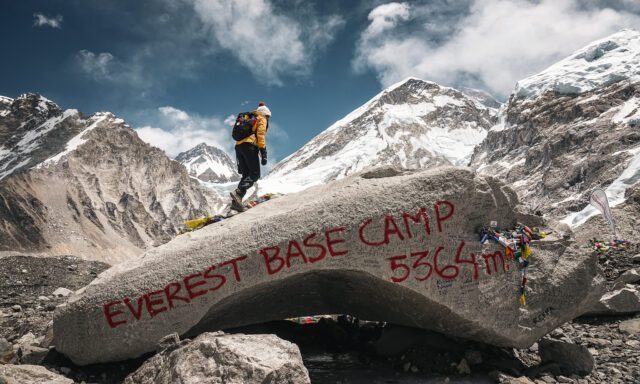
DOWNLOAD YOUR Everest Base Camp Trek GUIDEBOOK
Choose EBC footwear by fit, condition and the walking you will do. Test your shoes or boots with your socks and loaded daypack before departure.
The right footwear for Everest Base Camp is a pair you can walk in comfortably for repeated mountain days. A well-known brand, a high ankle or a waterproof label cannot tell you whether it fits your feet. Start with the expected conditions, the support you need and the shoes or boots you already trust.
LHO’s Everest Base Camp journey is a supported trek, with teahouse accommodation on the mountain. It is not an Everest summit expedition. Your footwear needs to work on uneven paths, steps and long descents while you carry your daypack.
Start with fit, then compare features
| Decision | What to check | What the label cannot promise |
|---|---|---|
| Toe space | Try the pair with trekking socks and walk down an incline; toes should not repeatedly strike the front | Buying a larger size alone does not solve a poor shape match |
| Heel hold | Walk uphill and check for rubbing or excessive movement | A stiff boot does not automatically fit securely |
| Grip and condition | Inspect tread, sole attachment and wear before training and again before departure | An expensive old pair may still need replacing |
| Weather protection | Discuss likely conditions for your departure and how you will keep socks dry | Waterproof footwear does not dry instantly or remove the need for care |
| Support and flexibility | Choose a pair that feels stable with your actual walking load | Ankle height is not a guarantee against injury |
| Warmth | Consider socks, fit and expected conditions together | Thick insulation is not a universal EBC requirement |
Should you choose shoes or boots?
Some walkers prefer the structure and coverage of a trekking boot; others are accustomed to lighter footwear. The useful question is whether your choice suits the route, conditions and your experience. Before committing to a low-cut shoe or an unfamiliar boot, discuss it with the LHO team. A technical mountaineering boot intended for a different expedition should not be your default purchase for this trek.
If you already own a comfortable pair, inspect it before shopping. Ageing soles, loose stitching and worn tread matter even when the uppers look good. If you need a replacement, allow time to try it on walks rather than relying on a last-minute purchase.
Rehearse the combination you will wear
- ☐ Try the footwear with the socks and insoles you intend to use.
- ☐ Walk on hills, steps and uneven ground with your packed daypack.
- ☐ Include a longer descent and note toe pressure, slipping or rubbing.
- ☐ Check how your feet and footwear feel the next day.
- ☐ Resolve fit problems before extending the walking time.
- ☐ Pack spare socks and a simple way to separate damp items from dry kit.
This is a practical equipment check, not a medical assessment or a guarantee against blisters. Persistent pain deserves individual advice. Do not turn a problem into a test of determination.
Complete the rest of your system
Footwear works alongside suitable layers, manageable baggage and preparation for repeated walking. Use the Everest Base Camp packing list to organise the whole kit, then read how to train for Everest Base Camp for the walking preparation.
Considering the journey? Explore the LHO Everest Base Camp trek, then tell the team what footwear you use now and which departure you are considering.
An earlier version of this article was reviewed for trekking accuracy by Shiva Raj Bastakoti, a Nepalese Trekking Guide licensed by Nepal’s Department of Tourism (Licence No. 2997).
CONTINUE YOUR RESEARCH




ABOUT THE AUTHOR

Rami Rasamny
Rami Rasamny is the founder of Life Happens Outdoors, a premium adventure travel company that uses the outdoors as a catalyst for human transformation. His work brings people into the mountains not only for challenge, but for clarity, confidence, and connection. He believes that when people answer the call to adventure truthfully, they come back different.