Outdoor Skills & Safety | BY Rami Rasamny | PUBLISH DATE: March 24 2026 | READ TIME: 10 mins | UPDATED DATE: July 15 2026
Is Kilimanjaro Safe? Guides, Health Checks, Oxygen, and Evacuation Explained

For many people planning the climb, one question comes before everything else: is Kilimanjaro safe? The honest answer is yes. Kilimanjaro is generally safe when climbed with a well-run operator, but it is not without risk. The main danger on the mountain is Kilimanjaro altitude sickness, which can range from mild acute mountain sickness (AMS) […]
For many people planning the climb, one question comes before everything else: is Kilimanjaro safe?
The honest answer is yes. Kilimanjaro is generally safe when climbed with a well-run operator, but it is not without risk. The main danger on the mountain is Kilimanjaro altitude sickness, which can range from mild acute mountain sickness (AMS) to more serious conditions that require immediate descent or evacuation.
That is why real Kilimanjaro safety is about far more than reaching the summit. It depends on experienced Kilimanjaro guides, daily health checks, consistent altitude monitoring, access to oxygen on Kilimanjaro, clearly defined team roles, and dependable evacuation planning. The safest operators are not the ones making vague promises. They are the ones with a system.
At Life Happens Outdoors, we treat safety as a built-in part of the expedition from day one. From private one-to-one health checks and blood oxygen readings to trained staff, predefined descent roles, and office-based support behind the scenes, the goal is simple: reduce avoidable risk, spot changes early, and respond calmly when the mountain requires it.
For a broader overview of routes, training, timing, and planning, read our complete guide to climbing Kilimanjaro.
Is Kilimanjaro safe?
Yes, Kilimanjaro is generally safe for well-prepared trekkers climbing with a responsible operator. It is not a technical climb on the standard routes, and most trekkers are not dealing with ropes, exposed scrambling, or advanced mountaineering hazards. But that does not mean safety should be taken lightly.
When people ask, is Kilimanjaro safe, what they are usually asking is whether the mountain’s risks are understood and properly managed. That is the real issue. Kilimanjaro is a high-altitude environment, and the biggest challenge is not technical climbing difficulty but the body’s response to elevation.
This is where a well-run expedition makes all the difference. Kilimanjaro safety comes from systems, not slogans. It comes from guides who know what to watch for, daily health checks, consistent altitude monitoring, access to emergency support, and a team culture that takes descent seriously when it is needed.
Is climbing Kilimanjaro dangerous?
This is another common question, and the answer is nuanced. Is climbing Kilimanjaro dangerous? It can be, especially when altitude is underestimated, symptoms are ignored, or the climb is run without proper monitoring and support.
The mountain itself is not usually dangerous in the way that technical alpine climbs are dangerous. For most trekkers, the real issue is not terrain but physiology. At high altitude, even strong, fit, motivated people can be affected. That is why Kilimanjaro altitude sickness is the central safety issue on the mountain.
A good operator does not treat that casually. They build the climb around prevention, observation, decision-making, and support. So while is climbing Kilimanjaro dangerous is a fair question, the better one is this: how does your operator manage the real risks of altitude, fatigue, and changing conditions?
How altitude risk is managed on Kilimanjaro
Altitude illness is the most important medical risk on a standard Kilimanjaro climb. Fitness does not provide immunity, which is why route choice, a slow pace, regular monitoring and early symptom reporting matter.
A safety-focused operator should have clear procedures for stopping ascent, using emergency support and organising descent or evacuation. For the early symptoms, serious warning signs and our approach to descent, read our complete guide to Kilimanjaro altitude sickness.

What good Kilimanjaro guides actually do
Many people think guides are mainly there to set the pace and lead the route. In reality, good Kilimanjaro guides are doing far more than that. They are constantly reading the team.
That means watching energy levels, appetite, coordination, breathing, mood, pace, and how each person is responding to altitude over time. Good guides know that Kilimanjaro safety is not only about reacting well in an emergency. It is about noticing the subtle changes that often come before one.
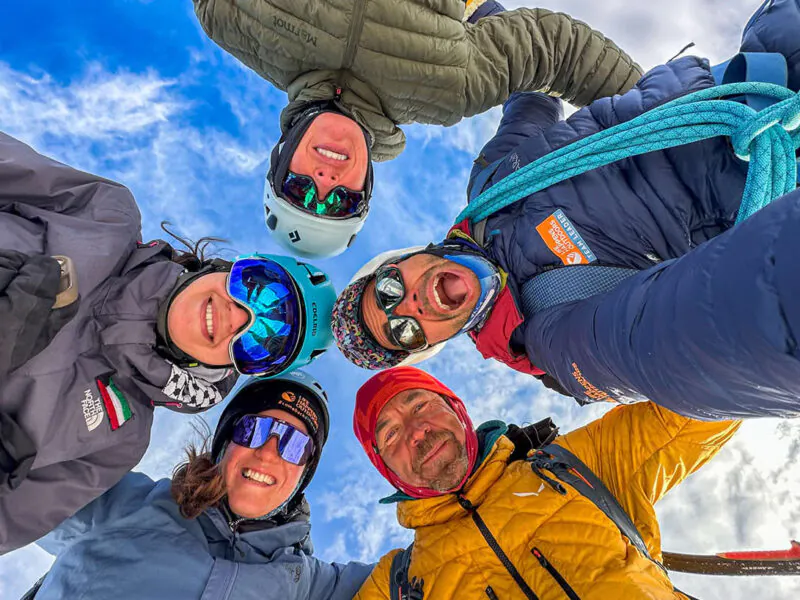
At Life Happens Outdoors, those responsibilities do not sit with one person alone. Safety is shared across the guiding and leadership structure. The guides, team leader, Safety Officer, and Science Safety Officer all play a role in monitoring wellbeing, sharing information, and making decisions in a coordinated way.
This matters because a safe expedition is not built around one heroic individual. It is built around a team that knows who is responsible for what and how information moves when something changes.
Kilimanjaro health checks, altitude monitoring, and daily safety protocols
Strong altitude monitoring should feel calm from the participant side, even when it is highly structured behind the scenes. That is how we approach it.
Each morning includes private one-to-one health checks, designed to create space for honest communication. A person may be more willing to mention a headache, nausea, poor sleep, or unusual fatigue in a private setting than in front of the group. That matters. Kilimanjaro health checks are not there to create anxiety. They are there to create a rhythm of prevention and awareness.
Alongside these conversations, blood oxygen readings are taken using a pulse oximeter. This is one part of the picture, not the whole story. Numbers matter, but so do observation, conversation, and comparison from one day to the next. Good altitude monitoring combines all of them.
Monitoring does not end in camp. There are also regular trail check-ins between guides, team leaders, and joiners throughout the day. These check-ins may feel informal, but internally they are part of a formal safety process. Then, at the end of each day, the team debriefs again and reviews how everyone is doing before the next stage of the climb.
This approach reduces the chance that important changes are missed. It also means decisions are made with context, not guesswork.
What safety equipment should a Kilimanjaro operator carry?
When people compare operators, this is one of the most useful questions they can ask: what Kilimanjaro safety equipment is actually carried on the mountain, and how is it used?
A credible safety setup should include more than a general promise of support. It should include the tools and systems needed to prevent, assess, and respond to altitude-related issues.
At Life Happens Outdoors, our Kilimanjaro safety equipment and medical readiness framework include supplemental oxygen on Kilimanjaro, blood oxygen monitoring with a pulse oximeter, access to altitude-related medications including acetazolamide and dexamethasone, a defined Kilimanjaro medical kit, a medical readiness checklist that is reviewed consistently, staff training in altitude awareness and mountain response, and communication systems linking the mountain team and office support team.
It is worth saying clearly that equipment alone does not create safety. Oxygen matters, but so does knowing when to use it. Medications matter, but so does judgement. A Kilimanjaro medical kit matters, but so do the people trained to use it within a wider protocol. The safest operators treat gear as one part of a broader system.
Team roles on the mountain: who does what if something changes
One of the clearest signs of a serious safety culture is clarity of roles. If something changes on the mountain, there should already be a shared understanding of who is monitoring, who communicates key information, who stays with the affected person, and how the next decision is made.
On our climbs, this structure is predefined. The guides, team leader, Safety Officer, and Science Safety Officer each have a role in supporting Kilimanjaro safety and maintaining a clear flow of information.
The guides are deeply involved in real-time observation and response on the trail. The team leader helps maintain communication, support, and clarity within the group. The Safety Officer and Science Safety Officer contribute to the monitoring and oversight structure, helping ensure that health-related decisions are handled consistently and responsibly.
Beyond the team on the mountain, there is also the office or base camp support team. This team remains in communication throughout the ascent and is there to assist if outside support becomes necessary. That can include coordinating with doctors, communicating with insurance providers, arranging evacuation services, and managing other external logistics if a situation escalates.
This is one of the less visible but most important parts of a well-run climb. Safety on Kilimanjaro does not only depend on the people next to you on the trail. It also depends on the people behind the scenes who are ready to act when needed.
Kilimanjaro evacuation and helicopter rescue
A descent on Kilimanjaro is not automatically a sign of failure. Often, it is simply the correct mountain decision made at the correct time. In fact, the willingness to descend when needed is one of the clearest indicators of a good safety culture.
There are different ways a Kilimanjaro evacuation may happen depending on the situation.
If the issue is not an immediate emergency and the person is able to walk, descent on foot is often the preferred option. If someone is fatigued or affected by altitude but not in a severe emergency, a partial assisted descent may be appropriate. In some cases, that means descending partly on foot and partly with stretcher support until the person begins to recover and can continue walking.
In more serious cases, Kilimanjaro helicopter evacuation may be required. This is why every Life Happens Outdoors participant must have Kilimanjaro evacuation insurance, including helicopter evacuation cover. It is an important part of planning responsibly for the mountain.
Whichever route is taken, one principle remains the same: a guide stays with the descending person at all times. They are not left to manage the process alone. Once down, they are met at the gate by our valley team, who take over the next stage of care and logistics. Depending on the situation, that may mean a doctor check, a hospital visit, support returning to the hotel, or help arranging an early return home.
A well-run Kilimanjaro evacuation is not improvised. The roles are already clear, the communication channels are already in place, and the pathway from mountain to medical or logistical support is already understood.

Why a safe Kilimanjaro climb depends on systems, not promises
It is easy for any operator to say safety is a priority. The more useful question is what that looks like in practice.
Does the team carry appropriate Kilimanjaro safety equipment? Are there daily health checks? Is altitude monitoring consistent? Is oxygen available? Are altitude medications part of the medical framework? Are staff trained for mountain readiness? Is there a clear descent protocol? Is Kilimanjaro helicopter evacuation built into the emergency plan? Does the office team know how to coordinate outside assistance, insurance, and medical logistics if needed?
These are the questions that matter because they show whether safety is being treated as a real operating system or as a marketing line.
At Life Happens Outdoors, our view is that a safe Kilimanjaro experience should feel calm, prepared, and human. It should not feel alarmist, and it should not feel casual. It should feel like you are climbing with a team that respects the mountain, watches carefully, communicates clearly, and knows exactly what to do if circumstances change.
Talk to a team leader about your summit week
If you are planning your climb and want to understand how we approach staffing, monitoring, medical readiness, and support on the mountain, explore our Climb Kilimanjaro trip and speak to a team leader about safety, staffing, readiness, and your summit week with us.
FAQ
Is Kilimanjaro safe for beginners?
Kilimanjaro is generally safe for beginners when climbed with a responsible operator, but it is still a high-altitude mountain. The main risk is altitude sickness, so daily health checks, altitude monitoring, and clear descent protocols are essential.
Is climbing Kilimanjaro dangerous?
Climbing Kilimanjaro is not usually dangerous in a technical mountaineering sense, but it can become dangerous if altitude illness is underestimated or poorly managed. The biggest safety issue is the body’s response to elevation.
What is the main safety risk on Kilimanjaro?
The main safety risk on Kilimanjaro is altitude sickness. This can begin as acute mountain sickness and, in rare cases, develop into serious conditions such as HAPE or HACE that require immediate descent or evacuation.
Do guides carry oxygen on Kilimanjaro?
Good operators carry supplemental oxygen on Kilimanjaro as part of a wider safety system. Oxygen should be backed by health checks, pulse oximeter readings, trained staff, and clear emergency response protocols.
What happens if someone needs to descend on Kilimanjaro?
If someone needs to descend on Kilimanjaro, the response depends on the situation. They may descend on foot, partially with stretcher support, or by helicopter evacuation if the condition is more serious. A guide should remain with the person at all times.
Do you need helicopter evacuation insurance for Kilimanjaro?
Yes. Anyone climbing Kilimanjaro should have helicopter evacuation insurance in place before the trip. This ensures that emergency evacuation can be arranged quickly if it becomes necessary.

CONTINUE YOUR RESEARCH






ABOUT THE AUTHOR

Rami Rasamny
Rami Rasamny is the founder of Life Happens Outdoors, a premium adventure travel company that uses the outdoors as a catalyst for human transformation. His work brings people into the mountains not only for challenge, but for clarity, confidence, and connection. He believes that when people answer the call to adventure truthfully, they come back different.