Mountains & Peaks | BY Rami Rasamny | PUBLISH DATE: January 21 2025 | READ TIME: 5 mins | UPDATED DATE: June 05 2026
Kilimanjaro vs Mont Blanc: A Tale of Two Summits

Climbing Kilimanjaro and Mont Blanc are two of the most sought-after mountain experiences in the world, but they could not be more different. Each mountain offers its own unique challenges, […]
Climbing Kilimanjaro and Mont Blanc are two of the most sought-after mountain experiences in the world, but they could not be more different. Each mountain offers its own unique challenges, landscapes, and rewards, but understanding their key differences is vital for anyone looking to take on these iconic peaks.
At Life Happens Outdoors, we believe in making adventure accessible and transformative for everyone, and choosing the right mountain for you is the first step in that journey. Let’s dive into what makes Kilimanjaro and Mont Blanc such distinct experiences.
Trekking vs Technical Mountaineering
Kilimanjaro is a trekker’s dream. This climb is classified as a non-technical ascent, meaning that no climbing skills or specialized equipment are required. It’s all about the walk – albeit a long and high one. The focus is on endurance and resilience as you hike through varying climates, from lush rainforests to barren alpine deserts, before reaching the snow-covered summit at 5,895 meters.
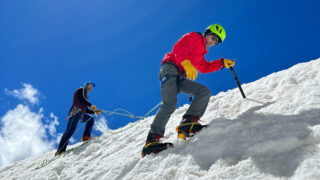
Mont Blanc, on the other hand, is the quintessential technical mountaineering challenge. Climbing Mont Blanc requires crampons, an ice axe, and the ability to navigate crevasses and steep, icy slopes. It’s a climb that demands both physical strength and technical know-how, making it a true test of skill in the mountains.

Duration and Pace
Kilimanjaro is a journey, typically completed over 5 to 8 days. The longer time frame allows for acclimatization to the altitude, which is essential for summiting safely. Each day, you’ll spend hours on the trail before resting in a tented camp, surrounded by the wild landscapes of Tanzania. The extended duration means more time exposed to the elements and greater mental fortitude as you push through the challenges of altitude and fatigue.
Mont Blanc is a much shorter endeavor, with most climbs completed in just 3 days. However, the intensity is packed into this shorter time frame. The climb begins with training and acclimatization on nearby peaks, which are crucial for preparing your body and mind for the summit push. The shorter duration doesn’t lessen the challenge; it concentrates it, demanding sustained effort and focus over every step.
Lodging: Tents vs Mountain Huts
On Kilimanjaro, the nights are spent in tents, pitched each evening by your support team. This mobile style of lodging allows you to progress steadily up the mountain, but it also means embracing the rawness of outdoor life. From the damp chill of the rainforest to the biting cold of high altitude, your tent becomes your sanctuary in an ever-changing environment.
Mont Blanc offers a different type of experience. Here, you’ll stay in mountain huts perched high in the Alps. These refuges provide warmth, hearty meals, and camaraderie with other climbers. While less isolated than Kilimanjaro’s camps, the huts are a welcome respite from the harsh alpine environment and a key part of the European mountaineering tradition.

Objective Risks and Training
One of the starkest differences between the two mountains is the level of objective risk. Mont Blanc’s challenges include crevasses, avalanches, and the ever-present danger of rockfall. These risks are why training is essential for any climber attempting Mont Blanc. At Life Happens Outdoors, our Mont Blanc week includes technical skills training and acclimatization climbs to prepare you for the summit, ensuring you’re equipped to manage the mountain’s demands.
Kilimanjaro, by contrast, poses fewer objective risks. There are no crevasses or technical sections to navigate, making it a safer environment for beginners. The challenges here are more mental and physiological, as you’ll contend with the effects of altitude and the sheer length of the journey. No prior training is needed; from the moment you arrive, it’s straight to the mountain.
Mental vs Physical Challenge
While Mont Blanc is objectively the more physically and technically demanding climb, Kilimanjaro presents a mental challenge of its own. The higher altitude and longer time on the mountain test your resilience in ways that are often unexpected. Spending days exposed to the elements, adjusting to the lack of oxygen, and keeping a steady pace toward the summit require a strong mindset.
Mont Blanc pushes you to your physical limits, requiring strength, precision, and the ability to perform under pressure in an environment that can change in an instant. But it’s a shorter and more concentrated challenge compared to Kilimanjaro’s prolonged test of endurance and determination.
Choosing Your Adventure
Both Kilimanjaro and Mont Blanc offer transformative experiences that will leave you forever changed. If you’re seeking a journey of mental resilience and a chance to immerse yourself in one of the most stunning landscapes in the world, Kilimanjaro is calling. But if you’re ready to embrace the technical and physical demands of alpine mountaineering, Mont Blanc awaits.
At Life Happens Outdoors, we’re here to guide you every step of the way. Whether it’s trekking through Tanzania or scaling the peaks of the Alps, your adventure is waiting. Are you ready to say yes?
CONTINUE YOUR RESEARCH


Kilimanjaro Altitude Sickness: Diamox, Oxygen, Hydration, Pace, and What Beginners Need to Know





ABOUT THE AUTHOR
Rami Rasamny
Rami Rasamny is the founder of Life Happens Outdoors, a premium adventure travel company that uses the outdoors as a catalyst for human transformation. His work brings people into the mountains not only for challenge, but for clarity, confidence, and connection. He believes that when people answer the call to adventure truthfully, they come back different.