




BY Rami Rasamny | January 02 2026
Do You Need a Guide to Climb Mont Blanc? A Fair Honest Comparison for 2026
Rami Rasamny
If you have been searching can you climb mont blanc without a guide, you have probably noticed the problem. Most pages either hard sell guiding, or they romanticise going unguided.
This guide is neither.
Mont Blanc is a serious alpine summit. In perfect conditions it can feel straightforward. When weather, rockfall, altitude, timing, or crowds shift, it can become serious very quickly. The question is not only can you do it without a guide. The real question is whether you can do it safely, consistently, and without becoming a rescue call for someone else to carry.
The fair answer in one sentence
Yes, you can climb Mont Blanc without a guide, but it only makes sense if you already have strong alpine and glacier skills, a competent partner, and the judgement to turn around early. For most first time climbers, a qualified guide is the safer and often more successful path.
Hiking Mont Blanc vs climbing Mont Blanc
A quick clarity point because Google mixes the two.
Hiking Mont Blanc usually refers to trekking around the massif, like the Tour du Mont Blanc. That is a brilliant trip, but it is not the same as reaching the Mont Blanc summit.
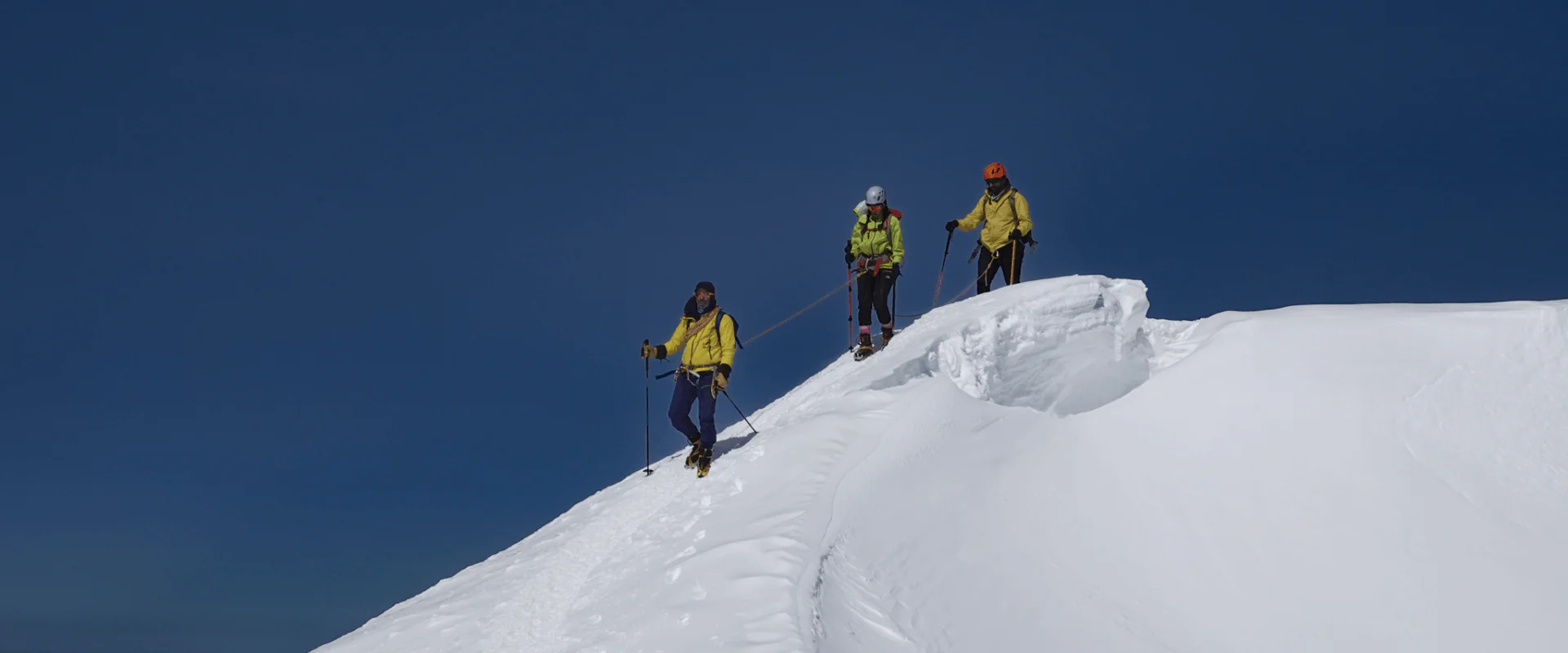
Climbing Mont Blanc means ascending to the summit at about 4,810 metres, typically involving glacier travel, crampon use, rope work, and real objective hazards.
If your goal is the Mont Blanc summit, treat it like mountaineering, not a hike.
What people mean when they say without a guide
Completely independent
You and your partner plan everything, book huts, manage route finding, handle glacier travel decisions, and have the skills to solve problems and perform self rescue if something goes wrong.
Self led but supported
You climb independently, but you have trained properly beforehand on glaciated peaks and rescue systems, and you are not learning the basics on the mountain.
No guide and no skills
This is the version that creates incidents. It is also why local authorities and the Chamonix valley take safety and access seriously in busy periods
The part most people miss: rules and logistics can be harder than the climbing
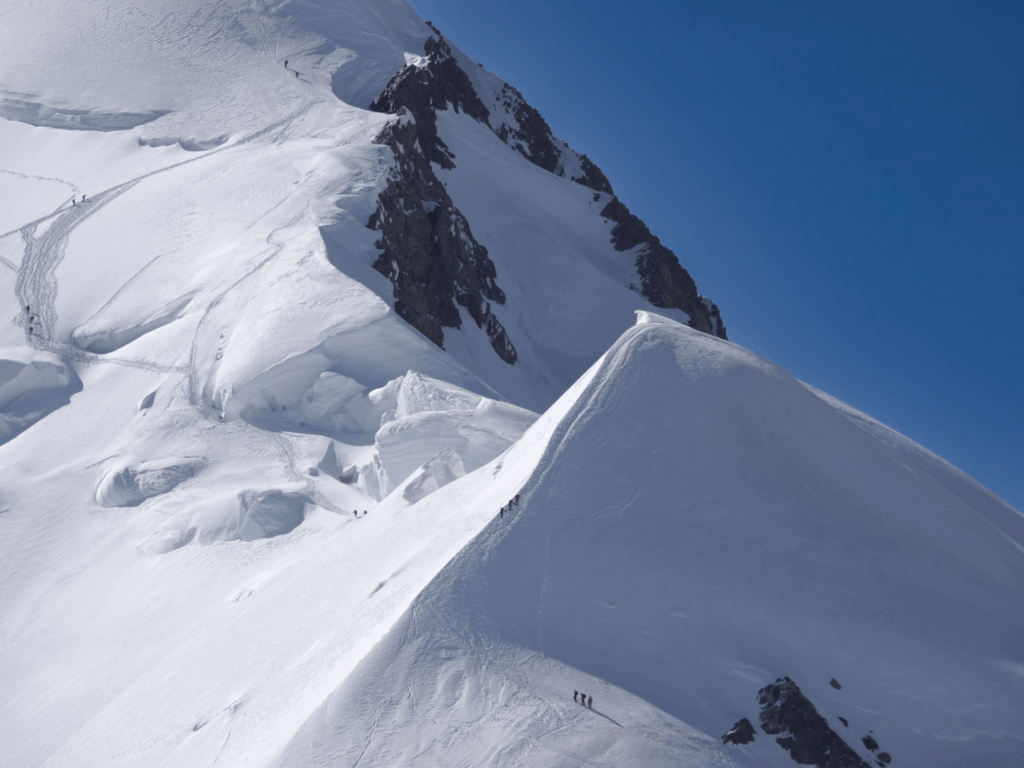
Even if you are capable, Mont Blanc has practical barriers that catch people out, especially on the normal route via the Goûter line.
Hut bookings are not optional on the normal route
On the Goûter route, huts can sell out and access rules can be tied to reservations in peak season. If you are going unguided, you are responsible for securing the right hut nights, for the right people, in the right sequence, with enough flexibility for weather.
That sounds simple until you realise one weather shift can collapse your entire plan.
Guides and experienced operators work within these systems every week. Independent teams usually experience it once, and it can make the difference between a safe attempt and a rushed, risky one.
Minimum equipment expectations can be enforced
Authorities in the area have, in some seasons, enforced minimum equipment expectations on the Goûter route. Whether you agree with the details or not, the takeaway is clear.
If you show up under prepared, you may be turned around, and you are far more likely to place yourself and others at risk.
Guide accreditation: what qualified actually means in France
If you are hiring a guide, the credential matters.
The French qualification
In France, the professional qualification for guiding mountaineers is the guide de haute montagne pathway. This is not a casual badge. It represents a structured training and assessment system designed for real mountain terrain.
IFMGA and UIAGM
You will also see IFMGA or UIAGM. This is the international standard for qualified mountain guides, recognised across member countries.
A simple takeaway
If you are paying someone to lead you on a glacier at altitude, look for a guide with recognised credentials and current Mont Blanc experience. If someone cannot clearly explain their qualification and scope, walk away.
Risk: the mountain does not care whether you are guided
A guide cannot remove objective danger. What a guide can do is reduce exposure, control timing, and make better calls under pressure.
The Grand Couloir and rockfall reality
On the Goûter route, the Grand Couloir is one of the most talked about hazards. Rockfall is real, and timing matters. Strong teams move efficiently and choose windows that reduce exposure.
Unguided teams are often slower, hesitate more, and sometimes cross at the worst times simply because they are not moving decisively.
Conditions can flip fast, even in mid summer
Recent seasons have shown how quickly heat and instability can change the risk picture. When conditions worsen, experienced professionals adjust, reroute, or cancel without hesitation. Independent climbers often struggle to make that same call after investing travel, hut bookings, and emotional energy.
Rescue services are already busy
Chamonix rescue teams respond to a high volume of incidents across the season. Many of these are not heroic epics. They are avoidable situations involving fatigue, poor weather decisions, navigation errors, lack of acclimatisation, or inadequate kit.
Guided vs unguided: the honest comparison
Going with a qualified guide
Pros
Higher safety margin through pacing, timing, and decision making
You benefit from expert route choice, hazard management, and efficient movement
Hut logistics and contingency planning are handled professionally
Better success odds for first time Mont Blanc climbers
Real coaching, you learn systems and habits you can reuse on future peaks
Cons
Higher cost
Less autonomy if you want to move entirely on your own rhythm
You still need fitness and preparation, a guide is not a shortcut for conditioning
Going without a guide
Pros
Full autonomy over pace, route, and decisions
Lower direct cost if you already own the equipment and have the skills
A valid progression goal for experienced alpinists who have earned competence
Cons
You carry all risk management yourself
You must be competent in glacier travel and crevasse rescue, not just familiar with the concepts
More complex logistics, hut bookings, route timing, weather judgement
Increased exposure if you move slowly through objective hazard zones
No professional circuit breaker when ambition starts overriding judgement
A decision framework you can use in two minutes
Consider going without a guide only if you can truthfully say yes to all of these.
- I have recent experience on glaciated terrain at altitude
- I can perform crevasse rescue systems efficiently with my partner
- I can navigate in poor visibility and make conservative go or no go calls
- I understand objective hazards on my chosen Mont Blanc route and how to reduce exposure
- I am acclimatised properly and have a realistic turnaround time
- My partner is equally competent and we make strong decisions together
- I have a plan B date, and I am emotionally okay not summiting
If any answer is no, a guide is not a luxury. It is a responsible choice.
Which Mont Blanc route are we talking about
People often ask about Mont Blanc routes without realising that route choice changes the risk profile.
The Goûter route is the classic normal line, popular and often crowded in season.
The Trois Monts route is another well known line, typically involving more complex glacier terrain and objective risk.
The Italian side routes can be quieter but still serious, with their own logistics and conditions.
If you are unsure which route fits your skill set, that uncertainty is a signal that you would benefit from guided leadership or a structured course.
Where Life Happens Outdoors fits, without the hard sell
Our view is simple. Mont Blanc should be a progression, not a gamble.
Some people come to Mont Blanc wanting a summit at any cost. We are not that. We build climbers.
Our Mont Blanc Summit Course is built around learning, safety, and judgement under real alpine conditions, led by qualified mountain professionals and supported by a Life Happens Outdoors Team Leader. You are not just being guided, you are being developed.
If your long term goal is to climb more independently, the quickest path is usually guided progression first. Skills, habits, systems, then autonomy.
Continue your Mont Blanc research
The Climbing Mont Blanc, the Definitive Guide for 2026
How hard is it to climb Mont Blanc, difficulty, risk, and prep
How much does it cost to climb Mont Blanc in 2026, realistic and operator compared
Mont Blanc Summit Course trip page
Frequently asked questions
Is it illegal to climb Mont Blanc without a guide?
No. You can climb independently. But you must still comply with current local rules, hut systems, and access restrictions where they apply, and you are responsible for your decisions and your impact on rescue services.
Do I need to book huts to climb Mont Blanc?
On the Goûter route, huts can book out early and access rules in peak season may be tied to reservations. If you do not have the right booking, your plan can unravel quickly.
Is Mont Blanc easy if I am fit?
Fitness helps, but it does not replace glacier competence, altitude response, and decision making. Many incidents happen to fit people who move confidently into the wrong situation.
What is IFMGA or UIAGM?
It is the international standard for qualified mountain guides, recognised across member associations.
Can a beginner climb Mont Blanc without a guide?
A true beginner in alpine and glacier terrain should not. Beginners can climb Mont Blanc safely with the right course structure, acclimatisation, and professional leadership.
Why do people still go without a guide?
Some are experienced alpinists with years of glacier travel and rescue practice. Others do it to save money or chase a story. Only the first group is making a decision that typically holds up under pressure.
Can I do a course first, then climb independently later?
Yes, and it is one of the smartest pathways. Treat Mont Blanc as a milestone in a longer progression, not a one time stunt.
Closing thought
Mont Blanc rewards humility. A guide is not about outsourcing bravery. It is about choosing a safer learning curve and stacking the odds in your favour. If you are ready to go independent, you will already know why you are ready. If you are not sure, that uncertainty is your answer.
About The Author
Rami Rasamny is the founder of Life Happens Outdoors, a premium adventure travel community dedicated to transforming lives through curated outdoor experiences. A mountaineer and entrepreneur, Rami has led teams on some of the world’s most challenging peaks, from the Alps to the Himalayas. His mission is to make adventure accessible, transformative, and safe for all who seek to push their limits and Come Back Different.
About Life Happens Outdoors
At Life Happens Outdoors, we believe in the power of nature to transform lives. As proud members of the Adventure Travel Trade Association (ATTA) and the World Travel & Tourism Council (WTTC), our team of certified guides and outdoor professionals is committed to the highest standards of safety, sustainability, and excellence.
Discover more about our story and mission on our Meet LHO page, or explore our curated adventures such as the Tour du Mont Blanc Trek, the Climb of Kilimanjaro, and Chasing the Northern Lights.