BY Rami Rasamny | April 06 2026
Climbing Mont Blanc for Beginners: Why Good Guidance Matters

Rami Rasamny
If you are researching climbing Mont Blanc for beginners, it is easy to assume that success comes down to fitness alone. Strength matters. Endurance matters. Preparation matters. But on a guided Mont Blanc climb, another factor becomes just as important: your ability to understand and apply the guidance of an experienced Mont Blanc guide.
This is one of the biggest differences between hiking hard and climbing well. On Mont Blanc, you are not simply following a path. You are moving through serious alpine terrain where timing, efficiency, judgment, and communication all matter. A simple instruction, given at the right moment and understood properly, can make the difference between moving smoothly and creating unnecessary risk.
That is why we take this seriously at Life Happens Outdoors. A mountain like Mont Blanc asks more of you than effort. It asks for calm attention, good decision making, and a willingness to learn. For many first timers, understanding guidance is not a small part of the climb. It is one of the things that makes the climb possible in the first place.
Why a Mont Blanc Guide Matters
People often search for Mont Blanc guides because they want to know who can get them to the summit. That is understandable, but it misses something important. A good Mont Blanc guide does far more than point the way.
On a mountain like Mont Blanc, a guide helps shape the entire experience. They manage pace, read conditions, adjust decision making, reduce unnecessary risk, and help climbers move with more efficiency and composure. They also turn complex mountain experience into clear, useful instructions you can apply in real time.
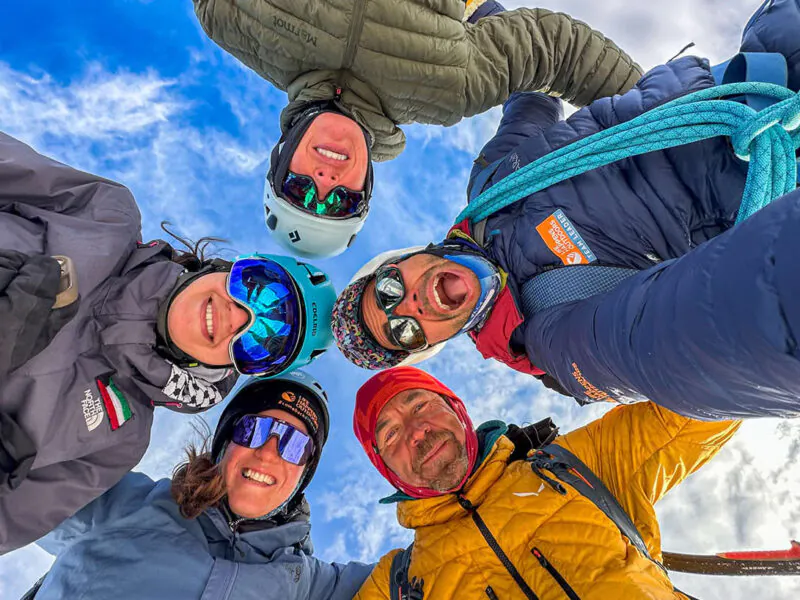
For first timers, that matters enormously. A guided Mont Blanc climb is not just about being led. It is about being supported inside a structure that helps you move better, stay calmer, and make better decisions when the mountain starts asking more of you.
The Mistake Many First Time Mont Blanc Climbers Make
A lot of people come to Mont Blanc thinking the main question is whether they are fit enough. That is an important question, but it is not the only one. Plenty of strong people struggle in the mountains, not because they lack engine, but because they are not yet used to receiving and applying technical guidance in a mountain environment.
In normal life, most of us move independently. We make decisions at our own pace. In the mountains, especially on snow, ice, and glaciated ground, the environment often demands something different. You may need to shorten a stride, slow your pace, change the way you place your feet, manage the rope differently, or adjust your timing around other climbers. None of those things are dramatic on paper. All of them matter in practice.
This is why guided climbing is not just about having someone show you the way. It is about entering a structure where mountain experience is translated into instructions you can act on in real time. The better you understand them, the smoother and safer your movement becomes.
On Mont Blanc, Small Instructions Matter
Mont Blanc is not the most technical peak in the Alps, but it is a serious mountain. The altitude is real. The summit day is long. The terrain can feel exposed. Conditions can change quickly. When that environment starts to ask more of you, small mistakes become more expensive.
That is where guidance matters most.
A guide may tell you to slow down even though you feel good. They may ask you to shorten the rope spacing, focus on your foot placements, change your breathing rhythm, or move more efficiently through a section that does not allow for hesitation. They may ask you to pause, reset, and move again with more control. These moments are not interruptions to the climb. They are part of the climb.
On Mont Blanc, danger does not always look dramatic. Often it begins with ordinary things. Poor pacing. Sloppy movement. A missed instruction. Unnecessary tension. A failure to adapt quickly. Understanding guidance is what helps prevent those small issues from becoming bigger problems higher up.
Good Mountain Guidance Creates Calm
One of the most underrated things about climbing with experienced Mont Blanc guides is that good guidance creates calm. It reduces noise. It gives you something clear to focus on when the mountain feels big.
That matters because alpine climbing can easily overwhelm people who are new to it. There is altitude, cold, unfamiliar equipment, early starts, changing weather, and the psychological weight of knowing you are on a serious objective. In that setting, clarity is powerful.
A good guide does not overload you with information. They simplify what matters right now. They tell you what to focus on, why it matters, and how to apply it. When that guidance lands well, you stop wasting energy on uncertainty. You start moving with more purpose.
This is one of the reasons a guided Mont Blanc climb can be so transformative for beginners. It teaches you that confidence is not the same thing as bravado. Real confidence often comes from understanding exactly what is being asked of you and meeting that ask properly.

Listening Is Part of Alpine Skill
Many people think of alpine skills as the visible things: cramponing, ice axe use, rope work, and movement on snow. Those things matter, but there is another skill underneath them that gets less attention. It is the skill of listening well.
Listening in the mountains is active. It means staying present. It means taking in instructions before a section becomes serious. It means asking questions early, not after confusion has already crept in. It means being honest when you do not understand something and willing to repeat it back if needed.
This is not weakness. It is maturity.
The climbers who tend to progress well are not always the loudest or the most naturally confident. Often, they are the ones who stay coachable. They listen. They adjust. They refine. They understand that learning in the mountains is not a threat to identity. It is part of becoming more capable.
For people researching climbing Mont Blanc for beginners, this is one of the least understood parts of the mountain. Beginners often focus on fitness and gear, but the ability to listen well, adapt quickly, and respond to guidance is one of the things that helps a first timer climb more safely and confidently.
Why This Matters During Mont Blanc Training and Acclimatisation
The best time to learn how to receive and apply mountain guidance is not when you are exhausted high on the route. It is earlier, during Mont Blanc training and acclimatisation days that build toward the summit attempt.
This is one of the reasons we believe so strongly in proper structure. A good Mont Blanc itinerary should not just move you toward the summit physically. It should prepare you mentally and technically for the way the mountain works.
That means using the earlier days well. It means learning how to move in boots, how to use crampons properly, how to travel on snow and glacier terrain, how to move as part of a rope team, and how to respond to guidance with increasing composure. By the time summit day arrives, you do not want every instruction to feel new. You want the language of the mountain to feel more familiar.
That familiarity saves energy. It reduces friction. It makes everything feel more manageable when the day gets long.
Why This Matters for Safety
There is no serious mountain without risk. Mont Blanc is no exception. Good preparation does not remove that reality, but it does improve how people move through it.
Understanding guidance matters for safety because the mountains are rarely forgiving of confusion. A delayed response, a misunderstood command, or a poorly timed action can affect not just you, but the whole team around you. In a rope team, your movement is connected to others. In exposed terrain, your decisions ripple outward.
That is why mountain safety is not only about equipment and logistics. It is also about communication. It is about timing. It is about whether people can absorb and apply the guidance they are given when it matters most.
At Life Happens Outdoors, we do not see safety as something separate from the experience. It is built into the experience. Good instruction is part of that. It helps people move more intelligently, more efficiently, and with more respect for the mountain they are in.
Climbing Well Is a Form of Respect
There is something deeper here too. Understanding guidance is not just practical. It is also a form of respect.
It is respect for the mountain, because you are not assuming effort alone is enough. It is respect for the guide, because you understand that experience matters. It is respect for your team, because your ability to move well affects more than just your own outcome. And it is respect for yourself, because you are choosing to approach the challenge honestly rather than casually.
Mont Blanc is meaningful precisely because it asks for that kind of mindset. It asks you to slow down, pay attention, and rise to the standard of the environment you are entering. That is part of what makes the mountain so rewarding. It does not just test your body. It asks for your presence.

Climbing Mont Blanc With the Right Guided Structure
At Life Happens Outdoors, we believe Mont Blanc should be approached as a journey into alpinism, not just a summit to collect. That means fitness, yes. It means acclimatisation, yes. But it also means learning how to be guided well, how to understand instructions under pressure, and how to move through the mountains with clarity and intent.
For first timers, that process can be one of the most valuable parts of the entire experience. You come for the summit, but you often leave with something deeper: a new relationship to preparation, to learning, and to what you are capable of when you stop rushing and start paying attention properly.
That is why good guidance matters. On the surface, it can sound simple. In reality, it is one of the quiet things that helps turn ambition into a real alpine experience.
And on a mountain like Mont Blanc, that matters more than most people realise.
If your goal is to climb Mont Blanc, do not prepare only to work hard. Prepare to listen well, learn quickly, and move with intention. The mountain will ask for all of it.
About The Author
Rami Rasamny is the founder of Life Happens Outdoors, a premium adventure travel company that uses the outdoors as a catalyst for human transformation. His work brings people into the mountains not only for challenge, but for clarity, confidence, and connection. He believes that when people answer the call to adventure truthfully, they come back different.
About Life Happens Outdoors
At Life Happens Outdoors, we believe in the power of nature to transform lives. As proud members of the Adventure Travel Trade Association (ATTA) and the World Travel & Tourism Council (WTTC), our team of certified guides and outdoor professionals is committed to the highest standards of safety, sustainability, and excellence.
Discover more about our story and mission on our Meet LHO page, or explore our curated adventures such as the Tour du Mont Blanc Trek, the Climb of Kilimanjaro, and Chasing the Northern Lights.