BY Rami Rasamny | March 03 2026
Why Adventure is Better with a Group: The Psychology of Shared Challenge

Rami Rasamny
DOWNLOAD YOUR
Tour du Mont Blanc Trek
GUIDEBOOK
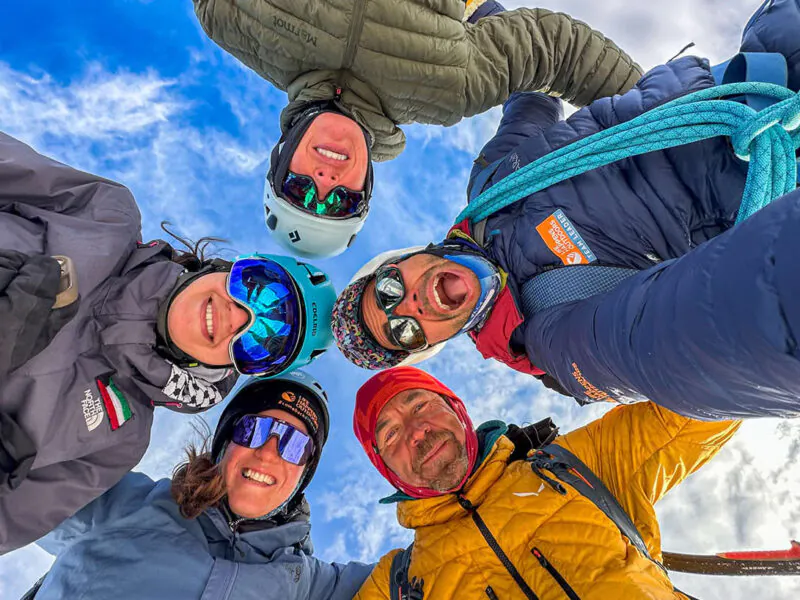
You might book an adventure alone, but that does not mean you have to experience it alone. In fact, there is a reason so many Life Happens Outdoors joiners arrive thinking “I am solo” and leave saying “I found my people.” The outdoors has a way of turning strangers into teammates fast, especially when the trail gets real.
There is a line from Into the Wild that hits for a reason: “Happiness only real when shared.” In the mountains, on a trek, or in a tent at 2 am with the wind pushing against the fabric, shared moments do not just feel better. They land deeper, and they stick.
This is the psychology behind it, built around three pillars that show up again and again on group adventures: social bonding, mirror neurons, and emotional safety.
The fastest way to bond is to do hard things together
There is a special kind of closeness that forms when you and a few other humans commit to the same challenge. The walk is long, the altitude is honest, the weather does what it wants, and everyone is learning each other in real time. When you move through that together, something shifts from “me” to “we.”
Research on real world outdoor team challenges found that experiences of interdependence and mutual reliance were associated with stronger bonding, and that post event bonding and a sense of achievement predicted increases in wellbeing. In other words, the combination of relying on each other and doing something meaningful together can strengthen connection and boost how people feel afterwards.
On an LHO trip, this shows up in small, human moments. Someone sets a steady pace when you are breathing hard. Someone shares snacks when your appetite disappears at altitude. Someone cracks a joke at exactly the moment the group needs a reset. These are not “extras.” They are how belonging is built.
Mirror neurons: why courage and joy spread through a group
One reason group adventure feels so nourishing is that emotion is contagious, and our brains are designed that way. A widely discussed explanation involves mirror neurons, nerve cells that fire when we do an action and also when we watch someone else do it. This mirroring is linked to how we read people, feel empathy, and catch each other’s emotional state.
That matters on the trail because the group becomes an emotional amplifier. When one person relaxes into the rhythm, others often follow. When someone steps onto a rocky section with calm focus, it signals “this is doable.” When the first person laughs after a tough push, the whole energy of the team can lift.
You have probably felt this in everyday life. In the outdoors, it gets louder, because there are fewer distractions and more shared attention. The result is that bravery becomes easier to access, and awe becomes bigger because you are not holding it alone.

Emotional safety: the hidden ingredient that makes people try
The most important benefit of group adventure is not motivation. It is safety, specifically emotional safety. When people feel emotionally safe, they are more willing to speak up, admit what they are struggling with, ask questions, and try things that are new.
Psychologist Amy Edmondson introduced psychological safety as a shared belief that the team is safe for interpersonal risk taking. In outdoor contexts, this idea shows up in a simple truth: people grow faster when they do not feel judged. Elevation Outdoors applies this directly to adventure settings, noting that in a trusting and supportive group, people are freer to be themselves, to try new things, and to push beyond comfort zones.
This is why the right group changes everything for first timers. When the atmosphere is respectful and encouraging, you stop spending energy on self protection and start putting energy into the experience. That is where confidence gets built.
It is also why good guiding is about more than logistics. America Outdoors describes practical ways guides support psychological safety, including daily check ins with clients to build trust and surface issues early. That aligns with how LHO leaders hold space: steady standards, clear expectations, and a culture of support that makes it easier to be honest about where you are.
From screens to trail: why real connection feels different out there
Modern connection can be constant and still feel thin. Messages, scrolling, remote work, busy calendars, and a lot of “catch up soon.” Many people do not lack people, they lack presence.
Outdoor experiences interrupt that pattern because they demand shared attention. You notice the same weather rolling in. You feel the same early wake up. You celebrate the same ridge line. You cannot fake it, and you do not need to.
A mixed methods case study on outdoor adventure training in a workplace context found participants described shared success and improved wellbeing from connecting with natural environments and stepping away from work demands. The context is different from expedition travel, but the mechanism is familiar: nature plus shared challenge plus time together creates conditions where people feel better, and feel closer.
Why Life Happens Outdoors is built for this
At Life Happens Outdoors, the group is not just a headcount. It is part of the design.
We create conditions where social bonding happens naturally, not awkwardly. That means shared routines, shared meals, shared laughter, and shared effort. It also means you are surrounded by people who chose the same kind of experience, which creates instant alignment.
Most importantly, we treat emotional safety as a performance factor. When people feel safe, they try more, learn faster, and enjoy deeper. When they feel supported, they come back different.
What to expect if you join solo
If you are reading this because you want an adventure but you are hesitating, here is the honest truth: joining solo is normal. Feeling nervous about it is normal too.
What changes quickly is the story in your head. Within the first day, you stop being “the person who came alone” and start being “part of the team.” You will share small wins, hard moments, and the kind of jokes that only make sense to the people who were there.
You will not just have photos. You will have people.

FAQs
Is a group trip better for beginners?
For most beginners, yes. A supportive group can reduce pressure, normalize nerves, and make learning feel safer. Psychological safety helps people participate fully without fear of embarrassment, which matters when everything is new.
What if I am more introverted?
Introverts often thrive on group adventures because connection happens through shared activity, not forced conversation. You can be quiet and still feel held by the team, especially when routines and shared goals do the social work for you.
Do groups actually improve wellbeing, or is it just a nice feeling?
Evidence from outdoor team challenge research suggests bonding and shared achievement can predict improvements in wellbeing after the event. The experience feels good, and it can also leave people better off psychologically.
How do LHO leaders create emotional safety?
Good leaders set the tone early, check in consistently, and model respect. Adventure industry guidance also emphasizes daily check ins as a practical way to build trust and address issues early.
Ready to share a challenge that turns into a bond?
If you have been waiting for the “right time” to do something bold, consider this your sign. You do not have to arrive confident. You just have to arrive willing.
Join us on a Life Happens Outdoors adventure, and step into a group where support is real, courage is shared, and the trail becomes a place you belong.
About The Author
Rami Rasamny is the founder of Life Happens Outdoors, a premium adventure travel company that uses the outdoors as a catalyst for human transformation. His work brings people into the mountains not only for challenge, but for clarity, confidence, and connection. He believes that when people answer the call to adventure truthfully, they come back different.
About Life Happens Outdoors
At Life Happens Outdoors, we believe in the power of nature to transform lives. As proud members of the Adventure Travel Trade Association (ATTA) and the World Travel & Tourism Council (WTTC), our team of certified guides and outdoor professionals is committed to the highest standards of safety, sustainability, and excellence.
Discover more about our story and mission on our Meet LHO page, or explore our curated adventures such as the Tour du Mont Blanc Trek, the Climb of Kilimanjaro, and Chasing the Northern Lights.