


BY Elie Abi Akar | February 13 2025
The Highest Mountains in Africa: A Guide to the Continent’s Great Peaks


Elie Abi Akar
Mount Kilimanjaro in Tanzania is the highest mountain in Africa, rising to 5,895 metres, or 19,340 feet, at Uhuru Peak. It is followed by Mount Kenya in Kenya and Mount Stanley in the Rwenzori Mountains. Together, these peaks define the upper reaches of African mountain adventure, but the story of Africa’s highest mountains goes far beyond height alone.
Africa’s highest and tallest mountains are shaped by altitude, geology, culture, ecosystems, weather, remoteness, and expedition style. Some are non technical trekking objectives. Others are technical climbing mountains. Some are suitable for first time high altitude trekkers with the right preparation, while others are better understood as serious expedition environments.
This guide ranks the major mountains of Africa, explains what makes each one relevant, and helps you understand which mountain may be the right starting point for your own African adventure.
Want To Climb Africa’s Highest Mountain?
The highest mountain in Africa is Kilimanjaro, rising to 5,895 metres in Tanzania. It is also one of the most popular high altitude trekking objectives in the world because it allows determined hikers to reach a major summit without technical mountaineering skills.
That does not make it easy. Kilimanjaro is a serious altitude challenge, and the quality of your route, acclimatisation profile, guide team, and preparation all matter.
If standing on Africa’s highest mountain is on your list, explore our guided Kilimanjaro climb.
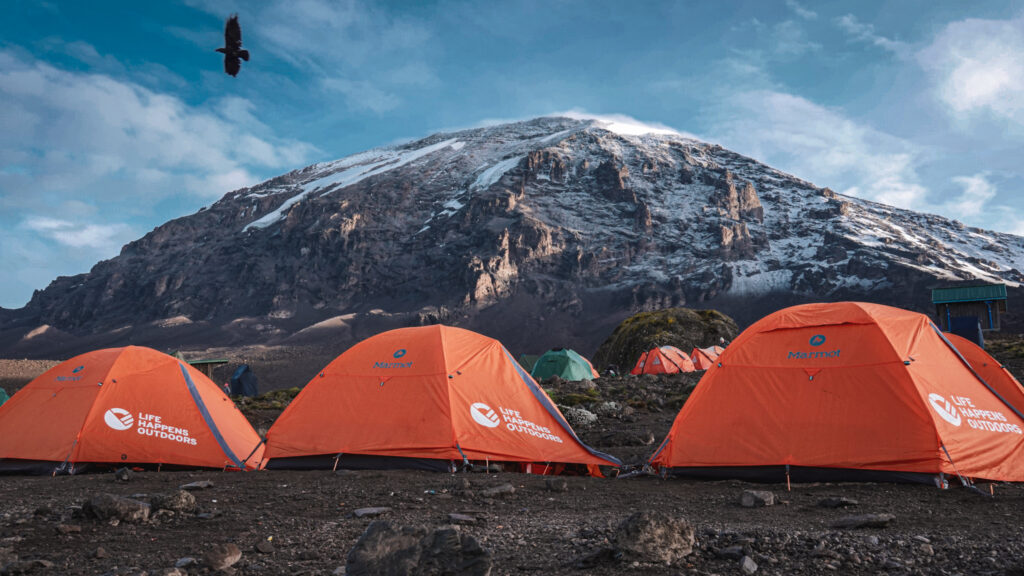
What is the highest mountain in Africa?
The highest mountain in Africa is Mount Kilimanjaro in Tanzania. Its highest point is Uhuru Peak, which stands at 5,895 metres, or 19,340 feet, above sea level. Kilimanjaro is also one of the Seven Summits, the highest mountains on each continent, and is one of the most recognisable high altitude trekking objectives in the world.
Kilimanjaro is globally famous because it rises dramatically from the plains of northern Tanzania as a vast volcanic mountain. Its three volcanic cones are Kibo, Mawenzi, and Shira, with Uhuru Peak on Kibo forming the true summit. Unlike many of the world’s highest mountains, Kilimanjaro’s main trekking routes do not require ropes, ice axes, or technical climbing skills in normal conditions.
That accessibility is one of the reasons Kilimanjaro is so popular, but it should not be mistaken for ease. Kilimanjaro reaches extreme altitude, and altitude sickness is the central challenge for most trekkers. Summit night is long, cold, slow, and physically demanding, which is why route choice, acclimatisation, guide quality, and preparation matter from the very beginning.
For many travellers, Kilimanjaro is the most accessible and iconic way to experience high altitude trekking in Africa. Life Happens Outdoors treats Kilimanjaro as a serious mountain objective, not a casual walking holiday. Our approach focuses on preparation, pacing, altitude awareness, route choice, guide support, and a calm team environment so first time high altitude trekkers can approach the mountain with the respect it deserves.
For a guided experience designed around preparation, safety, and a supportive team environment, explore the Life Happens Outdoors Kilimanjaro trip page.
The highest mountains in Africa ranked
Ranking the highest mountains in Africa can become complicated because some lists count independent mountains, while others include subsidiary peaks, volcanic cones, and named summits within the same massif. For example, Mawenzi on Kilimanjaro, Point Lenana on Mount Kenya, and Mount Speke and Mount Baker in the Rwenzori Mountains are all important high peaks, but they do not always fit neatly into a simple list of independent mountains.
For clarity, the table below prioritises major named mountains and mountain systems that general readers are most likely to encounter when researching the highest mountains in Africa, the tallest mountains in Africa, or the top mountains in Africa for adventure travel. It is designed as a practical mountain travel guide rather than a specialist peak bagging register.
| Rank | Mountain | Country or region | Height | Mountain type or range | Climbing or trekking relevance |
| 1 | Mount Kilimanjaro | Tanzania | 5,895 m, 19,340 ft | Standalone volcanic mountain in the East African Rift system | Highest mountain in Africa and the most iconic high altitude trekking objective on the continent |
| 2 | Mount Kenya | Kenya | 5,199 m, 17,057 ft | Standalone volcanic mountain in the East African Rift system | Africa’s second highest mountain, with technical true summits and a popular trekking objective at Point Lenana |
| 3 | Mount Stanley, Margherita Peak | Uganda and Democratic Republic of Congo | 5,109 m, 16,762 ft | Rwenzori Mountains | A serious glaciated expedition objective in one of Africa’s most remote mountain environments |
| 4 | Mount Meru | Tanzania | 4,565 m, 14,978 ft | Volcanic mountain in northern Tanzania | A quieter Tanzanian mountain and a useful acclimatisation objective before Kilimanjaro |
| 5 | Ras Dashen | Ethiopia | 4,533 m, 14,872 ft | Simien Mountains | Ethiopia’s highest mountain and a major trekking objective in the Simien Mountains |
| 6 | Mount Karisimbi | Rwanda and Democratic Republic of Congo | 4,507 m, 14,787 ft | Virunga Mountains | A demanding volcanic trek in a range that spans Rwanda, Uganda, and the Democratic Republic of Congo |
| 7 | Mount Elgon | Uganda and Kenya | 4,321 m, 14,177 ft | Extinct volcanic mountain in East Africa | A large regional trekking objective with volcanic scenery and a quieter mountain character |
| 8 | Mount Toubkal | Morocco | Approximately 4,165 to 4,167 m, 13,665 to 13,671 ft | Atlas Mountains | The highest mountain in North Africa and a shorter trekking objective from Morocco |
Kilimanjaro, Mount Kenya, and Mount Stanley dominate most discussions of Africa’s highest peaks because they combine altitude, landscape, reputation, and expedition relevance. Kilimanjaro is the clearest first choice for many high altitude trekkers, Mount Kenya introduces more technical mountain terrain, and the Rwenzori Mountains offer a more remote and complex expedition environment.
Africa’s three defining high mountains
The highest mountains in Africa are not all climbed in the same way. Kilimanjaro, Mount Kenya, and the Rwenzori Mountains each offer a very different kind of mountain experience. Understanding the differences between them is the key to choosing the right first objective.
Mount Kilimanjaro, Tanzania
Mount Kilimanjaro matters because it is both Africa’s highest mountain and one of the most recognisable trekking objectives in the world. Its summit, Uhuru Peak, stands at 5,895 metres, or 19,340 feet, and reaching it is a major physical and emotional undertaking for most trekkers.
The climb itself is not technical in the usual mountaineering sense. On the standard trekking routes, you do not need to climb rock walls, cross crevassed glaciers, or use mountaineering hardware in normal conditions. Instead, the challenge comes from walking for several days at increasing altitude, managing fatigue, sleeping high, and moving slowly enough to give your body the best chance to adapt.
This is why Kilimanjaro is suitable for many fit first time high altitude trekkers, but not something to treat casually. A strong gym routine is useful, but it is not the same as being able to walk slowly for hours over several consecutive days. The people who often do best are not always the fastest or strongest. They are the ones who prepare consistently, listen to their guides, choose a sensible route, and respect the altitude.
For Life Happens Outdoors, Kilimanjaro is the strongest commercial fit among Africa’s major mountains because it aligns closely with our mission. It is ambitious but accessible, serious but achievable, and powerful enough to change how people see themselves. It gives first time high altitude trekkers a real summit objective while allowing a well guided team structure to support preparation, pacing, safety, and morale.
Route choice is one of the most important decisions you will make. A longer route can give your body more time to acclimatise, while a rushed itinerary can make summit night significantly harder. Before choosing your route, read the Life Happens Outdoors Kilimanjaro routes guide.
Training should focus on long days on foot, steady aerobic endurance, hills or stairs, and the ability to keep moving over several consecutive days. Strength work helps protect the knees, hips, and back, but Kilimanjaro preparation is not only about gym fitness. For a structured approach, read the Life Happens Outdoors Kilimanjaro training guide.
Altitude is the main challenge on Kilimanjaro. You cannot guarantee how your body will respond above 5,000 metres, but you can improve your chances by choosing a sensible route, moving slowly, eating consistently, hydrating properly, and communicating symptoms early. The Kilimanjaro altitude guide and Kilimanjaro safety guide should both be part of your planning.
Summit night is the most demanding part of the climb for most trekkers. It is cold, slow, dark, and mentally challenging, and it often begins after limited sleep. Read the Kilimanjaro summit night guide so you understand what the final push really involves before you arrive on the mountain.
Cost should also be considered carefully. Kilimanjaro is not a place to choose only by the cheapest price, because route length, guide quality, staff welfare, safety systems, logistics, food, equipment, and support all affect the experience. For a realistic understanding of the investment, read the Kilimanjaro cost guide.
If you are deciding whether Kilimanjaro is the right first major African mountain for you, start with the Life Happens Outdoors Kilimanjaro trip page and the Kilimanjaro planning hub.
Mount Kenya, Kenya
Mount Kenya is Africa’s second highest mountain, with Batian rising to 5,199 metres and Nelion to 5,188 metres. These are dramatic technical summits, shaped by steep rock, high altitude conditions, and a more alpine character than many people expect when they first compare Mount Kenya with Kilimanjaro.
Mount Kenya is often misunderstood by people who compare it directly with Kilimanjaro. While Kilimanjaro is usually approached as a high altitude trek, Mount Kenya is more complex. Its highest summits, Batian and Nelion, are technical climbing objectives that require mountaineering and rock climbing ability. The most common trekking summit is Point Lenana, which is lower than Batian and Nelion but still a significant high altitude objective.
This distinction matters. Kilimanjaro gives trekkers the chance to stand on the highest point in Africa without needing technical climbing experience. Mount Kenya can offer a more alpine feeling mountain journey, but the true summit is not a simple trekking objective. That makes it better suited to travellers with more mountain experience, technical ambitions, or a desire to progress beyond non technical trekking.
For many first time African mountain travellers, Life Happens Outdoors may recommend Kilimanjaro before Mount Kenya, depending on their goals, fitness, previous trekking experience, and appetite for technical terrain. Kilimanjaro is not easy, but its structure is clearer for a first major high altitude objective.
The Rwenzori Mountains, Uganda and Democratic Republic of Congo
The Rwenzori Mountains are among the most serious and atmospheric mountain environments in Africa. Historically known as the Mountains of the Moon, the range sits along the Uganda and Democratic Republic of Congo border and contains some of the continent’s most distinctive high altitude terrain.
The highest mountain in the Rwenzori is Mount Stanley, whose highest point, Margherita Peak, reaches around 5,109 metres. The range also includes major peaks such as Mount Speke and Mount Baker, both of which are important high summits within the Rwenzori system. These peaks are best understood as part of a complex mountain range rather than as straightforward standalone trekking objectives.
The Rwenzori are often better understood as an expedition environment than a simple trek. They are remote, wet, logistically involved, and less mainstream than Kilimanjaro or Toubkal. The terrain can include bog, forest, steep ground, rock, snow, and ice, depending on the route and objective. This creates a very different type of mountain experience, one that rewards patience, resilience, and comfort with uncertainty.
Compared with Kilimanjaro, the Rwenzori feel more remote, wetter, and more expedition focused. Kilimanjaro is more accessible, better known, and better supported by a mature guiding infrastructure. The Rwenzori are less about a single iconic summit for first timers and more about entering a demanding mountain range where the journey itself is part of the challenge.
Other major African mountains worth knowing
Mount Meru, Tanzania
Mount Meru is a volcanic mountain in northern Tanzania, rising to around 4,565 metres. It sits west southwest of Kilimanjaro, near Arusha, which makes it geographically and logistically relevant for travellers already focused on Tanzania.
Meru is often used as an acclimatisation objective before Kilimanjaro, but it is also a worthwhile mountain in its own right. It is quieter than Kilimanjaro, has beautiful forest and volcanic scenery, and offers a serious summit day at altitude. For travellers with extra time in Tanzania, it can be a meaningful way to build confidence before stepping onto Kilimanjaro.
Ras Dashen, Ethiopia
Ras Dashen, also known as Ras Dejen, is the highest mountain in Ethiopia and rises to around 4,533 metres. It sits within the Simien Mountains, one of Africa’s most dramatic highland landscapes.
Ras Dashen is more of a trekking and regional adventure objective than a mainstream high altitude commercial summit like Kilimanjaro. Its appeal lies in the wider Simien Mountains experience, with escarpments, high plateaus, local culture, and wildlife. It may suit travellers who want a less obvious African mountain journey and are drawn to Ethiopia’s highland environment.
Mount Karisimbi, Rwanda and Democratic Republic of Congo
Mount Karisimbi rises to about 4,507 metres in the Virunga Mountains on the border between Rwanda and the Democratic Republic of Congo. The wider Virunga range spans Rwanda, Uganda, and the Democratic Republic of Congo, forming one of Africa’s most dramatic volcanic landscapes.
Karisimbi is usually approached as a demanding volcanic trek rather than a technical climb. Its appeal is strongly regional, often connected with Rwanda travel, volcano landscapes, and the wider Virunga environment. It is shorter than Kilimanjaro in expedition length, but the altitude and terrain still deserve respect.
Mount Elgon, Uganda and Kenya
Mount Elgon is a large extinct volcanic mountain on the border of Uganda and Kenya, with Wagagai commonly cited as its highest point at around 4,321 metres. It is lower than Kilimanjaro, Mount Kenya, and the main Rwenzori summits, but it remains one of East Africa’s major mountain landscapes.
Elgon is often more of a regional trekking adventure than a headline summit objective. It may appeal to travellers who want a quieter route, volcanic scenery, and a less crowded mountain experience. For those specifically seeking the highest mountain in Africa, however, Kilimanjaro remains the more direct and iconic choice.
Mount Toubkal, Morocco
Mount Toubkal rises to approximately 4,165 to 4,167 metres in Morocco’s Atlas Mountains and is widely recognised as the highest mountain in North Africa. It is much lower than Kilimanjaro but still reaches significant altitude, and its proximity to Marrakech makes it one of the most accessible short mountain objectives on the continent.
Toubkal is usually approached as a trekking objective, especially in normal summer conditions, although winter ascents can involve snow, ice, and more serious mountain conditions. It is a strong option for travellers looking for a shorter North African adventure, but it does not offer the same scale, altitude, or expedition arc as Kilimanjaro.
Which African mountain should you climb first?
The best African mountain to climb first depends on your experience, goals, available time, and appetite for altitude, remoteness, and technical terrain. For many first time high altitude trekkers, Kilimanjaro is the strongest starting point because it combines scale, accessibility, non technical trekking routes, strong guiding infrastructure, and a powerful summit objective.
| Rank | Mountain | Country or region | Height | Mountain type or range | Climbing or trekking relevance |
| 1 | Mount Kilimanjaro | Tanzania | 5,895 m, 19,340 ft | Standalone volcanic mountain in the East African Rift system | Highest mountain in Africa and the most iconic high altitude trekking objective on the continent |
| 2 | Mount Kenya | Kenya | 5,199 m, 17,057 ft | Standalone volcanic mountain in the East African Rift system | Africa’s second highest mountain, with technical true summits and a popular trekking objective at Point Lenana |
| 3 | Mount Stanley, Margherita Peak | Uganda and Democratic Republic of Congo | 5,109 m, 16,762 ft | Rwenzori Mountains | A serious glaciated expedition objective in one of Africa’s most remote mountain environments |
| 4 | Mount Meru | Tanzania | 4,565 m, 14,978 ft | Volcanic mountain in northern Tanzania | A quieter Tanzanian mountain and a useful acclimatisation objective before Kilimanjaro |
| 5 | Ras Dashen | Ethiopia | 4,533 m, 14,872 ft | Simien Mountains | Ethiopia’s highest mountain and a major trekking objective in the Simien Mountains |
| 6 | Mount Karisimbi | Rwanda and Democratic Republic of Congo | 4,507 m, 14,787 ft | Virunga Mountains | A demanding volcanic trek in a range that spans Rwanda, Uganda, and the Democratic Republic of Congo |
| 7 | Mount Elgon | Uganda and Kenya | 4,321 m, 14,177 ft | Extinct volcanic mountain in East Africa | A large regional trekking objective with volcanic scenery and a quieter mountain character |
| 8 | Mount Toubkal | Morocco | Approximately 4,165 to 4,167 m, 13,665 to 13,671 ft | Atlas Mountains | The highest mountain in North Africa and a shorter trekking objective from Morocco |
Kilimanjaro is often the best first major African mountain because it is high, iconic, non technical on the main trekking routes, and supported by established guiding infrastructure. It is serious enough to demand preparation, but accessible enough for many fit first time trekkers who approach it properly.
Mount Kenya is better for travellers who want a more technical mountain progression. If the aim is to stand on Batian or Nelion, you need climbing skills rather than only trekking fitness. If the aim is Point Lenana, it can be a beautiful high altitude trek, but it is not the same as reaching the highest point of the mountain.
The Rwenzori Mountains are best for travellers who want a remote expedition style adventure. They suit people who are comfortable with tougher logistics, wetter conditions, and a deeper sense of mountain isolation.
Toubkal is a strong option for a shorter North African trekking objective, while Mount Meru can be an excellent acclimatisation climb or quieter Tanzanian mountain experience. For travellers whose dream is the highest mountain in Africa, however, Kilimanjaro remains the clearest first choice.
To plan your first major African mountain journey, start with the Life Happens Outdoors Kilimanjaro trip page and the Kilimanjaro planning hub.
Why Kilimanjaro is the natural starting point for many African mountain adventures
Kilimanjaro is the natural starting point for many African mountain adventures because it sits at the rare intersection of altitude, accessibility, reputation, and emotional power. It is the highest mountain in Africa, yet its main trekking routes do not require prior technical climbing experience.
That combination is unusual. Many mountains of similar significance require climbing skills, glacier travel, or more advanced expedition experience. Kilimanjaro gives trekkers a genuine high altitude summit objective while remaining possible for fit first timers who prepare properly and choose a sensible route.
The mountain still requires respect. Altitude is the main challenge, and no amount of determination can fully override poor acclimatisation. A good Kilimanjaro climb depends on route choice, pacing, preparation, guide quality, safety systems, and the willingness to move slowly when everything in you wants to rush.
The experience is emotionally powerful because the task is simple but not easy. You walk, day after day, slowly upward. You learn patience. You learn how your body responds under pressure. You learn what support feels like inside a team. By the time you reach summit night, the climb has become more than a mountain. It has become a test of presence, humility, and trust.
How to prepare for climbing one of Africa’s highest mountains
Preparing for one of Africa’s highest mountains begins with fitness, but it does not end there. You need the ability to walk for several hours on consecutive days, ideally with hills, stairs, uneven ground, and a loaded daypack built into your preparation. Strength training helps protect your knees and hips, while steady aerobic work builds the engine you will rely on when the days become long. For Kilimanjaro, use the Kilimanjaro training guide as a starting point.
Altitude preparation is about understanding risk, not pretending you can control everything. You cannot guarantee how your body will respond at 5,000 metres or above. You can, however, choose a better route, move slowly, hydrate sensibly, eat consistently, communicate symptoms early, and travel with a guide team that takes altitude seriously. Read the Kilimanjaro altitude guide and Kilimanjaro safety guide before choosing your itinerary.
Route choice is one of the most important decisions on Kilimanjaro. Shorter routes may look appealing from a time or cost perspective, but they can reduce acclimatisation time. A better route is not simply the one that reaches the summit fastest. It is the one that gives you the best balance of scenery, pacing, preparation, safety, and summit opportunity. The Kilimanjaro routes guide explains the main options in more detail.
Equipment also matters. You need reliable footwear, layered clothing, warm summit gear, waterproof protection, a good sleeping system, and a daypack that can carry essentials comfortably. Poor gear choices can turn manageable discomfort into a serious problem, especially in cold, wet, or windy conditions.
Travel logistics should be handled with care. Flights, arrival time, transfers, park access, luggage, insurance, medical declarations, and emergency planning all affect the quality of the experience. Good preparation removes avoidable stress before the mountain begins.
Mindset is the final piece. High altitude trekking is not about charging upward. It is about patience, humility, consistency, and listening. The strongest trekkers are often those who can slow down, adapt, accept discomfort, and keep their attention on the next step rather than the whole mountain at once.
Highest Mountains in Africa FAQs
What is the highest mountain in Africa?
The highest mountain in Africa is Mount Kilimanjaro in Tanzania. Its highest point is Uhuru Peak, which stands at 5,895 metres, or 19,340 feet, above sea level. Kilimanjaro is famous because it is both the highest mountain in Africa and one of the Seven Summits. It does not require technical climbing experience on the main trekking routes, but the altitude makes it a serious challenge.
What are the three highest mountains in Africa?
The three highest major mountains in Africa are Mount Kilimanjaro in Tanzania, Mount Kenya in Kenya, and Mount Stanley in the Rwenzori Mountains on the Uganda and Democratic Republic of Congo border. Kilimanjaro reaches 5,895 metres, Mount Kenya reaches 5,199 metres at Batian, and Mount Stanley reaches around 5,109 metres at Margherita Peak. Ranking can vary when subsidiary peaks and volcanic cones are counted separately, but these three dominate most practical adventure travel discussions.
Is Kilimanjaro hard to climb?
Yes, Kilimanjaro is hard to climb, mainly because of altitude rather than technical difficulty. The main trekking routes do not normally require climbing skills, but the summit is very high and the final night is long, cold, and demanding. Many people underestimate Kilimanjaro because it is described as a trek, but reaching 5,895 metres places real stress on the body. Good preparation, sensible pacing, and an experienced guide team make a meaningful difference.
Can beginners climb Kilimanjaro?
Beginners can climb Kilimanjaro if they prepare properly, choose an appropriate route, and travel with a strong guiding team. It is not necessary to have technical mountaineering experience for the main trekking routes. However, beginners should not treat Kilimanjaro as an easy holiday hike, because altitude sickness, fatigue, cold, and summit night all require respect. The best beginner approach is to train steadily, choose a route with good acclimatisation time, and be honest about symptoms on the mountain.
Is Mount Kenya harder than Kilimanjaro?
Mount Kenya can be harder than Kilimanjaro if your aim is to reach its true highest summits, Batian or Nelion, because those are technical climbing objectives. Kilimanjaro’s main routes are non technical treks to the highest point of the mountain. On Mount Kenya, many trekkers aim for Point Lenana instead, which is lower than Batian and Nelion but still a significant high altitude objective. So the answer depends on which summit and route you mean.
Which African mountain is best for a first high altitude trek?
Kilimanjaro is often the best African mountain for a first high altitude trek. It is the highest mountain in Africa, has established trekking routes, does not require technical climbing experience, and offers a powerful summit objective. The challenge is still serious because of altitude, so preparation and guiding quality remain essential. For many Life Happens Outdoors travellers, Kilimanjaro offers the right balance of ambition, accessibility, and transformation.
Do you need technical climbing skills for Kilimanjaro?
You do not need technical climbing skills for Kilimanjaro’s main trekking routes in normal conditions. The climb is usually a high altitude trek rather than a technical mountaineering ascent. That said, the mountain should still be taken seriously because altitude, weather, cold, and fatigue can all affect safety and summit chances. The right preparation is less about rope skills and more about fitness, pacing, acclimatisation, equipment, and mindset.
What is the best time to climb Kilimanjaro?
The best time to climb Kilimanjaro is usually during the drier trekking seasons, commonly from January to early March and from June to October. Conditions can still vary, and no season removes the challenge of altitude. The best time also depends on your tolerance for crowds, weather, temperature, and personal schedule. A good operator will help you choose a date and route that fit your goals rather than treating all departures as equal.
How long does it take to climb Kilimanjaro?
Most Kilimanjaro climbs take between five and nine days on the mountain, depending on the route. Longer routes are often better for acclimatisation because they give the body more time to adapt to altitude. A shorter climb may look efficient, but it can make summit night harder and reduce the margin for adjustment. Many first time high altitude trekkers should prioritise route quality and acclimatisation time over speed.
How much does it cost to climb Kilimanjaro?
The cost of climbing Kilimanjaro varies depending on route length, operator quality, group size, inclusions, safety systems, staff treatment, and travel logistics. A very cheap climb can involve compromises that affect comfort, acclimatisation, guide support, or porter welfare. Kilimanjaro should be treated as a serious high altitude expedition, not a commodity purchase. For a deeper breakdown, read the Kilimanjaro cost guide.
What is the success rate on Kilimanjaro?
Kilimanjaro success rates vary widely by route, number of days, operator quality, acclimatisation profile, weather, individual health, and guide decision making. It is better to be cautious with any single headline percentage unless the source is clear and current. In general, routes with more acclimatisation time tend to give trekkers a better chance than rushed itineraries. Your aim should not only be to reach the summit, but to do so with good judgement, proper support, and respect for altitude.
Begin your African mountain journey with Kilimanjaro
Africa’s highest mountains are varied, beautiful, and demanding in very different ways. Mount Kenya offers technical ambition, the Rwenzori Mountains offer remote expedition character, Toubkal offers a shorter North African trekking objective, and Mount Meru offers a quieter Tanzanian mountain experience. But for many travellers, Kilimanjaro remains the natural starting point.
It is the highest mountain in Africa. It is accessible without technical climbing experience. It is serious enough to demand preparation, humility, and support. And when approached properly, it can become far more than a summit.
Explore the Life Happens Outdoors Kilimanjaro trip and Kilimanjaro planning hub to begin preparing for your own African mountain adventure.
About The Author
Elie is the Base Camp Chief at Life Happens Outdoors, orchestrating every adventure from first step to summit. He believes the outdoors offer something essential which is a space to disconnect from routine and reconnect with what truly matters. His mission is simple: to make every journey feel meaningful and unforgettable.
About Life Happens Outdoors
At Life Happens Outdoors, we believe in the power of nature to transform lives. As proud members of the Adventure Travel Trade Association (ATTA) and the World Travel & Tourism Council (WTTC), our team of certified guides and outdoor professionals is committed to the highest standards of safety, sustainability, and excellence.
Discover more about our story and mission on our Meet LHO page, or explore our curated adventures such as the Tour du Mont Blanc Trek, the Climb of Kilimanjaro, and Chasing the Northern Lights.




1 Comment
thank you