BY Elie Abi Akar | March 10 2026
Rami Rasamny and the Story Behind Life Happens Outdoors

Elie Abi Akar
At nineteen, Rami Rasamny woke in the middle of the night with a craving for a cigarette. At the time, he was smoking heavily, drinking too much, carrying extra weight, and drifting toward a version of his life that did not reflect who he wanted to become. What happened next was quiet. He said no, went back to bed, and woke up to the beginning of a different life.
That moment did not turn him overnight into a mountaineer, a leader, or a founder. What it gave him was something more important. It gave him the first clear understanding that a life is built through choices. Not only the dramatic ones, but the small repeated decisions that either pull a person closer to themselves or further away. If one set of habits could gradually unmake him, another set could rebuild him. That insight would become the foundation of his life and, years later, the philosophy behind Life Happens Outdoors.
Long before the company existed, the mountains already lived inside him. His parents met in the mountains. They put him on skis as a very young child. Some of his earliest memories are of alpine villages, mountain trains, chairlifts, cold air, and the excitement of being somewhere that felt bigger, cleaner, and more alive than ordinary life. Those trips were not just holidays. They were family at its best. They were movement, curiosity, beauty, and togetherness. In the mountains, he felt joy before he ever had the words to describe it.
His mother was especially formative in that world. She was the kind of parent who wanted her children to experience life fully. Weekends were for movement, exploration, and showing her sons that the world was wide. She brought energy, courage, and imagination to family life, often carrying far more than anyone around her fully saw. His father, too, helped shape that early relationship with the outdoors, not only by taking the family into the mountains, but by instilling a harder lesson that would stay with Rami for life. When things were rough, whether on skis, on a climb, or in life more broadly, the answer was not self pity. It was simple. This is part of the game. Keep going.
As a boy and then as a teenager, Rami felt that the mountains offered something that many other environments did not. They felt honest. There was no performance there. No need to impress. No need to fit a role. Yet much of his life away from the mountains was shaped by exactly those pressures. At school, he often felt out of place. He was alert to cruelty, bullying, false confidence, and the strange power games that develop in privileged environments. He could see when something was wrong, but like many young people, he did not always know what to do with that knowledge. Part of him wanted to resist it. Part of him wanted to avoid conflict. Part of him simply wanted to get through it.
That inner tension became one of the defining patterns of his early life. Outwardly, he could be charismatic, funny, and commanding. Inwardly, he often felt separate from the world he was moving through. He was never fully comfortable in rooms where people performed certainty without substance or used confidence as a form of dominance. Even then, he was deeply sensitive to the difference between appearance and truth.
At school, people came to know him as Big R. He coached hockey, had a strong presence, and carried himself with the kind of wit and force that made others assume he was entirely at ease in the world. He looked, from the outside, like somebody naturally at the centre of things. Younger students looked up to him. Teammates rallied around him. He had the quick line, the energy, the authority, the personality.

What most people did not see was what happened when the performance ended. The public version of Rami and the private one were often very different. Big R would leave the pitch, leave the jokes, leave the group, and go home alone. That contrast would become an important thread throughout his life. Even later, as the founder of a company, as a team leader, and as someone people turned to for reassurance and direction, that same pattern would remain. Others saw confidence, calm, and leadership. Behind it was often a quieter reality of solitude, reflection, and the emotional weight of carrying responsibility.
By the time he arrived in London for university, he was far from the person he wanted to become. He studied law, but not out of deep conviction. He smoked heavily, binge drank, and at one stage weighed around 110 kilos. The outdoors still lived in him, but more as fantasy than reality. He would imagine climbs he had not yet done, places he had not yet seen, and a version of himself that felt truer than the one he was actually living. The mountain life was there, but it existed in his imagination before it returned as lived experience.
That period was painful, but it was important. It taught him what it feels like to be estranged from oneself. It taught him what drift looks like. It also taught him that longing can be useful when it is not allowed to become an excuse. The life he wanted was not going to appear on its own. He would have to choose it, then choose it again, and keep choosing it when the excitement wore off and discipline was all that remained.

His path after university was anything but straightforward. Part of him had always been drawn to difficult places and entrepreneurial risk. His mother is Libyan, and Libya represented both family history and the possibility of building something meaningful from the ground up. When the revolution reshaped the country, he saw not only danger, but opportunity. He went in with ambition, youth, and the belief that difficult environments might be exactly where a person discovers who they are.
For a time, Libya felt electric. There was movement, possibility, and a sense that history was opening in front of him. Projects emerged quickly. Conversations with international firms began. What started as one business idea expanded into a series of opportunities, meetings, and responsibilities. For a young man in his twenties, it was intoxicating. It felt like life was accelerating.
Then the atmosphere changed. The roads changed. The city changed. Armed men became part of the landscape. Tension stopped being theoretical and became physical. There were moments when the illusion of control disappeared completely. A carjacking. A kidnapping. The unmistakable experience of staring down the barrel of a gun and understanding, in a way that no philosophy can simulate, how quickly life can narrow to one brutal moment. These were not dramatic stories for later retelling. They were real encounters with fear, fragility, and powerlessness.
Those experiences did not make him fearless. They did something harder. They forced him to understand that fear is real and that courage is not the absence of it. Courage is the choice that comes after. A person can spend years letting those moments define them through paralysis, bitterness, or retreat. Or they can allow them to become part of the spine they build. Libya changed him because it stripped away any romantic idea he had about danger. It showed him the difference between fantasy and consequence. It also deepened his respect for composure under pressure, for responsibility, and for the kind of steadiness that people need from each other when circumstances become serious.
When that chapter ended, it left him in what he now thinks of as a wilderness period. He did not want to return to a conventional legal path. He did not want to go back to Libya. He was caught between endings and unsure what shape the future should take. Back in Lebanon, he began running trails, climbing, surfing, and trying to find ground beneath his feet again. It was not a glamorous chapter. It was uncertain, messy, and often disorienting. But it was fertile in the way difficult periods sometimes are. It was the space in which a new direction could finally emerge.
The first version of what would become Life Happens Outdoors did not arrive neatly. It began with an idea in the broader outdoor space, part adventure platform, part startup concept, still searching for its true identity. Time was invested. Money was burned. Lessons came quickly and often painfully. Business relationships taught him about naivety, ownership, urgency, and the vast difference between an idea and the work required to make it real. There were false starts, wrong turns, and moments when the whole thing looked like it might collapse under the weight of uncertainty.
Yet one thing stayed constant. The name he wanted from the beginning was Life Happens Outdoors. That mattered because the phrase captured something he already knew to be true. The outdoors was never just scenery to him. It was the place where life became more visible. In the mountains, titles carry less weight. Status loses its grip. Comfort disappears. What remains is character. Focus. Humility. Effort. Teamwork. The ability to keep going when it would be easier not to. The ability to care for others when the environment is demanding something from everyone.
The true breakthrough came not from technology, but from experience in the field. After trying to define the business from the outside in, Rami started organizing actual trips. A Kilimanjaro climb brought people together. So did treks in the Alps and Nepal. On one descent from Kilimanjaro, a participant helped crystallize what had been in front of him all along. The real value was not an app or a broad adventure concept orbiting the outdoors. It was the way he was able to bring adventure to life for people, to make it accessible, meaningful, and transformational.
That realization changed everything. Life Happens Outdoors stopped being an idea looking for a product and became a company with a clear mission. It would create mountain based experiences for ordinary people, not only elite performers. It would treat adventure not as spectacle, but as a catalyst. It would build experiences in which people are invited to meet themselves more honestly, to move through discomfort with support, and to come home carrying more than photographs.

That mission is deeply personal to Rami because he knows what it means to feel far from oneself. He also knows the power of environments that strip away distraction and ask a better question: who are you when things get hard, when the noise falls away, and when you can no longer hide behind routine, status, or image? In the mountains, he has seen people discover strength they did not know they had. He has seen confidence built quietly. He has seen people return home with more patience, more humility, more courage, and a renewed belief in themselves.
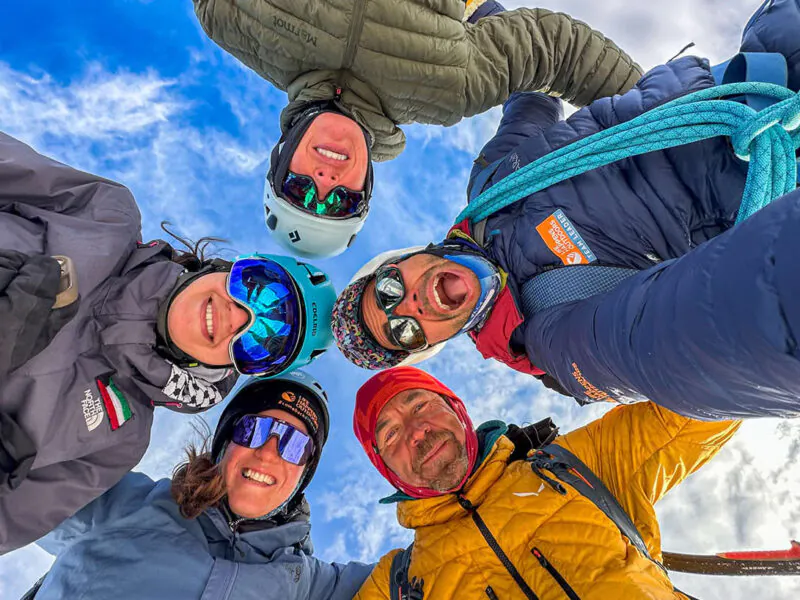
His own mountain achievements are significant. He has solo climbed Ama Dablam, run Mount Kilimanjaro in fourteen hours and twenty three minutes, set the south to north record on the Lebanon Mountain Trail, and raised more than seventy five thousand dollars for charitable causes through endurance challenges. But he does not treat those milestones as the centre of his story. They matter to him less as trophies than as teachers. The mountains shaped his discipline, his threshold for discomfort, his relationship with risk, and his understanding of how endurance is built.
They also deepened something more spiritual in him. For Rami, the mountains are not only places of effort. They are places of memory, solitude, and connection. Childhood lives there. Family lives there. Grief and gratitude live there. He has spoken often about feeling closest to the people who shaped him when he is in high places, far from the noise of ordinary life. In that sense, the mountains are not just where he performs. They are where he listens.
This is also why inclusion sits so close to the centre of the Life Happens Outdoors mission. The company has supported climbers and trekkers from a wide range of backgrounds, including those whose goals others might once have dismissed as unrealistic. Among these milestones was supporting Hari Budha Magar, a double over the knee amputee, on Aconcagua as part of his journey to become the first double over the knee amputee to complete the Seven Summits. The company has also supported inclusive Kilimanjaro climbs involving Fred Sfeir, who is blind, and Raneem Faraidy, who lives with cerebral palsy. For Rami, these are not side stories. They are proof of what he believes. Adventure should not belong only to the already confident, the already validated, or the already exceptional. It should be emotionally safe, deeply human, and meaningfully accessible.

Leadership in that environment has taught him another lesson as well. People do not come into the mountains carrying only backpacks. They carry grief, burnout, transition, self doubt, and the quiet hope that something in them might shift. To lead those experiences is to hold more than logistics. It is to carry trust. It is to recognize that while guides, founders, and team leaders are not therapists or superheroes, they are often entrusted with moments that matter deeply in other people’s lives. Over time, he has become increasingly aware of both the privilege and the weight of that responsibility.
That brings the story back, in some ways, to Big R. The shape of his life has changed dramatically, but certain truths have remained. He is still someone people turn to when they need steadiness. He is still someone who can bring energy, confidence, and direction into a room or a rope team. He is still someone whose public role often appears larger than the private cost of carrying it. But today there is less distance between the inner and outer life. The solitude no longer feels like evidence that he is misplaced. It feels like part of his nature. The mountains, the company, and the mission have given form to something that used to exist only as longing.
Life Happens Outdoors was not born from a polished plan. It emerged from contradiction, adversity, bad decisions, reinvention, and the slow recognition that the outdoors had always been the place where life made the most sense to him. It was built not to help people escape their lives, but to help them return to them differently.

As the company grows, Rami remains focused not only on scale, but on depth. He wants Life Happens Outdoors to remain a place where people feel cared for, challenged, and changed. He wants the brand to stand for excellence in the field and humanity in the way people are treated. He wants more people to experience the kind of internal shift that can happen when the mountain strips away noise and leaves only what is real.
If there is a legacy he hopes to leave, it is not only a successful company. It is the idea that people can rebuild themselves. That difficult environments can reveal the best in us. That courage is available to ordinary individuals in extraordinary places. And that the outdoors, when approached with honesty, humility, and care, can remind a person not only of what they are capable of, but of who they are.
His story did not begin with a summit. It began with a cigarette not smoked in the middle of the night, with a boy shaped by mountain winters, with a teenager called Big R who seemed larger than life and often felt alone, with a young man who stared down real danger and refused to let it hollow him out. What emerged from all of that was not simply an adventure company. It was a belief, lived before it was ever branded. Life happens outdoors, and when people answer that call truthfully, they come back different.
About Life Happens Outdoors
At Life Happens Outdoors, we believe in the power of nature to transform lives. As proud members of the Adventure Travel Trade Association (ATTA) and the World Travel & Tourism Council (WTTC), our team of certified guides and outdoor professionals is committed to the highest standards of safety, sustainability, and excellence.
Discover more about our story and mission on our Meet LHO page, or explore our curated adventures such as the Tour du Mont Blanc Trek, the Climb of Kilimanjaro, and Chasing the Northern Lights.