BY Rami Rasamny | March 31 2026
How to Climb Mont Blanc: Guided Routes, Training, Cost and Beginner Tips

Rami Rasamny
If you are wondering how to climb Mont Blanc, the first thing to know is that this is not a mountain you simply turn up and do on impulse. A successful Mont Blanc climb depends on fitness, acclimatisation, mountain skills, and the right support around you.
For many first timers, the best way to climb Mont Blanc is through a guided summit course that builds toward the mountain properly. With the right structure, a beginner Mont Blanc climb is absolutely possible. But it is never casual.
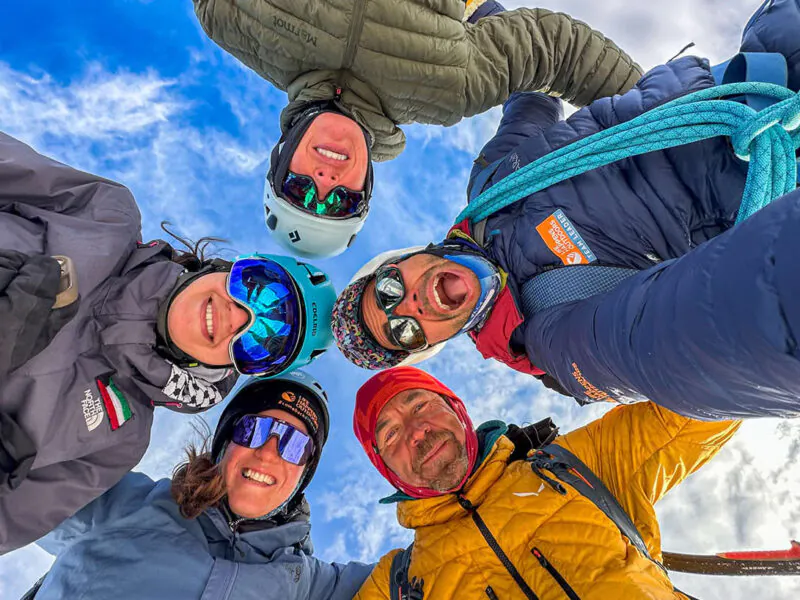
At Life Happens Outdoors, we believe climbing Mont Blanc should feel like a real journey into alpinism, not just a summit to collect. That means arriving prepared, moving well in alpine terrain, and giving yourself the best chance of a strong, meaningful summit attempt.
Explore our Mont Blanc Summit Course to see the full itinerary, guide support, acclimatisation plan, and what is included.
Can a Beginner Climb Mont Blanc?
Yes, a beginner can climb Mont Blanc, provided beginner does not mean unprepared.
Most people searching can a beginner climb Mont Blanc are really asking whether they need to be an experienced climber before they book. In most cases, the answer is no. You do not need to arrive as an expert alpinist. You do need to arrive willing to train properly, learn essential mountain skills, and follow a guided structure designed for first-time high alpine climbers.
Mont Blanc rises to 4,810 metres, and even the standard route is a serious mountaineering objective. Altitude, cold, glacier travel, long summit days, and changing conditions all place real demands on the body and mind. That is why the right beginner Mont Blanc climb is not about lowering the standard of the mountain. It is about raising the quality of preparation.
For fit first timers with the right attitude, a guided Mont Blanc climb can be a realistic and transformative goal.
Do You Need a Guide to Climb Mont Blanc?
For most first timers, yes, you do need a guide to climb Mont Blanc, or at the very least, highly qualified mountain leadership built into the itinerary.
A guide does far more than lead the way. They read conditions, manage pace, teach efficient movement, reduce risk, and know when to push and when to turn back. On a mountain like Mont Blanc, that judgment matters.
A guided Mont Blanc climb also gives you a far better structure around the mountain. Instead of trying to piece everything together yourself, you follow a proven progression that includes training, acclimatisation, mountain days, logistics, and a realistic summit strategy.
For most people, that is the difference between simply wanting to climb Mont Blanc and giving themselves a genuine chance of climbing it well.
How Hard Is It to Climb Mont Blanc?
If you are searching how hard is it to climb Mont Blanc, the honest answer is that it is hard enough to demand real preparation, but achievable for fit and well-supported first timers.
What makes climbing Mont Blanc hard is not just steepness or exposure. It is the accumulation of demands. The altitude is significant. The summit day is long. The weather can shift quickly. Snow conditions can change. Small inefficiencies in movement or pacing become much more costly high on the mountain.
This is why fitness alone is not enough. You need fitness, acclimatisation, mountain skills, and experienced decision-making around you. That is also why a proper Mont Blanc summit course matters. It gives you the structure to build those pieces in the right order.
Mont Blanc is achievable, but it has to be earned through process.
What It Takes to Climb Mont Blanc Successfully
A successful Mont Blanc climb usually depends on three things: fitness, skills, and acclimatisation.
1. Mountain Fitness
You do not need to be an elite athlete, but you do need strong, repeatable mountain fitness. That means being comfortable with long uphill efforts, moving steadily for many hours, and recovering well enough to perform again on the following days.
Cardiovascular endurance, leg strength, pacing discipline, and time on uneven terrain matter far more than occasional bursts of hard effort in the gym.
2. Basic Alpine Skills
You do not need to arrive already knowing everything, but you do need to learn the essentials before summit day. Good Mont Blanc preparation includes crampon technique, movement in mountain boots, use of an ice axe, rope team awareness, and confidence on glacier terrain.
These are not decorative skills. They help you move more safely and efficiently when the mountain starts to feel serious.
3. Proper Acclimatisation
Proper acclimatisation is one of the biggest drivers of success on Mont Blanc. Even very fit people can struggle badly if they go too high too quickly.
A strong Mont Blanc itinerary includes progressive altitude exposure, training peaks, and time spent moving and sleeping higher before the summit push. Acclimatisation is not an optional extra. It is part of the climb itself.

Best Route to Climb Mont Blanc: The Goûter Route
For most beginners, the best route to climb Mont Blanc is the Goûter Route.
This is the standard route used by many guided teams and supported by the hut system. That does not make it easy. The Goûter Route on Mont Blanc is still a serious alpine objective with objective hazards, especially around the Grand Couloir. It requires good conditions, strong judgment, and efficient movement.
What makes it the most realistic option for many first timers is that it is typically the most suitable guided route when combined with the right acclimatisation and support structure.
The best route is never just the one with the most traffic. It is the route that best matches your experience, the current conditions, and the overall design of your guided Mont Blanc climb.
Mont Blanc Training: How to Prepare Before the Trip
If Mont Blanc is on your horizon, your Mont Blanc training should begin well before you arrive in Chamonix.
The goal is not simply to get fit in a general sense. The goal is to become fit for the specific demands of the mountain. That means long hikes, uphill work, stair sessions, steady endurance training, loaded movement, and recovery between hard efforts.
Strength work matters too, especially for the legs and core, but it should support mountain movement rather than replace it.
The most useful Mont Blanc training is the kind that teaches your body to keep going when the day gets long. Hiking with a backpack, spending time on uneven ground, and getting comfortable with sustained effort are far more useful than occasional all-out sessions.
You are not just training to survive summit day. You are training to move well when it matters.
Mont Blanc Itinerary: What a Proper Summit Plan Looks Like
One of the biggest mistakes people make is treating Mont Blanc like a quick objective. In reality, a proper Mont Blanc itinerary usually takes six to eight days once you include skills training, acclimatisation, and the summit push.
That structure exists for a reason. It gives you time to adapt, learn, recover, and arrive at summit day in a much stronger position.
A typical guided Mont Blanc climb might include:
- arrival in the Chamonix valley
- equipment check and briefing
- glacier training and movement skills
- acclimatisation peaks
- one or more nights at altitude
- summit push via the Goûter Route
- weather flexibility where possible
This kind of progression gives you a far better chance of climbing strongly than simply going straight for the summit.
See our Mont Blanc Summit Course for the full itinerary, training structure, and guide support.
Mont Blanc Gear List: Essential Equipment for the Climb
A proper Mont Blanc gear list includes more than warm layers and good intentions.
For most guided climbs, you will need:
- alpine boots suitable for crampons
- crampons
- ice axe
- helmet
- harness
- technical clothing layers
- insulated gloves
- sunglasses or glacier eyewear
- headlamp
- backpack that carries comfortably
- water system and personal essentials
Many climbers rent some technical items in Chamonix, which is completely normal. What matters most is that your gear works well, fits properly, and supports efficient movement rather than adding stress.
Good gear is important, but gear is not the strategy. The real strategy is preparation, acclimatisation, and choosing the right guided structure.
How Much Does It Cost to Climb Mont Blanc?
If you are researching Mont Blanc climb cost, the total price usually depends on how the experience is structured.
The cost to climb Mont Blanc often reflects several variables, including:
- guide ratio
- number of acclimatisation and training days
- hut bookings
- lifts and local logistics
- accommodation
- transfers
- equipment rental
- what is included before and during the summit push
That is why comparing prices without comparing structure can be misleading. A cheaper-looking option may not include the same level of preparation, support, or mountain time. For most first timers, the better question is not only how much does it cost to climb Mont Blanc. It is also which course gives you the best chance of climbing well, safely, and meaningfully.
A well-designed Mont Blanc summit course creates value long before summit day begins.

What Summit Day on Mont Blanc Actually Feels Like
Summit day on Mont Blanc is rarely about explosive strength. It is about staying calm, steady, and disciplined over a long period of time.
You usually start in the dark. You move by headlamp. The pace is controlled. The effort builds gradually. Higher up, the air feels thinner, the terrain more exposed, and the need for efficient movement becomes more obvious.
For many people, this is where the whole process comes together. The training, the acclimatisation, the early mornings, the nerves, and the effort all narrow into one focused line of movement toward the summit.
That is part of what makes climbing Mont Blanc so meaningful. It is not just the height or the view. It is the process of becoming equal to the challenge in front of you.
Climbing Mont Blanc With Life Happens Outdoors
At Life Happens Outdoors, we do not treat Mont Blanc as something to rush. We believe the mountain should be approached through progression: fitness first, skills second, acclimatisation throughout, then a realistic summit push when the body and conditions are ready.
That is why our guided Mont Blanc climb is designed to do more than get people to the summit if conditions allow. We want people to come away feeling that they have genuinely stepped into the world of alpinism with more skill, more confidence, and more respect for the mountain environment.
If Mont Blanc is calling you, the next step is not just to ask whether you can do it. The next step is to prepare properly, choose the right structure, and build toward the mountain with intention.
Explore our Mont Blanc Summit Course, read our Definitive Guide to Climbing Mont Blanc, and start your journey with expert support.
FAQ
Can a beginner climb Mont Blanc?
Yes, a beginner can climb Mont Blanc, provided they are well prepared and choose a guided structure that includes training, acclimatisation, and qualified mountain leadership.
How hard is it to climb Mont Blanc?
Mont Blanc is hard enough to demand real preparation, but it is achievable for fit first timers who train properly, acclimatise well, and climb with the right support.
What is the best route to climb Mont Blanc?
For most beginners, the best route to climb Mont Blanc is the Goûter Route. It is the standard route used by many guided teams, although it remains a serious alpine objective.
Do you need a guide to climb Mont Blanc?
For most first timers, yes. A guide helps with conditions, pacing, risk management, route decisions, and efficient movement on the mountain.
How long does a Mont Blanc itinerary take?
A proper Mont Blanc itinerary usually takes six to eight days once you include acclimatisation, mountain training, and the summit push.
What should be on a Mont Blanc gear list?
A Mont Blanc gear list should include alpine boots, crampons, an ice axe, a helmet, a harness, technical layers, gloves, sunglasses, a headlamp, and a suitable backpack.
How should I approach Mont Blanc training?
Mont Blanc training should focus on endurance, uphill fitness, recovery, and time spent moving on uneven terrain. You are preparing for a long mountain effort, not just a gym session.
How much does it cost to climb Mont Blanc?
Mont Blanc climb cost varies depending on guide ratio, huts, acclimatisation days, accommodation, logistics, and equipment rental. It is best to compare what is included, not just the headline price.
Planning a climb in the Alps? Explore our complete Alps guide covering mountaineering courses, classic climbing objectives, and everything you need to know.
About The Author
Rami Rasamny is the founder of Life Happens Outdoors, a premium adventure travel company that uses the outdoors as a catalyst for human transformation. His work brings people into the mountains not only for challenge, but for clarity, confidence, and connection. He believes that when people answer the call to adventure truthfully, they come back different.
About Life Happens Outdoors
At Life Happens Outdoors, we believe in the power of nature to transform lives. As proud members of the Adventure Travel Trade Association (ATTA) and the World Travel & Tourism Council (WTTC), our team of certified guides and outdoor professionals is committed to the highest standards of safety, sustainability, and excellence.
Discover more about our story and mission on our Meet LHO page, or explore our curated adventures such as the Tour du Mont Blanc Trek, the Climb of Kilimanjaro, and Chasing the Northern Lights.