Outdoor Skills & Safety | BY Rami Rasamny | PUBLISH DATE: May 08 2021 | READ TIME: 2 mins | UPDATED DATE: June 05 2026
What’s the Difference Between Hiking and Mountaineering?

DOWNLOAD YOUR Tour du Mont Blanc Trek GUIDEBOOK
Mountaineering vs Hiking “LHO community members crossing the glacier on a mountaineering experience” This is probably the most frequently asked question amongst first-timers in our LHO community because there’s hardly any info out there on the subject! So, here’s a simple guide to understanding the differences. Hiking Going on a hike implies taking a walk […]
Mountaineering vs Hiking

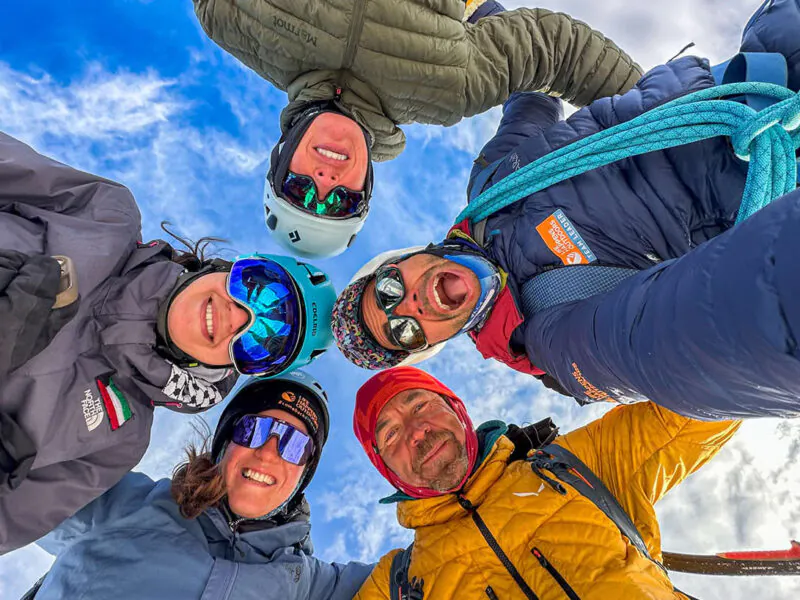
“LHO community members crossing the glacier on a mountaineering experience”
This is probably the most frequently asked question amongst first-timers in our LHO community because there’s hardly any info out there on the subject! So, here’s a simple guide to understanding the differences.
Hiking
Going on a hike implies taking a walk along a trail that is usually already defined and does not require the use of any gear apart from comfortable boots and sometimes a walking stick or trekking poles. A hike could reach the summit of a mountain, follow a circuit that brings you back to where you started or be linear where it starts somewhere and ends somewhere else. If you’ve ever gone for a walk in the countryside you’ve gone on some form of hike.
Trekking
Hiking and trekking are actually the same thing. But, in popular discourse describing a trail as a “trek” usually implies a longer experience that probably includes multiple days and nights spent on the trail.

“LHOer Pascal trekking past the Lava Tower on his way to the summit of Kilimanjaro.”
Kilimanjaro, Machu Picchu and Everest Base Camp experiences are commonly referred to as treks.
Mountaineering
Once technical gear such as ropes, crampons, harnesses and helmets are introduced to the trail the experience falls into the mountaineering category. This is where trail-specific skills must be learned in order to perform the experience safely. Although most mountaineering experiences aim to reach the summit of a mountain, glacier crossings and other objectives that include technical gear within a mountainous environment will also fall under the same category. Summiting the Mont Blanc, Crossing the alpine glaciers from Chamonix to Zermatt and climbing Paldor Peak would be considered mountaineering.
If you’re seeking to get started or have any questions at all, don’t hesitate to reach out to us on info@lifehappensoutdoors.com.
CONTINUE YOUR RESEARCH







ABOUT THE AUTHOR

Rami Rasamny
Rami Rasamny is the founder of Life Happens Outdoors, a premium adventure travel company that uses the outdoors as a catalyst for human transformation. His work brings people into the mountains not only for challenge, but for clarity, confidence, and connection. He believes that when people answer the call to adventure truthfully, they come back different.