Outdoor Skills & Safety | BY Rami Rasamny | PUBLISH DATE: April 27 2026 | READ TIME: 9 mins | UPDATED DATE: September 20 2026
Mera Peak Ski Touring: Everything You Need to Know

DOWNLOAD YOUR Mera Peak Climbing Expedition GUIDEBOOK
Jump to: Ski conditions · 21-day expedition · Costs and inclusions · Experience and equipment FAQs What Is Mera Peak Ski Touring Mera Peak is a Himalayan snow and glacier summit above 6,400 metres where a ski descent may be possible for suitably experienced ski tourers when mountain conditions allow. View Mera Peak dates and […]
Jump to: Ski conditions · 21-day expedition · Costs and inclusions · Experience and equipment FAQs
What Is Mera Peak Ski Touring
Mera Peak is a Himalayan snow and glacier summit above 6,400 metres where a ski descent may be possible for suitably experienced ski tourers when mountain conditions allow.
View Mera Peak dates and prices for the standard 21-day climb. The ski-descent option is quoted separately after LHO confirms suitability and the planned support.
Mera Peak ski touring combines high altitude trekking, mountaineering, and off piste skiing into a single experience that unfolds over multiple days. You ascend gradually through the Himalayas, allowing your body to adapt to altitude, before transitioning into a ski descent when conditions align. This creates a continuous journey rather than a single summit moment.
For many people, this represents a natural progression. You may have completed a trek such as Everest Base Camp or climbed Kilimanjaro and discovered that you are capable of more than you initially thought. Ski touring at altitude builds on that foundation and adds a new dimension that is both physical and mental.
Instead of simply reaching the summit and descending on foot, you engage with the mountain in a more dynamic way. The descent becomes something you earn and experience actively rather than something you endure.

Can You Ski Mera Peak
A ski descent on Mera Peak may be possible for experienced ski tourers, but it is not guaranteed. The standard expedition climbs and descends on foot; the ski option is a separate add-on.
Whether skiing is possible depends on snow cover, wind, weather, visibility, glacier conditions and the specialist ski leader’s judgement. Suitable snow cover is only one part of that assessment.
If the wind increases, it can remove that surface layer and expose hard ice underneath. When that happens, skiing becomes extremely technical and in many cases not viable for a guided expedition.
This is why many climbers summit Mera Peak but never ski it. The mountain may be climbable, but it is not always skiable.
The standard Life Happens Outdoors Mera Peak Expedition is a 21-day mountaineering ascent and descent on foot. Experienced ski tourers can request an optional, separately priced ski-descent add-on. It follows the same acclimatisation and summit plan, but any skiing depends on snow cover, weather, visibility, glacier conditions and the specialist ski leader’s judgement; it may be shortened, changed or cancelled.
How Difficult Is Mera Peak Ski Touring
Mera Peak is considered one of the more accessible high altitude summits, but ski touring adds a meaningful layer of difficulty that should not be underestimated.
From a physical perspective, you are operating for multiple days above 5,000 metres. The reduced oxygen levels impact your energy, your recovery, and your ability to perform sustained effort. Even simple tasks require more focus and patience than they would at sea level. Summit day itself is long and requires both endurance and mental resilience.
From a technical perspective, the climb involves basic mountaineering skills such as walking in crampons, using an ice axe, and moving safely on glaciated terrain. The skiing requires confidence in off piste conditions where snow quality can vary and terrain is not groomed or predictable.
For most people, the challenge is not about technical perfection. It is about consistency and composure. Showing up each day, managing your pace, and maintaining a steady approach even when the environment becomes demanding.
With the right preparation and support, this becomes achievable for non professionals. That preparation typically includes building aerobic fitness, spending time in the mountains beforehand, and becoming comfortable skiing in variable conditions.

Best Time to Ski Mera Peak
Timing is one of the most important factors in the success of a Mera Peak ski touring expedition, and it often determines whether skiing is possible at all.
April, in the pre monsoon season, is typically the best window. During this period, the Himalayas often receive light snowfall that creates a soft and skiable layer on the glacier. At the same time, temperatures remain manageable and the overall weather patterns are relatively stable.
Wind is the defining variable at altitude. Strong winds can strip the mountain of its snow and expose ice beneath. When that happens, even experienced skiers will struggle to descend safely.
The difference between an average experience and an exceptional one often comes down to a short weather window. A few days of the right conditions can transform the entire expedition.
This is why experienced teams focus on identifying and acting on those windows rather than committing to rigid summit dates.
What Does a Mera Peak Ski Touring Expedition Involve
The optional ski descent sits within LHO’s 21-day Mera Peak climbing itinerary. The approach is built around acclimatisation, training, positioning and two mountain contingency days, while the standard summit and descent plan remains on foot.
The journey begins in Kathmandu before travelling to Lukla and following the quieter Hinku Valley approach through Puyan, Pangum, Kothe and Thangnak.
Dedicated acclimatisation, repeated time around Khare and glacier-skills training help the team adapt before moving through Base Camp and High Camp.
The summit attempt is planned for Day 14, with Days 15 and 16 retained for weather, acclimatisation, training or route adjustments. These buffers improve flexibility but do not guarantee either the summit or a ski descent.
A typical expedition includes:
- Airport to airport logistics
- Domestic flights within Nepal
- Permits and national park access
- A full guiding team including experienced Sherpa support
- Accommodation and meals throughout
- Safety systems and emergency planning
The objective is to create an environment where you can focus entirely on the experience, knowing that the logistics and safety are being managed at a high level.
Read the full 21-day Mera Peak itinerary.

What a Real Mera Peak Ski Touring Expedition Looks Like
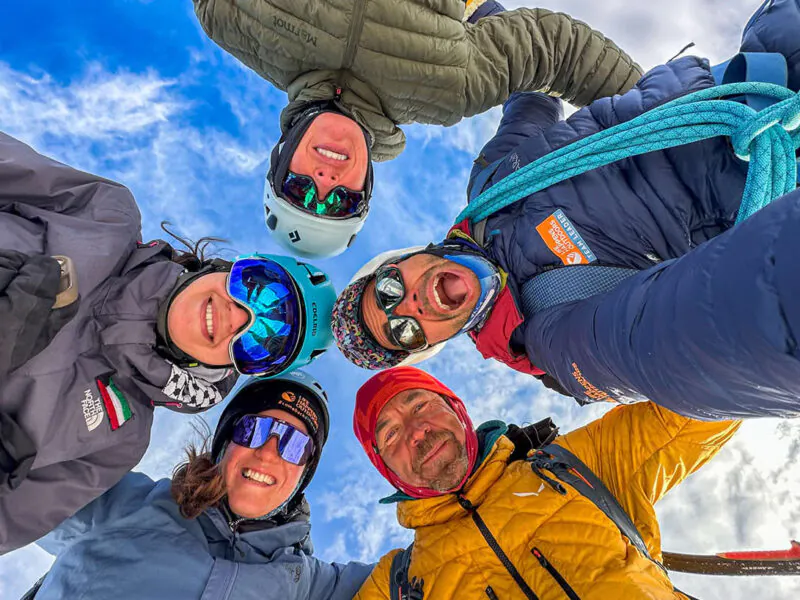
At Life Happens Outdoors, we recently completed our first ski touring expedition on Mera Peak, led by Rami Rasamny and supported by Yeti Lakpa Sherpa.
From early in the expedition, April 22 was identified as a potential summit window based on snowfall patterns and forecast stability. The days leading up to it brought consistent light snowfall, creating ideal skiing conditions across the glacier.
The forecast showed increasing wind after May 1, which would likely have stripped the mountain and exposed ice. This made the timing of the summit attempt critical.
On April 21, the team moved to high camp in preparation.
At 6:45am on April 22, they stood on the summit in almost no wind, a rare occurrence at that altitude.
At the same time, more than 100 climbers were making their way up the mountain, unaware that they had missed one of the best weather windows of the season.
From the summit, the team completed a 1,500 metre ski descent back to crampon point under stable conditions. The snow held, the glacier remained covered, and the descent unfolded exactly as planned.
This is what the experience looks like when preparation, patience, and timing come together.
How Much Does Mera Peak Ski Touring Cost
The cost of a Mera Peak ski touring expedition varies depending on the level of support and the quality of logistics provided.
View the standard 21-day Mera Peak Expedition dates and prices. The ski-descent add-on is quoted separately after LHO confirms suitability and the planned support model. Request a written quote covering scope, equipment, conditions, payment timing and cancellation or refund treatment.
This typically includes:
- Domestic flights within Nepal
- Permits and national park fees
- Professional guiding team and Sherpa support
- Accommodation and meals throughout the expedition
- Group equipment and safety infrastructure
Additional costs may include international flights, personal equipment, insurance, and tips for the local team.
What you are investing in is not just the climb itself. You are investing in preparation, expertise, and the ability to operate safely and effectively in a high altitude environment.

Is Mera Peak Ski Touring Worth It
For the right person, this becomes far more than a trip. It becomes a defining experience that stays with you long after you return.
You are stepping into an environment that demands focus, patience, and resilience. Every day requires intention, and every step builds towards something meaningful. The sense of progression is continuous rather than confined to a single moment.
The reward is not just the summit. It is the full journey through the Himalayas and, when conditions align, the experience of skiing from over 6,000 metres.
Compared to trekking, this adds a deeper level of engagement. Compared to climbing alone, it adds movement and flow to the descent. It transforms the mountain into something you interact with rather than simply overcome.
For many in the Life Happens Outdoors community, experiences like this become turning points. They shift how you approach challenge and what you believe is possible.

What This Means for Life Happens Outdoors
This expedition marks the beginning of high altitude ski touring within Life Happens Outdoors and sets the foundation for future experiences.
It creates a clear progression pathway for those who have already completed treks or climbs and are looking for something more immersive. It also opens the door to exploring new objectives across the Himalayas where similar experiences may be possible.
Mera Peak is just the starting point, and this first expedition has demonstrated both the potential and the approach required to build on it.

Start Your Journey
If you are looking for something beyond trekking or climbing, this is where the next chapter begins.
View Mera Peak dates and prices.
Or begin with Nepal adventures to understand the broader pathway:
https://lifehappensoutdoors.com/nepal
With the right preparation and the right support, the mountains become accessible in a way that is both safe and deeply rewarding.
Come Back Different.
FAQs
Can beginners do Mera Peak ski touring?
The ski option is not for beginner skiers. It is for experienced ski tourers who are comfortable with variable snow, their equipment and following instructions on glaciated terrain. A very fit first-time mountaineer may join the standard climb with preparation and the included technical training; previous high-altitude trekking is strongly recommended. Suitability for the optional ski descent must be assessed separately.
How long does a Mera Peak ski touring trip take?
The current LHO Mera Peak Expedition lasts 21 days from arrival in Kathmandu to departure. The optional ski descent sits within this climbing itinerary. The summit attempt is planned for day 14, with days 15 and 16 available for weather, acclimatisation, training or route adjustments. The standard descent is on foot; skiing is separately priced and may be shortened, changed or cancelled according to conditions.
Is altitude the biggest challenge?
Altitude is a major challenge alongside cold, glacier terrain, endurance and ski ability. Fitness, previous altitude experience and planned acclimatisation do not guarantee adaptation or summit success. The climbing team may adjust, delay or turn back according to altitude response, team welfare and mountain conditions.
What equipment do you need?
You will need ski touring skis, boots, bindings, skins, and poles, along with mountaineering equipment such as crampons, an ice axe, and high altitude clothing including a down jacket. A guided expedition provides a detailed kit list and support to ensure you are fully prepared. The goal is to balance safety with efficiency so you are not carrying unnecessary weight. Obtain the current mountaineering kit and rental list before booking. Ski equipment and its inclusion or rental costs must be specified in the separate written ski-descent quote.
When should I book?
Plan early enough to prepare physically, organise your equipment and discuss suitability with LHO. Check the current expedition dates and obtain a separate written quote for the ski-descent option, including its scope, equipment and cancellation or refund terms. Booking early does not guarantee suitable skiing conditions.
This article was reviewed for Nepal mountaineering accuracy by Lakpa Tsheri Sherpa, a senior Nepalese high-altitude guide and Nepal Mountaineering Association-registered Sardar (Registration No. 592).
CONTINUE YOUR RESEARCH






ABOUT THE AUTHOR

Rami Rasamny
Rami Rasamny is the founder of Life Happens Outdoors, a premium adventure travel company that uses the outdoors as a catalyst for human transformation. His work brings people into the mountains not only for challenge, but for clarity, confidence, and connection. He believes that when people answer the call to adventure truthfully, they come back different.