BY Elie Abi Akar | September 24 2025
Annapurna Base Camp vs Everest Base Camp. Which Is Harder?

Elie Abi Akar
For most people, Everest Base Camp is harder for altitude because it goes higher and demands careful acclimatisation. Annapurna Base Camp often feels harder on the legs because of steeper stair sections and bigger up and down days. The truth depends on your itinerary length, fitness, and how well you manage pacing and recovery.
When it comes to trekking in Nepal, two names dominate the conversation: Everest Base Camp (EBC) and Annapurna Base Camp (ABC). Both treks are world-class, offering stunning Himalayan views, rich cultural encounters, and challenging physical demands. But which one is harder? The answer isn’t as straightforward as it seems—it depends on how you define “hard.”
Planning Annapurna Base Camp?
If you are reading this because you are considering the Annapurna Base Camp trek, start with the comparison below, then visit our Annapurna Base Camp trip page for the full itinerary, support model, dates, inclusions, and booking details.
You can also explore our Nepal trekking hub if you are still comparing Annapurna Base Camp, Everest Base Camp, Mardi Himal, Gokyo, and other Himalayan journeys.
Altitude and Acclimatization
The biggest difference lies in altitude.
Everest Base Camp reaches 5,364m. Altitude sickness is a constant concern, and the pace of the trek is designed around acclimatization. Even the fittest trekkers can be affected.
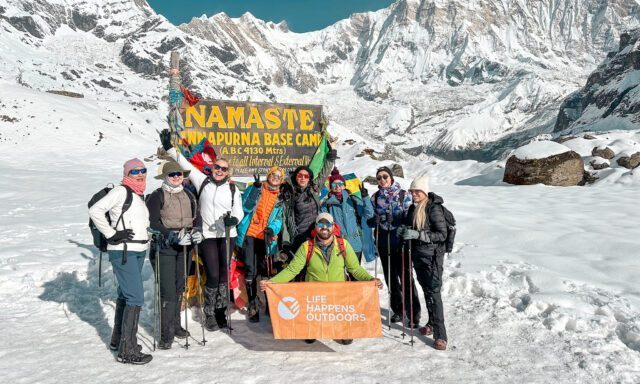
Annapurna Base Camp, on the other hand, tops out at 4,130m. While still high, the risk of altitude-related issues is much lower.
Verdict: EBC is harder due to altitude.
Trekking Days and Distance
EBC trek usually takes 12–14 days, covering longer distances with multiple acclimatization stops.
ABC trek is shorter, often completed in 7–10 days, with fewer rest days required.
Verdict: EBC is harder in terms of duration and distance.
Terrain and Daily Effort
The Everest route involves gradual ascents, rocky paths, suspension bridges, and long trekking days, but it follows a steady rhythm.
The Annapurna route is steep and relentless. Expect countless stone staircases, sharp ascents, and descents. While the altitude is lower, the daily effort can feel more intense on the legs.
Verdict: ABC feels harder on a day-to-day physical level, especially with its stair-heavy climbs.
If Annapurna Base Camp feels like the right level of challenge, you can see the full Life Happens Outdoors Annapurna Base Camp trek here.
Accessibility and Comfort
The Everest region requires a flight to Lukla, a notoriously weather-dependent airstrip. Lodges are more basic the higher you go.
The Annapurna region is more accessible by road, and accommodation is relatively comfortable compared to EBC.
Verdict: EBC is harder logistically; ABC is easier to reach and stay in.
Scenery and Motivation
Hardship is often balanced by reward.
On the EBC trek, trekkers are motivated by the iconic goal of reaching Everest’s foot and seeing the Khumbu Icefall.
On the ABC trek, trekkers are rewarded with a dramatic 360-degree view of towering peaks, including Annapurna I, Machapuchare, and Hiunchuli.
Verdict: Both offer extraordinary rewards, but ABC packs the scenery into fewer days.
The Bottom Line
If altitude and endurance are your main concerns, Everest Base Camp is harder.
If steep climbs and daily exertion wear you down more, Annapurna Base Camp can feel tougher.
In short:
EBC = Harder overall (altitude, length, logistics).
ABC = Shorter, but sharper (stair-heavy, physically demanding).
For a deeper look at the full itinerary, support, inclusions, and upcoming departures, visit the Annapurna Base Camp trek page. If you are still deciding where Nepal fits into your wider adventure plans, start with our Nepal trekking and mountaineering hub.
About The Author
Elie is the Base Camp Chief at Life Happens Outdoors, orchestrating every adventure from first step to summit. He believes the outdoors offer something essential which is a space to disconnect from routine and reconnect with what truly matters. His mission is simple: to make every journey feel meaningful and unforgettable.
About Life Happens Outdoors
At Life Happens Outdoors, we believe in the power of nature to transform lives. As proud members of the Adventure Travel Trade Association (ATTA) and the World Travel & Tourism Council (WTTC), our team of certified guides and outdoor professionals is committed to the highest standards of safety, sustainability, and excellence.
Discover more about our story and mission on our Meet LHO page, or explore our curated adventures such as the Tour du Mont Blanc Trek, the Climb of Kilimanjaro, and Chasing the Northern Lights.