Moderately Challenging Nepal
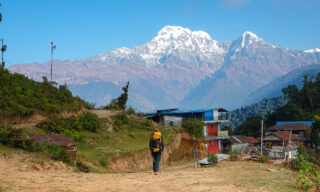
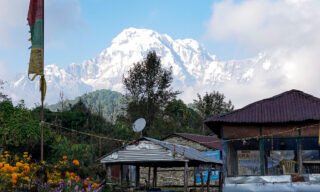
Our Fishtail Mountain Trek, also known as the Mardi Himal Base Camp Trek, is one of our most atmospheric journeys in the Himalayas. The sacred peak of Machapuchare, believed to be the home of the Hindu Lord Shiva, guides us through forests, ridgelines, tea house settlements, and high viewpoints that feel much bigger than the length of the trek suggests. With selected tea houses on the trail, unique stays in Pokhara and Kathmandu, delicious meals, cultural experiences, expert Mardi Himal trekking guides, and LHO Team Leader support, this adventure offers far more than just a trek. It is a deep and personal journey into the heart of Nepal.

TRIP TYPE
Trekking

DURATION
9 Days

DESTINATION
Nepal
1
An all inclusive experience that features a carefully selected range of tea houses on the trail, a relaxing night in the lakeside town of Pokhara, and a cultural tour of Kathmandu beyond the trail.
2
Trip photography is included throughout the experience, giving you a lasting record of the forests, ridgelines, tea houses, sunsets, and mountain moments that make the Mardi Himal route unforgettable.
3
Your LHO Team Leader sets the tone in Kathmandu, while our expert trekking team brings deep local knowledge of the route, pacing, tea houses, forest trails, and high ridgelines below Machapuchare.


WHAT'S INCLUDED IN THIS TRIP
WHAT'S NOT INCLUDED IN THIS TRIP
DAY 1: ARRIVAL IN KATHMANDU AND FISHTAIL MOUNTAIN TREK WELCOME BRIEFING
Kathmandu is an incredible, vibrant, and wild city that we’ve fallen in love with. That’s why we’re always so excited to receive you on the first day and share the gateway to the Himalayas with you. On arrival day, you’ll be met by an LHO representative at the airport and driven to our centrally located hotel by private transfer. Navigating Kathmandu airport can be an adventure in and of itself, so you’ll be receiving a text with detailed instructions on how to efficiently make your way to us.
Your LHO Team Leader will be waiting to receive you at our hotel, help you settle in, and make sure you have everything you need for the adventure ahead. If you arrive early, your Team Leader will share a curated list of restaurants, coffee shops, heritage sites, and markets so you can make the most of your first day in Kathmandu.
Our first official event is a team dinner hosted by your LHO Team Leader and local lead guide. This is where we meet the group, set expectations, answer questions, and begin building the rhythm of the journey together. Although it’s difficult not to be tempted by the nearby nightlife, we recommend an early rest. Our adventure starts early the next day.
DAY 2: FLY TO POKHARA AND TREK TO DEURALI ON THE MARDI HIMAL ROUTE
Distance: 6 KM | Ascent: 567 m | Descent: 164 m | Max Altitude: 2,125 m
Our first day of adventure starts early. We’ll depart from our hotel after breakfast and make our way to Kathmandu airport for an internal flight to Pokhara. The flight time is about 40 minutes, but the airport waiting time can sometimes last a few hours. This is totally normal for internal flights. With a little patience, we always eventually get there.
Upon arrival in Pokhara, the contrast is already quite apparent. The hustle and bustle of Kathmandu’s dense urban life is replaced by the vibes of a lazy lakeside resort town that is usually still asleep when we arrive. After collecting our bags, we’ll be met by our private transfer service, and we’ll make a quick pitstop at the hotel in Pokhara that we use on the way back. This is an opportunity to leave anything you don’t need for the trail like extra clothes.
From there, it’s off to the mountains. We’ll also be met by our porter team who will join us on the bus and continue with us from here onwards. The ride to our trailhead takes about one hour by private bus from Pokhara town center. We usually stop briefly on the way to pick up a few last-minute supplies. Our starting point is the town of Kande just above Pokhara. From there we’ll begin our walk to Australia Camp.
The walk begins through the town of Kande as we navigate our way through a few narrow streets and alleyways. We’ll eventually exit the town on the opposite side where we’ll be met with an ascending trail that starts climbing a small hill above the town. The trail is quite steep but is broken up by some stairs that make it easier. This is a great opportunity to learn about pacing ourselves. From the trailhead, our trekking team will help the group find a sustainable and efficient pace, especially on the steeper sections that introduce us to the rhythm of Himalayan trekking. Remember, trekking at altitude is a marathon, not a sprint.
At the top of the hill, we’ll find a plateau on which Australia Camp is found. Although it’s called a Camp, it’s more like a collection of tea houses with beautiful gardens. We’ll stop here for lunch and enjoy the views of the Himalayas opening up in front of us. It’s possible to see as far as Manasalu summit on a clear day, and Fishtail mountain will appear straight ahead of us. After lunch, we’ll continue along our trail that begins to dive deeper into the forest that covers the ridgeline towards Fishtail. The town of Gandruk on the Annapurna trail can be seen through the trees across the valley on our left.
The trail is gradual between Australia Camp and our tea house at Deurali. This means we won’t be faced with too many stairs or steep sections before arriving.
Checking into our tea house for the first time can feel a little confusing. Not to worry. Our trekking team will help make sure rooms are assigned, duffle bags are delivered to the right places, and everyone understands how the tea house works. We’ll also do a quick tour of the facilities so everyone knows where things are and how the evening will run.
Dinner will be served at the tea house, followed by a detailed briefing about the day to come.
DAY 3: TREK FROM DEURALI TO FOREST CAMP ON THE MARDI HIMAL TRAIL
Distance: 8.1 KM | Ascent: 599 m | Descent: 286 m | Max Altitude: 2,600 m
Our first morning on the trail usually starts slowly as we get into the swing of things. It can also feel a bit overwhelming to pack and repack before heading out on the trail. We recommend moving sequentially. That is to say, after waking up, finish everything that needs to be done in the room and the bathroom, including packing the duffle bag, before making your way to the breakfast room. This allows our porters to collect the bags and start moving up the mountain as early as possible. It also means you won’t need to interrupt breakfast to pack.
Our trekking team will help keep the morning smooth, making sure duffle bags are ready for the porters, breakfast runs on time, and the group is prepared before we step back onto the trail.
The trail from Deurali to Forest Camp covers a long horizontal distance but is quite mild when it comes to ascents. We’ll follow a northbound trail that intersects with the Landruk-Gandruk trail. After this junction, the only direction this trail leads to is the base of Fishtail Mountain. Through some small breaks in the trees, it may be possible to spot some of the snow-capped peaks that await us in the days ahead.
Lunch will be a picnic on the trail where we’ll have the chance to enjoy the beautiful trees around us and take our time to rest and recover. The trail continues from here along a similar trajectory until it opens up into a large clearing where we’ll find the collection of tea houses known as Forest Camp. We usually arrive quite early, enabling us to rest and enjoy the space. Dinner will be at the tea house where we’ll hear a briefing for the following day.
DAY 4: TREK FROM FOREST CAMP TO LOW CAMP WITH MACHAPUCHARE VIEWS
Distance: 4.8 KM | Ascent: 855 m | Descent: 33 m | Max Altitude: 3,300 m
Our first morning on the trail usually starts slowly as we get into the swing of things. It can also feel a bit overwhelming to pack and repack before heading out on the trail. We recommend moving sequentially. That is to say, after waking up, finish everything that needs to be done in the room and the bathroom, including packing the duffle bag, before making your way to the breakfast room. This allows our porters to collect the bags and start moving up the mountain as early as possible. It also means you won’t need to interrupt breakfast to pack. Our trekking team will help keep the morning rhythm moving smoothly, making sure duffle bags are ready for the porters and everyone is prepared before we continue higher.
After breakfast, we’ll continue along the trail in a northbound direction. The trail continues to follow the forest-covered ridge that moves up the southern flank of Fishtail Mountain. As we’re in the forest, we often forget that the summit is actually towering over us not too far ahead. We’ll continue along the “Nepali flat”, a common local term used to describe sections of trail that have inclines and flats that are short. This is where local pacing matters. The route moves between forest, stairs, short inclines, and flatter sections, and our trekking team will help the group manage energy before the trail opens into the higher ridgeline.
From there we’ll enter a clearing with a set of tea houses built on several levels. This is called Low Camp and it’s our spot for lunch. It’s also the last set of tea houses that are fully within the forest. After lunch and a rest, we will continue along the trail that begins with a series of stairs before rejoining the “Nepali Flat” through the forest.
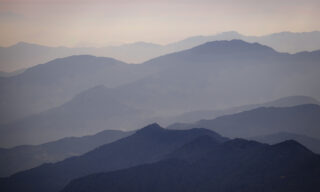
We’ll start to encounter a number of meadows that break through the trees. This is the early sign that we are now exiting the forest into the higher altitude environment. The breaks in the trees also give us an opportunity to see some of the other gigantic summits of the region. The one most prominent on our left is Dhaulagiri. The last section to our tea houses in Badal Danda (3,300 M) follows a westbound staircase that feels like it was built to finally emerge from the forest. From this point onwards there are hardly any trees. The views as we approach tea houses are spectacular. The valley ridge lines are something out of a movie. The towering and unobstructed fishtail mountain dominates the skyline and although Daulagiri is now concealed from view, it is shielded by Annapurna South, Himchuli, and Annapurna 3 all visible to us here. After we check-in, we’ll be out and about taking pictures, especially at the sunset golden hours when Fishtail Mountain truly brings out her immense beauty. Dinner will be at the tea house where we’ll have a briefing on our ascent from here to our highest point on the trail the following day.
DAY 5: TREK TO HIGH CAMP AND SUNSET VIEWS OF MACHAPUCHARE
Distance: 9.8 KM | Ascent: 926 m | Descent: 684 m | Max Altitude: 4,120 m
The trail to High Camp is very different from what we would have experienced up until this point. Gone are the towering trees, replaced by vistas of some of the highest and most spectacular summits on the planet. This will pretty much be the norm going forward. After breakfast, we’ll continue in our northbound direction, inching ever closer to the incredible Fishtail Mountain. The trail is a mix of Nepali flats at times but separated by bouts of staircases that pull us higher and higher into altitude. The stairs can be quite challenging, so it’s important to keep a steady and consistent pace without pushing too hard. We’ll also get to see the Rhododendron bushes and the colorful Danphe birds that live at this altitude.
The last section of the trail includes the most number of stairs that ultimately top out directly inside High Camp. We’ll check into our tea house and immediately sit for lunch. This will give us enough time to digest and relax before heading to our highest point on the trail in the early afternoon to catch the sunset from the viewpoint of Fishtail Mountain. There are two viewpoints. One sits at 4000 meters, and the other is further along the ridge at 4120 meters. Our aim is to reach the upper viewpoint. Similar to how we arrived at the Camp, our most challenging section is a series of stairs that top out high above the camp. A small shelter is visible between High Camp and the high point. That’s the endpoint of the stairs. From here, it’s much more gradual and follows a series of small ascents along narrow trails followed by long flat sections.
The best part is that we’ll have a spectacular view of Fishtail throughout the entire walk, with plenty of time to pause, take photos, and absorb the scale of the mountain before we arrive at the viewpoint. Our trekking team will brief the group on the plan, timing, layers, and descent before we head out, because the aim is to enjoy the full sunset safely before returning to High Camp by headlamp.
This might mean that we have to wait around a little. Above 4000 meters, that can get cold quickly. For those who have had their fix and would rather start heading down, we will arrange a descent back to High Camp with one of our team members. After sunset, we’ll put on our headlamps and retrace our steps back to High Camp where dinner will be served.
DAY 6: MARDI HIMAL VIEWPOINT TREK AND DESCENT TO FOREST CAMP
Distance: 7.5 KM | Ascent: 84 m | Descent: 1,159 m | Max Altitude: 3,650 m
After breakfast, we’ll make our way back in the direction of Badal Danda. The descending trail for the day is a tracing of our ascent, although it won’t feel like that at all. The southbound direction offers a completely different feel to the ascent, and the energy levels we get when gravity is making our trail feel easier can’t be overstated.
We’ll begin with the stair exit from High Camp before joining the gradual descending trail in the direction of Badal Danda. A brief tea break awaits us there, after which we’ll take our second flight of stairs that bring us back into the forest we had left behind some days prior. The trail inside the forest will feel familiar as we cross the meadows that become narrower and fewer the lower we go and the denser the forests become until we reach Forest Camp where we’ll have a late lunch and an afternoon to rest, stretch, and enjoy this beautiful sanctuary.
Our trekking team will manage the descent carefully, especially on the stair sections where tired legs can make people rush or lose focus.
Our final dinner together will also be in the same place where we’ll hear the final trail briefing of our adventure.
DAY 7: DESCEND FROM FOREST CAMP AND RETURN TO POKHARA
Distance: 3.6 KM | Ascent: 14 m | Descent: 577 m | Max Altitude: 2,600 m
The day will kick off by descending the trail on a combination of stairs and gentle downhill slopes through the forest to Kalimati; the final stop on our trail. After breakfast, we’ll exit Forest Camp in a westbound direction. This trail differs from the north-south ridge route we had used to ascend. The descending route to Kalimati is more direct and, although a bit steeper, is much shorter. The steeper sections are broken up with stairs to make it easier.
Our trekking team will brief us in detail on how to use trekking poles effectively so we can reduce unnecessary pressure on the knees during the descent.
The pine forests give way to a more lush and dense green where it is common to start spotting monkeys in the high trees. Once in the town, we’ll hop into our van for the one-hour ride back to Pokhara. We usually expect to arrive at lunchtime.
It is customary to share lunch with the guides and porters when we arrive back in Pokhara and present the support team with a group tip. Your LHO Team Leader and Base Camp team will guide the group on the tipping process before the end of the trek so it feels clear, discreet, and easy to manage.
After lunch, we’ll head to our hotel and check in. The afternoon is completely open to roam, rest, shop, or explore Pokhara. It’s also possible to arrange optional activities such as paragliding or a visit to a local outdoor climbing gym. Our next event together is a post trail celebration dinner at a local restaurant, usually followed by a night out for those who still have energy.
Our next event together is a team celebration dinner at a local restaurant, usually followed by a night out. We’ll be sharing lunch with our full support team, and this will be the last opportunity to sit with everyone. We usually use this time to present the group tip that would have been collected by your team leader before lunch. After that, we’ll make our way by car to Pokhara, check into our hotel, and have the afternoon off to roam around and do some shopping. Dinner will be à la carte in a trendy downtown restaurant.
DAY 8: FLY FROM POKHARA TO KATHMANDU AND FINAL TEAM DINNER
Yes, the trail is now behind us, but the adventure isn’t over yet! After breakfast, we’ll check out of our hotel and make our way back to Pokhara airport to catch our flight to Kathmandu. Lunch may be in Pokhara, at the airport, or in Kathmandu, depending entirely on when the plane takes off because of anticipated delays with internal flights. The good news is that we don’t have to wait at the airport if we are made aware of the flight delay before check-in. Once back in Kathmandu, we’ll make our way to the hotel and check in. The afternoon is free time to roam the market streets, buy souvenirs, and rest. Your LHO Team Leader will be available should you need any help or recommendations. Our last official event is a bittersweet team dinner at the hotel to close an epic chapter we’ve shared together.
DAY 9: DEPARTURE FROM KATHMANDU AFTER THE MARDI HIMAL BASE CAMP TREK
The last day is dedicated to airport transfers. Breakfast at the hotel is included. Please be sure to include the correct departure information when filling out your team details form prior to the trip start date. If any information has changed or may be incorrect, please inform your Team Leader as soon as possible for arrangements to be made.





OUR COMMITMENT
We are dedicated to ensuring that everyone involved in our services receives a fair living wage in their respective countries. We invest in our team members, fostering upward mobility within the adventure travel industry, expanding educational opportunities, and offering support wherever we can. By joining an LHO adventure you are directly impacting the incredible people and the remote communities that make these life-changing experiences possible.
LEARN MORE
HEALTH & SAFETY GUIDELINES
We do our best to ensure your wellbeing on LHO adventures. That's why the facilities we use throughout our trips are required to meet our health and safety standards. We also follow the laws and protocols of every country that hosts our adventures. This extends to national regulations requiring Covid-19 testing, vaccination certificates, mask wearing or any other local guidelines that may apply. Contact us for the most up to date protocols related to your destination.
LEARN MOREWhere is the trek to Fishtail Mountain located?
The trek to Fishtail Mountain, also known as the Mardi Himal Base Camp trek, is located in the Annapurna region of Nepal. The trail begins near Pokhara and winds through rhododendron forests, high ridgelines and alpine meadows, eventually reaching a viewpoint near the sacred peak of Machapuchare, also called Fishtail Mountain. It is one of the most scenic and less crowded routes in the Himalayas, offering stunning views of Annapurna South, Hiunchuli and, of course, Fishtail Mountain itself.
Why is it called the Fishtail Mountain Trek?
The Fishtail Mountain Trek is named after Machapuchare, a sacred Himalayan peak whose distinctive twin summits resemble the tail of a fish. Known locally as the home of the Hindu god Shiva, Fishtail Mountain is revered and remains unclimbed out of respect for its spiritual significance. The trek follows the Mardi Himal Base Camp route, bringing you up close to this iconic peak while passing through forests, ridgelines and remote villages. We use the name Fishtail Mountain Trek to highlight the sacred mountain at the heart of this journey.
How difficult is the Fishtail Mountain – Mardi Himal Base Camp Trek?
The Fishtail Mountain Trek is a moderately challenging adventure. To fully enjoy the experience, it helps to build your hiking endurance with a focus on leg strength and cardio fitness. The main challenge comes from steep ascents, descents and long-distance walking, all while carrying a light daypack of no more than 5 kilograms.
We recommend dedicating at least one day a week to specific training in the weeks leading up to the trek, so you can move confidently through the trail and enjoy every step of the journey.
When is the best time to trek to Mardi Himal Base Camp?
The best time to trek to Mardi Himal Base Camp is during the spring (March to May) and autumn (September to November) seasons. These months offer clear skies, mild temperatures and the best mountain views, especially of Machapuchare (Fishtail Mountain) and the Annapurna range. In spring, the rhododendron forests along the trail are in full bloom, while autumn provides crisp air and stunning visibility after the monsoon season. Although it is possible to trek year-round, these seasons offer the most comfortable and rewarding experience.
How long does it take to trek to Mardi Himal Base Camp?
The trek to Mardi Himal Base Camp includes five days of walking, with daily hikes ranging from 4 to 7 hours through forests, ridgelines and high-altitude terrain. You will gradually ascend to High Camp before reaching the spectacular base of Fishtail Mountain, also known as Machapuchare.
The full Fishtail Mountain Trek with Life Happens Outdoors spans 9 days, inclusive of your arrival and departure days, as well as time to explore Kathmandu and relax in Pokhara. This format ensures proper acclimatisation, cultural depth and a well-paced adventure from beginning to end.
What is the temperature like on the Fishtail Mountain – Mardi Himal Base Camp Trek?
During the Fishtail Mountain Trek, daytime temperatures typically range between 10 and 20 degrees Celsius, making for comfortable trekking conditions. At night, especially in the higher elevations, temperatures often drop to single digits and can occasionally reach 0 degrees. Above High Camp, it is common for temperatures to fall below zero, with occasional lows of around -10 degrees Celsius.
Dressing in layers is key to staying comfortable throughout the trek, especially in the early mornings and evenings.
Are there showers on the Mardi Himal trek trail? How much do they cost?
Yes, there are hot showers available at most tea houses along the Mardi Himal trek. They typically cost between 200 and 500 Nepali Rupees ($2 to $5 USD). However, hot water is not always guaranteed, especially in more remote locations where the heating systems rely solely on solar power. This is usually only an issue for one or two nights during the trek. We recommend bringing quick-dry towels and being prepared for the occasional cold rinse.
What is the accommodation like on the Fishtail Mountain – Mardi Himal Base Camp Trek?
During the Fishtail Mountain Trek, accommodation is split between Kathmandu, Pokhara, and mountain tea houses on the trail. In Kathmandu and Pokhara, we use comfortable, well located hotels that blend convenience, local character, and easy access to markets, restaurants, and walking areas.
On the trail, we stay in tea houses, which are locally run mountain lodges and a central part of the Himalayan trekking experience. Tea houses on the Mardi Himal route are simple, clean, and welcoming, with shared facilities in many locations and fewer comforts as we move higher. We select the best available standard where possible, while keeping the experience true to the character of the route.
Will my Fishtail Mountain Trek be led by an LHO Team Leader?
Yes. Your trek is shaped by an LHO Team Leader, who will be present and available for Kathmandu based events, including arrival, the welcome dinner, briefing, final dinner, and departure support. Their role is to set the tone of the experience, support the group, and help create the seamless logistics, rhythm, and attentive care Life Happens Outdoors is known for. On the trail, you are guided by our expert Mardi Himal trekking team, whose deep local knowledge of the route, tea houses, weather, forest trails, ridgelines, pacing, and mountain conditions brings the journey to life. This gives you the best of both worlds: the warmth and standards of LHO, with the confidence of people who know this route intimately.
Is the Fishtail Mountain Trek the same as the Mardi Himal Base Camp Trek?
Yes. The Fishtail Mountain Trek follows the Mardi Himal Base Camp route in the Annapurna region of Nepal. We use the name Fishtail Mountain Trek because Machapuchare, also known as Fishtail Mountain, is the sacred peak at the heart of the journey. The trail moves through forest, ridgelines, tea house settlements, High Camp, and viewpoints below the mountain, giving you dramatic views of Machapuchare, Annapurna South, Hiunchuli, and the surrounding Himalayan range.
PAYMENT PLANS AVAILABLE
FROM €160149


INQUIRE NOW
This adventure is only available as a private trip and is customized to your requirements, experience and skill level. To get started, please fill out the form below. We’ll be in touch soon to put it together for you.
"(Required)" indicates required fields
CONTACT US
We’re passionate about guiding you to epic adventures and beyond. If you have any questions at all, don’t hesitate to reach out. We’d love to hear from you.
JOIN THE LIFE HAPPENS OUTDOORS COMMUNITY!
Get £100 off your next adventure!
Sign Up To The Newsletter